ADVANTECH PCL-725 Plc Modules
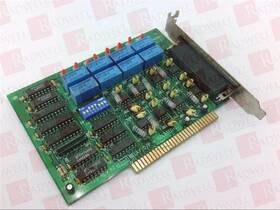
( Brand: Advantech ), ( Manufacturer Part Number: PCL-725 ), ( Part Type: Module )
Review ADVANTECH Pcl725 Used
The **Advantech PCL-725** is a high-performance, compact industrial-grade **PCI Express (PCIe) data acquisition (DAQ) card** designed to deliver precise, real-time analog and digital signal processing for demanding applications in automation, test and measurement, and embedded systems. Engineered with robust industrial standards, this versatile card integrates seamlessly into modern computing environments while maintaining exceptional reliability in harsh operational environments. Featuring a **PCIe x1 interface**, the PCL-725 offers high-speed data transfer capabilities, ensuring minimal latency and optimal throughput for high-frequency signal acquisition and control tasks. With a **16-bit resolution** across its **four differential analog input channels**, the card excels in capturing high-precision measurements from sensors, transducers, or instrumentation, making it ideal for applications such as motor control, vibration analysis, or industrial monitoring where accuracy is paramount.
The PCL-725 is equipped with **two 16-bit analog output channels**, enabling precise control signals for actuators, valves, or other devices, while its **two digital I/O channels** (with configurable input/output) provide flexible discrete control and monitoring functions. These features, combined with **programmable gain amplifiers (PGAs)** on the input channels, allow users to dynamically adjust sensitivity for signals ranging from millivolts to volts, enhancing adaptability across diverse measurement scenarios. Additionally, the card supports **high-speed counter/timer functions**, including **quadrature encoder inputs** and **PWM (Pulse Width Modulation) outputs**, which are essential for motion control, speed monitoring, and closed-loop systems. The PCL-725 also incorporates **hardware-triggering capabilities**, enabling synchronized data acquisition and control operations, which is critical for time-sensitive applications like radar signal processing or synchronized sensor networks.
Built to withstand the rigors of industrial environments, the PCL-725 adheres to strict **conformal coating** and **industrial temperature range** specifications, operating reliably between **-40 C to 85 C**, making it suitable for deployment in automotive test benches, aerospace systems, or outdoor monitoring stations. Its **low-power design** ensures efficient operation in embedded systems, while the **comprehensive driver support** for platforms like **Windows, Linux, and RTOS** simplifies integration into custom or off-the-shelf software environments. The card s **plug-and-play compatibility** with Advantech s **LabVIEW, MATLAB, and Python** toolkits further accelerates development, allowing engineers to deploy sophisticated data acquisition and control algorithms with minimal configuration. Whether used for **high-speed data logging, predictive maintenance, or real-time process control**, the PCL-725 delivers a compelling blend of precision, flexibility, and durability, making it a dependable choice for engineers and system integrators seeking a high-performance DAQ solution.
The **Advantech PCL-725** is a compact, high-performance **PCIe x4 data acquisition (DAQ) card** designed for industrial and embedded applications. Below is a detailed analysis of its pros and cons, followed by a conclusion and recommendation.
---
### **Pros of the Advantech PCL-725**
1. **High-Speed Data Acquisition**
- Supports **100 MS/s** sampling rate on all channels, making it suitable for high-speed signal processing, vibration analysis, and real-time monitoring.
- Low latency ensures minimal delay between signal capture and processing, which is critical in industrial automation and research applications.
2. **Multiple Input/Output Options**
- Offers **16-bit resolution** with **16 single-ended or 8 differential analog inputs**, providing flexibility for various signal types.
- Includes **4 digital I/O lines** (TTL/CMOS compatible) and **2 counter/timer channels**, useful for synchronization and control tasks.
- Optional **PWM, serial (RS-232/485), and relay outputs** (via additional modules) expand functionality for automation and monitoring.
3. **Robust Industrial Design**
- Built for **industrial environments** with wide operating temperature ranges (-40 C to 85 C) and compliance with **CE, FCC, and RoHS** standards.
- Rugged form factor ensures reliability in harsh conditions, such as factory floors or outdoor installations.
4. **Software Support and Compatibility**
- Comes with **Advantech s LabVIEW, MATLAB, and .NET drivers**, simplifying integration with existing software ecosystems.
- Supports **Windows (7/10/11) and Linux** (via kernel modules), making it versatile for different operating systems.
- Includes **Advantech s DAQ software suite** (e.g., **PCL-725 Driver Suite**) for easy configuration and data logging.
5. **Compact and Cost-Effective**
- **PCIe x4 interface** provides high bandwidth without occupying multiple slots, saving space in embedded systems.
- Competitively priced compared to other high-speed DAQ cards with similar specifications (e.g., National Instruments or Measurement Computing alternatives).
6. **Scalability and Modularity**
- Can be paired with **Advantech s I/O expansion modules** (e.g., **PCL-830** for additional analog/digital channels) for larger systems.
- Supports **remote monitoring** via Ethernet (with optional modules), enabling cloud or network-based data acquisition.
7. **Low Power Consumption**
- Efficient design reduces heat generation and power draw, which is beneficial for embedded systems with limited cooling.
8. **Good Documentation and Community Support**
- Advantech provides **detailed datasheets, user manuals, and technical support**, though response times may vary.
- Active forums and user communities (e.g., Advantech s official support channels) offer troubleshooting help.
---
### **Cons of the Advantech PCL-725**
1. **Limited Channel Count**
- Only **16 analog inputs** (single-ended/differential), which may be insufficient for applications requiring hundreds of channels (e.g., large-scale sensor arrays).
- No built-in **high-channel-count options** like some competitors (e.g., National Instruments PXI systems).
2. **No Built-in Isolation**
- The analog inputs lack **optical or galvanic isolation**, which can be a concern in noisy industrial environments or when interfacing with high-voltage signals. Isolation modules would need to be purchased separately.
3. **Driver and Software Complexity**
- While drivers are available for major platforms, **Linux support may require additional configuration** compared to Windows.
- Some users report **occasional driver compatibility issues**, particularly with newer OS versions or custom applications.
4. **No Built-in Triggering for All Channels**
- Triggering capabilities are limited to **external or software-based triggers**, which may not meet advanced synchronization needs (e.g., multi-channel time-correlated events).
5. **PCIe x4 Dependency**
- Requires a **PCIe x4 slot**, which may not be available in all systems (especially older or budget-friendly embedded platforms).
- If the system lacks sufficient PCIe bandwidth, performance may degrade.
6. **Limited High-Speed Digital I/O**
- Only **4 digital I/O lines** are included, which may be restrictive for applications requiring high-speed digital signal processing (e.g., FPGA-based systems).
7. **No Built-in Calibration Tools**
- Unlike some high-end DAQ cards (e.g., National Instruments), the PCL-725 does not include **automatic calibration software**, requiring manual verification for precision applications.
8. **Mixed Reviews on Customer Support**
- Some users report **delays in technical support responses**, particularly for non-standard configurations or hardware issues.
- While documentation is adequate, **lack of a dedicated 24/7 support line** may be a drawback for mission-critical deployments.
9. **No Built-in AI/ML Acceleration**
- Unlike newer DAQ cards with **FPGA or AI co-processors**, the PCL-725 lacks built-in hardware for real-time signal processing or machine learning tasks.
10. **Compatibility with Some Embedded Systems**
- May not fit seamlessly into **low-power or space-constrained embedded systems** due to its PCIe requirement and power draw.
---
### **Conclusion**
The **Advantech PCL-725** is a **strong choice for high-speed data acquisition in industrial, research, or embedded applications** where **16-bit resolution, 100 MS/s sampling, and rugged design** are priorities. Its **cost-effectiveness, software flexibility, and modularity** make it suitable for projects requiring **real-time signal processing, vibration analysis, or automation control**.
However, it is **not ideal for applications needing**:- **High channel counts** (e.g., >32 channels).
- **Isolated inputs** without additional modules.
- **Advanced triggering or synchronization** beyond basic external/software triggers.
- **Low-power or ultra-compact embedded systems** (due to PCIe dependency).
- **AI/ML acceleration or FPGA integration** for complex signal processing.
For users who need **simplicity, reliability, and high-speed analog capture**, the PCL-725 is a **solid investment**. Those requiring **more channels, isolation, or advanced triggering** may need to consider alternatives like **National Instruments PXI systems, Measurement Computing s USB/PCI cards, or FPGA-based solutions**.
---
### **Recommendation**
**Buy the Advantech PCL-725 if:**- You need **high-speed (100 MS/s) analog data acquisition** with **16-bit resolution**.
- Your application involves **industrial automation, vibration testing, or real-time monitoring** in a rugged environment.
- You are working with **Windows or Linux systems** and need **LabVIEW/MATLAB compatibility**.
- You want a **cost-effective, compact PCIe solution** without excessive complexity.
**Consider alternatives if:**- You require **more than 16 analog channels** (e.g., 32 ).
- **Isolation or high-voltage compatibility** is critical (opt for a card with built-in isolation).
- You need **advanced triggering, FPGA integration, or AI acceleration** (e.g., National Instruments PXI or Advantech s FPGA-based cards).
- Your system lacks a **PCIe x4 slot** (USB or Ethernet-based DAQ cards may be better).
**Final Verdict:**The **PCL-725 is a well-rounded, high-performance DAQ card** that delivers excellent value for its specifications. For most users requiring **industrial-grade, high-speed analog capture**, it is a **reliable and recommended purchase**. However, assess your specific channel requirements and environmental needs before committing.
Details:
All products are guaranteed to be working but may show signs of use if purchasing a used product. ADVANTECH PCL-725 / PCL725 USED RELAY ACTUATOR, ISOLATED DI ISA CARD, 8CHANNEL. Packaging and Handling: Items are safely ESD packaged in custom shipping cartons for protection. Call to use a shipping service other than the ones listed.
Sells new and surplus product develops channels to purchase such.
part #: pcl725 prices
- $39.99-$56.47
specifications sensoindustria:
- brand: Advantech
- mpn: Pcl-725
- part type: Module
payments sensoindustria:
- credit card: Diners-club
- other
- wallet: Google-pay
general sensoindustria:
- condition: Used
- PLCs HMIs > PLC Peripheral Modules > PLC Input Output Modules
offer sensoindustria:
- started: February 20, 2026
- quantity: 1
- sold: 0
- options: Ship-to-home
- availability: In Stock
seller sensoindustria:
- # reviews: 190935
- rating: 99.5%
- city: 1 Millennium Dr, Willingboro, NJ 08046
returns sensoindustria:
- method: Money back
- paid by: Buyer
- policy: Returns Accepted
- time: 30 Days
shipping sensoindustria:
- transit: 29-34 Days
- cost: $12.90
- type: Fixed
- service: Standard
- class: Standard
Advantech PCL-725 Is Similar To:
- Advantech Pcl-730 Isolated Digital Ttl I o Card 32 Channel (42.7% similar) Advantech PCL-730 isolated digital Tl i/o card, 32 channel, : no dings...(December 23rd, 2023)
- Advantech Adam-4118 Used And Tested Thermocouple Input Module (34.8% similar) Package content: 1 x used tested Advantech ADAM-4118 Thermopylae input module. Used tested Advantech ADAM-4118 Thermopylae input module. Product feature: Advantech ADAM-4118. Product specifications: brand name...(September 10th, 2024)
- Advantech Pcm-3610 Pcm3610 Used (71.9% similar) Packaging and handling: items are safely eds packaged in custom shipping cartons for protection. Call to use a shipping service other than the ones listed. Advantech PCM-3610 / PCM3610 used interface module, isolation protection, 115.2 KB/s, 2 port, 5 v, - 40 c to 85 c, RS-232/422/485. All products ...(October 15th, 2024)
- Advantech Uno2473gj3ae Used And Tested Uno-2473g-j3ae Industrial Control (33% similar) Product feature. The purchase history link on left side of page. Do remember sign your rma# on the front of package. Product specifications. Package content. Return items should include the original packaging and all accessories. Used tested Advantech UNO-2473G-J3AE industrial control control. All ...(November 21st, 2024)
- Advantech Uno2182 Used And Tested Uno-2182 Uno-2182-d12e Fanless Industrial Computer (29.6% similar) Used and tested, it ensures smooth operation in automation data processing. About technology. This finales industrial computer by Advantech is designed for rugged and reliable performance. Product specifications. Product feature. Return items should include the original packaging and all accessories...(November 23rd, 2024)
- Advantech Pcl-735 12 Channel Relay Output Card (54.5% similar) Item is in good cosmetic condition. Item comes with a full 30-DAY warranty us only. Watsonville,ca. . This sale is for an Advantech PCL-735 12 channel relay output card. 408 746-0817...(December 14th, 2024)
- Adam Advantech Adam-6521 Adam6521 Used (59.2% similar) Advantech ADAM-6521 / ADAM6521 used. Condition is used. Shipped with USPS ground advantage...(June 11th, 2025)
- Advantech Tpc-1551t-e3ae Tpc1551te3ae Used (61.3% similar) Sells new and surplus product develops channels to purchase such. Call to use a shipping service other than the ones listed. All products are guaranteed to be working but may show signs of use if purchasing a used product. Packaging and handling: items are safely eds packaged in custom shipping ...(July 2nd, 2025)
- Advantech Adam-6050 I o Module Digital 12 In 6 Out Used (51.2% similar) Condition: used item - all used products are guaranteed to be working but may show signs of use. Is Advantech ADAM-6050 not the part you are wanting. For example, programmable logic controllers plc's, distributed control systems DC's's, human machine interface him's, variable speed drives BSD's, ...(July 22nd, 2025)
- Advantech Pcm-3724-be Pcm3724be Used (78.3% similar) Packaging and handling: items are safely eds packaged in custom shipping cartons for protection. All products are guaranteed to be working but may show signs of use if purchasing a used product. Call to use a shipping service other than the ones listed. Sells new and surplus product develops ...(July 24th, 2025)
- Advantech Usb-4718-ae Usb4718ae Used (60.9% similar) Advantech USB-4718-AE / USB4718AE used discontinued by manufacturer, USB module; current rating,product range,no. Of PORTS:16PORTS; switch mounting:din rail rhos compliant: yes. Packaging and handling: items are safely eds packaged in custom shipping cartons for protection. All products are ...(October 14th, 2025)
