DGH D1701 Module RS-232C I/o T267519
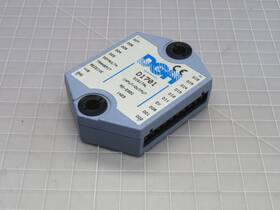
( Brand: Dgh ), ( Manufacturer Part Number: D1701 ), ( Part Type: Module )
Review DGH Rs-232c I/o Module
The **DGH D1701 RS-232C I/O Module (T267519)** is a robust and versatile communication interface designed to seamlessly integrate serial data transmission with industrial automation and control systems. Part of DGH s reliable line of modular I/O solutions, this module serves as a critical bridge between RS-232C-based devices such as PLCs, data loggers, barcode scanners, or remote sensors and higher-level control networks like Ethernet, Profibus, or Modbus. Engineered with precision, the D1701 supports full-duplex asynchronous serial communication at speeds ranging from 50 baud to 115,200 baud, ensuring compatibility with a wide array of legacy and modern serial devices. Its compact, DIN-rail-mountable design allows for easy installation in control panels, cabinets, or distributed I/O architectures, while its rugged construction featuring metal housing and protective shielding ensures durability in demanding industrial environments where exposure to dust, vibration, or temperature fluctuations is common.
At its core, the D1701 is equipped with a **dual-port RS-232C interface**, each configured with standard DB-9 connectors, enabling simultaneous communication with two separate devices or redundant connections for enhanced reliability. The module supports a comprehensive set of communication protocols, including **ASCII, binary, and custom data formats**, with configurable parameters such as parity, stop bits, and data bits to match the requirements of connected equipment. For added flexibility, it features programmable **handshake signals (RTS/CTS, DTR/DSR)**, allowing seamless synchronization with devices that require flow control. The module also incorporates **diagnostic LEDs** for real-time monitoring of communication status, including transmit/receive activity and link integrity, simplifying troubleshooting and maintenance.
Beyond its communication capabilities, the D1701 integrates seamlessly with DGH s **TwinCAT** or other PLC systems via standardized interfaces, enabling efficient data exchange for applications such as **remote monitoring, SCADA integration, or machine control**. Its **isolated signal paths** (up to 1,500V DC isolation) protect against electrical noise and voltage spikes, ensuring data integrity in harsh industrial settings. The module s **configurable baud rates, word lengths, and error-checking mechanisms** such as parity and checksum validation further enhance its adaptability, making it suitable for applications ranging from simple sensor data acquisition to complex industrial automation workflows. Whether deployed in manufacturing plants, energy management systems, or building automation networks, the D1701 delivers a dependable, low-latency solution for serial data communication, reinforcing operational efficiency and system reliability.
The **DGH D1701 RS-232C I/O Module (T267519)** is a communication interface module designed to connect RS-232 devices to industrial automation systems, PLCs, or other industrial controllers. Below is a detailed analysis of its pros and cons, followed by a conclusion and recommendation.
---
### **Pros of the DGH D1701 RS-232C I/O Module**
1. **Compatibility with RS-232 Devices**
The module provides a reliable interface for connecting legacy or modern RS-232 devices (e.g., printers, scales, barcode scanners, or serial modems) to industrial networks or PLCs. This is particularly useful in environments where RS-232 is still widely used despite the prevalence of USB and Ethernet.
2. **Industrial-Grade Design**
The module is built for industrial applications, featuring robust construction to withstand harsh environments such as temperature fluctuations, electrical noise, and vibrations. This makes it suitable for manufacturing, process control, or automation systems where reliability is critical.
3. **Easy Integration with PLCs and Controllers**
It is designed to work seamlessly with common industrial controllers, including PLCs (e.g., Siemens, Allen-Bradley, Mitsubishi), HMIs, or SCADA systems. Many modules like this support standard communication protocols (e.g., Modbus RTU, ASCII, or proprietary protocols), allowing for straightforward integration into existing systems.
4. **Serial Communication Flexibility**
The module supports full-duplex communication, allowing simultaneous data transmission and reception. It can handle various baud rates, data bits, parity, and stop bits, making it versatile for different serial devices.
5. **Isolation and Safety Features**
Many industrial RS-232 modules include galvanic isolation to protect against voltage spikes, electrical surges, or ground loops, which is essential for preventing equipment damage in industrial settings.
6. **Compact and Modular Form Factor**
The module is likely designed for rack-mounted or DIN-rail installation, saving space in control panels or server rooms. Its modular nature allows for easy replacement or expansion of I/O capabilities.
7. **Support for Multiple Protocols**
Depending on the firmware or configuration, the module may support multiple communication protocols, including Modbus RTU, ASCII, or even custom protocols, which enhances its adaptability.
8. **Low Latency**
For time-sensitive applications (e.g., real-time monitoring or control), the module is likely optimized for low-latency communication, ensuring minimal delay in data transmission.
9. **Vendor Support and Documentation**
DGH (or the manufacturer) typically provides technical documentation, software tools, and customer support to assist with installation, configuration, and troubleshooting, which can be valuable for maintenance and upgrades.
10. **Cost-Effective for Legacy Systems**
If you have existing RS-232 devices that cannot be easily replaced or upgraded, this module offers a cost-effective solution to integrate them into modern systems without purchasing entirely new hardware.
---
### **Cons of the DGH D1701 RS-232C I/O Module**
1. **Limited to RS-232 Standard**
The module is restricted to RS-232 communication, which is an older standard compared to USB, Ethernet, or wireless protocols. This can be a limitation if you need to connect newer devices that primarily use USB or Ethernet interfaces. Upgrading to a more modern interface may require additional hardware or software translation.
2. **Potential for Compatibility Issues**
While the module is designed for industrial use, compatibility issues may arise if the connected RS-232 device uses non-standard protocols, baud rates, or handshaking methods. Testing and configuration may be required to ensure seamless operation.
3. **Dependence on PLC or Controller Support**
The module s functionality is entirely dependent on the PLC or controller it is connected to. If the controller lacks the necessary drivers, firmware, or communication libraries, the module may not work as intended. This can require additional programming or configuration effort.
4. **Physical Connectivity Limitations**
RS-232 typically uses DB-9 or DB-25 connectors, which can be less durable than modern connectors (e.g., USB Type-A or Ethernet RJ-45). Frequent plugging and unplugging may lead to wear and tear on the connectors, potentially causing connectivity issues over time.
5. **No Built-in Security Features**
Unlike Ethernet-based communication, RS-232 does not inherently support security features such as encryption, authentication, or firewalls. This can be a concern if the connected devices handle sensitive data or if the system is exposed to potential security risks.
6. **Potential for Signal Degradation**
RS-232 signals are more susceptible to noise and interference over long distances compared to differential or optical communication methods (e.g., RS-485 or fiber optics). If the cable runs are long or the environment is electrically noisy, signal integrity may be compromised.
7. **Limited Scalability**
If your system requires connecting multiple RS-232 devices, you may need multiple modules or a hub, which can increase complexity and cost. Ethernet-based solutions (e.g., USB-to-Ethernet converters) may offer better scalability for large numbers of devices.
8. **Dependence on Manual Configuration**
Configuring the module for specific baud rates, parity, and other settings often requires manual intervention, which can be error-prone if not done correctly. Some modules may lack user-friendly configuration tools, requiring technical expertise.
9. **Potential for Driver or Firmware Issues**
If the module requires drivers or firmware updates, compatibility issues may arise with older or newer versions of operating systems or PLC software. This can lead to downtime or require additional IT support.
10. **Obsolescence Risk**
As industries increasingly migrate to Ethernet, USB, or wireless communication, RS-232 modules like this may become obsolete over time. Future-proofing may require investing in more modern interfaces, which could render this module less valuable in the long run.
---
### **Conclusion**
The **DGH D1701 RS-232C I/O Module (T267519)** is a practical and reliable solution for integrating RS-232 devices into industrial automation systems, particularly in environments where legacy equipment is still in use. Its industrial-grade design, compatibility with PLCs, and support for multiple communication protocols make it a strong choice for applications where RS-232 connectivity is necessary.
However, its limitations such as reliance on an outdated standard, potential compatibility issues, lack of built-in security, and scalability concerns should be carefully considered. If your system primarily uses modern interfaces (e.g., USB, Ethernet) or requires high-speed, secure, or scalable communication, alternative solutions may be more appropriate.
---
### **Recommendation**
1. **Use the DGH D1701 if:**- You have existing RS-232 devices that cannot be replaced or upgraded.
- Your system is already based on RS-232 or PLCs that support serial communication.
- You require a cost-effective, low-latency solution for industrial automation.
- The module s isolation and robustness align with your environmental and safety requirements.
2. **Consider Alternatives if:**- Your system is transitioning to modern interfaces (e.g., USB, Ethernet, or wireless).
- You need to connect a large number of devices, as Ethernet-based solutions may offer better scalability.
- Security or data integrity is a critical concern, as RS-232 lacks inherent security features.
- You anticipate long-term use, and you want to avoid potential obsolescence risks.
3. **Complementary Steps:**- If possible, test the module with your specific RS-232 devices before full deployment to ensure compatibility.
- Pair the module with a PLC or controller that has robust serial communication support and drivers.
- Consider adding isolation or surge protection if your environment is electrically noisy.
- Document the configuration settings (baud rate, parity, etc.) for future reference or troubleshooting.
In summary, the DGH D1701 is a solid choice for RS-232 integration in industrial settings, but its suitability depends on your specific requirements and long-term goals for your system s communication infrastructure.
Details:
Rush Orders Ship Same Day. Extra Information. We proudly sell hard-to-find parts, components, and machines to makers manufacturers. Open to Making Bulk Deals.
DGH D1701 RS-232C I/O MODULE T267519 Brand:: DGH, condition: THIS IS A USED ITEM, IN GOOD CONDITION AND INCLUDES 30 DAY WARRANTY. Primary model Number:D1701. Glad you stopped by.
part #: d1701 price
- $69.95
specifications sensoindustria:
- brand: Dgh
- mpn: D1701
- part type: Module
offer sensoindustria:
- started: February 20, 2026
- sold: 0
- options: Ship-to-home
- best offers: True
- quantity: 1
- availability: In Stock
payments sensoindustria:
- other
- credit card: Discover
- wallet: Apple-pay
seller sensoindustria:
- city: El Paso, Texas
- rating: 99.7%
- # reviews: 21187
shipping sensoindustria:
- transit: 3-6 Days
- class: Standard, Expedited, One-day
- cost: $10.41
- type: Calculated
- service: UPS Ground, UPS 2nd Day Air, UPS Next Day Air
- carrier: UPS
returns sensoindustria:
- policy: Returns Accepted
- time: 30 Days
- paid by: Seller
- method: Money back
general sensoindustria:
- condition: Used
- PLCs HMIs > PLC Peripheral Modules > PLC Input Output Modules
Dgh D1701 Is Similar To:
- D2601 Dgh Voltage Input Module (39.4% similar) Parts room stock...(February 11th, 2018)
- Dgh D3251 Current Output Module (44.8% similar) Shock absorbs. Solenoid coils. Knife gate valves. Solenoid valves. Flow indicators...(October 16th, 2024)
- Dgh D5132 Rs485 Interface Module (52.9% similar) Location S210F18. Net weight 0.25 lb. Listed 05/2025...(May 9th, 2025)
- Dgh Corp D1711 Lot Of 10 Digital Input output Module (45.5% similar) Color may be different from what is pictured. Working devices pulled from a functioning system. May contain sticker residue and ink marks. Includes ten 10 Dr digital input/output modules model: D1711 with mount screws and plug-in screw terminals. Contains scratches and scuffs from previous use. ...(June 16th, 2025)
- 3m D1712 U20553 Dgh Corp Digital Inputoutput Module G2u (41.8% similar) Part #: 3m D1712 for sale...(February 6th, 2026)
