MITSUBISHI NZ2G7BN-60AD4 Melsec Iq Plc Analog Module Input/output Ethernet
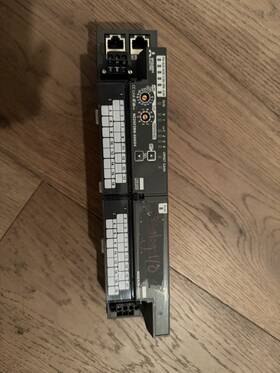
( Brand: Mitsubishi ), ( Manufacturer Part Number: NZ2G7BN-60AD4 ), ( Type: Plc Input/output Module ), ( Communication Standard: Ethernet ), ( Analog/digital: Analog ), ( Controller Platform: Melsec Iq-r )
Review MITSUBISHI Melsec Iq r Plc Analog Input/output Module Ethernet
The **Mitsubishi Electric NZ2G7BN-60AD4** is a high-performance analog input/output module designed for integration into the **MELSEC iQ-R Series Programmable Logic Controllers (PLCs)**, offering robust and flexible automation solutions for industrial applications. This module combines **four analog input channels** and **four analog output channels** into a single, compact unit, providing seamless connectivity and precise control for a wide range of processes. Each of the **16-bit resolution analog inputs** supports a configurable input range of **0 5V, 0 10V, 0 20mA, or 4 20mA**, ensuring compatibility with various sensors, transducers, and measurement devices, while its **isolated inputs** protect against noise and voltage spikes, enhancing system reliability. The **analog outputs**, similarly configurable for **0 5V, 0 10V, 0 20mA, or 4 20mA**, deliver stable and accurate control signals to actuators, valves, and other control elements, making it ideal for applications in manufacturing, process control, and HVAC systems. Built with **Mitsubishi s advanced iQ-R architecture**, this module supports **Ethernet communication** via **TCP/IP or Modbus TCP**, enabling seamless integration with SCADA systems, HMIs, and other networked devices for real-time monitoring and data acquisition. Its **compact, DIN-rail mountable design** allows for efficient space utilization in control panels, while its **wide operating temperature range (0 C to 55 C)** ensures consistent performance in diverse industrial environments. Additionally, the module features **high-speed data processing** and **low latency**, making it suitable for applications requiring precise timing and rapid response. With **Mitsubishi s reputation for durability and precision**, the NZ2G7BN-60AD4 module is engineered to deliver long-term reliability, minimal maintenance, and seamless compatibility with the broader **MELSEC iQ-R ecosystem**, including other expansion modules, power supplies, and communication interfaces. Whether deployed in discrete manufacturing, continuous process control, or energy management systems, this analog I/O module provides the flexibility, accuracy, and connectivity needed to optimize automation workflows.
**Pros and Cons of buying a Mitsubishi NZ2G7BN-60AD4 (MELSEC iQ-R PLC Analog I/O Module with Ethernet)**
### **Pros**
1. **Compatibility with MELSEC iQ-R Series PLCs**
The module is specifically designed for use with Mitsubishi s iQ-R programmable logic controllers, ensuring seamless integration and optimized performance. This reduces the risk of compatibility issues and simplifies programming and configuration.
2. **Analog Input/Output Capabilities**
The module provides both analog input (AI) and output (AO) functions, allowing for precise control and monitoring of signals such as temperature, pressure, voltage, or current. This versatility makes it suitable for a wide range of industrial applications, including process control, HVAC systems, and machinery automation.
3. **Ethernet Communication**
The built-in Ethernet port enables high-speed data transfer and remote monitoring or control. This facilitates integration with enterprise networks, SCADA systems, or other industrial devices, enhancing overall system connectivity and efficiency.
4. **High Reliability and Durability**
Mitsubishi Electric is known for producing robust industrial automation components. The NZ2G7BN-60AD4 is designed to operate reliably in harsh environments, with features such as protection against electrical noise, voltage spikes, and temperature fluctuations.
5. **Scalability and Modularity**
The module fits into Mitsubishi s modular PLC architecture, allowing users to expand or reconfigure their control systems as needed. This modularity supports future upgrades or modifications without requiring a complete system overhaul.
6. **Support for Mitsubishi s Software Ecosystem**
The module works seamlessly with Mitsubishi s programming software, such as GX Works3 or Factory Automation Software (FAS), which simplifies development, debugging, and maintenance tasks. This reduces the learning curve for engineers familiar with Mitsubishi s tools.
7. **Global Availability and Support**
Mitsubishi has a strong global presence with extensive technical support, documentation, and spare parts availability. This ensures that users can access assistance or replacements quickly if needed.
8. **Energy Efficiency**
Mitsubishi s industrial products often incorporate energy-saving features, which can contribute to lower operational costs over time. The module s efficient design may reduce power consumption compared to some competitors.
---
### **Cons**
1. **Cost**
The NZ2G7BN-60AD4 is a specialized module, and its price may be higher than generic or third-party alternatives. For small-scale or budget-conscious projects, this could be a significant drawback, especially if only a few analog channels are required.
2. **Vendor Lock-In**
Mitsubishi s proprietary nature means that users may face challenges if they need to switch to a different PLC brand in the future. This could limit flexibility and increase long-term costs if compatibility issues arise with other systems.
3. **Limited Third-Party Support**
Unlike some open-standard modules, the NZ2G7BN-60AD4 may not have extensive third-party documentation, firmware updates, or community support. This could complicate troubleshooting or customization efforts.
4. **Learning Curve for New Users**
While Mitsubishi s software is user-friendly for experienced users, those unfamiliar with the iQ-R series or GX Works3 may require additional training to fully utilize the module s capabilities. This could slow down project implementation.
5. **Potential for Obsolescence**
Mitsubishi occasionally discontinues or updates its product lines, which could render the NZ2G7BN-60AD4 obsolete over time. Users should verify the module s long-term availability and support before purchasing.
6. **Complex Installation and Configuration**
Analog I/O modules often require careful calibration and setup to ensure accurate signal processing. Misconfiguration could lead to errors or system malfunctions, particularly for users without prior experience with analog inputs/outputs.
7. **Dependence on Mitsubishi s Infrastructure**
Features such as firmware updates, cloud connectivity, or advanced diagnostics may require access to Mitsubishi s servers or proprietary tools. This could create dependencies that are not present with open-standard solutions.
---
### **Conclusion**
The Mitsubishi NZ2G7BN-60AD4 (MELSEC iQ-R Analog I/O Module with Ethernet) is a high-quality, reliable, and feature-rich module ideal for industrial applications requiring precise analog control and robust Ethernet connectivity. Its strengths lie in its seamless integration with Mitsubishi s PLC ecosystem, durability, and support for advanced automation tasks. However, its proprietary nature, higher cost, and potential vendor lock-in may pose challenges for users seeking flexibility or cost-effective alternatives.
For projects where compatibility with Mitsubishi s iQ-R series is non-negotiable, or where long-term support and reliability are critical, this module is an excellent choice. Conversely, users working with open-standard PLCs, on tight budgets, or requiring maximum flexibility may prefer alternatives such as third-party analog I/O modules or open-platform solutions like those from Siemens, Allen-Bradley, or open-source options.
---
### **Recommendation**
**Purchase the NZ2G7BN-60AD4 if:**- You are already using or planning to use Mitsubishi s iQ-R series PLCs.
- Your application requires high-precision analog I/O with Ethernet connectivity.
- Reliability, long-term support, and integration with Mitsubishi s software ecosystem are priorities.
- You are willing to invest in a specialized but high-performance module.
**Consider alternatives if:**- You need a cost-effective or open-standard solution.
- Your project may require future compatibility with non-Mitsubishi systems.
- You lack experience with Mitsubishi s programming tools and need a simpler setup.
- Third-party or generic analog I/O modules meet your requirements at a lower cost.
For most industrial automation projects where Mitsubishi s ecosystem is already established, the NZ2G7BN-60AD4 is a sound investment. However, conduct a thorough cost-benefit analysis and verify long-term availability before finalizing your decision.
Details:
Mitsubishi NZ2G7BN-60AD4 MELSEC iQ-R PLC Analog Input/Output Module Ethernet.
part #: nz2g7bn60ad4 price
- $100.00
specifications sensoindustria:
- brand: Mitsubishi
- mpn: Nz2g7bn-60ad4
- type: Plc Input/output Module
- communication standard: Ethernet
- analog/digital: Analog
- controller platform: Melsec Iq-r
general sensoindustria:
- condition: Used
- PLCs HMIs > PLC Peripheral Modules > PLC Input Output Modules
offer sensoindustria:
- started: April 19, 2026
- options: Ship-to-home
- sold: 0
- availability: In Stock
- quantity: 1
shipping sensoindustria:
- carrier: USPS
- type: Calculated
- class: Standard
- service: USPS Ground Advantage
- transit: 5-11 Days
- cost: $8.46
seller sensoindustria:
- # reviews: 4
- city: Fremont, California
- rating: 100.0%
payments sensoindustria:
- other
- credit card: Discover
- wallet: Paypal
returns sensoindustria:
- policy: No Returns
Mitsubishi NZ2G7BN-60AD4 Is Similar To:
- 500w00 Mitsubishi Module Used (36.2% similar) If another carrier such as ups or FedEx is required to ship due the size, then shipping costs may change...(May 28th, 2018)
- A0j2hcpu Mitsubishi Melsec Plc Programable Controller (46.5% similar) Mitsubishi melsec A0J2HCPU plc programmable controller A0J2H P21 R21 manufacturer: Mitsubishi model: A0J2HCPUTYPE: platform: new, in working condition. This item is new...(September 14th, 2018)
- A1sc12b Mitsubishi Plc Demo Expansion Cable (33.6% similar) This service usually takes 2-5 weeks, sometimes longer. This came from a former dealers demonstration training application solution room and was used sparingly. Up for sale is a used Mitsubishi plc cable part number a1 2B...(March 4th, 2018)
- A1sd75m3 Mitsubishi Melsec Positioning Unit (40.3% similar) This item is used. Mitsubishi melsec A1SD75M3 positioning unit SC PRI24 manufacturer: Mitsubishi model: type: unit controller platform: used, in working condition...(January 10th, 2018)
- A1sh42 Mitsubishi Unit Module (38.1% similar) ...(July 18th, 2018)
- A1shcpu Mitsubishi Plc Demo Cpu Module Card (47.1% similar) This came from a former dealers demonstration training application solution room and was used sparingly. This service usually takes 2-5 weeks, sometimes longer. We combine offers to save on shipping. Up for sale is a used Mitsubishi plc CPU part number A1SHCPU...(March 4th, 2018)
- A1sj61bt11 Mitsubishi Melsec Datalink Unit Tsc (37.7% similar) This item is used. Mitsubishi melsec A1SJ61BT11 cc-link data link unit SC PRI24 manufacturer: Mitsubishi model: type: unit controller platform: used, in working condition...(September 7th, 2018)
- A1sx10 Mitsubishi Plc Point Ac Input Module Card (50% similar) We combine offers to save on shipping. Up for sale is a used Mitsubishi plc input module part number A1SX10. This service usually takes 2-5 weeks, sometimes longer...(June 6th, 2018)
- A1sx40 Mitsubishi Melsec 12-24 Vdc (38.2% similar) Mitsubishi melsec A1SX40 CDC 16 point input module manufacturer: Mitsubishi model: type: module controller platform: melsec voltage : 24 used, in working condition. This item is used...(December 25th, 2017)
- A1sx40-s1 Mitsubishi Input Unit Module (42.1% similar) ...(July 18th, 2018)
- A1sx41 Mitsubishi Input Unit 12-24 646412766372 (30.9% similar) Mail checks to: industrial parts r us inc. View our complete range of products. Industrial parts r us inc. Delivery is needed. Please make checks payable to industrial parts r us inc. Orders placed before 12:00 PO. Unless special packaging or shipping arrangements are requested next day air orders ...(February 16th, 2018)
