FUJI ELECTRIC NP1Y16U09P6 Digital Module Usip
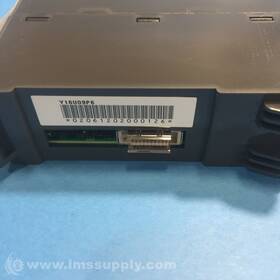
( Brand: Fuji Electric ), ( Manufacturer Part Number: NP1Y16U09P6 ), ( Part Type: Digital Module )
Review FUJI ELECTRIC Digital Output Module Usip
The **Fuji Electric NP1Y16U09P6** is a high-performance digital module designed for industrial automation and control systems, offering robust functionality and seamless integration into modern manufacturing and process automation environments. This compact yet versatile unit belongs to the NP1 series, a line of digital input/output (I/O) modules renowned for their reliability, precision, and adaptability to demanding applications. Engineered with advanced semiconductor technology, the NP1Y16U09P6 provides **16 digital inputs** configured in a **universal signal input (USIP)** format, making it exceptionally flexible for interfacing with a wide range of sensors, switches, and discrete signals. The USIP architecture allows the module to accommodate various input types, including **DC voltage (DC 10 30V), DC current (DC 4 20mA), and AC voltage (AC 24V)**, eliminating the need for additional signal conditioning hardware and simplifying system design. This versatility is particularly advantageous in environments where different types of field devices coexist, such as in factory automation, building management systems, or energy monitoring applications.
Built to withstand the rigors of industrial settings, the NP1Y16U09P6 features a **high-impact, metal-housed enclosure** that ensures protection against dust, moisture, and electromagnetic interference (EMI), adhering to strict standards like **IP65** for environmental resistance. The module s robust construction, combined with its wide operating temperature range (typically **0 C to 55 C**), allows it to operate reliably in harsh conditions, including temperature fluctuations and exposure to vibrations common in manufacturing plants or outdoor installations. Internally, the module employs **optically isolated inputs**, which enhance noise immunity and protect against voltage spikes or surges, thereby extending the lifespan of both the module and connected devices. The isolation also ensures safety compliance with international standards such as **IEC 61131-2**, making it suitable for applications requiring high levels of electrical safety.
At the heart of the NP1Y16U09P6 s functionality lies its **high-speed processing capabilities**, with a **scan rate of up to 1 ms**, enabling real-time monitoring and response in dynamic automation scenarios. The module supports **configurable input filtering**, allowing users to adjust sensitivity to transient noise or signal fluctuations, which is critical for applications involving high-speed machinery or variable-frequency drives. Additionally, the module integrates seamlessly with **Fuji Electric s NP series PLCs (Programmable Logic Controllers)**, leveraging the **PROFIBUS DP, CC-Link, or EtherNet/IP** communication protocols for efficient data exchange. This interoperability ensures smooth integration into larger control networks, enabling centralized monitoring, diagnostics, and control across distributed systems. For users requiring advanced diagnostics, the module provides **built-in fault detection**, including short-circuit, open-circuit, and overload monitoring, which can trigger alarms or initiate automatic shutdowns to prevent equipment damage.
The NP1Y16U09P6 is also designed with **user convenience in mind**, featuring a **modular and scalable architecture** that allows for easy expansion of I/O capacity as system requirements evolve. The module s **hot-swappable design** enables maintenance or upgrades without disrupting ongoing operations, minimizing downtime in critical production environments. Furthermore, its **compact form factor** (typically **18.2 mm wide**) optimizes space utilization in control panels, making it ideal for installations where space is limited. The module s **low power consumption** further enhances its efficiency, reducing operational costs while maintaining peak performance. Whether deployed in **discrete manufacturing, process control, or energy management systems**, the NP1Y16U09P6 delivers a blend of **precision, durability, and adaptability**, making it a cornerstone component for modern industrial automation solutions.
The **Fuji Electric NP1Y16U09P6** is a digital module, specifically a **USIP (Universal Serial Interface Protocol) module**, designed for industrial automation applications such as PLCs, HMIs, or other control systems. Below is a detailed analysis of its pros and cons, followed by a conclusion and recommendation.
---
### **Pros of buying a Fuji Electric NP1Y16U09P6**
1. **Compatibility with Fuji Electric Systems**
- The module is designed for seamless integration with Fuji Electric s **iA Series, UP Series, and other compatible PLCs/HMIs**, ensuring reliable communication and reduced setup complexity.
- It supports **USIP (Universal Serial Interface Protocol)**, a proprietary protocol optimized for Fuji s ecosystem, which can improve performance in Fuji-based systems.
2. **High Reliability and Industrial-Grade Build**
- Fuji Electric is a well-established manufacturer in industrial automation, known for durable and robust components.
- The module is likely built to withstand harsh industrial environments, including temperature variations, electrical noise, and mechanical stress.
3. **Standardized Interface for Simplified Wiring**
- USIP modules use a **standardized connector system**, reducing wiring errors and improving maintainability compared to custom or non-standard interfaces.
- The module may include **self-diagnostic features**, helping detect communication or hardware issues early.
4. **Backward and Forward Compatibility**
- Depending on the firmware version, the module may support older and newer versions of Fuji s control systems, extending its usable lifespan.
- Some USIP modules support **multi-drop communication**, allowing multiple devices to share a single communication line, which can simplify network design.
5. **Cost-Effective for Fuji Ecosystems**
- Since it is designed for Fuji systems, replacement or upgrade costs may be lower than third-party alternatives that require additional adapters or converters.
- The module may be available through Fuji s authorized distributors, ensuring genuine parts and warranty support.
6. **Support for High-Speed Data Transfer**
- USIP protocols are optimized for industrial applications, often providing **low-latency communication**, which is critical for real-time control systems.
- The module may support **high baud rates**, enabling faster data exchange between devices.
7. **Easy Integration with Fuji s Software Tools**
- Fuji s **iA Programmer, UP Programmer, or other development environments** likely include built-in support for USIP modules, simplifying programming and troubleshooting.
- Documentation and technical support from Fuji may be readily available, reducing development time.
8. **Long-Term Availability**
- As a legacy or widely used module, the NP1Y16U09P6 may remain available for an extended period, reducing the risk of obsolescence compared to niche or newer technologies.
---
### **Cons of buying a Fuji Electric NP1Y16U09P6**
1. **Limited to Fuji Electric Ecosystem**
- The module is **not compatible with non-Fuji systems** (e.g., Siemens, Allen-Bradley, Mitsubishi) without additional converters or gateways.
- If your system requires interoperability with other brands, you may need a **USIP-to-Ethernet/IP, Modbus, or Profibus converter**, adding complexity and cost.
2. **Potential for Obsolescence**
- While the module may have long-term availability, Fuji Electric occasionally phases out older products in favor of newer technologies (e.g., Ethernet/IP, OPC UA).
- Future firmware updates or support may be discontinued, limiting long-term usability.
3. **Higher Cost Compared to Generic Alternatives**
- For applications where **USIP is not strictly necessary**, a generic **RS-485/RS-232 module** or an **Ethernet-based solution** (e.g., Modbus TCP) might be cheaper and more flexible.
- Third-party USIP modules may exist, but they risk compatibility issues and lack official support.
4. **Dependence on Fuji s Support and Documentation**
- If Fuji Electric s support is slow or documentation is outdated, troubleshooting may be challenging.
- Unlike open-standard protocols (e.g., Modbus, Ethernet/IP), USIP requires reliance on Fuji s resources.
5. **Limited Scalability for Large Networks**
- USIP is typically designed for **smaller, localized networks** rather than large-scale industrial networks that might benefit from **Ethernet-based protocols**.
- Adding more devices may require careful planning to avoid communication bottlenecks.
6. **Potential for Single Point of Failure**
- If the USIP communication line fails, it can disrupt communication across all connected devices, unlike Ethernet networks where redundancy (e.g., switches, failover) is easier to implement.
7. **Learning Curve for Non-Fuji Users**
- Engineers unfamiliar with Fuji s systems or USIP protocol may require additional training, increasing implementation time and costs.
8. **Physical Size and Installation Constraints**
- Industrial modules like this often have **fixed mounting sizes**, which may not fit retrofitting applications where space is limited.
- Wiring and connector design may require careful planning to avoid damage.
---
### **Conclusion**
The **Fuji Electric NP1Y16U09P6 USIP module** is a **reliable, well-supported choice for applications strictly within Fuji Electric s ecosystem**. Its strengths lie in **seamless integration, industrial robustness, and simplified wiring**, making it ideal for existing Fuji-based systems where USIP is the preferred protocol. However, its **lack of cross-platform compatibility, potential obsolescence, and higher cost relative to generic alternatives** make it less suitable for mixed-vendor environments or large-scale networks.
If your project **requires compatibility with non-Fuji systems, scalability, or future-proofing**, alternatives like **Ethernet/IP, Modbus TCP, or Profibus** may be more advantageous despite requiring additional hardware (e.g., converters). On the other hand, if you are **locked into Fuji s platform and need a USIP module for a specific application**, the NP1Y16U09P6 is a **practical and dependable option**.
---
### **Recommendation**
- **Buy the NP1Y16U09P6 if:**- You are working **exclusively with Fuji Electric PLCs/HMIs** and USIP is the required protocol.
- Your system **cannot accommodate Ethernet or other open protocols** due to legacy constraints.
- You prioritize **simplified wiring and Fuji s support ecosystem** over cross-platform flexibility.
- The module is **already budgeted for** and no better alternatives exist within your system.
- **Consider alternatives if:**- Your system **requires interoperability with other brands** (e.g., Siemens, Rockwell), in which case a **USIP-to-Ethernet converter** or a **Modbus/Ethernet module** would be better.
- You plan to **scale the network significantly**, as Ethernet-based protocols offer better redundancy and scalability.
- Cost is a major concern, as **generic RS-485 or Ethernet modules** may be more affordable for non-Fuji systems.
- You anticipate **long-term flexibility**, as USIP may become obsolete, whereas Ethernet/IP or Modbus will remain widely supported.
For **new projects**, evaluating whether USIP is still the best choice or if migrating to a more open protocol is feasible could save costs and improve future maintainability. For **existing Fuji systems**, the NP1Y16U09P6 remains a **solid, low-risk purchase**.
Details:
2-Year MRO Shield Protection Plan Included. Manufacturer Part Number: NP1Y16U09P6. Special Instructions. Output Type: Transistor source.
Fuji Electric NP1Y16U09P6 Digital Output Module Manufactured by FUJI ELECTRIC. Country of Origin: Japan. Series: MICREX-SX. Terminal Type: Screw terminal.
A previously used, fully functional product that may have some signs of cosmetic wear. Type: Digital Output Module. Most items are in stock when they listed. Fuji Electric NP1Y16U09P6 Digital Output Module Fuji MICREX-SX series digital output module, transistor source type, 12-24V DC, 16 points, 0.6A/point, 4A/common.Specifications Brand.
The product must be the original item shipped, with matching serial numbers if applicable.
part #: np1y16u09p6 prices
- $73.50-$271.00
specifications sensoindustria:
- brand: Fuji Electric
- mpn: Np1y16u09p6
- part type: Digital Module
general sensoindustria:
- condition: Used
- PLCs HMIs > PLC Peripheral Modules > PLC Input Output Modules
offer sensoindustria:
- availability: In Stock
- started: May 15, 2026
- sold: 0
- best offers: True
- quantity: 1
- options: Ship-to-home
payments sensoindustria:
- other
- credit card: Visa
- wallet: Google-pay
shipping sensoindustria:
- class: Standard, One-day
- type: Calculated
- transit: 4-11 Days
- carrier: UPS
- service: UPS Ground, UPS Next Day Air
- cost: $0.00
returns sensoindustria:
- paid by: Buyer
- policy: Returns Accepted
- method: Money back
- time: 30 Days
seller sensoindustria:
- city: Mount Sterling, Kentucky
- # reviews: 25491
- rating: 99.8%
Fuji Electric NP1Y16U09P6 Is Similar To:
- 1di300z-100-e Fuji Electric Power Transistor Module Free Shipping (46.2% similar) The shipping on this item reflects standard ground for us. Greenback stock G27180-212. I have a used Fuji Electric 1DI300Z-100-E 300A 1000V power transistor module - for sale...(May 16th, 2018)
- A50l-0001-0327 Fuji Electric Power Black (37% similar) Up for sale is imp module A50L 600V 50A. The shipping service is for us only. Used, cleaned and tested...(August 7th, 2018)
- Pyz4 Fuji Electric Temperature Control Thermx Japan (40.8% similar) For sale is a Fuji Electric temperature control PYZ4 therm USA made. Please see exclusion list for any locations not included. Not sure if this has been used or not but we assume it has, in good used condition. Please see pictures for a better idea of condition and contents included...(October 28th, 2016)
- Pyz4rey1-4v Fuji Electric Li Mpn (42.9% similar) Fuji Electric PYZ4REY1-4V 1/1 6 din temperature micro controller 4-20MA output, no alarm, 8 pin socket for rail mount...(July 3rd, 2017)
- Rm21-c Fuji Electric 100-200vac Remote (42.2% similar) You are buying surplus items. If for any reason you are not satisfied with our product or item. No box please. Old stock inventory...(October 30th, 2017)
- Rye.50p-z1 Fuji Electric Used Digital Es Parts Only (46.6% similar) Used Fuji Electric rye. 50P-Z1 digital es RYE50PZ1 parts only BB bf...(March 23rd, 2018)
- Se09ag Fuji Electric Sc-e02-g 24 (38.1% similar) Marketing, listing apps, application. Fuji Electric SC-E02SE09AG 24 CDC coil 5 hp vac starter SCE02 SCE02G m4 manufacturer: Electric model: type: motor starter rating: vac coil: used, in working condition. This item is used...(May 6th, 2017)
- Sj-0g Fuji Electric Magnetic Contactor Used Free Shipping (45.9% similar) Greenback stock G27987-8. I have a nice used Fuji Electric SJ-0G 24VDC magnetic contractor - for sale. The shipping on this item reflects standard ground for us...(April 5th, 2018)
- 6mbi100vb12050 Fuji New In Box Power Supply Module (33.3% similar) New in box Fuji 6MBI100VB power supply module feature specifications brand name model no type collector emitter voltage CEO the length of warranty depends on nature products. How many months warranty do you provide. Our product team will keep the products up-to-date, which can allows you to ...(February 20th, 2021)
- 7mbr75vx12050 Fuji New In Box Igbt Module (34.4% similar) All shipping charges are not negotiable. Do you ship to my country. The length of warranty depends on nature products. Where can I find a rma. The purchase history link on left side of page. Return items should include the original packaging and all accessories. How many months warranty do you ...(October 3rd, 2021)
- Fuji Electr Np1y64t09p1 Electric Digital Output Module 12-24vdc 0.12a (71.1% similar) If manuals, software, packaging etc. Classification: used good condition key functions working. Are not mentioned, they are included. The unit is used and has some scuffs scrapes from normal wear. No cables or accessories are included with this listing. Only what is pictured included in this listing...(August 18th, 2023)
