OMEGA ENGINEERING DMD4380 Analog Isolated Plc Module I/o
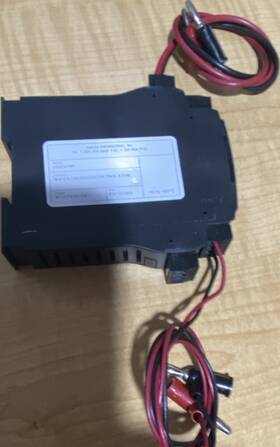
( Brand: Omega Engineering ), ( Manufacturer Part Number: DMD4380 ), ( Type: Plc Input/output Module ), ( Analog/digital: Analog )
Review OMEGA ENGINEERING Analog Dc To Isolated Plc I/o Module
The **Omega Engineering DMD4380 Analog Isolated PLC I/O Module** is a high-performance, versatile input/output module designed to seamlessly integrate analog signals into industrial automation and control systems, particularly within programmable logic controllers (PLCs). Engineered for reliability and precision, this module features **isolated 4-20 mA current loop inputs**, ensuring robust signal transmission even in harsh environments where electrical noise, voltage spikes, or ground loops pose a risk to data integrity. With a **4-channel configuration**, the DMD4380 accommodates a wide range of analog sensors such as temperature probes, pressure transducers, flow meters, or level sensors while maintaining accurate readings across its **0-20 mA or 4-20 mA** input range, with an exceptional resolution of **12-bit** for fine granularity in data acquisition. The module s **optical isolation** between the field devices and the PLC s control circuitry enhances safety and prevents potential damage from short circuits or voltage fluctuations, making it ideal for applications in manufacturing, process control, or energy management systems where uptime and data accuracy are critical.
Beyond its robust signal handling, the DMD4380 is engineered for ease of integration with **Omega s DMD series of PLCs** or compatible controllers via a **standard modular interface**, ensuring seamless communication with other I/O modules, HMIs, or SCADA systems. Its **compact, DIN-rail-mountable design** allows for efficient space utilization in control panels, while the **LED status indicators** provide quick visual feedback on module health, signal presence, and communication status. The module s **wide operating temperature range** (from **-40 C to 75 C**) and **extended voltage tolerance** (115 264 VAC) further expand its applicability in diverse industrial settings, from cold storage facilities to high-temperature processing environments. Whether deployed in a discrete manufacturing line, a building automation system, or a critical infrastructure monitoring application, the DMD4380 delivers **consistent, high-fidelity analog data conversion**, empowering engineers to build resilient, data-driven control solutions with confidence. Its combination of **industrial-grade durability, precise analog processing, and modular flexibility** makes it a cornerstone for modern automation systems requiring reliable signal acquisition and isolation.
The **Omega Engineering DMD4380 Analog Isolated PLC I/O Module** is a versatile device designed for industrial automation, offering isolated analog inputs for safe and reliable signal acquisition. Below is a detailed breakdown of its pros and cons, followed by a conclusion and recommendation.
---
### **Pros of the DMD4380**
1. **Isolation and Safety**
The module provides **galvanic isolation** (up to 1500V DC) between the input signals and the PLC, protecting against electrical noise, ground loops, and potential damage from voltage spikes. This is critical in harsh industrial environments where multiple devices share a common ground.
2. **Wide Input Range and Flexibility**
It supports ** 10V, 0 10V, 0 5V, and 4 20mA** input ranges, making it compatible with a broad range of sensors and analog devices. The ability to configure input ranges via software or hardware jumpers adds flexibility for different applications.
3. **High Accuracy and Precision**
The module boasts **high resolution (16-bit)** and **low noise performance**, ensuring reliable data acquisition for processes requiring precise measurements (e.g., temperature, pressure, or flow monitoring).
4. **Modular and Scalable Design**
As part of Omega s DMD series, it integrates seamlessly with other I/O modules, allowing users to expand their PLC system incrementally. This modularity simplifies system upgrades and maintenance.
5. **Industrial-Grade Durability**
The module is built to withstand **industrial environments**, with features like:- Wide operating temperature range (**-40 C to 85 C**).
- Protection against **surges, transients, and EMI/RFI**.
- Robust construction (metal enclosure options available in some variants).
6. **Easy Integration with PLCs**
It is designed for compatibility with major **PLC brands** (e.g., Allen-Bradley, Siemens, Rockwell, and others via standard communication protocols like **Modbus, Profibus, or direct PLC I/O connections**). This reduces integration complexity and development time.
7. **Low Latency and Fast Response**
The module provides **real-time analog signal processing**, which is essential for applications requiring immediate feedback (e.g., motor control, process monitoring, or safety systems).
8. **Cost-Effective for High-Volume Applications**
While not the cheapest option, its **longevity, reliability, and reduced need for additional isolation hardware** can offset costs in large-scale or mission-critical systems.
9. **Software and Documentation Support**
Omega provides **comprehensive documentation, configuration tools, and technical support**, making setup and troubleshooting more accessible for engineers.
10. **Backward and Forward Compatibility**
The DMD series is designed to be compatible with older systems while supporting newer PLC technologies, reducing the risk of obsolescence.
---
### **Cons of the DMD4380**
1. **Limited Digital I/O**
The DMD4380 is **analog-only**, meaning it cannot handle digital signals (e.g., discrete inputs/outputs). Users requiring both analog and digital I/O would need to purchase additional modules, increasing system complexity and cost.
2. **No Built-In Signal Conditioning for Some Sensors**
While the module handles standard analog signals well, **high-impedance or weak signals** (e.g., thermocouples without amplification) may require external signal conditioners or pre-amplifiers, adding to the system cost.
3. **Potential Latency in Networked Configurations**
If used over **Ethernet or serial networks** (e.g., Modbus TCP), there may be slight delays in data transmission compared to direct PLC I/O connections. This is less of an issue for monitoring applications but could be critical in high-speed control loops.
4. **Learning Curve for Configuration**
Configuring input ranges, isolation settings, and communication protocols may require familiarity with **PLC programming or Omega s configuration software**. Smaller teams or non-engineers may need additional training.
5. **Limited Expansion Ports**
Some variants of the DMD series may have **fewer expansion slots or limited I/O density**, which could restrict scalability for very large systems. Users may need to chain multiple modules, increasing wiring complexity.
6. **Price Point**
While competitive for its features, the **upfront cost** may be higher than basic analog I/O modules from less established brands. However, this is often justified by its reliability and isolation capabilities.
7. **Dependence on PLC Compatibility**
If the PLC lacks native support for the module s communication protocol (e.g., Modbus RTU vs. Profibus), additional **gateway devices or converters** may be required, adding to system complexity.
8. **Physical Size and Wiring Complexity**
The module s **size and the need for proper grounding and shielding** can make installation more involved, especially in space-constrained environments. Poor wiring practices could negate the benefits of isolation.
9. **Limited Support for Advanced Features**
Unlike some high-end I/O modules, the DMD4380 lacks **built-in diagnostics, predictive maintenance features, or advanced filtering algorithms**, which may require external tools or software.
10. **Potential for Overkill in Simple Applications**
For **low-budget or non-critical applications** where isolation and high precision are unnecessary, simpler (and cheaper) analog I/O modules may suffice.
---
### **Conclusion**
The **Omega Engineering DMD4380** is a **high-quality, reliable analog isolated I/O module** ideal for industrial automation applications where **safety, accuracy, and noise immunity** are paramount. Its strengths lie in its **isolation capabilities, wide input range, modularity, and compatibility with major PLC systems**, making it a strong choice for:
- **Process control systems** (e.g., temperature, pressure, flow monitoring).
- **Hazardous environments** (e.g., oil & gas, chemical processing, or manufacturing).
- **Systems requiring high-precision analog data acquisition**.
- **Long-term deployments** where reliability and low maintenance are critical.
However, it may **not be the best fit** for:- Applications needing **digital I/O** (requiring additional modules).
- Budget-conscious projects where **simpler, lower-cost solutions** would suffice.
- Systems with **extremely high-speed control loops** where latency is a concern.
- Users without **basic PLC or I/O configuration experience**.
---
### **Recommendation**
**Buy the DMD4380 if:**- You need **isolated analog inputs** for a **PLC-based system** in an industrial or hazardous environment.
- Your application requires **high accuracy, wide input range flexibility, and long-term reliability**.
- You are willing to invest in a **modular, scalable solution** that integrates well with major PLC brands.
- Safety and **noise immunity** are critical (e.g., avoiding ground loops or electrical interference).
**Consider alternatives if:**- You need **digital I/O** alongside analog (look for combined modules like Omega s DMD44xx series).
- Your budget is tight and **simpler, non-isolated modules** (e.g., from Allen-Bradley or Siemens) meet your needs.
- You require **advanced features** like built-in diagnostics or predictive maintenance (e.g., some Beckhoff or Rockwell modules).
- Your application is **low-speed and non-critical**, where a basic analog I/O card would work.
**Final Verdict:**For **industrial applications demanding isolation, precision, and PLC compatibility**, the **DMD4380 is an excellent choice**. Its trade-offs (e.g., lack of digital I/O, higher cost) are outweighed by its reliability and performance in demanding environments. Ensure proper **grounding, wiring, and PLC configuration** to maximize its benefits.
Details:
Omega Engineering DMD4380 Analog DC to Isolated PLC I/O Module.
part #: dmd4380 prices
- $95.00-$344.49
specifications sensoindustria:
- brand: Omega Engineering
- mpn: Dmd4380
- type: Plc Input/output Module
- analog/digital: Analog
payments sensoindustria:
- wallet: Google-pay
- other
- credit card: Diners-club
general sensoindustria:
- PLCs HMIs > PLC Peripheral Modules > PLC Input Output Modules
- condition: Used
returns sensoindustria:
- policy: No Returns
offer sensoindustria:
- availability: In Stock
- started: May 15, 2026
- quantity: 1
- best offers: True
- options: Ship-to-home
- sold: 0
shipping sensoindustria:
- cost: $9.42
- type: Calculated
- class: Standard
- service: USPS Ground Advantage
- carrier: USPS
- transit: 5-12 Days
seller sensoindustria:
- city: Pawtucket, Rhode Island
- # reviews: 3
- rating: 100.0%
Omega Engineering DMD4380 Is Similar To:
- 4201a-pf1 Omega Engineering 1 Temperature (46.6% similar) Item is in good working condition...(June 15th, 2017)
- 88006e Omega Engineering Model Type (45.4% similar) Omega Engineering model: 88006E type e high temperature Thermopylae probe new...(May 9th, 2017)
- Cn6071a-j-dc1 Omega Engineering Temperature Controller (41.4% similar) Offer includes: item only as pictured. New page 2: Omega Engineering temperature controller degree f CN6071A-J-DC1 - in original box, never used. See pictures for details. Items must be the original condition and approved received within specified time frame. With this, we rarely have an issue item ...(August 20th, 2017)
- Dr-io-oac-r0-280 Omega Module New (25.3% similar) Omega DR-IO-OAC-R0-280 I o module new...(March 11th, 2019)
- Om-916 Omega New Analog Input Module (49% similar) 15 lbs shipping DIMENSIONS:18...(May 25th, 2018)
- Om-922 Omega New Scu Module (36% similar) ...(May 25th, 2018)
- Tac80b-k Omega 4x Thermocouple To Analog Converter 1mv Degree (37.4% similar) I am not equipped to test them so they are sold as is. They are all in used condition. This offer is for a lot of four Omega TAC80B k Thermopylae to analog converters. No batteries are included...(May 24th, 2016)
- Tj120-cain-18g-60-sb-smpw-m Omega Thermocouple Transition Joint Tc Probe By Engineering (22.8% similar) TJ120 Cain 18G 60 Sb sump unopened in original shipping long tube. Thermopylae, transition joint Tc probe by Omega Engineering...(April 28th, 2016)
- Psw-523 Omega Engineering Adjustable Pressure (43% similar) Are only included if pictured or listed in. Please review images thoroughly before purchasing. Unit dimensions l x w h: 1/3 as a large liquidator for many vendors, our rating system is follows. If in doubt, please before purchasing. Please by sending a message through or calling. If you do receive ...(April 6th, 2017)
- Om3-acv-10v Omega Input Module Iso Ac (30.3% similar) Free shipping us only...(December 18th, 2020)
- Omega Engineering D5252 Omegabus Interface 4-ch 4-20ma Input Rs485 Output (43% similar) Termination: screw terminals. Omega Engineering Omega bus interface module. Input: 4-20MA. Type: analog. Specifications: model #: D5252. This is a surplus item. Resolution: 15-BIT. If you do not have an account no worries. Output: RS-485...(February 28th, 2025)
