MOORE PRODUCTS 16171-121-04 Siemens 16171-121/04
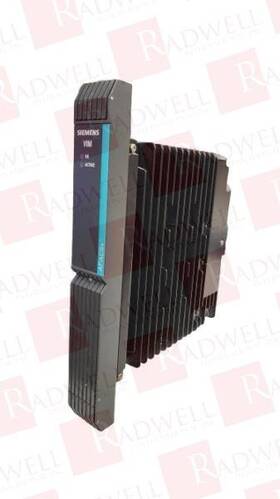
( Brand: Moore Products ), ( Manufacturer Part Number: 16171-121/04 )
Review MOORE PRODUCTS 16171-121/04 Siemens Used
The **Siemens 16171-121/04** is a high-performance, industrial-grade **16A, 250V AC contactor** designed for demanding applications in automation, control systems, and electrical distribution networks. Part of Siemens robust **1617 series**, this contactor is engineered to provide reliable switching, protection, and control in both commercial and industrial environments. Its compact yet durable design ensures efficient operation in spaces where space optimization is critical, making it ideal for panel mounting in machinery, HVAC systems, motor control centers, and other electrical installations.
At the core of this contactor is a **magnetic coil mechanism** that delivers rapid and precise switching capabilities, ensuring minimal arcing and extended component lifespan. The **16A current rating** allows it to handle moderate to high-power loads, including motors, heaters, and lighting circuits, while its **250V AC voltage rating** ensures compatibility with standard industrial power supplies. The **121/04 model variant** features a **normally open (NO) contact configuration**, providing a single-pole switching function that can be easily integrated into control circuits for on/off operations, sequencing, or interlocking applications.
Constructed with **high-quality materials**, including corrosion-resistant coatings and reinforced contact points, this contactor is built to withstand frequent cycling, thermal stress, and environmental challenges such as dust, moisture, and temperature fluctuations. The **auxiliary contacts** (if applicable in specific configurations) enhance flexibility for signaling or auxiliary control functions, while the **mechanical latch mechanism** ensures stable operation even under transient loads. Siemens reputation for precision engineering is evident in the **low contact resistance** and **fast response time**, which minimize energy loss and reduce wear over time.
For safety and reliability, the **16171-121/04** incorporates **overload protection features**, such as thermal or magnetic trip mechanisms (depending on the integrated protection relay), to prevent damage from short circuits or excessive current. Its **modular design** allows for easy integration with other Siemens components, including relays, timers, and motor starters, making it a versatile choice for custom control panels. Whether used in **factory automation, renewable energy systems, or building automation**, this contactor delivers consistent performance with minimal maintenance requirements, ensuring long-term operational efficiency.
For professionals seeking a dependable, high-efficiency switching solution, the **Siemens 16171-121/04** stands out as a reliable workhorse combining Siemens engineering excellence with practical, field-proven performance for a wide range of industrial and commercial applications.
### **Pros and Cons of buying a Siemens 16171-121/04 (Model: 1617112104)**
#### **Overview**
The **Siemens 16171-121/04 (part number: 1617112104)** is a **replacement motor starter** commonly used in industrial applications, particularly for controlling three-phase motors in HVAC, pumps, and machinery. It is part of the **Siemens 1617 series**, known for reliability in medium-voltage (up to 690V) systems.
---
### **Pros**
1. **High Reliability and Durability**
- Siemens is a well-established brand with a strong reputation for industrial-grade components. This motor starter is built to withstand harsh environments, including temperature fluctuations, dust, and vibration.
- Designed for **long-term operation**, reducing the need for frequent replacements.
2. **Compatibility with Siemens Systems**
- Seamless integration with other Siemens control systems, PLCs, and motor protection devices (e.g., **Siemens 1NO, 1NC, or 2NO/2NC contactors**).
- Works well with **Siemens SIMATIC or TIA Portal** for automation and monitoring.
3. **Standardized and Tested Components**
- Meets **IEC and UL standards**, ensuring safety and performance in industrial settings.
- Often pre-tested for **short-circuit, overload, and thermal protection**, reducing risk during operation.
4. **Easy Installation and Maintenance**
- Modular design allows for **quick replacement** if a component fails.
- Standardized mounting and wiring make installation straightforward for trained technicians.
5. **Wide Availability of Spare Parts**
- As a legacy Siemens product, replacement parts (contacts, coils, relays) are still widely available through authorized distributors.
- Aftermarket alternatives (e.g., from **Schneider Electric, ABB, or TE Connectivity**) may also be compatible.
6. **Cost-Effective for Medium-Voltage Applications**
- While not the cheapest option, it offers **better longevity** than some lower-cost alternatives, reducing downtime costs in the long run.
- Often used in **retrofit projects** where existing Siemens infrastructure is already in place.
7. **Thermal and Overload Protection**
- Includes **built-in thermal protection** to prevent motor damage from overheating.
- Can be paired with **Siemens overload relays** for enhanced safety.
8. **Support for Remote Monitoring (Optional)**
- Some Siemens systems allow for **remote diagnostics**, helping in predictive maintenance.
---
### **Cons**
1. **Higher Upfront Cost**
- Compared to **generic or aftermarket motor starters**, Siemens components are **more expensive**.
- Pricing may vary based on **quantity, distributor markup, and regional availability**.
2. **Potential Obsolescence**
- As Siemens updates its product line, **older models like the 16171 series may be phased out**, leading to:- **Limited long-term availability** of exact replacements.
- **Higher costs** for rare parts over time.
- Newer Siemens alternatives (e.g., **Siemens 3RW series**) may offer better features but could require system modifications.
3. **Complexity in Wiring and Configuration**
- Requires **proper wiring and programming** (if integrated with PLCs), which may necessitate **specialized training**.
- Misconfiguration can lead to **false trips or equipment damage**.
4. **Dependence on Siemens Ecosystem**
- If your system relies heavily on **Siemens-specific components**, switching to a different brand (e.g., ABB, Schneider) may require **significant rework**.
- Compatibility issues could arise if mixing with non-Siemens devices.
5. **Lead Times for Replacement Parts**
- While parts are still available, **delays in shipping** may occur, especially for older stock.
- Some distributors may **discontinue carrying** this model entirely over time.
6. **Size and Space Requirements**
- Industrial motor starters like this one are **bulkier** than some modern alternatives, which may be a constraint in **space-limited installations**.
7. **Limited Advanced Features Compared to Newer Models**
- Lacks **smart monitoring, IoT integration, or digital diagnostics** found in newer Siemens starters (e.g., **Siemens 3RW series**).
- No **wireless communication or app-based control** options.
8. **Potential for Counterfeit Parts**
- Due to its age, there is a risk of **counterfeit or low-quality replicas** entering the market.
- Always **purchase from authorized Siemens distributors** to avoid this issue.
---
### **Conclusion**
The **Siemens 16171-121/04 (1617112104)** is a **reliable, durable, and well-supported** motor starter ideal for **industrial applications where compatibility with Siemens systems is critical**. It excels in **long-term performance, safety features, and ease of maintenance**, making it a **strong choice for existing Siemens installations or retrofit projects**.
However, its **higher cost, potential obsolescence, and lack of advanced features** compared to newer models may make it less attractive for **new installations or cost-sensitive projects**. If budget allows, **consider a newer Siemens model (e.g., 3RW series)** for better long-term flexibility. For legacy systems where this starter is already in use, **it remains a sound replacement option** as long as spare parts remain accessible.
---
### **Recommendation**
1. **If You Need a Direct Replacement for an Existing Siemens System:**- **Buy from an authorized Siemens distributor** to ensure authenticity.
- **Check stock levels** some distributors may offer last-time-buy incentives.
- **Verify compatibility** with your existing control panel and motor specifications.
2. **If Considering a New Installation or Upgrade:**- **Evaluate newer Siemens models (e.g., 3RW series)** for **better efficiency, smart features, and longer warranty support**.
- **Compare with alternatives** (e.g., **Schneider Electric TE, ABB, or TE Connectivity**) if cost is a major factor some offer similar performance at lower prices.
- **Assess long-term maintenance costs** newer models may reduce downtime with better diagnostics.
3. **If Budget is a Constraint:**- **Explore aftermarket or compatible alternatives** (e.g., **Schneider Electric s Altivar or ABB s ACS series**) that may offer similar functionality.
- **Consider refurbished or remanufactured units** from trusted suppliers if original Siemens parts are too expensive.
4. **For Critical Applications (High Reliability Needed):**- **Stick with Siemens** if your system is already integrated with their ecosystem.
- **Invest in a backup or redundant starter** to minimize downtime in case of failure.
**Final Verdict:**The **Siemens 16171-121/04 is a solid choice for reliability in industrial settings**, especially when maintaining compatibility with existing Siemens infrastructure. However, for new projects or long-term planning, **weigh the trade-offs against newer models or alternative brands** to ensure future-proofing. Always **consult with an electrical engineer or Siemens specialist** to confirm compatibility with your specific application.
Details:
Sells new and surplus product develops channels to purchase such. Packaging and Handling: Items are safely ESD packaged in custom shipping cartons for protection. All Products are guaranteed to be working but may show signs of use if purchasing a used product. Call to use a shipping service other than the ones listed.
part #: 1617112104 prices
- $100.00-$979.00
specifications sensoindustria:
- brand: Moore Products
- mpn: 16171-121/04
offer sensoindustria:
- started: March 31, 2026
- options: Ship-to-home
- best offers: True
- quantity: 1
- availability: In Stock
- sold: 0
general sensoindustria:
- condition: Used
- PLCs HMIs > PLC Peripheral Modules > PLC Input Output Modules
payments sensoindustria:
- wallet: Apple-pay
- credit card: Visa
- other
seller sensoindustria:
- # reviews: 197265
- rating: 99.6%
- city: 1 Millennium Dr, Willingboro, NJ 08046
shipping sensoindustria:
- type: Fixed
- service: Standard
- cost: $12.90
- transit: 29-34 Days
- class: Standard
returns sensoindustria:
- method: Money back
- paid by: Buyer
- time: 30 Days
- policy: Returns Accepted
Moore Products 16171-121-04 Is Similar To:
- Io-4rt Moore Plc Products Rtd Ohm Input Module (32.3% similar) Jay this item has been fully tested by our tech department and is in good working condition...(March 14th, 2018)
- Knox90013594-spt-tprg-prg-u Moore Industries Temperature Transmitter Used (30.2% similar) If another carrier such as ups or FedEx is required to ship due the size, then shipping costs may change...(August 11th, 2018)
- Qlcamaan Moore Products Siemens Quadlog Also Oem For Yokogawa (42.1% similar) Guaranteed to work. Worldwide insured shipping cost based on delivery location. Item is clean and shows normal signs of use. Can provide specific pictures on request. No major defects or corrosion are evident. Unit was removed from active service and fully functional upon removal. Shipping cost is ...(April 8th, 2018)
- Moore Products 16133-71 13 Siemens 161337113 Used (82.7% similar) Call to use a shipping service other than the ones listed. All Products are guaranteed to be working but may show signs of use if purchasing a used product. Packaging and handling: items are safely eds packaged in custom shipping cartons for protection. Sells new and surplus product develops ...(November 7th, 2024)
- Moore Products 39bdmnbn Siemens Apacs Module (53.6% similar) Part #: Moore Products 39BDMNBN for sale...(December 3rd, 2024)
- Moore Products 15738-119 Loop Controller Digital Single 15738119 (49.6% similar) Moore Products, digital single loop controller module, 15738-119 this control module is in good working condition. Ships as presented in pictures...(January 1st, 2025)
- Moore Products 39eamcan Siemens 39amcan And Other (51.9% similar) Items are listed in the that we feel fits them most suitably. In this case, the item is believed to be used, and sold as all faults without warranty...(January 6th, 2025)
- Siemens Qlodm115acaan Moore Quadlog Critical Systems Output Discrete Module 115v (19.5% similar) Unless stated otherwise. Abby 3BSE008514R1 DO820 output module digital relay S800 i/o Abby 3BSE00851. Type: module. Trickiness Rx 4200 fibre optic primary remote module - used. Mpn: QLODM115ACAAN. Used but in good condition, comes only as shown, no other kind of accessories included apart from what ...(January 16th, 2025)
- Moore Products 352eb21n1f Loop Controller Digital Single Board Pcb 16105-41r (43.4% similar) Ships as presented in pictures. Moore Products, digital single loop controller module, printed circuit board, 352EB21N1F, 16105-41R this control module is in good working condition...(February 11th, 2025)
- Moore Products 15756-8-1 Loop Controller Display Digital Single Board Pcb Screen (37.6% similar) Moore Products, display assembly for digital single loop controller module, printed circuit board, 15756-8-1 this control module is in good working condition. Ships as presented in pictures...(February 11th, 2025)
- Moore Products Qlccm36aan Siemens Used (66.7% similar) All Products are guaranteed to be working but may show signs of use if purchasing a used product. Sells new and surplus product develops channels to purchase such. Call to use a shipping service other than the ones listed. Packaging and handling: items are safely eds packaged in custom shipping ...(May 18th, 2025)
