YOKOGAWA 16133-500-3 Plc Modules 16133-500/3
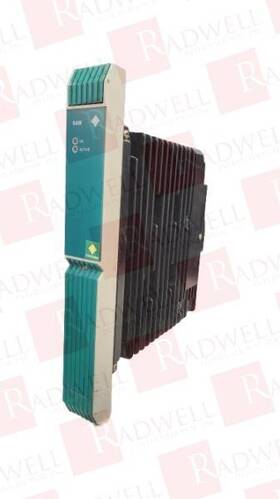
( Brand: Yokogawa ), ( Manufacturer Part Number: 16133-500/3 ), ( Part Type: Module )
Review YOKOGAWA 16133-500/3 Used
The Yokogawa 16133-500/3 (model number 161335003) is a high-performance, modular analog input module designed for integration into Yokogawa s advanced process control and automation systems, such as the CS3000 or CS3100 series. This robust device is engineered to deliver precise and reliable analog signal conditioning, making it an ideal choice for industrial environments where accuracy, stability, and durability are paramount. The module features a dual-channel configuration, each capable of accepting a wide range of analog input signals, including 4-20 mA current loops, 0-20 mA current loops, and 0-10 VDC voltage signals, ensuring compatibility with virtually any standard industrial sensor or transmitter. Its high-resolution analog-to-digital conversion (16-bit resolution) ensures exceptional measurement accuracy, minimizing errors and providing consistent performance even under fluctuating process conditions. The 16133-500/3 is built with Yokogawa s signature engineering excellence, incorporating advanced filtering and noise suppression technologies to mitigate interference from electromagnetic fields, voltage spikes, and other environmental disturbances, thereby enhancing signal integrity in harsh industrial settings. The module s compact yet sturdy design allows for seamless integration into control panels or distributed I/O systems, while its modular architecture enables easy expansion or reconfiguration of the system as process requirements evolve. Additionally, the unit supports Yokogawa s proprietary communication protocols, such as PROFIBUS PA, HART, and Foundation Fieldbus, facilitating seamless interoperability with other automation devices and enabling advanced diagnostic capabilities for predictive maintenance. With its combination of precision engineering, adaptability, and long-term reliability, the Yokogawa 16133-500/3 serves as a cornerstone for industries such as oil and gas, chemical processing, power generation, and water treatment, where dependable analog signal acquisition is critical to operational efficiency and safety.
### **Pros and Cons of buying a Yokogawa 16133-500/3 (161335003) Pressure Transmitter**
#### **Overview**
The Yokogawa 16133-500/3 is a **smart differential pressure transmitter** designed for industrial process control applications, particularly in fluid handling, HVAC systems, and other monitoring tasks. It is part of Yokogawa s **EJX series**, known for reliability and precision in measurement.
---
### **Pros**
1. **High Accuracy and Precision**
- The transmitter features a **high-precision measurement range** (typically 0 500 mbar or 0 50 inH O, depending on the model variant) with minimal hysteresis and drift, ensuring reliable data for critical applications.
- Suitable for **low-pressure differential measurements**, where accuracy is crucial (e.g., airflow, liquid level, or gas flow monitoring).
2. **Smart Digital Output (HART Protocol)**
- Supports **HART communication**, allowing for **two-way digital communication** with field devices. This enables:- **Remote configuration and calibration** without removing the device.
- **Diagnostic capabilities** (e.g., fault detection, process variable monitoring).
- **Integration with PLCs, SCADA systems, or Yokogawa s own control platforms** (e.g., STARDOM, CENTUM).
- Reduces wiring complexity compared to traditional 4 20 mA-only devices.
3. **Wide Range of Inputs and Outputs**
- Accepts **differential, gauge, or absolute pressure inputs**, making it versatile for various applications.
- Offers **multiple output options** (4 20 mA, HART, or digital signals), ensuring compatibility with different control systems.
- Some variants support **temperature compensation**, improving measurement stability in varying environmental conditions.
4. **Durable and Rugged Construction**
- Designed for **industrial environments**, with **IP65/NEMA 4X** protection ratings, ensuring resistance to dust, water, and harsh conditions.
- **Stainless steel or aluminum housing** provides corrosion resistance, suitable for chemical, food, and water treatment industries.
- **Wide temperature range** (typically 20 C to 85 C, with some models extending to 40 C), allowing operation in extreme climates.
5. **Low Maintenance Requirements**
- **No moving parts** in the sensing element (capacitive or piezoresistive), reducing wear and tear.
- **Long-term stability** with minimal calibration drift, lowering maintenance costs over time.
- **Self-diagnostic features** (via HART) help detect issues before they lead to failures.
6. **Compatibility with Yokogawa Ecosystem**
- Works seamlessly with **Yokogawa s control systems** (e.g., STARDOM, CENTUM VP), reducing integration challenges.
- Supports **Yokogawa s software tools** (e.g., Field Communicator) for easy setup and troubleshooting.
7. **CE and ATEX Certifications**
- Meets **CE (EU) and ATEX (explosion-proof) standards**, making it suitable for use in **hazardous areas** (e.g., oil & gas, chemical plants).
8. **Compact and Easy Installation**
- **Modular design** allows for flexible mounting (wall, panel, or pipe flange).
- **Quick-connect fittings** simplify installation and maintenance.
---
### **Cons**
1. **Higher Upfront Cost**
- Compared to **basic analog pressure transmitters** (e.g., some Omega or Ashcroft models), the 16133-500/3 is **more expensive** due to its smart features (HART, digital diagnostics).
- Cost may be a barrier for **small-scale or budget-constrained applications**.
2. **Limited Pressure Range**
- The **500 mbar (5 kPa) range** is suitable for **low-pressure applications** (e.g., HVAC, airflow, liquid level) but **not for high-pressure systems** (e.g., steam, hydraulic systems).
- For higher pressures, Yokogawa offers other models (e.g., 16133-1000/3 for 1000 mbar), which may be more appropriate.
3. **Dependence on HART for Advanced Features**
- While HART enables powerful features, it **requires compatible instrumentation** (e.g., a HART-enabled handheld or PLC).
- If the control system **does not support HART**, the device s full potential cannot be utilized, reducing its value.
4. **Potential Calibration and Setup Complexity**
- Due to its **smart capabilities**, initial setup and calibration may require **technical expertise**, especially for non-Yokogawa users.
- Misconfiguration could lead to **false readings or communication errors**.
5. **Limited Availability of Spare Parts**
- As a **mid-range industrial device**, finding **OEM replacement sensors or seals** may be **less straightforward** than for more common brands (e.g., Rosemount, Endress Hauser).
- Some users report **longer lead times** for critical components.
6. **Not Ideal for Extreme Environments Without Modifications**
- While the **IP65 rating is robust**, some **high-vibration or corrosive environments** may require **additional protection** (e.g., reinforced mounting).
- For **very low temperatures** (below 20 C), performance may degrade unless specified variants are used.
7. **Learning Curve for Non-Yokogawa Users**
- Users unfamiliar with **Yokogawa s software (e.g., Field Communicator)** may find the **HART configuration process** less intuitive compared to simpler transmitters.
- Documentation and training may be required for optimal use.
---
### **Conclusion**
The **Yokogawa 16133-500/3** is a **high-quality, smart differential pressure transmitter** ideal for **precision applications in industrial, HVAC, or process control environments** where **HART communication, accuracy, and durability** are critical. Its **smart features, wide compatibility, and robust construction** make it a strong choice for **medium to large-scale systems** where long-term reliability and diagnostic capabilities are valued.
However, its **higher cost, limited pressure range, and dependency on HART** may make it **overkill or impractical** for:- **Low-budget applications** where a basic 4 20 mA transmitter suffices.
- **High-pressure systems** (requiring a different Yokogawa model).
- **Users without HART-compatible infrastructure**.
- **Applications with extreme conditions** (e.g., very high vibration or corrosive media) that require additional modifications.
For **users already invested in Yokogawa s ecosystem** or those needing **advanced diagnostics and precision**, this transmitter is an **excellent investment**. For others, a **simpler or lower-range model** (e.g., a basic differential pressure transmitter from a different brand) may be more cost-effective.
---
### **Recommendation**
**Buy the Yokogawa 16133-500/3 if:**You require **high-accuracy differential pressure measurement** in a **low-pressure range (0 500 mbar)**.
Your system **supports HART communication** and benefits from **remote diagnostics and configuration**.
You operate in an **industrial or hazardous environment** where **durability and IP65/ATEX compliance** are essential.
You are already using **Yokogawa s control systems** (e.g., STARDOM, CENTUM) and want seamless integration.
Long-term **low-maintenance operation** and **process optimization** are priorities.
**Consider an alternative if:**Your budget is **strictly limited**, and a **basic 4 20 mA transmitter** would suffice.
Your application requires **higher pressure ranges** (e.g., >500 mbar), necessitating a different model.
Your control system **does not support HART**, making the smart features unnecessary.
You need **extreme pressure or temperature ranges** beyond the device s specifications.
You prefer **brands with broader spare parts availability** (e.g., Rosemount, Endress Hauser).
**Final Verdict:**For **precision, smart functionality, and long-term reliability in compatible systems**, the **Yokogawa 16133-500/3 is a strong choice**. However, weigh its **cost and feature requirements** against your specific application to ensure it aligns with your needs.
Details:
YOKOGAWA 16133-500/3 / 161335003 USED STANDARD ANALOG MODULE, 24 VDC, 1.1 AMP, VDC 4-20 MA I/O SIGNAL. Call to use a shipping service other than the ones listed. All products are guaranteed to be working but may show signs of use if purchasing a used product. Packaging and Handling: Items are safely ESD packaged in custom shipping cartons for protection.
Sells new and surplus product develops channels to purchase such.
part #: 161335003 prices
- $1073.07-$1599.00
specifications sensoindustria:
- brand: Yokogawa
- mpn: 16133-500/3
- part type: Module
seller sensoindustria:
- rating: 99.6%
- # reviews: 197269
- city: 1 Millennium Dr, Willingboro, NJ 08046
returns sensoindustria:
- time: 30 Days
- paid by: Buyer
- method: Money back
- policy: Returns Accepted
shipping sensoindustria:
- class: Standard
- cost: $12.90
- service: Standard
- type: Fixed
- transit: 29-34 Days
offer sensoindustria:
- options: Ship-to-home
- availability: In Stock
- best offers: True
- quantity: 1
- sold: 0
- started: March 31, 2026
payments sensoindustria:
- credit card: Discover
- other
- wallet: Google-pay
general sensoindustria:
- PLCs HMIs > PLC Peripheral Modules > PLC Input Output Modules
- condition: Used
Yokogawa 16133-500-3 Is Similar To:
- K9296ba Yokogawa Used Module (40% similar) Shelving number M32...(April 12th, 2018)
- Yokogawa Aai543-h00 Aai543h00 Used (65.8% similar) Sells new and surplus product develops channels to purchase such. Packaging and handling, items are safely eds packaged in custom shipping cartons for protection. The product is used surplus...(January 7th, 2024)
- Yokogawa Dt200-11-s1 Dt20011s1 Used (56.8% similar) Packaging and handling, items are safely eds packaged in custom shipping cartons for protection. Sells new and surplus product develops channels to purchase such...(February 13th, 2024)
- Yokogawa F3xs04-3n Used And Tested Plc Module (41.5% similar) Product feature: Yokogawa F3XS04-3N. Used tested Yokogawa F3XS04-3N plc module. Product specifications: brand name. Package content: 1 x used tested Yokogawa F3XS04-3N plc module...(September 10th, 2024)
- Yokogawa F3ad08-1n Input output Analog Module Type S1 Used (37.9% similar) F3AD08-1N Yokogawa input/output analog module, a/d converter, type: S1.: condition: used item - all used products are guaranteed to be working but may show signs of use. For example, programmable logic controllers plc's, distributed control systems DC's's, human machine interface him's, variable ...(November 28th, 2024)
- Yokogawa Pm1 C Pm1 C Discontinued Plc Module Card Used (39.6% similar) Condition: used item - all used products are guaranteed to be working but may show signs of use. For example, programmable logic controllers plc's, distributed control systems DC's's, human machine interface him's, variable speed drives BSD's, power supplies, pressure transmitters and everything in ...(November 28th, 2024)
- Yokogawa F3yd32-1b Transistor Output Module Source Type Used (37.1% similar) For example, programmable logic controllers plc's, distributed control systems DC's's, human machine interface him's, variable speed drives BSD's, power supplies, pressure transmitters and everything in between. F3YD32-1B Yokogawa transistor output module, source type, 12 to 24VDC, 115MA. Is ...(November 28th, 2024)
- Yokogawa F3ad04-0r Analog Input Module 1 To 5vdc Used S1 (45.2% similar) Condition: used item - all used products are guaranteed to be working but may show signs of use. Is Yokogawa F3AD04-0R not the part you are wanting. For example, programmable logic controllers plc's, distributed control systems DC's's, human machine interface him's, variable speed drives BSD's, ...(December 3rd, 2024)
- Yokogawa F3le01-5t Ethernet Interface Module 10base 5 10base-t Used S1 (41.1% similar) Is Yokogawa F3LE01-5T not the part you are wanting. F3LE01-5T Yokogawa Ethernet interface module, 10BASE, 5/10BASE-T. For example, programmable logic controllers plc's, distributed control systems DC's's, human machine interface him's, variable speed drives BSD's, power supplies, pressure ...(December 3rd, 2024)
- Yokogawa F3yc16-0n Relay Output Module 16 Used S1 (51.2% similar) Condition: used item - all used products are guaranteed to be working but may show signs of use. For example, programmable logic controllers plc's, distributed control systems DC's's, human machine interface him's, variable speed drives BSD's, power supplies, pressure transmitters and everything in ...(December 4th, 2024)
- Yokogawa Adv551-p03-s2 Adv551p03s2 Used (59% similar) All products are guaranteed to be working but may show signs of use if purchasing a used product. Yokogawa ADV551-P03-S2 / ADV551P03S2 used discontinued by manufacturer, digital output module, 32 channel, 50MA, 24VDC. Call to use a shipping service other than the ones listed. Packaging and handling...(December 13th, 2024)
