ETEK 05-024-016 Dias Ddi Module DKL016 05-006-165
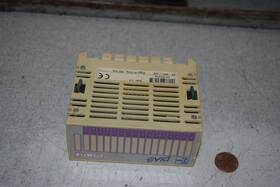
( Brand: Etek ), ( Manufacturer Part Number: 05-024-016 ), ( Model: DKL016 05-024-016 ), ( Part Type: Module )
Review ETEK Dias Ddi 165 Module
The **ETEK 05-024-016 DIAS DDI 165 (05-006-165) Module** is a high-performance, industrial-grade digital input/output (I/O) expansion module designed to enhance the functionality of programmable logic controllers (PLCs) and automation systems in demanding environments. Engineered with precision and reliability in mind, this module serves as a versatile interface for connecting a wide range of sensors, switches, and actuators to a central control system, enabling seamless data acquisition and control signal processing. Its robust construction features a compact yet durable form factor, built to withstand the rigors of industrial settings, including exposure to dust, moisture, and temperature fluctuations, thanks to its IP65-rated enclosure. The module supports a diverse array of digital inputs and outputs, accommodating both DC and AC signals, which makes it ideal for applications requiring flexibility in signal compatibility, such as machinery monitoring, process automation, or building management systems.
At the core of the DIAS DDI 165 module lies a sophisticated digital interface that ensures high-speed data transmission and minimal latency, critical for real-time automation tasks. Each input channel is designed to handle a variety of signal types, including dry contact, PNP, or NPN signals, with configurable thresholds to accommodate different sensor outputs, while the output channels provide robust switching capabilities for driving relays, solenoids, or other low-power actuators. The module s integration with ETEK s DIAS (Digital Input/Output Architecture System) ensures seamless communication with compatible PLCs and control platforms, leveraging standardized protocols for effortless implementation and reduced wiring complexity. Additionally, the module s modular design allows for easy installation and replacement, minimizing downtime during maintenance or system upgrades.
Beyond its technical specifications, the ETEK 05-024-016 DIAS DDI 165 module stands out for its user-centric features, such as intuitive configuration tools and diagnostic capabilities. Engineers and technicians can remotely monitor the status of each input and output channel, receive real-time alerts for faults or signal anomalies, and adjust parameters through user-friendly software interfaces. This level of oversight enhances system reliability and simplifies troubleshooting, making it a valuable asset in large-scale automation projects where efficiency and uptime are paramount. Whether deployed in manufacturing plants, energy infrastructure, or smart building environments, this module exemplifies ETEK s commitment to delivering innovative, high-quality solutions that bridge the gap between hardware and software in modern industrial automation.
### **Pros and Cons of buying a ETek 05-024-016 DIAS DDI 165 (05-006-165) Module**
#### **Overview**
The ETek **05-024-016 DIAS DDI 165 (05-006-165)** is a **Direct Digital Interface (DDI) module** commonly used in **automotive diagnostics, engine control units (ECUs), and aftermarket tuning applications**. It serves as a bridge between a vehicle s **CAN bus** and external devices like laptops, scan tools, or custom ECU development systems. Below is a detailed analysis of its advantages and limitations.
---
### **Pros**
1. **Compatibility with CAN Bus Systems**
- The module supports **CAN (Controller Area Network) communication**, a standard in modern vehicles (especially those with **Bosch, Siemens, or Intel-based ECUs**).
- Works with **16-bit CAN (CAN 2.0B)** at speeds up to **500 kbps**, making it suitable for most automotive applications.
2. **Versatile Use Cases**
- **Diagnostic purposes**: Connects to **OBD-II scanners, ELM327 adapters, or custom diagnostic tools** for reading fault codes, live data, and ECU parameters.
- **Aftermarket tuning**: Used in **ECU flashing, remapping, and custom firmware development** for performance tuning.
- **Development & prototyping**: Helps in **testing and debugging ECU software** before final integration.
3. **Low-Cost Alternative to Proprietary Solutions**
- Compared to **OEM-specific diagnostic tools** (e.g., Bosch KTS, Delphi DAS), this module is **affordably priced**, reducing development costs for hobbyists and small-scale tuners.
- Avoids the need for **expensive manufacturer-approved tools** for basic CAN communication.
4. **Easy Integration with Microcontrollers & PCs**
- Can be interfaced with **Arduino, Raspberry Pi, STM32, or other microcontrollers** via **UART or USB** (depending on the adapter used).
- Works with **software like CANalyzer, Vector CANoe, or custom C/C /Python scripts** for data logging and analysis.
5. **No Physical Wiring Complexity**
- Unlike some ECU modifications that require **soldering or direct wiring**, this module often connects via **plug-and-play adapters** (e.g., OBD-II port, DIN rail connectors).
- Reduces risks of **electrical damage** from improper wiring.
6. **Supports Multiple Protocols (Indirectly)**
- While primarily a **CAN module**, it can be paired with **other diagnostic adapters** (e.g., KWP2000, ISO9141) to expand compatibility with older vehicles.
7. **Open-Source & Community Support**
- Many **hackers and tuners** have documented its use, making it easier to find **tutorials, firmware modifications, and troubleshooting guides**.
- Can be **flashed with custom firmware** (e.g., for extended CAN support or protocol emulation).
---
### **Cons**
1. **Limited to CAN Bus (No Direct OBD-II Support)**
- Unlike **ELM327 adapters**, this module **does not natively support OBD-II protocols** (e.g., ISO9141, KWP2000, SAE J1850). It requires an **additional adapter or software bridge** to interface with standard OBD-II scanners.
- If you need **basic OBD-II diagnostics**, you ll still need a separate tool (e.g., VCDS, Torque, or a standalone scanner).
2. **Requires Technical Knowledge for Advanced Use**
- **Not plug-and-play for beginners**: Setting up CAN communication, configuring baud rates, and interpreting raw CAN data requires **basic understanding of CAN protocols and ECU programming**.
- Misconfiguration (e.g., wrong baud rate, incorrect CAN ID filtering) can **corrupt ECU data or brick the module**.
3. **No Built-in Power Regulation**
- Some versions may **not include voltage regulation**, meaning you must ensure **stable 5V or 12V power** (depending on the vehicle s CAN bus voltage).
- **Reverse polarity or voltage spikes** can damage the module or connected ECU.
4. **No Official Manufacturer Support**
- ETek is a **generic supplier**, meaning **no warranty for automotive ECU compatibility** or technical support for vehicle-specific issues.
- If the module fails or malfunctions, troubleshooting may require **community forums or third-party help**.
5. **Potential Legal & Warranty Risks**
- **Modifying or interfacing with an ECU without manufacturer approval** may **void vehicle warranties** or violate **emissions regulations** (e.g., in the U.S. under EPA rules).
- Some **OEMs actively block or disable** aftermarket CAN tools, requiring **additional bypass methods** (e.g., ECU cloning, key programming).
6. **Physical & Electrical Compatibility Issues**
- **Connector mismatch**: The **05-006-165** may not fit all vehicles due to **variations in CAN bus wiring** (e.g., pinout differences in connectors).
- **Noise & interference**: CAN buses in some vehicles are **prone to electrical noise**, which can cause **data corruption or communication drops**.
- **Power draw considerations**: Some ECUs may **not provide enough current** for the module, leading to unstable connections.
7. **Limited to 16-bit CAN (No CAN FD Support)**
- The module **does not support CAN FD (Flexible Data-Rate)**, the newer **higher-speed CAN standard** used in modern vehicles (e.g., some BMW, Mercedes, and Tesla models).
- If working with **high-data-rate systems**, you may need a **more advanced module**.
8. **No Built-in Security Features**
- Unlike **OEM diagnostic tools**, this module **lacks encryption or authentication**, making it vulnerable to **unauthorized access or hacking** if used in security-sensitive applications.
---
### **Conclusion**
The **ETek 05-024-016 DIAS DDI 165 (05-006-165) module** is a **cost-effective, versatile tool** for **CAN-based automotive diagnostics, tuning, and ECU development**, particularly for **hobbyists, tuners, and DIY enthusiasts**. Its **low cost, open-source nature, and compatibility with CAN systems** make it a **popular choice** for projects requiring **direct ECU communication**.
However, it is **not a universal solution** it has **clear limitations**, including:- **No direct OBD-II support** (requires additional adapters).
- **Technical complexity** for beginners.
- **No official support or warranty**.
- **Potential legal risks** when modifying ECUs.
- **Limited to 16-bit CAN** (not suitable for CAN FD vehicles).
**Best suited for:****CAN bus diagnostics** (with a compatible scanner).
**Aftermarket ECU tuning & remapping**.
**Custom ECU development & prototyping**.
**Budget-friendly automotive hacking projects**.
**Not ideal for:****Basic OBD-II scanning** (use an ELM327 instead).
**Professional shop diagnostics** (OEM tools are more reliable).
**High-security or emissions-compliant applications** (may require OEM-approved tools).
**Vehicles using CAN FD or advanced security protocols**.
---
### **Recommendation**
- **If you need a simple, affordable CAN module for tuning or development**, this is a **solid choice**, especially if you already have a **CAN-to-USB adapter** (e.g., **PCAN-USB, SocketCAN-compatible dongle**) to interface with your PC.
- **For OBD-II diagnostics**, pair it with a **separate ELM327 adapter** or a **CAN-to-OBD bridge**.
- **For professional or high-end applications**, consider **OEM-specific tools** (e.g., **Bosch KTS, Delphi DAS, or VCDS**) or **higher-end CAN FD modules** (e.g., **MCP2515 with CAN FD support**).
- **Always back up ECU data** before making changes, as **incorrect configurations can permanently damage the module or ECU**.
**Final Verdict:**The ETek module is **excellent for DIY tuners and developers** who understand CAN communication but **not a plug-and-play solution** for casual users. **Proceed with caution, especially regarding legal and warranty implications.**
Details:
ETEK DIAS DDI 165 05-006-165 Module.
part #: 05024016 prices
- $45.00-$320.00
specifications sensoindustria:
- brand: Etek
- mpn: 05-024-016
- model: Dkl016 05-024-016
- part type: Module
offer sensoindustria:
- started: April 15, 2026
- availability: In Stock
- options: Ship-to-home
- sold: 0
- quantity: 1
returns sensoindustria:
- policy: No Returns
seller sensoindustria:
- city: Unionville, Connecticut
- # reviews: 5189
- rating: 99.9%
general sensoindustria:
- PLCs HMIs > PLC Peripheral Modules > PLC Input Output Modules
- condition: Used
payments sensoindustria:
- wallet: Paypal
- credit card: Diners-club
- other
shipping sensoindustria:
- type: Fixed
- class: Economy
- cost: $14.00
- service: Economy
- transit: 3-7 Days
