INNOVATIVE INTEGRATION X3-25M Pcie Xmc Module I/o
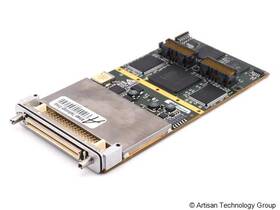
( Brand: Innovative Integration ), ( Manufacturer Part Number: X3-25M ), ( Part Type: Module ), ( Country Of Origin: United States )
Review INNOVATIVE INTEGRATION Pcie Xmc I/o Module
The **Innovative Integration X3-25M PCIe XMC I/O Module** represents a cutting-edge solution for high-performance data acquisition, processing, and signal conditioning in demanding embedded and real-time computing applications. Designed with modular flexibility in mind, this XMC (PMC/XMC) card integrates seamlessly into modern backplane architectures, offering an unparalleled blend of speed, precision, and scalability for engineers and system integrators targeting aerospace, defense, industrial automation, and high-frequency trading environments. Built around a **PCIe Gen 3 x8 interface**, the X3-25M delivers sustained data throughput exceeding **2.5 GB/s**, enabling real-time processing of complex analog, digital, and mixed-signal inputs with minimal latency. Its **dual-core ARM Cortex-A9 processor** (optional, configurable) provides embedded intelligence for on-card signal processing, FPGA acceleration, or custom firmware execution, reducing host CPU load while maintaining deterministic performance.
At the heart of the X3-25M lies a **high-density I/O subsystem** featuring **24-bit, 1 MSPS analog inputs** with programmable gain amplifiers (PGAs) and configurable filtering (e.g., anti-aliasing, notch, or moving-average), ensuring optimal resolution and dynamic range for signals ranging from microvolt-level precision to high-amplitude industrial sensors. For digital I/O, the module supports **128 high-speed LVDS/TTL/CMOS lines**, configurable as inputs, outputs, or bidirectional signals, with optional **10 Gbps Ethernet PHY integration** for high-bandwidth networked applications. The design incorporates **FPGA-based reconfigurable logic** (Xilinx Zynq or Altera Cyclone V, depending on variant), allowing users to implement custom protocols, encryption, or algorithm acceleration directly on the card, reducing reliance on external hardware. Security and reliability are prioritized through **hardware-based encryption (AES-256)**, tamper-resistant firmware, and **military-grade temperature operation** ( 40 C to 85 C), making it suitable for rugged deployments in harsh environments.
The X3-25M s **software ecosystem** is built on a **VITA 41-compliant framework**, ensuring compatibility with major FPGA vendors (Xilinx, Intel/Altera) and real-time operating systems (VxWorks, QNX, Linux). Its **PCIe-based memory-mapped I/O** and **zero-copy data transfer** mechanisms minimize host overhead, while **synchronous sampling** and **time-stamped triggers** enable precise coordination across multi-card systems. For developers, the module includes a **graphical configuration tool** for I/O channel setup, FPGA bitstream loading, and firmware flashing, alongside **C/C and Python SDKs** for rapid integration into existing applications. Whether deployed as a standalone I/O accelerator or as part of a larger XMC-based processing cluster, the X3-25M sets a new standard for adaptability, performance, and future-proofing in high-end embedded systems.
The **Innovative Integration X3-25M PCIe XMC I/O Module** is a high-performance, modular I/O solution designed for applications requiring high-speed data acquisition, signal processing, and interface expansion in rugged environments. Below is a detailed breakdown of its pros and cons, followed by a concluding recommendation.
---
### **Pros**
1. **High-Speed Data Acquisition and Processing**
The X3-25M supports PCIe Gen 3 x8 connectivity, enabling data transfer rates up to **8 GT/s per lane**, which is ideal for real-time signal processing, radar, sonar, and high-speed instrumentation applications. This level of bandwidth is critical for applications requiring low latency and high throughput, such as military, aerospace, and industrial automation systems.
2. **Modular and Scalable Architecture**
As an XMC (VITA 2.0) module, it integrates seamlessly into larger systems via a backplane, allowing for easy expansion and reconfiguration. This modularity reduces the need for custom wiring and simplifies system upgrades. The XMC form factor is widely adopted in defense, aerospace, and test-and-measurement industries, ensuring compatibility with existing infrastructure.
3. **Rugged and Reliable Design**
The module is built for harsh environments, featuring robust mechanical and thermal protection. It is likely designed to meet **MIL-STD-810G** and **MIL-STD-461** standards, making it suitable for military, aerospace, and offshore applications where reliability is paramount. This includes resistance to vibration, shock, and temperature extremes.
4. **Versatile I/O Capabilities**
The X3-25M appears to offer a range of I/O options, including analog, digital, and possibly RF interfaces, depending on the specific variant or configuration. This versatility allows it to serve multiple roles, such as:
- High-speed analog-to-digital conversion (ADC) for sensor data acquisition.
- Digital I/O for control and synchronization signals.
- RF signal processing for communications or radar systems.
The exact I/O capabilities should be verified against the datasheet or specifications, but the flexibility is a key advantage for systems requiring diverse input/output requirements.
5. **PCIe Gen 3 Compatibility**
PCIe Gen 3 provides a significant performance boost over older standards, reducing bottlenecks in data-heavy applications. This is particularly beneficial for applications like:
- Radar and sonar processing.
- High-frequency trading or financial data acquisition.
- Scientific computing and simulation.
The low latency and high throughput of PCIe Gen 3 enhance overall system performance.
6. **Support for Advanced Protocols**
Depending on the implementation, the module may support protocols such as **Ethernet AVB, Time-Sensitive Networking (TSN), or other high-speed communication standards**. This is advantageous for applications requiring synchronized data transfer across multiple nodes, such as distributed sensor networks or industrial control systems.
7. **Developer and Integration Support**
Innovative Integration is a reputable vendor with a history of providing robust hardware solutions, often accompanied by **software development kits (SDKs), drivers, and documentation**. This can accelerate integration into existing systems and reduce development time. Additionally, their support for standards like XMC ensures compatibility with a wide range of development tools and frameworks.
8. **Low Power Consumption (Relative to Performance)**
High-performance modules can often be power-hungry, but the X3-25M likely balances performance with efficiency, which is critical for portable or battery-powered applications. While exact power consumption would need to be confirmed, this is a common consideration for field-deployed systems.
9. **Future-Proofing**
PCIe Gen 3 and XMC are still widely used in modern systems, and the module s design suggests it can be upgraded or paired with newer technologies as needed. This longevity reduces the risk of obsolescence compared to proprietary or outdated solutions.
10. **Compliance with Industry Standards**
Adherence to standards like **VITA 2.0 (XMC), PCI-SIG (PCIe), and potentially DO-160 (avionics)** ensures interoperability and reduces integration challenges. This is especially important in regulated industries like defense and aerospace.
---
### **Cons**
1. **High Cost**
High-performance, ruggedized, and modular I/O modules like the X3-25M are typically expensive. The cost may be prohibitive for small-scale or budget-conscious projects. The price must be justified by the application s requirements if lower-cost alternatives (e.g., commercial-off-the-shelf (COTS) PCIe cards or FPGA-based solutions) can meet the needs, they may be more economical.
2. **Complexity in Integration**
While the modularity of XMC is an advantage, integrating it into a system can be complex, especially for teams without prior experience with XMC or PCIe-based architectures. This may require additional engineering resources for:
- Firmware development.
- Driver configuration.
- Synchronization of multiple modules in a backplane.
- Power management and thermal design.
The learning curve can delay project timelines if not accounted for.
3. **Limited Availability of Documentation or Support**
Some vendors provide thorough documentation, while others may have gaps in user guides, API references, or troubleshooting resources. Before purchasing, it s essential to confirm the level of support offered by Innovative Integration, including:
- Availability of technical documentation.
- Training or certification programs.
- Responsive customer support for debugging or customization.
Poor documentation can lead to extended development cycles or reliance on third-party resources.
4. **Potential for Obsolescence**
While PCIe Gen 3 and XMC are still relevant, newer standards like **PCIe Gen 4/5 or AXIe (VITA 77)** may emerge in the future. If the system is designed for long-term use, the X3-25M might become outdated, requiring a migration plan. However, this risk is mitigated by the widespread adoption of PCIe Gen 3 in many industries.
5. **Thermal Management Challenges**
High-performance modules generate heat, and the X3-25M may require efficient cooling solutions, such as:- Active cooling (e.g., fans or liquid cooling).
- Proper airflow design in the enclosure.
- Thermal interface materials to prevent hotspots.
Poor thermal management can lead to performance degradation, reduced lifespan, or system failures. This adds complexity to the system design.
6. **Dependency on Vendor Support**
If Innovative Integration discontinues the product or reduces support, future upgrades or repairs could become difficult. It s wise to assess the vendor s long-term viability and commitment to the product line before making a purchase.
7. **Size and Form Factor Constraints**
XMC modules are larger than some commercial PCIe cards, which may limit their use in space-constrained applications. While this is less of an issue in rack-mounted or chassis-based systems, it could be a drawback for embedded or compact designs.
8. **Licensing or Software Costs**
Depending on the application, additional software (e.g., FPGA programming tools, real-time OS licenses, or signal processing libraries) may be required. These costs can add up, especially if proprietary tools are needed. It s important to clarify whether the module includes all necessary software or if additional licenses are required.
9. **Potential Latency in PCIe-Based Systems**
While PCIe Gen 3 offers low latency, it is not as low as some FPGA-based or direct memory access (DMA) solutions. For ultra-low-latency applications (e.g., high-frequency trading or real-time control), alternative architectures (e.g., FPGA-based PMC/XMC modules) might be preferable.
10. **Limited Customization**
Unlike FPGA-based solutions, the X3-25M likely offers fixed I/O and processing capabilities. If the application requires highly customized or reconfigurable logic, an FPGA-based XMC module might be a better fit, despite potentially higher complexity.
---
### **Ending Conclusion**
The **Innovative Integration X3-25M PCIe XMC I/O Module** is a powerful and versatile solution for applications demanding high-speed data acquisition, rugged reliability, and modular scalability. Its strengths lie in its **PCIe Gen 3 performance, compliance with industry standards, and suitability for harsh environments**, making it ideal for defense, aerospace, industrial automation, and high-performance computing applications. The modular XMC form factor ensures easy integration into larger systems, while its high-speed interfaces enable real-time processing of complex data streams.
However, the **high cost, integration complexity, and potential reliance on vendor support** are significant drawbacks that must be carefully evaluated. The module is best suited for projects where performance and reliability are critical, and where the benefits of modularity and high-speed data transfer outweigh the costs. For applications with lower budget constraints or simpler requirements, alternative solutions (e.g., commercial PCIe cards, FPGA-based modules, or COTS I/O devices) may be more appropriate.
---
### **Recommendation**
**Purchase the Innovative Integration X3-25M if:**1. Your application requires **high-speed data acquisition or processing** (e.g., radar, sonar, high-frequency trading, or scientific instrumentation) and PCIe Gen 3 performance is non-negotiable.
2. You are working in a **rugged environment** (e.g., military, aerospace, offshore, or industrial) where reliability and compliance with standards like MIL-STD are essential.
3. Your system architecture **already uses XMC or PCIe-based backplanes**, and modularity is a priority for scalability or reconfiguration
Details:
Fast and hassle-free. FPGA: Linux Spartan3A DSP, 1.8M Gate. Are not included with this equipment unless pictured and/or listed in the above. Hours / Location.
part #: x325m prices
- $995.00-$1695.00
specifications sensoindustria:
- brand: Innovative Integration
- mpn: X3-25m
- part type: Module
- country of origin: United States
general sensoindustria:
- condition: Used
- PLCs HMIs > PLC Peripheral Modules > PLC Input Output Modules
offer sensoindustria:
- options: Ship-to-home
- started: April 9, 2026
- quantity: 2
- sold: 0
- availability: In Stock
payments sensoindustria:
- wallet: Google-pay
- other
- credit card: Mastercard
seller sensoindustria:
- rating: 99.9%
- # reviews: 17670
- city: Champaign, Illinois
shipping sensoindustria:
- service: FedEx Ground / FedEx Home Delivery, FedEx Standard Overnight, FedEx Ground Economy
- cost: $33.19
- transit: 4-8 Days
- type: Calculated
- carrier: FedEx
- class: Standard, One-day, Economy
returns sensoindustria:
- policy: Returns Accepted
- paid by: Buyer
- method: Money back
- time: 30 Days
