NI WSN-3212 Wireless Sensor Network Thermocouple Node 4-CHANNEL 24-BIT
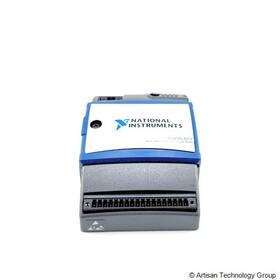
( Brand: Ni ), ( Manufacturer Part Number: WSN-3212 ), ( Part Type: Sensor ), ( Country Of Origin: United States )
Review NI Wireless Sensor Network 4-channel 24-bit Thermocouple Input Node
The **NI WS/N-SN-3212 Wireless Sensor Network 4-Channel 24-Bit Thermocouple Node** is a high-performance, wirelessly connected data acquisition module designed for precision temperature monitoring in demanding industrial, research, and scientific applications. Part of National Instruments robust Wireless Sensor Network (WSN) platform, this compact yet powerful node integrates four independent thermocouple input channels, each capable of measuring temperatures across a wide range from cryogenic levels up to extreme high temperatures with exceptional accuracy and resolution. Leveraging a **24-bit delta-sigma analog-to-digital converter (ADC)**, the WS/N-SN-3212 delivers sub-microvolt-level precision, ensuring reliable readings even in environments with minimal temperature fluctuations or high noise interference. The node supports **J, K, T, E, N, R, S, B, and C-type thermocouples**, along with customizable cold-junction compensation (CJC) to maintain accuracy regardless of ambient conditions, making it ideal for applications such as HVAC systems, industrial process control, aerospace testing, or environmental research where thermal dynamics must be tracked with millidegree precision.
Built for seamless integration into wireless sensor networks, the WS/N-SN-3212 communicates wirelessly via **IEEE 802.15.4 (Zigbee-compatible) radio**, enabling real-time data transmission to a central gateway or host system without the need for cabling. This wireless capability eliminates the constraints of wired installations, allowing for flexible deployment in hard-to-reach locations, moving equipment, or distributed sensor arrays where mobility and scalability are critical. The node operates within the **2.4 GHz ISM band**, offering robust connectivity over distances of up to **100 meters (328 feet)** in open environments, with potential range extensions through mesh networking or additional repeaters. Its low-power design ensures extended battery life ideal for remote or battery-powered deployments while still providing the bandwidth and throughput necessary for high-speed data acquisition and streaming.
Security and reliability are prioritized in the WS/N-SN-3212 s architecture, featuring **AES-128 encryption** for secure wireless communication and **low-latency data transfer** to minimize delays in critical applications. The node s rugged construction, with an **IP67-rated enclosure**, protects against dust, moisture, and vibration, making it suitable for harsh industrial or outdoor environments. Additionally, its **LabVIEW-compatible software support** allows for easy configuration, data logging, and visualization through NI s intuitive development environment, enabling engineers and researchers to quickly deploy, monitor, and analyze thermal data without extensive programming expertise. Whether used for real-time process monitoring, experimental validation, or long-term environmental tracking, the WS/N-SN-3212 combines cutting-edge wireless technology with unmatched thermocouple measurement capability, delivering a versatile and high-fidelity solution for temperature-sensitive applications.
### **Pros and Cons of buying a NI WS/N-3212 Wireless Sensor Node (4-Channel 24-Bit Thermocouple Node)**
#### **Pros:**1. **High Precision and Accuracy** The 24-bit resolution ensures extremely precise temperature measurements, making it suitable for demanding industrial, research, or scientific applications where small variations matter.
2. **Wireless Connectivity** Eliminates the need for cabling, reducing installation complexity and improving flexibility in sensor placement. This is particularly useful in harsh or remote environments where wiring is impractical.
3. **Multi-Channel Capability** Supports four thermocouple inputs, allowing simultaneous monitoring of multiple temperature points, which is valuable for systems requiring distributed sensing (e.g., HVAC, industrial processes, or environmental studies).
4. **Fast Sampling Rates** Capable of high-speed data acquisition, which is beneficial for dynamic temperature monitoring or applications requiring real-time response.
5. **Compatibility with NI Systems** Integrates seamlessly with National Instruments LabVIEW, LabVIEW FPGA, and other NI hardware/software platforms, making it ideal for users already invested in the NI ecosystem.
6. **Durability and Rugged Design** Built to withstand industrial environments, including temperature extremes, vibration, and electromagnetic interference, ensuring reliable long-term operation.
7. **Low Latency Communication** Wireless Sensor Network (WSN) technology minimizes data transmission delays, which is critical for applications requiring near-instantaneous feedback.
8. **Scalability** Can be part of a larger NI WSN system, allowing for expansion with additional nodes and gateways as needs grow.
9. **Thermocouple Compatibility** Supports common thermocouple types (e.g., K, J, T, E, N, S, B, R), making it versatile for a wide range of temperature measurement requirements.
10. **Software Flexibility** The node can be programmed and configured via LabVIEW, enabling custom data processing, logging, and visualization without additional hardware.
---
#### **Cons:**1. **High Cost** As a high-end industrial-grade device, the WS/N-3212 is expensive compared to basic wired thermocouple amplifiers or simpler wireless alternatives. The price may be prohibitive for small-scale or budget-conscious applications.
2. **Complex Setup and Learning Curve** Requires familiarity with NI software (particularly LabVIEW) and wireless sensor network configuration. Users without prior experience may need significant training or support to implement the system effectively.
3. **Dependency on NI Ecosystem** If your workflow does not involve LabVIEW or NI hardware, the lack of native compatibility with other platforms (e.g., MATLAB, Python, or open-source tools) could be a limitation.
4. **Power Requirements** Wireless nodes typically require battery power or external power sources, which may add complexity to deployment (e.g., battery replacement, power management, or wired power solutions).
5. **Interference and Range Limitations** Wireless communication can be affected by electromagnetic interference, physical obstacles, or signal congestion, potentially reducing reliability in crowded or large environments. Range may also be limited compared to wired solutions.
6. **Maintenance and Support Costs** NI hardware often requires specialized support, and maintenance (e.g., firmware updates, troubleshooting) may incur additional costs or require in-house expertise.
7. **Overkill for Simple Applications** If you only need basic temperature monitoring with minimal channels or lower precision, the WS/N-3212 may offer more features than necessary, making cheaper alternatives (e.g., wired data loggers or simpler wireless sensors) more cost-effective.
8. **Limited Offline Capability** Unlike some standalone data loggers, the WS/N-3212 relies on a gateway and software for data storage and processing. If the system is disconnected, data may be lost unless local buffering is implemented.
9. **Licensing Costs** Advanced features in LabVIEW (e.g., FPGA programming, high-speed data acquisition) may require additional software licenses, increasing the total cost of ownership.
10. **Potential Latency in Large Networks** In a multi-node WSN, data synchronization and latency can become issues as the network scales, which may affect real-time applications.
---
### **Ending Conclusion:**The **NI WS/N-3212** is a **high-performance, wireless thermocouple sensor node** designed for **precision, scalability, and integration with NI s ecosystem**. It excels in **industrial, research, or scientific applications** where **accuracy, multi-point monitoring, and wireless flexibility** are critical. However, its **high cost, complexity, and dependency on NI software** make it less suitable for **budget-conscious or simple applications**.
If your project demands **cutting-edge temperature sensing with wireless capability and NI compatibility**, the WS/N-3212 is an excellent choice despite its drawbacks. For **lower-cost, simpler, or non-NI applications**, alternatives like **wired data loggers, basic wireless sensors, or open-source platforms** may be more practical.
---
### **Recommendation:** - **Buy the NI WS/N-3212 if:**- You are already using **National Instruments hardware/software** (e.g., LabVIEW, cDAQ, or FPGA systems).
- Your application requires **high-precision, multi-channel thermocouple monitoring** in a **wireless or distributed setup**.
- You prioritize **scalability, low latency, and integration with industrial-grade systems**.
- Budget constraints are not a limiting factor, and the **long-term value of precision and flexibility** justifies the cost.
- **Avoid the NI WS/N-3212 if:**- You need a **low-cost, simple solution** for basic temperature logging.
- Your workflow does not involve **NI software**, and you prefer **open-source or cross-platform tools**.
- The application does not require **wireless flexibility** or **high-speed sampling**.
- You are working in a **small-scale or academic setting** where the **complexity and cost** outweigh the benefits.
For a **middle-ground alternative**, consider **wired NI thermocouple modules (e.g., NI 9213)** if wireless is not essential, or **third-party wireless thermocouple sensors** (e.g., from Campbell Scientific or Sensitech) if NI compatibility is not required.
Details:
Part Number: 197085D-01L. Are not included with this equipment unless pictured and/or listed in the above. Condition: Used and in Excellent Condition. Fast and hassle-free.
part #: wsn3212 prices
- $682.82-$1395.00
specifications sensoindustria:
- brand: Ni
- mpn: Wsn-3212
- part type: Sensor
- country of origin: United States
returns sensoindustria:
- paid by: Buyer
- time: 30 Days
- method: Money back
- policy: Returns Accepted
offer sensoindustria:
- sold: 0
- started: April 22, 2026
- quantity: 1
- options: Ship-to-home
- availability: In Stock
shipping sensoindustria:
- cost: $33.19
- transit: 3-8 Days
- type: Calculated
- class: Standard, One-day, Economy
- carrier: FedEx
- service: FedEx Ground / FedEx Home Delivery, FedEx Standard OverNight, FedEx Ground Economy
payments sensoindustria:
- credit card: Visa
- wallet: Apple-pay
- other
seller sensoindustria:
- # reviews: 17746
- rating: 99.9%
- city: Champaign, Illinois
general sensoindustria:
- condition: Used
- PLCs HMIs > PLC Peripheral Modules > PLC Input Output Modules
Ni WSN-3212 Is Similar To:
- 4-s12-ad4x Sensor Proximity Ni Turck (28.6% similar) Part #:4-S12-AD4X prices...(May 19th, 2015)
- D0135nd Do135nd Foxboro New Invensys Electric Level Sensor Origin 2a8716 C0-ni G M (26.6% similar) Looks like new without papers to me. Was found in storage...(June 27th, 2016)
- Ki-3015-fnkg Ki5210 Ifm Efector Ki-3015-fnkg Ni 0 Capacitive Sensor W Mounting Instructions (26.3% similar) IMF defector KI5210 KIA 3015 fang Ni capacities sensor w mounting instructions...(April 29th, 2016)
- Ki-2015-frkg Ni Efector Ifm Capacitive Sensor Ki5060 (21.9% similar) For sale is one new old surplus: IMF defector capacities sensor, KI5060, KI-2015-FRKG will expedite. Call with questions...(February 25th, 2017)
- Ni-2b Unbranded Vintage Lubri-sensor Oil Quality (29% similar) Vintage Libra-sensor oil quality analyzer NI-2B always save shipping on combined lots...(December 26th, 2016)
- Ni-9201 National Instruments Analog Input Module (40.3% similar) Was purchased for a project which never commissioned. The module features up to 100 v of over voltage protection for errant signal connection or unexpected signals individual channels. Please see my other listings for a CRIO-9025 real-time controller, NI-9421 digital input module and NI-9472 output...(May 5th, 2018)
- Ni-9421 National Instruments Digital Input Module (38.4% similar) Each channel is compatible with 24 v logic levels and has an led indicating the state of that. The Ni offers isolation between input channels and earth ground. Was purchased for a project which never commissioned. In full working condition. Please see my other listings for a CRIO-9025 real-time ...(May 5th, 2018)
- Scxi-1160 National Instruments Ni 16-channel (20% similar) What you see in the pictures is get nothing more less. With power capabilities of up to 2 a at 250 RMS or 30 CDC, these relays are suitable for switching, routing, and controlling medium-level signals. You can use two or more SCXI-1160S and SCXI-1161S in the same chassis with a single FAQ device ...(November 21st, 2017)
- National Instruments Ni-9215 Ni 9215 189190d-01 Voltage Input Module (29.2% similar) Operating various types of industrial products, mechanical modules. 25B-D2P3N104. 25B-D1P4N104. Dear customer, there is one things need to be noticed before placing an order. 25B-D6P0N104. 22B-D010N104...(January 2nd, 2024)
- National Instruments 9213 Ni Thermocouple Input 16-ch 24-bit (38.2% similar) 25B-D6P0N104. Ni 9213 national instruments thermocouple input 16-CH 24-BIT. Best price service. Shipping our delivery methods include speedups, DHL, ups, USPS, etc. 25B-D1P4N104. Dear customer, there is one things need to be noticed before placing an order. Item specifics. FAQ module type: analog ...(January 22nd, 2024)
- National Instruments Ni-9422 8-channel Digital Input Module Used (47.1% similar) National instruments NI-9422 8-CHANNEL digital input module used. Industries. Our delivery methods include speedups, DHL, ups, USPS, etc. Item specifics: brand: national instruments, mpn: NI-9422...(April 19th, 2024)
