VMIC VMIVME-4132-011 Fanuc
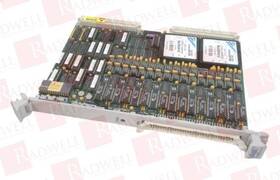
( Brand: Vmic ), ( Manufacturer Part Number: VMIVME-4132-011 )
Review VMIC Fanuc Vmivme4132011 Used
The **VMIC VMIVME-4132-011** (or **Fanuc VMIVME4132011**) is a high-performance, industrial-grade **VMEbus (Versa Module Europa) single-board computer** designed for demanding applications in automation, robotics, motion control, and embedded systems. Engineered for reliability and expandability, this module integrates a robust **ARM-based processor architecture** with a rich set of I/O interfaces, making it an ideal choice for OEMs, test and measurement systems, and real-time control environments. The VMIVME-4132-011 features a **high-speed VMEbus backplane connection**, enabling seamless integration into larger modular systems where data throughput and deterministic timing are critical. Its compact yet rugged form factor ensures compatibility with standard VMEbus chassis, while its **low-power consumption** and **wide operating temperature range** (typically -40 C to 85 C) make it suitable for both indoor and outdoor industrial deployments.
At its core, the VMIVME-4132-011 leverages a **high-performance ARM Cortex-A series processor**, paired with ample onboard memory including **DDR3 SDRAM** and **Flash storage** to handle complex computational tasks with efficiency. The module supports **real-time operating systems (RTOS)** such as VxWorks, QNX, or Linux, ensuring deterministic performance for time-sensitive applications like CNC controls, robotics, or automated test systems. Its **dual Ethernet ports** (10/100 Mbps) provide high-bandwidth networking capabilities, while **PCI Express (PCIe) interfaces** allow for the integration of high-speed peripherals, accelerators, or FPGA-based coprocessors. Additionally, the board includes **multiple serial communication interfaces (RS-232/422/485)** and **USB ports**, facilitating legacy device integration and human-machine interface (HMI) connectivity.
The VMIVME-4132-011 is built with **industrial-grade components** to withstand harsh environmental conditions, including **vibration resistance, EMI/EMC compliance**, and **extended temperature operation**, making it a dependable solution for factory automation, defense systems, or aerospace applications. Its **modular design** allows for easy expansion via **VMEbus slots**, enabling the addition of I/O modules, analog/digital converters, or specialized signal processing cards as needed. The board also supports **remote management features**, such as **IPMI (Intelligent Platform Management Interface)**, which simplifies diagnostics, monitoring, and maintenance in large-scale systems. Whether deployed in a **high-speed motion control system**, a **scientific instrument**, or a **military-grade embedded platform**, the VMIVME-4132-011 delivers a balance of processing power, connectivity, and reliability that meets the stringent requirements of modern industrial automation.
The **VMIC VMIVME-4132-011** (or **Fanuc VMIVME4132011**) is a high-performance **VMEbus I/O module** designed for industrial automation, data acquisition, and real-time control applications. Below is a detailed analysis of its pros and cons, followed by a conclusion and recommendation.
---
### **Pros of buying a VMIVME-4132-011**
1. **High-Speed Data Acquisition**
- The module supports **12-bit analog input** with a sampling rate of up to **100 kHz per channel** (depending on configuration), making it suitable for high-speed signal processing in industrial and scientific applications.
- It features **16 differential analog input channels**, allowing for precise multi-channel data acquisition.
2. **Robust Industrial Design**
- Built for **VMEbus systems**, which are commonly used in **industrial automation, robotics, and embedded control systems**.
- Designed to operate in **harsh environments**, with proper shielding and rugged construction for reliability in factory settings.
3. **Flexible Triggering and Synchronization**
- Supports **external and internal triggering**, which is essential for synchronized data acquisition in multi-channel or multi-module setups.
- Can be configured for **burst sampling**, useful in applications requiring periodic data capture.
4. **Compatibility with Fanuc and VMIC Ecosystems**
- Works seamlessly with **Fanuc CNC and PLC systems**, as well as other VME-based industrial controllers.
- VMIC (a subsidiary of Fanuc) provides **technical support and driver documentation**, ensuring easier integration.
5. **Low Latency and Real-Time Performance**
- Optimized for **real-time applications**, making it suitable for **motion control, process monitoring, and high-speed testing**.
- Minimal processing delay between input and output, critical for closed-loop control systems.
6. **Backward and Forward Compatibility**
- Supports **VME64 and VME32 standards**, ensuring compatibility with older and newer VMEbus systems.
- Can be used in **standalone or multi-slot VME chassis**, expanding system flexibility.
7. **Good for Legacy System Upgrades**
- If you already have a **VME-based industrial system**, this module can extend functionality without requiring a full hardware overhaul.
- Useful for **retrofitting older CNC machines, test stands, or data acquisition systems**.
8. **Available from Authorized Distributors**
- Purchasing from **Fanuc/VMIC-certified dealers** ensures **authenticity and warranty coverage**.
- Some distributors offer **technical support and spare parts**, reducing long-term maintenance risks.
---
### **Cons of buying a VMIVME-4132-011**
1. **Outdated Technology (VMEbus is Declining)**
- **VMEbus is an older standard**, and modern industrial systems increasingly favor **PCIe, PCI, or Ethernet-based solutions** (e.g., CompactPCI, PXI, or FPGA-based cards).
- **Limited availability of new VME chassis** compared to more modern bus standards, which may complicate future expansions.
2. **Higher Cost Relative to Modern Alternatives**
- While functional, **PCIe or USB-based data acquisition cards** (e.g., National Instruments, Advantech) often offer **similar or better performance at a lower cost**.
- **Maintenance and spare parts** for VME modules can be **more expensive** than newer standards.
3. **Limited Software and Driver Support**
- **Driver availability may be restricted** compared to widely supported interfaces like PCIe or USB.
- **Programming complexity** may be higher for developers unfamiliar with VMEbus programming (requires **VMEbus programming libraries**).
4. **Physical Size and Installation Constraints**
- VME modules require **dedicated VME slots**, which may not be available in newer industrial PCs.
- **Power consumption and heat dissipation** can be higher than modern, low-profile cards.
5. **No Built-in Ethernet or IP Connectivity**
- Unlike modern **Ethernet-based I/O modules**, this module **does not support remote access or network integration** without additional hardware.
- Requires **direct connection to a VME chassis**, limiting flexibility in distributed systems.
6. **Potential for Obsolete Components**
- Some **supporting chips or connectors** in VMEbus systems may become **hard to replace** over time.
- **Long-term availability** of the module itself may decline as industrial automation shifts to newer standards.
7. **Learning Curve for Non-Expert Users**
- Setting up a **VMEbus system** requires **specialized knowledge** in embedded systems and bus interfacing.
- **Debugging hardware issues** can be more challenging compared to plug-and-play PCIe/USB devices.
8. **No Built-in Digital I/O (Limited Flexibility)**
- While strong in **analog input**, the **VMIVME-4132-011 does not include digital I/O**, meaning additional modules may be needed for full control applications.
---
### **Conclusion**
The **VMIVME-4132-011** is a **high-quality, high-performance analog input module** ideal for **legacy VMEbus systems, industrial automation, and real-time data acquisition** where **low latency and high-speed sampling** are critical. It excels in **environments where VMEbus is already established** and where **backward compatibility** is a priority.
However, **modern industrial applications** increasingly favor **PCIe, Ethernet, or FPGA-based solutions**, which offer **better scalability, lower cost, and easier integration** with contemporary software (e.g., LabVIEW, Python, or PLC programming). If your system **already uses VMEbus** and you need **high-speed analog input**, this module is a **solid choice**. But if you are **starting a new project or upgrading an older system**, considering **modern alternatives** (e.g., **PCIe DAQ cards, CompactRIO, or Ethernet-based I/O**) may be more cost-effective and future-proof.
---
### **Recommendation**
1. **Buy the VMIVME-4132-011 If:**- You are **maintaining or upgrading an existing VMEbus-based system** (e.g., Fanuc CNC, industrial test equipment).
- You require **12-bit, 100 kHz analog input** in a **real-time control application** where VMEbus is the only viable interface.
- You have **technical expertise** in VMEbus programming and **access to a VME chassis**.
- You need **long-term reliability** in a **stable, legacy system** where modern alternatives are not compatible.
2. **Consider Alternatives If:**- You are **starting a new project** and want **future-proof, scalable hardware**.
- You need **Ethernet/IP, USB, or PCIe connectivity** for easier integration with modern software.
- You require **digital I/O, higher resolution, or more channels** than what this module offers.
- You want **lower cost, easier availability, and better driver support** (e.g., **National Instruments, Advantech, or cRIO systems**).
3. **Best Modern Alternatives to Consider:**- **PCIe Data Acquisition Cards** (e.g., **NI PXIe-6363, Advantech PCIe-9810**) Higher speed, better software support.
- **CompactRIO or FPGA-Based Systems** (e.g., **National Instruments cRIO-9072**) Flexible, programmable, and scalable.
- **Ethernet-Based I/O Modules** (e.g., **Advantech USB-3000 series, Siemens ET200SP**) Network-enabled, easier remote access.
- **USB Data Acquisition** (e.g., **NI USB-6009, ADLink USB-3000**) Plug-and-play, widely supported, lower cost.
### **Final Verdict**
The **VMIVME-4132-011 is a capable but aging solution** best suited for **VMEbus-centric applications**. If your system **relies on VMEbus and you need high-speed analog input**, it remains a **reliable choice**. However, for **new projects or modern industrial setups**, investing in a **PCIe, Ethernet, or FPGA-based system** will likely provide **better long-term value, flexibility, and support**. Always weigh the **current needs vs. future scalability** when making a decision.
Details:
Call to use a shipping service other than the ones listed. Sells new and surplus product develops channels to purchase such. All products are guaranteed to be working but may show signs of use if purchasing a used product. Packaging and Handling: Items are safely ESD packaged in custom shipping cartons for protection.
part #: vmivme4132011 prices
- $925.17-$2124.15
specifications sensoindustria:
- brand: Vmic
- mpn: Vmivme-4132-011
returns sensoindustria:
- paid by: Buyer
- time: 30 Days
- policy: Returns Accepted
- method: Money back
shipping sensoindustria:
- type: Fixed
- cost: $12.90
- transit: 29-35 Days
- service: Standard
- class: Standard
general sensoindustria:
- PLCs HMIs > PLC Peripheral Modules > PLC Input Output Modules
- condition: Used
offer sensoindustria:
- quantity: 1
- best offers: True
- sold: 0
- options: Ship-to-home
- availability: In Stock
- started: April 21, 2026
payments sensoindustria:
- credit card: Mastercard
- wallet: Apple-pay
- other
seller sensoindustria:
- rating: 99.6%
- city: 1 Millennium Dr, Willingboro, NJ 08046
- # reviews: 2004 93
