VMIC VMIVME-2534-040 Digital Board 32-BIT I/o
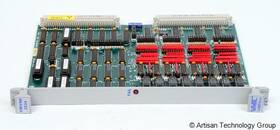
( Brand: Vmic ), ( Manufacturer Part Number: VMIVME-2534-040 ), ( Part Type: Digital Board )
Review VMIC 32-bit Digital I/o Board
The **VMIC VMIVME-2534-040** is a high-performance, 32-bit digital I/O expansion board designed for integration into VMEbus systems, offering robust and flexible control for industrial, scientific, and embedded applications. Engineered with precision and reliability in mind, this board delivers a compact yet powerful solution for interfacing with a wide range of digital signals, making it an ideal choice for engineers and developers seeking seamless integration into complex data acquisition, automation, or real-time control systems. Featuring a **40-channel digital I/O configuration**, the VMIVME-2534-040 provides both input and output capabilities, allowing for bidirectional communication with external devices while maintaining high-speed data transfer rates. Each channel is individually configurable, supporting TTL-compatible logic levels (0 5V) and offering programmable direction control, ensuring compatibility with a variety of sensors, actuators, and peripheral devices. The board s **32-bit data bus interface** ensures efficient data handling, enabling rapid read/write operations that are critical for time-sensitive applications such as motor control, process automation, or high-speed data logging.
Built on a robust VMEbus architecture, the VMIVME-2534-040 adheres to strict industry standards, ensuring compatibility with a broad spectrum of VME-compatible systems, including those from major manufacturers like Motorola, Intel, and others. Its **single-slot design** maximizes space efficiency within a VME crate, while its **low-power consumption** and **rugged construction** make it suitable for deployment in demanding environments, including industrial settings where reliability and durability are paramount. The board s **programmable interrupt capabilities** further enhance its functionality, allowing for asynchronous event handling and reducing CPU overhead by offloading interrupt-driven tasks. Whether used for real-time monitoring, automated testing, or high-speed data acquisition, the VMIVME-2534-040 delivers a dependable and scalable solution that empowers developers to build sophisticated control systems with ease.
Under the hood, the VMIVME-2534-040 incorporates advanced **digital signal conditioning** and **isolated I/O channels**, ensuring protection against voltage spikes, electromagnetic interference (EMI), and other environmental hazards that could compromise system integrity. This isolation not only safeguards the host system but also enables safe operation in high-voltage or noisy industrial environments. The board s **software-driven configuration** simplifies setup, with intuitive driver support available for major operating systems and development environments, including Windows, Linux, and real-time OS platforms. Developers can leverage VMIC s comprehensive **APIs and SDKs** to streamline integration, while built-in diagnostics and error reporting tools facilitate troubleshooting, reducing downtime and enhancing overall system reliability. Whether deployed in a laboratory, manufacturing facility, or aerospace application, the VMIVME-2534-040 stands as a versatile and high-performance digital I/O solution, bridging the gap between hardware and software with unmatched precision and efficiency.
The **VMIC VMIVME-2534-040** is a 32-bit VMEbus digital I/O board designed for high-speed data acquisition and control applications. Below is a detailed analysis of its pros and cons, followed by a concluding recommendation.
---
### **Pros of the VMIVME-2534-040**
1. **High-Speed Data Acquisition**
The board supports high-speed digital I/O with configurable timing and synchronization capabilities, making it suitable for applications requiring real-time data processing, such as industrial automation, scientific research, or military/aerospace systems.
2. **32-Bit VMEbus Interface**
As a 32-bit VMEbus device, it integrates seamlessly with modern VME-based systems, offering robust data transfer rates and compatibility with other VME modules. This is particularly advantageous in legacy or high-performance computing environments where VME remains a trusted standard.
3. **Flexible Configuration**
The board features programmable I/O lines, allowing users to configure it for various digital signal applications, such as pulse counting, event timing, or parallel data transfer. This flexibility makes it adaptable to a wide range of use cases without requiring additional hardware.
4. **Low Latency**
Designed for real-time systems, the VMIVME-2534-040 minimizes latency in data acquisition and control operations, which is critical in applications where timing precision is essential.
5. **Reliability and Durability**
VMIC is a well-established manufacturer known for producing rugged and reliable industrial-grade hardware. The board is likely built to withstand harsh environments, making it suitable for embedded or field-deployed systems.
6. **Software Support**
VMIC typically provides comprehensive software development kits (SDKs) and documentation, including drivers and APIs for common operating systems (e.g., Linux, VxWorks, QNX). This simplifies integration into existing software frameworks.
7. **Backward and Forward Compatibility**
The 32-bit VMEbus standard ensures compatibility with older systems, while its design may also support future-proofing through software updates or peripheral expansions.
---
### **Cons of the VMIVME-2534-040**
1. **Aging Technology**
The VMEbus standard, while robust, is not as widely adopted in modern computing as PCIe or Ethernet-based interfaces. This could limit availability of support, spare parts, or newer alternatives in the long term. Finding technicians or replacement components may become challenging over time.
2. **Limited Scalability**
VMEbus systems are generally more complex and less scalable than modern bus architectures like PCIe or Ethernet. Expanding the system may require additional cabling, power supplies, or backplanes, increasing costs and complexity.
3. **High Cost of Ownership**
VMEbus hardware can be expensive compared to modern alternatives, especially when factoring in the cost of backplanes, power supplies, and cabling. Additionally, the lack of mass production may drive up prices for specialized modules like the VMIVME-2534-040.
4. **Software Ecosystem Limitations**
While VMIC provides drivers, the broader ecosystem of software tools and libraries may not be as extensive as those for more modern interfaces (e.g., PCIe-based DAQ cards or FPGA-based solutions). This could require more custom development effort.
5. **Physical Size and Power Requirements**
VMEbus modules are typically larger and require more power than modern plug-and-play cards. This can be a constraint in space-limited applications or systems with strict power budgets.
6. **Deprecation Risk**
As industries shift toward Ethernet, USB, or PCIe-based solutions for digital I/O, the long-term viability of VMEbus hardware is uncertain. Future-proofing may require additional investment in bridging technologies or migration to newer standards.
7. **Limited Parallelism**
Compared to modern FPGA-based or multi-core processor solutions, the VMIVME-2534-040 offers limited parallel processing capabilities. Applications requiring high-throughput parallel operations may need supplementary hardware.
---
### **Conclusion**
The **VMIVME-2534-040** is a powerful and reliable choice for applications demanding high-speed, low-latency digital I/O within a VMEbus environment. Its strengths lie in its precision timing, flexibility, and integration with legacy systems. However, its reliance on the VMEbus standard introduces challenges related to scalability, cost, and long-term support. If your application is already embedded in a VME-based system or requires the specific features of this board (e.g., real-time synchronization, high-speed parallel I/O), it remains a viable option. For new projects or applications where modern interfaces are preferred, evaluating alternatives like PCIe-based DAQ cards, FPGA solutions, or Ethernet-based I/O systems may be more future-proof.
---
### **Recommendation**
- **Buy the VMIVME-2534-040 if:**- You are working within an existing VMEbus system and require its specific capabilities (e.g., high-speed digital I/O, real-time control).
- Your application cannot be migrated to a more modern interface without significant redesign.
- You prioritize reliability, low latency, and have access to technical support for VMEbus hardware.
- **Avoid or Consider Alternatives if:**- You are starting a new project and can integrate a more scalable or cost-effective solution (e.g., PCIe, Ethernet, or FPGA-based I/O).
- Long-term support and availability of spare parts are concerns, as VMEbus hardware may become harder to source over time.
- Your budget allows for modern alternatives that offer better scalability, software support, or integration with current computing trends.
For most modern applications, it may be worth exploring newer technologies, but the VMIVME-2534-040 remains a solid choice for legacy or high-performance VMEbus environments.
Details:
Pull Up Resistor Option 0.12 W: 6.8 k 29 V Maximum. Are not included with this equipment unless pictured and/or listed in the above. Part Number: 332-002534-040. Fast and hassle-free.
part #: vmivme2534040 price
- $9450.00
specifications sensoindustria:
- brand: Vmic
- mpn: Vmivme-2534-040
- part type: Digital Board
offer sensoindustria:
- options: Ship-to-home
- started: May 29, 2026
- quantity: 1
- sold: 0
- availability: In Stock
payments sensoindustria:
- credit card: Discover
- other
- wallet: Paypal
general sensoindustria:
- condition: Used
- PLCs HMIs > PLC Peripheral Modules > PLC Input Output Modules
seller sensoindustria:
- # reviews: 17957
- rating: 99.8%
- city: Champaign, Illinois
returns sensoindustria:
- paid by: Buyer
- method: Money back
- policy: Returns Accepted
- time: 30 Days
shipping sensoindustria:
- cost: $49.75
- transit: 4-7 Days
- service: FedEx Ground / FedEx Home Delivery, FedEx Standard Overnight, FedEx Ground Economy
- type: Calculated
- class: Standard, One-day, Economy
- carrier: FedEx
Vmic VMIVME-2534-040 Is Similar To:
- Vmic Vmivme-2510b Vme-bus Ttl Digital I o Module 64-bit Preowned (61.3% similar) Vmic vme-bus Tl digital i/o module 64-BIT VMIVME-2510B. Handling charges may apply for special crating, packaging etc. Standard shipping: Gris liquidations offers a variety of shipping options. Upon invoicing, and varies on a case by basis, depending the item. Please let us know via message if you ...(November 11th, 2024)
- Vmic Vmivme-2120 Vme-bus Digital I o Module 64-bit preowned (61% similar) Please let us know via message if you would like to pay by cash on pickup or wire for further instructions. Upon invoicing, and varies on a case by basis, depending the item. Standard shipping: Gris liquidations offers a variety of shipping options. Vmic vme-bus digital i/o module 64-BIT VMIVME-2120...(November 11th, 2024)
- Vmic Vmivme-2534-042 32-bit Digital I o Board (97.8% similar) Part number: 333-002534-0 332-002534-042. Are not included with this equipment unless pictured and/or listed in the above. Fast and hassle-free. Pull up resistor option 0.12 w: 6.8 k 58 v maximum...(May 29th, 2026)
- Vmic Vmivme-2534-046 32-bit Digital I o Board (97.8% similar) Fast and hassle-free. Are not included with this equipment unless pictured and/or listed in the above. Part number: 333-002534-0 332-002534-046. Pull up resistor option 0.12 w: 6.8 k 58 v maximum...(May 29th, 2026)
