MEASUREMENT COMPUTING USB-PDISO8 High Voltage Relay Digital I/o Usb Device
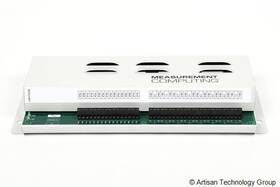
( Brand: Measurement Computing ), ( Manufacturer Part Number: USB-PDISO8 ), ( Part Type: Voltage Digital Device ), ( Country Of Origin: United States )
Review MEASUREMENT COMPUTING High voltage And Relay Digital I/o Usb Device
The **USB-PDISO8 High-Voltage Relay Digital I/O USB Device** is a versatile, high-performance interface module designed to bridge the gap between modern computing systems and demanding industrial, automation, or high-voltage control applications. Engineered for precision and reliability, this compact yet robust device integrates eight isolated digital I/O channels with a high-voltage relay output, making it an ideal solution for applications requiring both signal control and power switching in environments where electrical isolation and safety are paramount. Built around a high-speed USB 2.0 interface, it ensures seamless communication with any Windows, Linux, or macOS-based system, delivering real-time data acquisition and control with minimal latency. The device s isolated digital inputs, featuring robust optocoupler protection, can safely interface with a wide range of voltage levels from low-signal sensors (3.3V or 5V logic) to high-voltage industrial signals (up to 24V DC or 120V AC RMS) while its single-channel high-voltage relay output, rated for up to **250V AC/DC at 10A**, enables direct control of high-power loads such as solenoids, motors, or heating elements without compromising system integrity. Each relay channel is fully isolated, ensuring protection against voltage spikes, ground loops, and electromagnetic interference, while the digital inputs are configurable as either inputs or outputs via software, offering unparalleled flexibility for custom automation setups. The device s firmware-driven configuration allows users to define input/output modes, debounce settings, and edge-triggering parameters, enabling precise timing control for applications like machine sequencing, safety interlocks, or experimental setups. Compact yet rugged, the USB-PDISO8 is housed in a durable metal or plastic enclosure, depending on the variant, and features mounting holes for easy integration into panels or racks, making it suitable for both benchtop and embedded systems. Whether used in research laboratories, industrial automation, or custom control systems, this device combines the convenience of USB connectivity with the robustness of high-voltage switching, providing a seamless bridge between software-driven logic and real-world electrical control.
The **USB-PDISO8** is a high-voltage relay and digital I/O device that supports USB Power Delivery (PD) and can control up to eight isolated channels via USB. Below is a detailed analysis of its pros and cons, followed by a conclusion and recommendation.
---
### **Pros of the USB-PDISO8**
1. **High-Voltage Relay Control**
The device supports high-voltage relays (up to 250V AC/DC), making it suitable for industrial, automation, and HVAC applications where switching high-power loads is required. This eliminates the need for separate relay drivers or external control circuits.
2. **USB Power Delivery (PD) Support**
The inclusion of USB-PD allows the device to draw power from a USB port (up to 100W), reducing the need for additional power supplies. This is convenient for portable or field-deployed systems where power sources are limited.
3. **Digital I/O Expansion**
In addition to relays, the device provides digital I/O channels (input/output) that can be used for sensing, signaling, or additional control functions. This versatility allows for integration into larger systems without requiring multiple devices.
4. **Isolation and Safety**
The device features galvanic isolation between the USB interface and the relay/I/O channels, which improves safety by preventing ground loops and protecting sensitive electronics from voltage spikes or noise.
5. **Software and API Support**
The USB-PDISO8 is likely to come with software drivers, SDKs, or APIs for easy integration with programming languages like Python, C , or LabVIEW. This simplifies development and reduces the learning curve for users familiar with USB-based devices.
6. **Compact and Plug-and-Play Design**
As a USB device, it is compact and can be easily plugged into a computer or embedded system without requiring additional hardware like Arduino or Raspberry Pi shields. This makes it ideal for prototyping or small-scale applications.
7. **Remote Control Capability**
Since it communicates over USB, it can be controlled remotely via software, making it useful for automation tasks where manual intervention is impractical.
8. **Compatibility with Modern Systems**
USB-PD is a relatively new but rapidly adopted standard, so this device is well-suited for modern systems that leverage USB power and data transfer. It may also support future USB-PD enhancements.
---
### **Cons of the USB-PDISO8**
1. **Limited Current Handling**
While the device supports high-voltage relays, the actual current rating of the relays may be relatively low (e.g., 10A or less per channel, depending on the model). For high-current applications (e.g., motor control or heavy-duty switching), external relays or contactors may still be required.
2. **Dependence on USB Power**
The device relies on USB-PD for power, which means it cannot operate independently if the USB port is disconnected. This could be a limitation in applications where power must be maintained during USB disconnection (e.g., uninterrupted control of critical loads).
3. **Potential Latency in USB Communication**
USB communication, especially in high-speed or real-time applications, may introduce slight latency. While this is unlikely to be an issue for most digital I/O or relay control tasks, it could be a concern for applications requiring precise timing (e.g., high-speed switching or synchronization with other devices).
4. **Software Dependency**
The functionality of the device is heavily reliant on the provided software or SDK. If the software is not well-documented or lacks support for a specific programming language, integration could be challenging. Users may need to write custom drivers or use third-party tools.
5. **Limited Physical Connectivity Options**
The device likely uses standard USB connectors, which may not be ideal for rugged or industrial environments where robust, waterproof, or high-durability connectors are required. Additional adapters or enclosures may be needed for harsh conditions.
6. **Cost Relative to Alternatives**
While the USB-PDISO8 offers a compact and integrated solution, it may be more expensive than standalone relay modules or microcontroller-based solutions (e.g., Arduino with external relays). For simple applications, a DIY approach might be more cost-effective.
7. **Potential for USB Port Overload**
If the USB port supplying power to the device is also used for other high-power peripherals (e.g., external hard drives or hubs), it could lead to power limitations or instability. Users must ensure their USB port can handle the combined load.
8. **Limited Scalability**
With only eight relay/I/O channels, the device may not be sufficient for large-scale automation projects. For applications requiring more channels, multiple units would need to be used, increasing complexity and cost.
---
### **Conclusion**
The **USB-PDISO8** is a versatile and convenient device for applications requiring high-voltage relay control and digital I/O expansion over USB. Its support for USB-PD reduces the need for external power supplies, and its isolation features enhance safety. The device is particularly well-suited for prototyping, small-scale automation, or applications where USB connectivity is already present (e.g., embedded systems or lab setups).
However, its limitations such as reliance on USB power, potential current restrictions, and software dependency may make it less ideal for high-current, high-reliability, or large-scale industrial applications. Users should carefully evaluate their specific requirements, including voltage/current needs, power availability, and integration complexity, before deciding whether this device is the right fit.
---
### **Recommendation**
- **Buy the USB-PDISO8 if:**- You need a compact, USB-controlled high-voltage relay and digital I/O solution for prototyping, lab work, or small-scale automation.
- Your application can leverage USB-PD for power, reducing the need for additional power supplies.
- You prioritize ease of use and integration with existing USB-based systems (e.g., computers, Raspberry Pi, or other microcontrollers with USB interfaces).
- The current and voltage requirements of your relays are within the device s specifications (e.g., 250V AC/DC, 10A or less per channel).
- **Consider alternatives if:**- You require high-current switching (e.g., motors, heavy loads) and need external relays or contactors.
- Your application demands uninterrupted power or operation independent of USB connectivity.
- You need a large number of relay/I/O channels and scalability is a priority.
- You are working in a rugged or industrial environment where robust connectivity options (e.g., Ethernet, RS-485) or high-durability enclosures are essential.
- You prefer a more cost-effective or open-source solution (e.g., Arduino with external relays or a PLC).
For most hobbyists, students, or engineers working on USB-based control projects, the **USB-PDISO8** is a strong choice due to its convenience and functionality. For industrial or high-power applications, a more specialized relay module or PLC may be more appropriate.
Details:
Are not included with this equipment unless pictured and/or listed in the above. It does not include any cables or external power supplies. Measurement Computing USB-PDISO8 High- voltage and Relay Digital I/O USB Device:: This is also known as the National instruments Device. Fast and hassle-free.
This is just the circuit board.
part #: usb-pdiso8 price
- $295.00
specifications sensoindustria:
- brand: Measurement Computing
- mpn: Usb-pdiso8
- part type: Voltage Digital Device
- country of origin: United States
general sensoindustria:
- PLCs HMIs > PLC Peripheral Modules > PLC Input Output Modules
- condition: Used
offer sensoindustria:
- sold: 0
- quantity: 1
- options: Ship-to-home
- availability: In Stock
- started: May 12, 2026
shipping sensoindustria:
- class: Standard, One-day, Economy
- type: Calculated
- cost: $25.01
- carrier: FedEx
- service: FedEx Ground / FedEx Home Delivery, FedEx Standard Overnight, FedEx Ground Economy
- transit: 3-7 Days
payments sensoindustria:
- wallet: Google-pay
- other
- credit card: Diners-club
returns sensoindustria:
- time: 30 Days
- paid by: Buyer
- method: Money back
- policy: Returns Accepted
seller sensoindustria:
- # reviews: 17853
- rating: 99.9%
- city: Champaign, Illinois
Measurement Computing USB-PDISO8 Is Similar To:
- 1362007 Measurement Computing New In (43.9% similar) ...(July 17th, 2017)
- Cio-serb48 Measurement Computing New Nib Relay Board Pin Connector (48.6% similar) As is shown in the pictures. Measurement Computing CIO-SERB48 relay board. New never opened...(June 1st, 2018)
- Usb-dio96h-50 Measurement Computing New (39.3% similar) Please with any questions. Its brand new and never been used...(September 23rd, 2018)
- Usb-erb24 Measurement Computing Relay Board (47.9% similar) Pre-owned Measurement Computing usb-ER 24 channel relay board...(November 10th, 2018)
- Usb-ssr24 Measurement Computing Solid State Relays Included (54% similar) Up for sale:measurement Computing USB-SSR24, 24-CHANNEL relay interface device excellent working condition. 92 total IDC5 it has been hardly used. 92 now this can be yours for only ODC5 price as new: USB-SSR24 comes with two 2 input modules 70-IDC5 and fifteen 15 output 70-ODC5. X free shipping...(June 2nd, 2018)
- Usb-temp Measurement Computing Temperature Module Supports Sensor (40.6% similar) The device supports Thermopylae, ETD, thermostat, and semiconductor sensors. This device provides analog input along with digital and counter functions, cold junction compensation cc. Analog sample RATESAMPLING8 DIFF24-BIT2S by sensor TYPE500 v ch- voltage digital I TIMERSENCODER81 , android ...(April 23rd, 2018)
- Ge Fanuc Mpm123 Alstom Measurement And Protection Module Rx3i Alspa Mpm 123 (26.1% similar) Part #: ge fang MPM123 for sale...(August 16th, 2024)
- Keyence Nr-ha08p 14-bit High Speed Analog Data Measurement Push Type Terminal (27.1% similar) However, the shipping charge is not included in accepted offer price unless item listing states free shipping. Customer shall pay all repair costs for any loss of, or damage to, the equipment. Used - good overall cosmetics no physical damage. The photo accompanying the listing is/are of actual item ...(February 27th, 2025)
- Keyence Nr-th08 Hi-accuracy Temperature voltage Measurement Unit (22.5% similar) The shipping charge listed applies to USA addresses only. Local pick-up available at no cost, call in advance to schedule a pickup. Keynes NR-TH08 hi-accuracy temperature/ voltage Measurement unit,: : : this voltage /temp module is in working condition. Customer shall pay all repair costs for any ...(April 3rd, 2025)
- National Instruments Ni-9224 High Precision Measurement Module Test Completed (25.8% similar) New product comes with a one-year warranty. Please feel free to purchase. For ni products. Then its 100% shipped from inventory in the USA. Operating various types of industrial products, mechanical modules...(May 9th, 2026)
