TELEMECANIQUE TSXDST817 Schneider Electric
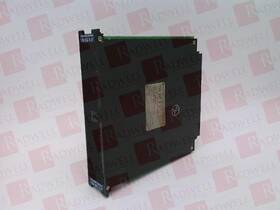
( Brand: Telemecanique ), ( Manufacturer Part Number: TSXDST817 )
Review TELEMECANIQUE Schneider Electric Used
The **Schneider Electric TeSys TSTD817** is a robust, high-performance motor starter designed for demanding industrial applications where reliability, efficiency, and ease of integration are paramount. Part of Schneider Electric s TeSys D series, this thermal overload motor starter combines advanced thermal protection with a compact, modular design to deliver optimal performance in environments ranging from manufacturing plants to energy-intensive facilities. Engineered with a **17-ampere (A) current rating**, the TSTD817 is ideal for controlling three-phase AC motors up to approximately 2.2 kW (3 HP) at 400V, making it a versatile solution for small to medium-sized machinery, pumps, compressors, and conveyor systems. Its **thermal overload relay (TOR)** incorporates a bimetallic element that provides precise protection against motor overloads, short circuits, and phase failures, ensuring extended equipment lifespan by preventing damage from excessive current or prolonged overheating.
The starter s **compact and space-saving design** allows for easy installation in tight panel spaces, while its **modular construction** enables seamless integration with other TeSys components, such as contactors, auxiliary relays, and motor protection devices, streamlining wiring and reducing installation time. Schneider Electric s commitment to quality is evident in the TSTD817 s **durable construction**, featuring a robust metal enclosure with a **degree of protection (IP) rating of IP20**, which ensures protection against solid objects greater than 12.5 mm and limited ingress of dust. For applications requiring higher environmental protection, the starter can be paired with additional enclosures or accessories to achieve higher IP ratings, such as IP40 or IP54, depending on specific operational needs.
One of the standout features of the TSTD817 is its **user-friendly operation and diagnostics**. The thermal overload relay includes **clear visual indicators**, such as a red pilot light for overload conditions and a green light for normal operation, allowing for quick troubleshooting. Additionally, the starter is compatible with **Schneider Electric s EcoStruxure platform**, enabling seamless integration with advanced control systems, SCADA, and IoT solutions for enhanced monitoring, predictive maintenance, and energy efficiency. The **EcoStruxure-compatible design** also supports remote diagnostics, reducing downtime by alerting operators to potential issues before they escalate.
Safety is a core consideration in the design of the TSTD817, which incorporates **multiple protection mechanisms** to safeguard both the motor and personnel. The thermal overload relay provides **adjustable trip settings** to match the specific motor s current requirements, while the **magnetic contactor** ensures rapid and reliable motor starting and stopping. The starter also includes **auxiliary contacts** for additional control functions, such as interlocking with safety devices or integrating with PLCs for automated processes. For applications requiring **soft-start capabilities**, the TSTD817 can be paired with Schneider Electric s TeSys soft-start modules, reducing mechanical stress on motors and extending their operational life.
From a maintenance perspective, the TSTD817 is designed for **simplicity and accessibility**. The thermal overload relay is easily replaceable, with spare parts readily available, and the starter s modular design allows for quick upgrades or replacements without extensive rewiring. Schneider Electric s **global support network** ensures that technicians have access to training, documentation, and technical assistance, further enhancing reliability in diverse operational environments. Whether deployed in a traditional control panel or as part of a modern, digitalized automation system, the TeSys TSTD817 delivers a balance of **performance, safety, and efficiency**, making it an indispensable component for industries prioritizing operational excellence.
### **Pros and Cons of Buying Schneider Electric Telemecanique TSX-DST817 PLC**
The **Schneider Electric Telemecanique TSX-DST817** is a compact, modular programmable logic controller (PLC) designed for industrial automation applications. Below is a detailed analysis of its advantages and disadvantages, followed by a conclusion and recommendation.
---
### **Pros of the TSX-DST817**
1. **Compact and Modular Design**
The TSX-DST817 is part of Schneider Electric s **Compact Series**, offering a space-efficient solution for applications where floor space is limited. Its modular design allows for easy expansion by adding input/output (I/O) modules, memory extensions, or communication modules as needed.
2. **High Performance and Reliability**
The TSX-DST817 is built on Schneider Electric s robust platform, known for industrial-grade reliability. It supports high-speed processing with scan times as low as **0.1 ms**, making it suitable for applications requiring real-time control, such as motion control, process automation, or machine monitoring.
3. **Rich Communication Capabilities**
The PLC supports multiple communication protocols, including:- **Modbus RTU/TCP** (for easy integration with legacy and modern systems)
- **Ethernet/IP** (for Rockwell Automation compatibility)
- **PROFIBUS DP** (for industrial fieldbus applications)
- **EtherNet/IP, Modbus TCP, and Schneider s EcoStruxure** (for advanced SCADA and MES integration)
This flexibility simplifies integration into existing or new automation networks.
4. **User-Friendly Programming Environment**
Schneider Electric provides **EcoStruxure Machine Expert** (formerly SoMachine) for programming, which offers a **graphical, drag-and-drop interface** that reduces development time. It also supports **IEC 61131-3** standards, making it compatible with widely used programming languages (Ladder Logic, Structured Text, Function Block Diagram, etc.).
5. **Energy Efficiency and Eco-Friendly Features**
Schneider Electric emphasizes sustainability, and the TSX-DST817 incorporates **low-power consumption** and **energy-efficient components**, reducing operational costs over time. Some models also support **remote diagnostics and predictive maintenance**, helping minimize downtime.
6. **Scalability and Future-Proofing**
The modular architecture allows users to start with a basic configuration and **upgrade I/O, memory, or communication modules** as requirements evolve. Schneider Electric continues to support the TSX series with firmware updates and new software tools, ensuring long-term compatibility.
7. **Strong Industry Support and Documentation**
Schneider Electric provides **comprehensive technical documentation, training resources, and customer support**. The company has a global presence, making parts and service readily available. Additionally, Schneider s **EcoStruxure platform** integrates with other automation solutions, offering a unified ecosystem.
8. **Cost-Effective for Mid-Range Applications**
While not the most budget-friendly PLC on the market, the TSX-DST817 offers a **good balance between price and performance** for applications requiring **modularity, communication flexibility, and reliability**. It is often more cost-effective than high-end PLCs like Siemens S7-1200 or Allen-Bradley CompactLogix for similar performance levels.
9. **Built-in Safety and Security Features**
The TSX-DST817 supports **Schneider s Safety Integrated** technology, allowing for **safety functions (e.g., emergency stops, safety doors, and machine safeguarding)** to be integrated directly into the PLC. It also includes **IP20/IP65 protection ratings** (depending on the enclosure), ensuring durability in harsh industrial environments.
10. **Compatibility with Schneider s Automation Suite**
The PLC integrates seamlessly with **EcoStruxure**, Schneider s automation platform, which includes **SCADA, MES, and IoT tools**. This makes it easier to transition from machine-level control to enterprise-level monitoring and analytics.
---
### **Cons of the TSX-DST817**
1. **Higher Initial Cost Compared to Basic PLCs**
While the TSX-DST817 offers advanced features, it is **more expensive than entry-level PLCs** (e.g., Siemens LOGO!, Allen-Bradley Micro800, or Omron CP1E). For very simple applications, a cheaper PLC may suffice.
2. **Limited Analog I/O in Basic Configurations**
The base model of the TSX-DST817 has **few analog inputs/outputs**, and additional modules must be purchased for advanced analog control. This can increase costs if high-resolution analog processing is required.
3. **Learning Curve for New Users**
While EcoStruxure Machine Expert is user-friendly, **programming in IEC 61131-3 or using advanced features** (e.g., motion control, advanced communication) may require training. Engineers familiar with **Allen-Bradley or Siemens PLCs** may need time to adapt.
4. **Dependence on Schneider Electric s Ecosystem**
If a system is already built around **Allen-Bradley, Siemens, or other PLC brands**, integrating the TSX-DST817 may require additional **gateways, protocol converters, or middleware**, adding complexity and cost.
5. **Firmware and Software Updates May Require Licensing**
Some advanced features (e.g., **predictive maintenance tools, cloud connectivity**) may require **additional software licenses or subscriptions**, increasing long-term costs.
6. **Physical Size Still Requires Space**
Although compact, the TSX-DST817 is **not as small as micro-PLCs** (e.g., Siemens SIMATIC S7-1200 Compact or Allen-Bradley Micro850). For **extremely space-constrained applications**, a smaller PLC might be preferable.
7. **Limited Global Availability of Spare Parts**
While Schneider Electric has a strong global presence, **spare parts availability can vary by region**, potentially leading to delays in maintenance or repairs in some areas.
8. **No Built-in HMI (Human-Machine Interface)**
Unlike some PLCs (e.g., Siemens S7-1200 with built-in touchscreens), the TSX-DST817 **requires external HMIs** (e.g., Schneider Electric s **TM3000 series**) for operator interfaces, adding to the overall system cost.
9. **Motion Control Requires Additional Modules**
For **advanced motion control applications**, the TSX-DST817 requires **dedicated motion control modules**, which can be an extra expense compared to PLCs with built-in motion capabilities (e.g., Allen-Bradley CompactLogix with built-in servo support).
10. **Documentation and Troubleshooting Can Be Overwhelming**
While Schneider Electric provides extensive documentation, **debugging complex programs or communication issues** may require deep technical knowledge, especially for users new to the platform.
---
### **Conclusion**
The **Schneider Electric Telemecanique TSX-DST817** is a **high-performance, modular PLC** well-suited for **mid-to-large industrial automation applications** where **scalability, communication flexibility, and reliability** are critical. Its **compact design, support for multiple protocols, and integration with EcoStruxure** make it a strong choice for projects requiring **future-proofing and advanced features**.
However, it is **not the best choice** for:- **Budget-conscious, simple control applications** (where a basic PLC would suffice).
- **Systems already locked into a different PLC ecosystem** (e.g., Allen-Bradley or Siemens) without a clear migration path.
- **Applications requiring extremely high analog resolution or built-in motion control** without additional modules.
If **cost efficiency, ease of use, or compatibility with a different automation platform** is a priority, alternatives like **Allen-Bradley CompactLogix, Siemens S7-1200, or Omron CP3E** may be worth considering.
---
### **Final Recommendation**
**Buy the TSX-DST817 if:**You need a **modular, scalable PLC** for **mid-to-large industrial applications**.
Your system requires **multiple communication protocols** (EtherNet/IP, Modbus, PROFIBUS).
You are already using **Schneider Electric s EcoStruxure platform** or plan to integrate with it.
**Reliability, energy efficiency, and long-term support** are key considerations.
You anticipate **future expansion** in I/O, memory, or communication capabilities.
**Avoid the TSX-DST817 if:**Your budget is **extremely tight**, and a simpler PLC (e.g., Siemens LOGO!, Omron CP1E) will work.
Your system is **locked into a different PLC brand** (e.g., Allen-Bradley, Siemens) without a clear transition plan.
You require **high analog resolution or advanced motion control** without additional modules.
You prefer **built-in HMIs or smaller form factors** (e.g., micro-PLCs).
For most **industrial automation projects requiring flexibility, performance, and Schneider Electric s ecosystem**, the **TSX-DST817 is a solid, well-supported choice**. However, **careful cost-benefit analysis** against alternatives is recommended before purchase.
Details:
Part Number TSXDST817. Sells new and surplus product develops channels to purchase such. SCHNEIDER ELECTRIC TSXDST817 / USED DISCONTINUED BY MANUFACTURER, OUTPUT MODULE, 8 POINT, 24/48 VDC, 0.5 AMP. Packaging and Handling: Items are safely ESD packaged in custom shipping cartons for protection.
Call to use a shipping service other than the ones listed. All products are guaranteed to be working but may show signs of use if purchasing a used product.
part #: tsxdst817 prices
- $242.90-$319.99
specifications sensoindustria:
- brand: Telemecanique
- mpn: Tsxdst817
offer sensoindustria:
- options: Ship-to-home
- started: March 18, 2026
- sold: 0
- availability: In Stock
- quantity: 1
shipping sensoindustria:
- type: Fixed
- class: Standard
- cost: $12.90
- service: Standard
- transit: 24-37 Days
payments sensoindustria:
- credit card: Visa
- other
- wallet: Google-pay
returns sensoindustria:
- policy: Returns Accepted
- method: Money back
- time: 30 Days
- paid by: Buyer
seller sensoindustria:
- city: 1 Millennium Dr, Willingboro, NJ 08046
- # reviews: 195064
- rating: 99.6%
general sensoindustria:
- condition: Used
- PLCs HMIs > PLC Peripheral Modules > PLC Input Output Modules
Telemecanique TSXDST817 Is Similar To:
- Atsu01n206lt Schneider Electric Telemecanique Contactor Pole Used (47.4% similar) Title: Telemecanique schneider electric contractor, LC1F115, 200A, 3 pole, used: our internal stock m8 dale you are about to purchase the following item: 1 - used catalog LC1F115 200A pole made in Germany this unit was taken directly from working service. Please do the same for us. We note all ...(October 24th, 2018)
- Gv2me16 Schneider Electric Telemecanique Industrial (50% similar) New in box location A6...(July 13th, 2017)
- Lc1d150g7 Telemecanique 21 Stock Schneider (54.9% similar) Note: unless listing is specified as a lot, only 1 piece being sold. Contractor 600VAC 150AMP IRC options...(July 27th, 2017)
- Lrd21 Telemecanique 63 Nstock Schneider (59.1% similar) Note: unless listing is specified as a lot, only 1 piece being sold. Bimetallic overload relay 600V 18A IRC...(July 25th, 2017)
- Rhk416kf Telemecanique Schneider Latch Relay (60.2% similar) Schneider Telemecanique RHK416KF latch relay 120V 60HZ - new in box. WECANSELL50 stores...(May 3rd, 2017)
- Sr3 Xt141fu Telemecanique Schneider Zelio Controller (55.4% similar) Programming software free download here. Zelig Io controller. En download range 542-ZELIO soft cable not included. Schneider-electric...(September 30th, 2018)
- Jo2323 Telemecanique Photo Electric Sensor Xul 034419 X 1 (49.1% similar) Fast free same day shipping...(September 24th, 2016)
- Xus-lng5c0600r Xus-lng5e0600t Telemecanique Schneider Electric Xus-lz450 Nos (54.4% similar) The item available here is a set of new old stock Telemecanique schneider electric light curtains that are in excellent condition. The set consists of the curtains, manual, CD, arc suppressors test rod and mounting brackets...(July 16th, 2016)
- Xuc-f08513 Telemecanique Photoelectric Used Sensor (56.6% similar) Used and tested and in good working condition Telemecanique photo sensor relay part XC F08513 110VAC operating power...(September 24th, 2015)
- Tsxbly01 Schneider Modicon Terminal Block Tsx Telemecanique (24.1% similar) This item is used. Marketing, listing apps, application. Schneider mod icon TSXBLY01 terminal block tsx BLY01 Telemecanique Sr manufacturer: mod icon model: type: used, in working condition...(August 19th, 2018)
- Tsxdey16d2 Scneider New Nib Tsx Micro Telemecanique Plc Module Dey Schneider (40% similar) Make sure to include a way contact you for immediate needs. So make sure an item will fit your application needs before purchase. Larger items ship ups only. Provide item number Andes with question...(July 14th, 2018)
