OMRON TPM1A-40CDR-A Plc Modules
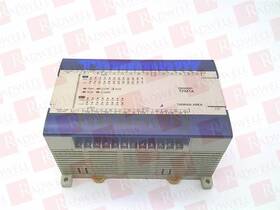
( Brand: Omron ), ( Manufacturer Part Number: TPM1A-40CDR-A ), ( Part Type: Module )
Review OMRON Tpm1a40cdra Used
The **Omron TPM1A-40CDR-A** is a high-performance, compact, and versatile **time programmable module** designed to enhance automation systems with precise timing, sequencing, and control capabilities. Part of Omron s advanced TPM series, this model integrates seamlessly into industrial and commercial applications where reliable, programmable timing is essential. With a **40-step capacity**, the TPM1A-40CDR-A allows users to configure complex sequences, delays, and interlocking operations with ease, making it ideal for machinery control, conveyor systems, assembly lines, and process automation. Its **compact footprint** and **modular design** ensure efficient installation in tight spaces, while the **CDR (Compact Direct Replacement)** form factor enables straightforward integration with existing Omron PLCs and control systems, reducing downtime and simplifying retrofitting.
At the heart of the TPM1A-40CDR-A is its **high-speed processing and flexible programming interface**, which supports both **step-by-step sequencing** and **time-based triggering**, allowing for precise synchronization of multiple operations. The module features **40 programmable steps**, each capable of handling complex logic, including start/stop conditions, time delays, and external signal responses, all programmable via Omron s intuitive **CX-Programmer** software or **CX-One** platform. This flexibility ensures that users can tailor the module to specific workflows, whether for repetitive production cycles, safety interlocks, or dynamic process adjustments. The **high-speed operation** with response times measured in microseconds ensures minimal latency, making it suitable for high-speed applications where timing accuracy is critical.
The TPM1A-40CDR-A is built with **industrial durability** in mind, featuring a robust **compact metal housing** that protects against environmental factors such as dust, moisture, and temperature fluctuations (operating within a range of **0 C to 55 C**). Its **low power consumption** further enhances efficiency, making it energy-conscious for long-term operation. The module also supports **multiple input/output configurations**, including **relay outputs, transistor outputs, and digital inputs**, allowing for direct interfacing with sensors, actuators, and other control devices. This versatility ensures compatibility with a wide range of automation setups, from small-scale machinery to larger industrial systems.
One of the standout features of the TPM1A-40CDR-A is its **easy integration with Omron s ecosystem**, including **PLCs, HMIs, and other programmable controllers**. The module communicates seamlessly via **Omron s proprietary network protocols**, such as **CC-Link** and **Ethernet/IP**, enabling real-time data exchange and centralized control. Additionally, its **compact size** measuring just **44.5 mm (W) x 88 mm (H) x 100 mm (D)** makes it an excellent choice for space-constrained environments without compromising performance. The **CDR (Compact Direct Replacement)** designation ensures backward compatibility with older Omron systems, reducing the need for extensive reconfiguration during upgrades.
Beyond its technical specifications, the TPM1A-40CDR-A is designed with **user-friendly programming tools** that streamline setup and troubleshooting. Omron s **CX-Programmer** software provides a graphical interface for visualizing and editing step sequences, while **CX-One** offers a more advanced, web-based platform for remote monitoring and control. These tools, combined with the module s **self-diagnostic capabilities**, help operators quickly identify and resolve issues, minimizing downtime and improving overall system reliability. Whether deployed in a manufacturing plant, a packaging facility, or a material handling system, the TPM1A-40CDR-A delivers **precision, flexibility, and efficiency**, making it a cornerstone for modern automation solutions.
The **Omron TPM1A-40CDR-A** is a compact, analog pressure transmitter designed for measuring gauge, differential, or absolute pressure in various industrial applications. Below is a detailed analysis of its pros and cons, followed by a conclusion and recommendation.
---
### **Pros of the Omron TPM1A-40CDR-A**
1. **Compact and Rugged Design**
The transmitter is small and lightweight, making it suitable for installations where space is limited. Its robust construction ensures durability in harsh environments, including exposure to vibration, shock, and temperature fluctuations.
2. **Wide Range of Measurement**
It supports multiple pressure types (gauge, differential, absolute) and can measure a broad range of pressures (from vacuum to high-pressure applications), depending on the selected model variant. This versatility makes it adaptable to various industrial processes.
3. **High Accuracy and Reliability**
Omron is known for precision engineering, and this transmitter delivers consistent accuracy within its specified range. It is designed to maintain performance over long operational periods, reducing the need for frequent recalibration.
4. **Easy Installation and Calibration**
The device features a simple mounting design (e.g., flange or process connection) and often includes built-in calibration tools or software support for straightforward setup. This minimizes downtime during installation and maintenance.
5. **Compatibility with Industrial Standards**
It adheres to industry standards such as **IEC/EN 60534-2** for pressure transmitters, ensuring compatibility with most control systems and SCADA platforms. It also supports **HART communication**, enabling advanced diagnostics and integration with smart systems.
6. **Low Maintenance Requirements**
With no moving parts (in many configurations) and a sealed design, the transmitter reduces the risk of wear and tear. This translates to lower maintenance costs and fewer failures over time.
7. **Wide Temperature and Pressure Ratings**
The model can operate in extreme temperatures (e.g., -40 C to 125 C) and withstand high-pressure environments, making it suitable for applications in oil and gas, chemical processing, and HVAC systems.
8. **Explosion-Proof and Intrinsically Safe Options**
Depending on the variant, the TPM1A series can be certified for use in **explosion-proof (ATEX, IECEx) or intrinsically safe (IS) environments**, expanding its applicability in hazardous areas.
9. **Cost-Effective for Short-Term Needs**
For applications requiring a reliable but not ultra-high-end transmitter, the TPM1A offers a balance between performance and cost, making it a practical choice for budget-conscious projects.
10. **Omron s Reputation for Quality**
Omron is a trusted brand in industrial automation, with a strong track record for reliability and customer support. This reduces the risk of counterfeit or low-quality alternatives.
---
### **Cons of the Omron TPM1A-40CDR-A**
1. **Limited Advanced Features**
Compared to more modern or high-end transmitters, the TPM1A lacks advanced functionalities such as **wireless communication (e.g., Bluetooth, LoRa), built-in AI diagnostics, or digital filtering for noise reduction**. This may limit its use in cutting-edge automation systems.
2. **Analog Output Limitations**
While it provides a **4-20 mA analog output**, it does not natively support digital outputs (e.g., Profibus, Foundation Fieldbus, or Modbus RTU) unless paired with additional converters or gateways. This can complicate integration into modern SCADA or PLC systems.
3. **Potential for Obsolescence**
Omron occasionally phases out older models to focus on newer, more efficient designs. The TPM1A, being a mid-range product, may eventually be discontinued, leading to challenges in sourcing spare parts or replacements in the long term.
4. **Calibration Dependency on External Tools**
While calibration is straightforward, it may require specialized tools or software, which could add to the initial setup cost if not already available.
5. **Higher Cost Than Basic Models**
While not premium-priced, the TPM1A is more expensive than very basic pressure transmitters (e.g., some generic or low-end brands). For simple applications, this may not justify the added cost.
6. **Limited Customization**
The transmitter s configuration options are somewhat restricted compared to higher-end models. Users may need to compromise on features like **adjustable zero/span settings** or **multiple communication protocols**.
7. **Potential for Signal Noise in High-Vibration Environments**
Although rugged, some users report that in extremely high-vibration settings, the analog signal may exhibit minor noise, requiring additional filtering or shielding.
8. **No Built-In Self-Diagnostics for Advanced Faults**
While HART communication allows for basic diagnostics, the transmitter does not offer as sophisticated self-monitoring as newer models with embedded sensors or predictive maintenance features.
9. **Installation Complexity in Some Cases**
Depending on the process connection (e.g., threaded vs. flange), installation may require additional fittings or seals, adding time and potential points of failure.
10. **Limited Global Availability of Spare Parts**
While Omron has a global presence, some regions may have limited access to authorized service centers or spare parts, potentially delaying repairs.
---
### **Conclusion**
The **Omron TPM1A-40CDR-A** is a **reliable, compact, and versatile pressure transmitter** well-suited for industrial applications requiring **accuracy, durability, and ease of installation**. Its strengths lie in its **ruggedness, wide measurement range, and compatibility with standard industrial systems**. However, it may fall short for users needing **advanced digital communication, wireless capabilities, or cutting-edge diagnostics**.
The transmitter is an **excellent choice** for:- Applications where **space is limited** and **high reliability** is critical (e.g., HVAC, water treatment, or general process control).
- Environments with **harsh conditions** (temperature, vibration, or pressure fluctuations).
- Projects where **cost-effectiveness and simplicity** are prioritized over advanced features.
It may **not be ideal** for:- **Highly automated or smart factory environments** requiring digital communication protocols.
- **Applications needing predictive maintenance or AI-driven diagnostics**.
- **Long-term projects** where obsolescence risk is a concern, as newer models may offer better long-term support.
---
### **Recommendation**
**Buy the Omron TPM1A-40CDR-A if:**- You need a **proven, analog-based pressure transmitter** for a **mid-range industrial application** with moderate space constraints.
- Your system **primarily uses 4-20 mA analog signals** and does not require advanced digital communication.
- You operate in an **environment with high vibration, temperature extremes, or corrosive conditions** where ruggedness is essential.
- Budget constraints make higher-end transmitters impractical, but you still require **Omron s reliability**.
**Consider an Alternative if:**- You require **wireless or digital communication** (e.g., Profibus, Modbus, or wireless HART). In this case, models like the **Omron EJA series** or **Siemens SITRANS P** may be better suited.
- Your application demands **predictive maintenance or AI-driven diagnostics**, which newer transmitters (e.g., **Endress Hauser PMC3000**) offer.
- You anticipate **long-term use** and want to avoid potential obsolescence risks. In this scenario, investing in a **more modern or modular transmitter** could be justified.
- Your system integrates with **cloud-based or IoT platforms**, where analog-only transmitters may not provide sufficient data granularity.
**Final Verdict:**The **Omron TPM1A-40CDR-A remains a solid, cost-effective choice** for traditional industrial pressure measurement needs. However, for **next-generation automation or highly specialized applications**, evaluating newer or more feature-rich alternatives is advisable. Always verify compatibility with your specific control system and future scalability requirements before purchasing.
Details:
Call to use a shipping service other than the ones listed. All products are guaranteed to be working but may show signs of use if purchasing a used product. Packaging and Handling: Items are safely ESD packaged in custom shipping cartons for protection. Sells new and surplus product develops channels to purchase such.
part #: tpm1a40cdr prices
- $129.00-$559.87
specifications sensoindustria:
- brand: Omron
- mpn: Tpm1a-40cdr-a
- part type: Module
seller sensoindustria:
- city: 1 Millennium Dr, Willingboro, NJ 08046
- # reviews: 197550
- rating: 99.6%
general sensoindustria:
- condition: Used
- PLCs HMIs > PLC Peripheral Modules > PLC Input Output Modules
payments sensoindustria:
- wallet: Apple-pay
- credit card: Diners-club
- other
shipping sensoindustria:
- cost: $12.90
- type: Fixed
- transit: 29-34 Days
- class: Standard
- service: Standard
offer sensoindustria:
- availability: In Stock
- sold: 0
- options: Ship-to-home
- started: April 2, 2026
- quantity: 1
returns sensoindustria:
- time: 30 Days
- method: Money back
- policy: Returns Accepted
- paid by: Buyer
Omron TPM1A-40CDR Is Similar To:
- C200h-0c222 Omron Output Unit Module Used (38% similar) Used good condition. Some signs of use dust, light scratches. From working environment. Omron C200H-OC222 output unit module C200H-0C222...(March 4th, 2018)
- C200h-0c224 Omron N1-1-1 1 Used (40.6% similar) This item is to be installed and maintained by qualified individuals. E-mail any questions. If are looking to combine shipping, please send a note through. Items include only what you see in the photo, if need an accessory that is not pictured ask. 1 used Omron C200H-0C224 C200H-OC224 output unit. ...(August 26th, 2017)
- C200h-id215 Omron Good Used And (34.8% similar) Model C200H-ID215. For your consideration is a good used and working Omron input module...(December 27th, 2017)
- C200h-im211 Omron Good Used And (34.8% similar) For your consideration is a good used and working Omron input module. Model C200H-IM212...(December 27th, 2017)
- C200h-lk201 Omron Good Used And (34.8% similar) For your consideration is a good used and working Omron input module. Model C200H-LK201...(December 27th, 2017)
- C200h-od411 Omron Good Used And (34.8% similar) For your consideration is a good used and working Omron input module. Model C200H-OD411...(October 26th, 2017)
- C200hg-cpu43-e Omron Programmable Controller Unit Used Free Shipping (26.4% similar) I have a nice used Omron C200HG-CPU43-E programmable controller CPU43 unit - for sale. The shipping on this item reflects standard ground for us. Greenback stock G31025. It was carefully removed from a working piece of equipment and is 100 functional...(August 8th, 2018)
- C200hw-bc081 Omron Cpu Backplane Base Unit Used Free Shipping (32.3% similar) I have a nice used Omron C200HW-BC081 CPU back plane 8-SLOT base unit - for sale. Greenback stock G31026. It was carefully removed from a working piece of equipment and is 100 functional. The shipping on this item reflects standard ground for us...(August 8th, 2018)
- C250hl-od213-mk Omron Output Module Used (35.9% similar) Selling 1 board. Its still in original rack...(June 13th, 2019)
- Cpu45-v1 Omron Used Cqm1 New (30.3% similar) 1 och, 2 - OC221, TC001 cards. Look at photos for all details used Omron CQM1 with PA206 power supply. One of the Omron power supply doesn't lock completely, button does used CPM1-CIF01...(November 20th, 2017)
- F3sn-a0907p25-d Omron Type Safety Light Curtain Receiver Used Shipping (31.5% similar) Greenback stock G31016. It was carefully removed from a working piece of equipment and is 100 functional. The shipping on this item reflects standard ground for us. I have a nice used Omron F3SN-A0907P25-D type 4 safety light curtain receiver - for sale...(August 7th, 2018)
