TURCK TBIP-L4-4FDI-4FDX Devicenet Block Ethernet Ip Module I/o Ethernet/ip
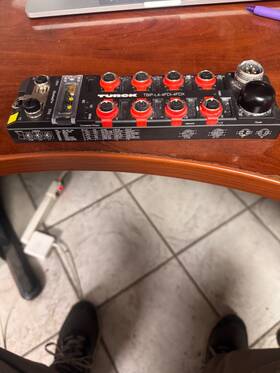
( Brand: Turck ), ( Manufacturer Part Number: TBIP-L4-4FDI-4FDX ), ( Part Type: Block Module ), ( Country Of Origin: Germany )
Review TURCK Devicenet I/o Block Ethernet/ip Module
The **Turck TBIP-L4-4FDI-4FDX** is a high-performance, Ethernet/IP-compatible I/O module designed to deliver seamless integration and robust communication in industrial automation environments. Part of Turck s advanced **TBIP** series, this compact yet powerful device combines four discrete digital inputs (FDI) and four discrete digital outputs (FDX) into a single, modular unit, making it an ideal solution for applications requiring efficient signal processing and reliable data transmission. Engineered with **Ethernet/IP** connectivity, the TBIP-L4-4FDI-4FDX ensures real-time communication with PLCs, HMIs, and other control systems, minimizing latency and maximizing productivity. Its **Industrial Ethernet** interface supports high-speed data transfer, enabling precise synchronization of inputs and outputs while maintaining deterministic performance critical for applications in manufacturing, process control, and automation.
The module s **discrete digital inputs** feature **24V DC operation**, providing robust signal handling with built-in **optical isolation** for enhanced noise immunity and protection against voltage spikes. Each input is equipped with **configurable sinking or sourcing** capabilities, allowing flexibility in interfacing with a variety of sensors, switches, or relays. On the output side, the **four 24V DC sinking relays** deliver reliable actuation with a **contact rating of 2A at 24V DC**, suitable for controlling motors, solenoids, or indicators. The relays are **mechanically and electrically isolated**, ensuring safety and longevity in demanding industrial settings. Additionally, the module supports **wired-OR configuration** for the inputs, enabling fail-safe operation where loss of communication or power can be detected, further enhancing system reliability.
The **TBIP-L4-4FDI-4FDX** is housed in a **compact, rugged metal enclosure** designed to withstand harsh environments, with an **IP67 rating** for protection against dust, water, and contaminants. Its **hot-swappable** design allows for easy installation and replacement without disrupting system operation, reducing downtime and simplifying maintenance. The module s **LED indicators** provide instant visual feedback on power status, communication link integrity, and input/output states, facilitating quick troubleshooting and system monitoring. Compatible with **Turck s TURCKnet/IP protocol** and adhering to **CIP (Common Industrial Protocol)** standards, this module integrates effortlessly with major automation platforms, including Rockwell Automation s **ControlLogix, CompactLogix, and Studio 5000**, as well as Siemens **S7-1200/1500** and other Ethernet/IP-enabled controllers.
Beyond its technical specifications, the **TBIP-L4-4FDI-4FDX** exemplifies Turck s commitment to **modular, scalable automation solutions**. Its **plug-and-play compatibility** with Turck s **TBIP terminal blocks** and **TBIP power supplies** streamlines system design, allowing engineers to build flexible, future-proof architectures. Whether deployed in **discrete manufacturing, packaging, or process automation**, this module delivers **high-speed, low-latency communication**, **enhanced reliability**, and **easy integration**, making it a versatile choice for modern industrial control applications. With its combination of **performance, durability, and ease of use**, the **Turck TBIP-L4-4FDI-4FDX** is a dependable asset for engineers seeking to optimize efficiency and reduce complexity in their automation systems.
The **Turck TBIP-L4-4FDI-4FDX** is a DeviceNet I/O block module that integrates Ethernet/IP communication, offering flexibility for industrial automation applications. Below is a detailed analysis of its pros and cons, followed by a conclusion and recommendation.
---
### **Pros of the Turck TBIP-L4-4FDI-4FDX**
1. **Hybrid Communication Protocol Support**
The module supports both **DeviceNet** (for legacy integration) and **Ethernet/IP** (for modern, high-speed communication). This dual-protocol capability allows seamless migration from older systems to newer, more efficient networks without requiring a complete system overhaul.
2. **High-Speed Data Transfer**
Ethernet/IP provides faster data rates compared to traditional fieldbus protocols like DeviceNet. This reduces latency and improves real-time performance, which is critical for applications requiring rapid response times, such as motion control or process automation.
3. **Scalability and Flexibility**
The module can be easily integrated into larger networks using Ethernet/IP, which supports scalable architectures. It can connect to Allen-Bradley ControlLogix, Rockwell Automation systems, or other Ethernet/IP-compatible PLCs, offering compatibility with a wide range of industrial controllers.
4. **Compact and Modular Design**
The I/O block format allows for easy installation in existing DeviceNet networks while adding Ethernet/IP connectivity. Its compact size saves space in control panels or enclosures, which is beneficial in constrained environments.
5. **Diagnostic and Monitoring Capabilities**
Ethernet/IP provides advanced diagnostic features, such as device health monitoring, error logging, and remote troubleshooting. This enhances maintenance efficiency and reduces downtime by enabling proactive issue detection.
6. **Future-Proofing**
By incorporating Ethernet/IP, the module aligns with modern industrial trends, such as Industry 4.0 and the adoption of digital technologies. This makes it a long-term investment that can adapt to evolving automation requirements.
7. **Turck s Reliability and Support**
Turck is a well-established manufacturer known for robust, high-quality industrial products. The module benefits from Turck s reputation for reliability, extensive documentation, and global support network, which can simplify implementation and troubleshooting.
8. **Compatibility with Turck s ECo System**
The module integrates seamlessly with Turck s **ECo (Ethernet Communication Option)** technology, which simplifies configuration and programming. This reduces development time and complexity, especially when working with Turck s other I/O devices or controllers.
---
### **Cons of the Turck TBIP-L4-4FDI-4FDX**
1. **Dual-Protocol Complexity**
While the dual-protocol support is advantageous, it can introduce complexity in configuration and programming. Engineers may need to be familiar with both DeviceNet and Ethernet/IP protocols, which could require additional training or documentation review.
2. **Cost Considerations**
The module is likely more expensive than traditional DeviceNet-only I/O blocks due to the added Ethernet/IP functionality. For applications where DeviceNet alone suffices, investing in this hybrid module may be unnecessary, increasing overall project costs.
3. **Compatibility Limitations with Non-Ethernet/IP Systems**
If the rest of the automation system does not support Ethernet/IP, the module s advanced features may not be fully utilized. In such cases, the benefits of Ethernet/IP are limited, and the module may function primarily as a DeviceNet device.
4. **Potential Latency in DeviceNet Mode**
While Ethernet/IP offers high-speed communication, DeviceNet is inherently slower. If the module is primarily used in DeviceNet mode for legacy integration, the performance benefits of Ethernet/IP are not realized, which could be a drawback for time-sensitive applications.
5. **Configuration Overhead**
Configuring a hybrid module requires careful setup to ensure seamless communication between the two protocols. Misconfiguration could lead to connectivity issues or data corruption, adding to the implementation burden.
6. **Limited I/O Capacity**
The module features **4 digital inputs (DI)** and **4 digital outputs (DO)**, which may be insufficient for applications requiring a higher number of I/O points. In such cases, multiple modules or a different I/O solution may be needed, increasing complexity and cost.
7. **Dependence on Ethernet/IP Network Infrastructure**
The module requires a stable Ethernet/IP network infrastructure to function optimally. Poor network quality, such as packet loss or high latency, can degrade performance, particularly in distributed systems with long cable runs.
8. **Training and Expertise Requirements**
Effective use of the module s Ethernet/IP capabilities may require personnel with expertise in Ethernet/IP programming and network configuration. Organizations without such expertise may face challenges in deployment or optimization.
---
### **Conclusion**
The **Turck TBIP-L4-4FDI-4FDX** is a versatile and powerful I/O block that bridges legacy DeviceNet systems with modern Ethernet/IP networks. Its dual-protocol support, high-speed communication, and scalability make it an excellent choice for applications requiring migration to Ethernet/IP or integration with existing DeviceNet infrastructure. The module s reliability, diagnostic features, and compatibility with Turck s ecosystem further enhance its appeal for industrial automation projects.
However, the added complexity of dual-protocol management, higher cost, and potential limitations in non-Ethernet/IP environments may not justify its use in all scenarios. It is particularly well-suited for projects where:
- **Legacy DeviceNet systems need to be modernized** without a complete overhaul.
- **High-speed, real-time communication** is required alongside DeviceNet compatibility.
- **Scalability and future-proofing** are priorities.
- **Turck s ecosystem** is already in use, simplifying integration.
For applications where DeviceNet alone is sufficient or where budget constraints are critical, a simpler DeviceNet-only I/O block may be more appropriate.
---
### **Recommendation**
**Purchase the Turck TBIP-L4-4FDI-4FDX if:**1. Your project involves **migrating from DeviceNet to Ethernet/IP** or requires **coexistence of both protocols**.
2. You need **high-speed, real-time I/O communication** with **Allen-Bradley or Rockwell Automation controllers**.
3. Your system is **Turck-based**, and you want to leverage **ECo technology** for simplified configuration.
4. **Future scalability** and **Industry 4.0 readiness** are key considerations for your automation strategy.
5. The **cost is justified** by the long-term benefits of Ethernet/IP integration and reduced maintenance overhead.
**Avoid the Turck TBIP-L4-4FDI-4FDX if:**1. Your system **does not require Ethernet/IP** and DeviceNet alone is sufficient, making a simpler (and cheaper) I/O block more appropriate.
2. Your team lacks **experience with Ethernet/IP programming**, which could complicate implementation.
3. The **I/O capacity is insufficient** for your application, and additional modules would be needed.
4. **Budget constraints** are strict, and the added cost of the hybrid module is not necessary for your specific use case.
In summary, this module is a **strong investment for modernization and high-performance applications**, but its suitability depends on the specific requirements and constraints of your project.
Details:
LOT 4517, USED - TURCK I/O BLOCK DEVICENET ETHERNET/IP, PART NO.
part #: tbipl44fdi4fdx prices
- $599.99-$806.25
specifications sensoindustria:
- brand: Turck
- mpn: Tbip-l4-4fdi-4fdx
- part type: Block Module
- country of origin: Germany
seller sensoindustria:
- rating: 100.0%
- city: Imlay City, Michigan
- # reviews: 908
offer sensoindustria:
- quantity: 1
- options: Ship-to-home
- availability: In Stock
- started: February 25, 2026
- sold: 0
- best offers: True
payments sensoindustria:
- wallet: Apple-pay
- other
- credit card: Diners-club
shipping sensoindustria:
- service: USPS Priority Mail Medium Flat Rate Box
- cost: $21.00
- type: Fixed
- class: Expedited
- transit: 3-7 Days
- carrier: USPS
returns sensoindustria:
- policy: No Returns
general sensoindustria:
- condition: Used
- PLCs HMIs > PLC Peripheral Modules > PLC Input Output Modules
Turck TBIP-L4-4FDI-4FDX Is Similar To:
- 4mb12z-5n3-cs19 Turck Block (24.7% similar) New in box 4MB12Z-5N3-CS19 tur E8028570 junction 4-PORTS multi box euro fast low profile 2 a signal 9 total 19-PIN multi fast connector 11 conductors mates with Cm 19-11...(April 8th, 2018)
- S4t Sbcs Bl20 6827063 Turck Basic Zugfeder Module (32.4% similar) Turck BL20 S4T ABCs basic suggester module...(May 13th, 2015)
- Bic-44-e424 Turck Ethernet Bus Stop (33% similar) 5ASEE this web page for more details. This means that all used or surplus items are sold as-is except for where it is stated explicitly otherwise in the. Packaging fee is as stated above. 45 lbs and oz. Buyer is to pay actual shipping costs based on address. PDF Turck Turck-ethernet-adapters-...(April 8th, 2017)
- Bl20-16di-24vdc-p Turck Digital Module (32% similar) Turck BL20-16DI-24VDC-P digital I o module condition: new stock, in oem packaging. En ESP ol Minos adrenals: alienates Si quire recover SUSE products Nestor neocon Durante horas regulates de teabag, EST le salivary costs nevi. Mantras Que cites no son necessaries, used Purdue uprear Si recook de ...(June 14th, 2018)
- Bl20-2do-r-no Turck Electronic Relay Module No Qty (33.9% similar) Notes:included in this offer is: 1 BL20-2DO-R-NO. Part NUMBER:BL20-2DO-R-NOMANUFACTURER:TURCK: Turck BL20-2DO-R-NO BL20 electronic relay module. Condition: pup used in a plc hardware. This item details you are buying on:one Turck BL20-2DO-R-NO BL20 electronic relay module, fully tested, in excellent...(September 9th, 2018)
- Bl20-e-8do-24vdc-0.5a-p Turck Bl20 Economy Module (32.4% similar) 5A-P BL20 economy module, fully tested, in excellent working and cosmetic condition. Come buy Allen Bradley, Cisco, hp and Siemens parts. The serial number in pictures has been altered for privacy purposes condition: pup used a plc hardware. Part NUMBER:BL20-E-8DO-24VDC-0. 5A-PMANUFACTURER:TURCK: ...(December 6th, 2017)
- Bl20-pf-24vdc-d Turck Power Module (33.3% similar) Turck BL20-PF-24VDC-D power module used...(March 5th, 2019)
- Bl67-b-4m12-p Turck Base Module Used (30.6% similar) Turck BL67-B-1M23 base module 1XM23 used...(October 14th, 2018)
- F0129 Turck Aim Style Devicenet Station New (45.7% similar) Buyer winner accepts all risk for these items. If an item has been installed improperly or there is another component that caused damage to the it no longer returnable...(September 20th, 2018)
- F0132 Turck Devicenet Spanner Module New (49% similar) If an item has been installed improperly or there is another component that caused damage to the it no longer returnable. Buyer winner accepts all risk for these items...(September 30th, 2018)
- F0200 Turck Industrial Devicenet Station New (45.3% similar) If an item has been installed improperly or there is another component that caused damage to the it no longer returnable. Buyer winner accepts all risk for these items...(May 5th, 2018)
