TELEMECANIQUE STBACO0220 Analog Module
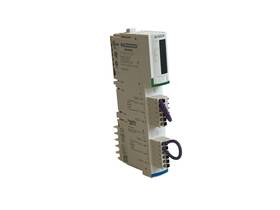
( Brand: Telemecanique ), ( Manufacturer Part Number: STBACO0220 ), ( Model: TELEMECANIQUE STBACO0220 ), ( Part Type: Module ), ( Analog/digital: Analog )
Review TELEMECANIQUE Used Analog Output Module
The **Telemecanique STBACO0220** is a robust and versatile analog input/output module designed to seamlessly integrate into industrial automation systems, offering reliable signal processing for a wide range of applications. Part of the STBACO series, this compact yet powerful device is engineered to handle both analog input and output functions with precision, making it an ideal choice for environments where real-time data acquisition and control are critical. The module features a **24-bit resolution**, ensuring exceptionally high accuracy and minimal noise in measurements, which is essential for applications requiring fine-grained control such as process automation, building management systems, or energy monitoring. With its **isolated analog inputs**, the STBACO0220 can safely interface with a variety of sensors, including thermocouples, RTDs, and voltage/current sources, while protecting the system from voltage spikes and ground loops that could compromise performance.
The module s **dual-channel analog output capability** allows for precise control of external devices such as actuators, valves, or motor drives, delivering stable and repeatable signals with minimal drift over time. Its **wide input range flexibility** supporting 4-20 mA, 0-20 mA, 0-10 V, and 1-5 V signals ensures compatibility with most industry-standard sensors and transducers, reducing the need for additional signal conditioning hardware. The STBACO0220 is built to withstand harsh industrial conditions, featuring a **wide operating temperature range** (from -25 C to 70 C) and robust construction that resists vibration, dust, and moisture, making it suitable for deployment in factories, oil and gas facilities, or outdoor installations. Its **modular design** allows for easy integration into larger control systems, whether through direct wiring or via communication protocols such as **Modbus RTU/TCP**, enabling seamless data exchange with PLCs, SCADA systems, or other automation platforms.
Beyond its technical specifications, the STBACO0220 stands out for its **user-friendly configuration and diagnostics**, offering clear status indicators and built-in fault detection to minimize downtime. The module s **low power consumption** and **long-term stability** further enhance its reliability, ensuring consistent performance even in demanding, continuous-operation environments. Whether used for monitoring temperature, pressure, flow rates, or other critical parameters, the Telemecanique STBACO0220 delivers a perfect balance of accuracy, durability, and flexibility, making it a dependable solution for engineers and operators seeking high-performance analog signal processing in industrial automation.
The **Telemecanique STBACO0220** is an analog input/output module designed for industrial automation, specifically for use with PLCs (Programmable Logic Controllers) in the STBACO series. Below is a detailed analysis of its pros and cons, followed by a conclusion and recommendation.
---
### **Pros of the STBACO0220**
1. **Compatibility with STBACO PLCs**: The module is specifically designed for integration with STBACO PLCs, ensuring seamless communication and reliable operation within the same ecosystem. This reduces potential compatibility issues that may arise with third-party modules.
2. **Analog Input/Output Functionality**: The module provides both analog input (AI) and analog output (AO) capabilities in a single unit, which can simplify wiring and reduce the number of modules required in a control system. This is particularly useful for applications requiring both signal acquisition and control, such as temperature regulation, pressure monitoring, or motor speed control.
3. **High Accuracy and Precision**: Analog modules like the STBACO0220 are typically designed to provide high-resolution measurements and control outputs, which is critical for applications where precision matters (e.g., process control, robotics, or industrial machinery).
4. **Modular Design**: The STBACO series is modular, allowing for easy expansion or reconfiguration of the control system. The STBACO0220 can be added or removed as needed, adapting to changing requirements without major overhauls.
5. **Rugged and Industrial-Grade**: STBACO modules are built to withstand harsh industrial environments, including temperature fluctuations, electrical noise, and mechanical stress. This ensures long-term reliability in demanding applications.
6. **Easy Installation and Wiring**: The module is designed for straightforward installation, with clear labeling and standardized connections. This reduces installation time and minimizes the risk of errors during setup.
7. **Support for Common Analog Signals**: The STBACO0220 typically supports standard analog signals such as 4-20 mA, 0-10 V, or 0-20 mA, which are widely used in industrial automation. This makes it versatile for a variety of applications without requiring additional signal conditioning.
8. **Diagnostic Features**: Many STBACO modules include built-in diagnostics, such as status LEDs or fault reporting, which help in troubleshooting and maintaining the system.
9. **Backward and Forward Compatibility**: Depending on the specific model and firmware version, the STBACO0220 may offer compatibility with older or newer STBACO PLCs, reducing the need for complete system upgrades.
10. **Local and Remote Monitoring**: The module can be integrated into SCADA systems or HMI interfaces for remote monitoring and control, enhancing operational efficiency and maintenance capabilities.
---
### **Cons of the STBACO0220**
1. **Limited to STBACO Ecosystem**: One of the primary drawbacks is that the module is proprietary to the STBACO brand. This means it may not be compatible with PLCs from other manufacturers (e.g., Siemens, Allen-Bradley, Schneider Electric), limiting flexibility if you operate in a mixed-vendor environment.
2. **Potential for Higher Cost**: Proprietary modules can sometimes be more expensive than equivalent third-party or open-standard modules. While the long-term reliability may justify the cost, it is worth comparing prices with alternatives.
3. **Dependence on STBACO Support**: If you encounter issues or require technical support, you will need to rely on STBACO s customer service or authorized dealers. This could lead to longer response times or limited availability of support compared to larger, more established brands.
4. **Limited Availability of Documentation or Tutorials**: Compared to widely used brands like Siemens or Allen-Bradley, STBACO may have less extensive online documentation, forums, or community support. This could make programming, troubleshooting, or integration more challenging for users without prior experience with the brand.
5. **Potential for Obsolescence**: As with any proprietary hardware, there is a risk that the STBACO0220 may become obsolete over time, especially if STBACO shifts focus or discontinues the product line. This could make future upgrades or replacements difficult.
6. **Fewer Third-Party Integrations**: Unlike modules from major brands, the STBACO0220 may not have as many third-party integrations or add-ons (e.g., software tools, expansion cards, or communication protocols). This could limit advanced functionality or customization options.
7. **Learning Curve for New Users**: If your team is unfamiliar with STBACO PLCs or analog modules, there may be a learning curve associated with programming, configuring, or maintaining the system. Training or additional resources may be required.
8. **Physical Size and Space Constraints**: Depending on the specific application, the size of the STBACO0220 module may not be optimal for space-constrained environments. While modular, the overall footprint of the control panel may still be larger than with smaller, more compact alternatives.
9. **Limited Software Support**: The software tools provided by STBACO may not be as feature-rich or user-friendly as those from larger competitors. This could affect the ease of programming, simulation, or debugging.
10. **Potential for Longer Lead Times**: As a niche or specialized brand, STBACO may have longer lead times for orders, especially for specific modules or custom configurations. This could impact project timelines.
---
### **Conclusion**
The **Telemecanique STBACO0220** is a robust and reliable analog I/O module tailored for applications within the STBACO PLC ecosystem. Its strengths lie in its seamless integration with STBACO systems, high precision, modularity, and industrial-grade durability. These features make it an excellent choice for users who are already invested in the STBACO platform and require analog input/output functionality in a controlled and predictable environment.
However, the module s proprietary nature presents significant limitations, particularly for users operating in mixed-vendor environments or those seeking broader compatibility, support, or cost-effectiveness. The lack of widespread adoption may also result in fewer resources, higher costs, or potential obsolescence risks over time.
---
### **Recommendation**
**Buy the STBACO0220 if:**- You are already using STBACO PLCs and need a compatible analog I/O module for your system.
- Your application requires high precision and reliability in an industrial setting where STBACO s rugged design is advantageous.
- You prioritize modularity and ease of integration within a single-vendor ecosystem.
- You have access to technical support or training resources specific to STBACO products.
**Consider alternatives if:**- You operate in a mixed-vendor environment and need compatibility with other PLC brands (e.g., Siemens, Allen-Bradley, or Schneider Electric). In this case, modules like Siemens ET 200SP, Allen-Bradley CompactLogix with analog I/O, or third-party modules from brands like ABB or Beckhoff may be more suitable.
- You require broader software support, extensive documentation, or a larger community for troubleshooting.
- Cost is a significant factor, and you are open to exploring more cost-effective or widely available alternatives.
- You anticipate future scalability or the need to integrate with non-STBACO systems, which could become problematic with proprietary hardware.
**Final Suggestion:**If you are committed to the STBACO platform and the module meets your technical requirements, the STBACO0220 is a solid choice. However, conduct a thorough cost-benefit analysis, including long-term support and potential obsolescence risks. If flexibility, support, or compatibility with other systems is a priority, evaluate third-party or multi-vendor alternatives to ensure a more future-proof solution.
Details:
USED Telemecanique STBACO0220 Analog Output Module, - Shelf A14 Tote 290.
part #: stbaco0220 prices
- $189.00-$499.99
specifications sensoindustria:
- brand: Telemecanique
- mpn: Stbaco0220
- model: Telemecanique Stbaco0220
- part type: Module
- analog/digital: Analog
offer sensoindustria:
- started: April 7, 2026
- sold: 0
- availability: In Stock
- quantity: 1
- options: Ship-to-home
- best offers: True
shipping sensoindustria:
- service: USPS Priority Mail
- type: Fixed
- carrier: USPS
- transit: 3-8 Days
- cost: $0.00
- class: Expedited
payments sensoindustria:
- other
- credit card: Visa
- wallet: Apple-pay
returns sensoindustria:
- method: Money back
- policy: Returns Accepted
- paid by: Seller
- time: 30 Days
seller sensoindustria:
- city: Ray, Michigan
- rating: 100.0%
- # reviews: 2181
general sensoindustria:
- PLCs HMIs > PLC Peripheral Modules > PLC Input Output Modules
- condition: Used
Telemecanique STBACO0220 Is Similar To:
- Abe7s16s2b0 Telemecanique Abe7-s16s2b0 Output Module (56.9% similar) Telemecanique ABE7-S16S2B0 output module brand name:telemecanique model : ABE7-S16S2B0 condition: used specs:-item is in good used condition, please see pictures...(February 16th, 2018)
- Asi-b4vm12 Telemecanique Channel Base Module Lot Of New In Box (44.6% similar) The items being shipped are automatically covered for full amount of purchase price you paid. Some boxes have pen markings on them. No other methods of shipping can be made...(June 25th, 2018)
- Atsu01n206lt Schneider Electric Telemecanique Contactor Pole Used (40% similar) Title: Telemecanique Schneider electric contractor, LC1F115, 200A, 3 pole, used: our internal stock m8 dale you are about to purchase the following item: 1 - used catalog LC1F115 200A pole made in Germany this unit was taken directly from working service. Please do the same for us. We note all ...(October 24th, 2018)
- Xuc-f08513 Telemecanique Photoelectric Used Sensor (44% similar) Used and tested and in good working condition Telemecanique photo sensor relay part XC F08513 110VAC operating power...(September 24th, 2015)
- Tsx-det-1612 Tsxdet1612 Telemecanique Input Module (50% similar) Not all offers are the same. Some used items may also be sold as-is. Please review the details of each offer for more specific on item. Current shipping displayed on offer is for us lower 48 states only. Also, complete address, contact name and phone number is required...(December 11th, 2017)
- Tsxaey414 Telemecanique Analog Input Module (66.7% similar) 5 analog digital conversion 16 read cycle time 550 ms measurement error C9. 7 c Thermopylae k external u internal ohm C0. 19 of full scale c1 c ni Thermopylae's internal 25 C6. 5 c Thermopylae k internal c8 C4. 5 v 25 c0 c4 of full scale. 1 c Thermopylae u external n internal v at state ohms 25 C3...(January 18th, 2018)
- Tsxast200 Tsx-ast-200 Telemecanique Output Module Analog Day Warranty (45.4% similar) Some used items may also be sold as-is. Also, complete address, contact name and phone number is required. Not all offers are the same. Current shipping displayed on offer is for us lower 48 states only. Please review the details of each offer for more specific on item...(September 28th, 2018)
- Tsxdet1604 Telemecanique Input Module 16 (55.6% similar) New in original open box...(November 16th, 2017)
- Tsxdey16d2 Scneider New Nib Tsx Micro Telemecanique Plc Module Dey Schneider (34.9% similar) Make sure to include a way contact you for immediate needs. So make sure an item will fit your application needs before purchase. Larger items ship ups only. Provide item number Andes with question...(July 14th, 2018)
- Tsxdsf635 Telemecanique Tsxdmf342a Expansion Output (49.5% similar) Telemecanique TSXDMF342A expansion TSXDSF635 output brand name:Telemecanique model : TSXDMF342A condition: USEDSPECS:TSXDSF635ITEM is in good used condition, please see pictures...(February 9th, 2018)
- Tsxdst2472 Tsxblk8 Telemecanique Schneider Modicon Output Module Tb (53.8% similar) Telemecanique mod icon Schneider STX DST BLK8 24 output module tb bundle deal includes terminal block and came off of working machine free shipping...(September 25th, 2018)
