OPTO 22 SNAP-PAC-R2-W Programmable Automation Controller Snap Pac
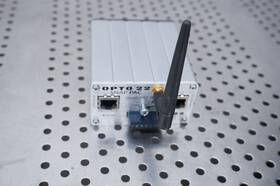
( Brand: Opto 22 ), ( Manufacturer Part Number: SNAP-PAC-R2-W ), ( Part Type: Controller )
Review OPTO 22 Snap Pac Programmable Automation Controller
The **Opto Snap-PAC-R2-W** is a robust, high-performance programmable automation controller designed to deliver unparalleled flexibility, scalability, and reliability for industrial and commercial automation applications. Part of Opto s advanced Snap-PAC series, this compact yet powerful controller combines the efficiency of a programmable logic controller (PLC) with the versatility of a PC-based automation platform, making it an ideal choice for engineers and technicians seeking a seamless integration of control, communication, and data processing. Built with a ruggedized design, the Snap-PAC-R2-W is engineered to withstand harsh environments, featuring a wide operating temperature range and protection against dust, moisture, and electrical interference, ensuring consistent performance even in demanding industrial settings. Its modular architecture allows for easy expansion, accommodating a variety of I/O modules, communication protocols, and advanced control algorithms, while its real-time operating system ensures deterministic performance critical for time-sensitive applications.
At the heart of the Snap-PAC-R2-W is its powerful processing capabilities, powered by a high-speed CPU that enables rapid execution of control logic, motion commands, and data acquisition tasks. The controller supports a wide array of communication protocols, including Ethernet/IP, Modbus TCP, PROFINET, and OPC UA, facilitating seamless interoperability with other automation systems, SCADA platforms, and enterprise-level software. This extensive connectivity ensures that users can easily integrate the Snap-PAC-R2-W into larger automation networks, enabling real-time monitoring, remote diagnostics, and centralized control from anywhere in the facility. Additionally, the device s built-in web server and intuitive graphical interface allow for effortless configuration, programming, and troubleshooting via a web browser, reducing downtime and simplifying maintenance tasks.
The Snap-PAC-R2-W excels in applications requiring precise motion control, advanced process automation, or complex sequencing, thanks to its integrated motion control capabilities and support for high-speed digital and analog I/O. Whether deployed in manufacturing, process control, building automation, or energy management systems, this controller provides the tools needed to optimize productivity, enhance efficiency, and reduce operational costs. Its open architecture and compatibility with popular programming environments, such as Opto s proprietary software or third-party tools like Codesys, RSLogix, or TwinCAT, ensure that users can leverage their existing expertise while taking advantage of the latest automation advancements. With features like built-in safety functions, high-speed event handling, and extensive memory capacity, the Snap-PAC-R2-W is not just a controller it s a comprehensive automation solution designed to meet the evolving demands of modern industrial environments.
### **Pros and Cons of the OptoSnap PAC-R2-W (Programmable Automation Controller)**
#### **Pros:**1. **Scalability and Flexibility** The PAC-R2-W is part of Opto s PAC-SYSTEM platform, which supports modular expansion. It can handle small to medium-sized automation tasks and can be scaled with additional I/O modules, communication ports, and processing units as requirements grow. This makes it suitable for applications that may evolve over time.
2. **High Performance and Speed** The controller is built on a real-time operating system (RTOS) and features a fast processing core, allowing for quick response times in control loops and real-time data processing. This is beneficial for applications requiring precise timing, such as motion control, PLC-based automation, or data acquisition.
3. **Diverse Communication Protocols** The PAC-R2-W supports a wide range of communication protocols, including Ethernet/IP, Modbus TCP, Profibus DP, DeviceNet, CANopen, and more. This makes it easy to integrate with other industrial devices, SCADA systems, or enterprise networks without additional gateways.
4. **Programmability with Multiple Languages** The controller supports programming in ladder logic (IEC 61131-3), structured text, function block diagrams, and other languages. This flexibility allows engineers to choose the most suitable method for their application, whether for traditional PLC programming or more advanced control logic.
5. **Built-in Safety and Security Features** The PAC-R2-W includes safety-certified outputs (up to SIL 2/PLe) and supports security protocols like TLS/SSL for secure communication. This is important for applications in hazardous environments or where data integrity is critical.
6. **Compact and Rugged Design** The controller is designed for industrial environments, with a robust enclosure that can withstand harsh conditions such as temperature fluctuations, vibration, and electrical noise. Its compact size makes it suitable for space-constrained applications.
7. **Integration with Opto s Ecosystem** If you are already using other Opto products (e.g., HMI panels, drives, or sensors), the PAC-R2-W integrates seamlessly with them, reducing the need for third-party interfaces and simplifying system maintenance.
8. **Cost-Effective for Mid-Range Applications** While not as inexpensive as very basic PLCs, the PAC-R2-W offers a balance between price and performance for applications that require more processing power than a traditional PLC can provide without overpaying for a high-end system.
9. **Support for Edge Computing** The controller can perform local data processing, reducing the load on central systems and enabling faster decision-making. This is useful in IoT or Industry 4.0 applications where real-time analytics are required.
10. **Long-Term Availability and Support** Opto is a well-established company with a history of supporting its products over extended periods. This reduces the risk of obsolescence compared to some newer or niche brands.
---
#### **Cons:**1. **Higher Initial Cost Compared to Basic PLCs** The PAC-R2-W is more expensive than entry-level PLCs (e.g., Allen-Bradley Micro800 or Siemens LOGO!). If your application only requires simple control logic, a cheaper PLC may suffice.
2. **Steeper Learning Curve** Due to its advanced features (e.g., multi-language programming, RTOS, and complex communication protocols), the PAC-R2-W may require more training for operators or programmers compared to simpler PLCs. This could increase setup time and potential for errors during initial programming.
3. **Overkill for Simple Applications** If your automation task involves only basic on/off control, counting, or simple sequencing, the PAC-R2-W s advanced capabilities may not be fully utilized. In such cases, a less expensive PLC would be more cost-effective.
4. **Limited Built-in I/O** The PAC-R2-W has a fixed number of digital and analog I/O points. For applications requiring extensive I/O, you will need to purchase additional modules, which can add to the overall cost and complexity of the system.
5. **Software Dependency** The controller relies on Opto s programming software (e.g., PAC-SYSTEM Studio), which may require a license. If the software is not user-friendly or lacks certain features, it could slow down development or debugging.
6. **Fewer Third-Party Integrations** While it supports many protocols, some niche or proprietary systems may not integrate as smoothly as they would with controllers from larger vendors like Siemens or Rockwell Automation. This could require additional development effort.
7. **Power Consumption** The PAC-R2-W consumes more power than very basic PLCs, which may be a consideration in battery-powered or energy-sensitive applications.
8. **Maintenance and Spare Parts** While Opto has a good support history, parts and maintenance for older models may become harder to source over time compared to more widely adopted brands like Siemens or Allen-Bradley.
9. **No Built-in Motion Control (Unless Paired with Additional Modules)** If your application requires advanced motion control (e.g., servo or stepper motor control), you will need to pair the PAC-R2-W with additional motion control modules or drives, adding complexity and cost.
10. **Limited Cloud or Remote Monitoring Features (Without Additional Software)** While the controller supports remote access, advanced cloud-based monitoring or predictive maintenance features may require third-party software or additional licensing, which could be an extra expense.
---
### **Conclusion:**The **OptoSnap PAC-R2-W** is a versatile and powerful programmable automation controller that excels in applications requiring real-time processing, scalability, and support for multiple communication protocols. It is particularly well-suited for:
- Mid-sized automation projects where a PLC with advanced capabilities is needed.
- Systems that require integration with Opto s ecosystem or diverse industrial protocols.
- Applications benefiting from edge computing, such as data acquisition, motion control, or safety-critical processes.
- Environments where long-term support and scalability are priorities.
However, it may not be the best choice if:- Your application is simple and only requires basic control (a cheaper PLC would suffice).
- Your team lacks experience with advanced PLC programming or RTOS-based systems.
- You need extensive built-in I/O without additional modules.
- You are working with very tight budgets or require the lowest possible initial cost.
---
### **Recommendation:** **Buy the OptoSnap PAC-R2-W if:**- You need a controller that can handle complex logic, real-time processing, or multiple communication protocols.
- Your project requires scalability or integration with Opto s other products.
- You are willing to invest in training for your team to fully utilize its capabilities.
- The application justifies the higher cost compared to a basic PLC (e.g., motion control, safety applications, or data-intensive tasks).
**Avoid the OptoSnap PAC-R2-W if:**- Your automation needs are very basic (e.g., simple relay control, counting, or sequencing).
- You are working with a limited budget and a simpler, cheaper PLC would meet your requirements.
- Your team lacks experience with advanced PLC programming or lacks support for Opto s software ecosystem.
- You prioritize vendor lock-in concerns and prefer a more widely adopted brand (e.g., Siemens, Allen-Bradley, or Mitsubishi).
**Alternatives to Consider:**- For **simple applications**, consider a **basic PLC** like the Allen-Bradley Micro800, Siemens LOGO!, or Omron CP1E.
- For **high-performance motion control**, evaluate **Rockwell Automation s CompactLogix** or **Siemens S7-1200/1500**.
- For **scalability and enterprise integration**, consider **Allen-Bradley ControlLogix** or **Siemens S7-1500T**.
- For **cost-sensitive but still advanced needs**, explore **Mitsubishi s FX5U** or **Keyence s NC Series**.
Ultimately, the PAC-R2-W is a strong choice for applications where its advanced features provide clear value, but it is not the best fit for every scenario. Carefully assess your project s requirements before making a decision.
Details:
Used item, working pull.
part #: snappacr2 prices
- $400.00-$1500.00
specifications sensoindustria:
- brand: Opto 22
- mpn: Snap-pac-r2-w
- part type: Controller
seller sensoindustria:
- # reviews: 6419
- rating: 99.8%
- city: Downey, California
general sensoindustria:
- condition: Used
- PLCs HMIs > PLC Peripheral Modules > PLC Input Output Modules
payments sensoindustria:
- other
- wallet: Apple-pay
- credit card: Diners-club
returns sensoindustria:
- policy: Returns Accepted
- method: Money back
- time: 30 Days
- paid by: Seller
offer sensoindustria:
- started: May 28, 2026
- best offers: True
- sold: 0
- quantity: 1
- availability: In Stock
- options: Ship-to-home
shipping sensoindustria:
- class: Standard
- carrier: UPS
- cost: $0.00
- service: Standard, UPS Ground
- transit: 4-7 Days
- type: Fixed
Opto 22 SNAP-PAC-R2 Is Similar To:
- Odc-32 Snk Opto 22 Snap-odc-32-digital (38.8% similar) This module is ideal for ems and others with applications high point counts, or those requiring a large number of digital output channels on one snap I o rack. The SNAP-ODC-32-SNK digital output module provides 32 channels in one compact snap. The high-density configuration reduces per-point costs ...(December 6th, 2017)
- Opto Snap Module Removal Tool Available (30.8% similar) This handy tool let's you remove a snap I o module from mounting rack. Can be shipped next day first-class USPS...(July 27th, 2018)
- Snap-aictd-2 Opto Analog Temperature Input Module (31.6% similar) Snap-acted 2-CH analog...(August 25th, 2018)
- Snap-aictd-8 Opto 22 Snap 8-ch (29.5% similar) Although the eight channels are not isolated from each other, module is transformer and optically other modules devices. Simple two-wire connections are made to standard connectors on top of the module...(December 6th, 2017)
- Snap-aima Opto 22 Snap Analog (34% similar) 26 in-lb -range limits from 22 to 22 ma range input response time of span delta I tame ma input resistance - single ENDED200 ohms each channel operating TEMPERATURE-20 c 70 c storage TEMPERATURE-40 85 torque, hold-down SCREWS4. 9 ma 10 ms data freshness max snap-aims: 11. The module does not supply ...(September 23rd, 2017)
- Snap-aima-4 Opto Channel Analog Current Input Module Card (21.3% similar) The module does not supply loop excitation current. Although the four channels are not isolated from each other, module is transformer and optically other modules devices. I'm selling a new Opto 22 snap analog SNAP-AIMA-4 but the package was dirty and torn. The SNAP-AIMA-4 provides four channels of ...(March 21st, 2018)
- Snap-airtd Opto 22 2-ch 100-ohm (29.2% similar) Bought them and customer changed there mind never installed. They are new out of box...(September 1st, 2017)
- Snap-airtd-10 Opto Snap Analog Temperature Input Module (35% similar) Snap analog input modules are part of Opto 22S pac system. Product overview the SNAP-AIRTD-10 module is usually used for temperature inputs. No user adjustment necessary. Since the two inputs share same reference terminal, make sure you use isolated ETD probes. Power requirements: 5 CDC 4 ounces ...(October 8th, 2018)
- Snap-aitm-i Opto Snap Analog Channel Isolated Thermocouple (37.4% similar) This is for a new Opto 22 - snap 2-CHANNEL isolated Thermopylae analog input model snap-ATM-i...(April 28th, 2018)
- Snap-aiv-4 Opto 22 4-ch 10vdc (25.5% similar) Bought them and customer changed there mind never installed. They are new out of box...(October 15th, 2017)
- Snap-aiv-hdb Opto Breakout Board For Analog Input Module (28.1% similar) Use the SNAP-HD-BF6 cable to connect module breakout board. 2 ounces domestic shipping: item can be shipped within us. Opto 22 snap-AVI-HD - breakout board for SNAP-AIV-32 analog input module product overview the is a convenient wiring field devices to 32-CHANNEL...(October 8th, 2018)
