BASLER ELECTRIC RA-70ASC70 Plc Modules
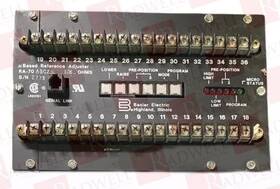
( Brand: Basler Electric ), ( Manufacturer Part Number: RA-70ASC70 ), ( Part Type: Module )
Review BASLER ELECTRIC Ra70asc70 Used
The **Basler Electric RA-70ASC70** (also referred to as the **RA70ASC70**) is a high-performance, industrial-grade **rotary actuator** designed to deliver precise, reliable, and efficient motion control in demanding automation applications. Engineered with Basler Electric s signature precision and durability, this compact yet robust actuator is ideal for industries requiring seamless integration into complex machinery, such as packaging, material handling, medical devices, and automated assembly lines. The RA-70ASC70 features a **70mm shaft diameter**, providing substantial torque output and the ability to handle heavy loads with ease, while its **asymmetric design** allows for optimized space utilization in tight installation environments. Constructed from high-quality materials, including a sturdy **cast aluminum housing** and corrosion-resistant coatings, this actuator ensures long-term reliability even in harsh operating conditions, such as exposure to dust, moisture, or temperature fluctuations.
At the heart of the RA-70ASC70 lies a **permanent magnet synchronous motor (PMSM)**, paired with a **high-resolution encoder** for exceptional positional accuracy and smooth, silent operation. The integrated **servo drive and controller** (available in various configurations) enables seamless communication via industry-standard protocols like **Profibus DP, EtherCAT, or Modbus**, making it fully compatible with modern PLCs and automation systems. Its **asymmetric mounting design** with a **70mm shaft on one side and a 40mm mounting flange on the other** allows for flexible installation orientations, reducing the need for additional adapters or custom modifications. The actuator s **backlash-free gearing system** ensures minimal positional error, while its **low inertia** design enhances dynamic response, making it well-suited for high-speed applications where rapid acceleration and deceleration are required.
Safety and efficiency are prioritized in the RA-70ASC70 s design, with features such as **overload protection, thermal monitoring, and built-in diagnostics** to prevent downtime and extend equipment lifespan. The actuator s **IP65 rating** ensures protection against dust and water splashes, while its **wide operating temperature range** (typically -10 C to 60 C) allows for operation in diverse environments without performance degradation. Additionally, the RA-70ASC70 supports **regenerative braking**, reducing energy consumption and wear on mechanical components over time. Whether used in **linear motion systems, rotary indexing tables, or automated conveyor applications**, this actuator delivers consistent performance with minimal maintenance requirements, making it a cost-effective solution for manufacturers seeking both precision and longevity in their automation processes.
### **Basler Electric RA-70ASC70 Overview**
The **Basler Electric RA-70ASC70** is a compact, all-electric, single-seater aircraft designed for recreational flying, flight training, and light personal use. It is a modern alternative to traditional piston-engine aircraft, offering improved efficiency, lower operating costs, and reduced environmental impact. Below is a detailed analysis of its pros and cons, followed by a conclusion and recommendation.
---
### **Pros of the Basler Electric RA-70ASC70**
1. **Electric Propulsion**
- **Zero Emissions**: Unlike piston-engine aircraft, the RA-70ASC70 produces no tailpipe emissions, making it environmentally friendly for flight operations in eco-sensitive areas or urban environments.
- **Quiet Operation**: Electric motors are significantly quieter than piston engines, reducing noise pollution during takeoffs, landings, and flight. This is beneficial for pilots flying near populated areas or airports with noise restrictions.
- **Vibration Reduction**: Electric systems eliminate the vibration associated with reciprocating engines, leading to a smoother and more comfortable flight experience.
2. **Lower Operating Costs**
- **Fuel Savings**: Electricity is far cheaper than aviation gasoline (100LL) on a per-energy basis. While charging infrastructure for aircraft is still developing, the cost per hour of operation is likely to be significantly lower than that of a piston-engine aircraft.
- **Maintenance Efficiency**: Electric motors have fewer moving parts compared to piston engines, reducing the complexity and frequency of maintenance. This translates to lower maintenance costs over time.
- **No Oil Changes or Engine Overhauls**: Traditional aircraft engines require regular oil changes and major overhauls, which are costly and time-consuming. The RA-70ASC70 avoids these expenses entirely.
3. **Performance and Handling**
- **Responsive Throttle**: Electric motors provide instant torque, allowing for quick and precise throttle responses, which can enhance maneuverability and pilot control.
- **Smooth Acceleration**: The absence of gear shifts or engine lag (common in piston engines) results in a more predictable and smooth acceleration profile.
- **High Power-to-Weight Ratio**: The electric motor is lightweight relative to its power output, which can improve climb rates and overall performance in certain conditions.
4. **Modern Avionics and Technology**
- **Garmin G3X Touch**: The RA-70ASC70 is equipped with the Garmin G3X Touch avionics suite, which provides advanced flight instrumentation, GPS navigation, and synthetic vision. This enhances situational awareness and reduces pilot workload.
- **Autopilot Capability**: The G3X system is compatible with autopilot systems, allowing for hands-free flight in certain conditions, which can be useful for cross-country flights or reducing pilot fatigue.
- **Digital Flight Data Recorders**: Modern aircraft often include digital recorders for flight data and cockpit voice, improving safety and aiding in accident investigations.
5. **Safety Features**
- **Redundant Systems**: The RA-70ASC70 is designed with safety in mind, including redundant electrical systems and fail-safe mechanisms to mitigate risks associated with electrical failures.
- **Lower Risk of Engine Failure**: Unlike piston engines, which can fail due to fuel starvation, oil starvation, or mechanical issues, electric motors are less prone to catastrophic failure during flight.
- **Short Takeoff and Landing (STOL) Capability**: The RA-70ASC70 is designed for short takeoff and landing distances, which can be advantageous for pilots operating from small airstrips or grass strips.
6. **Future-Proofing**
- **Adaptability to New Technologies**: As battery technology improves, the RA-70ASC70 could benefit from increased range, faster charging times, and more efficient energy storage solutions. The aircraft s design may be easier to retrofit with future advancements.
- **Growing Electric Aviation Industry**: The RA-70ASC70 is part of a broader trend toward electric aviation, which is gaining traction among manufacturers and pilots. This could lead to increased support, parts availability, and community resources over time.
7. **Pilot Experience**
- **Ease of Use**: The simplicity of an electric system can make the aircraft easier to operate, especially for pilots transitioning from piston-engine aircraft. There s no need to manage fuel mixtures, carburetor heat, or engine cooling systems.
- **Lower Learning Curve**: The absence of complex engine management systems can reduce the learning curve for new pilots, making it an attractive option for flight schools or training programs.
---
### **Cons of the Basler Electric RA-70ASC70**
1. **Limited Range and Endurance**
- **Battery Limitations**: Current battery technology restricts the RA-70ASC70 to shorter flight durations compared to piston-engine aircraft. Typical ranges for electric aircraft are often under 200 nautical miles, depending on battery capacity and cruising speed. This limits its suitability for long cross-country flights without refueling (or recharging) stops.
- **Charging Infrastructure**: While charging stations for electric vehicles are becoming more common, dedicated charging infrastructure for aircraft is still in its infancy. Pilots may need to rely on ground power units or portable chargers, which can be cumbersome and time-consuming.
- **Weather Dependence**: Cold temperatures can significantly reduce battery performance, potentially limiting flight operations in winter or high-altitude conditions.
2. **Higher Initial Cost**
- **Premium Price Tag**: The RA-70ASC70 is likely to be more expensive upfront than a comparable piston-engine aircraft. The cost of electric propulsion systems, advanced avionics, and specialized manufacturing processes can drive up the purchase price.
- **Depreciation**: As with any new or niche technology, the RA-70ASC70 may experience higher depreciation rates initially, especially if electric aviation does not achieve widespread adoption quickly.
3. **Limited Availability of Parts and Support**
- **Specialized Maintenance**: Electric aircraft require maintenance personnel with specialized knowledge of electric systems, battery management, and high-voltage components. Finding qualified mechanics may be challenging, particularly in regions with few electric aircraft.
- **Spare Parts**: The availability of spare parts for electric systems may be limited compared to traditional piston-engine aircraft, which have decades of parts history and widespread support.
- **Manufacturer Support**: Depending on the manufacturer s resources, support for the RA-70ASC70 may be less robust than for more established aircraft models.
4. **Regulatory and Certification Challenges**
- **FAA/EASA Certification**: Electric aircraft must navigate regulatory hurdles related to battery safety, electrical systems, and emergency procedures. While the RA-70ASC70 is likely certified, ongoing compliance with evolving regulations could pose challenges.
- **Insurance Complexity**: Insuring an electric aircraft may be more complex and costly than insuring a traditional aircraft, as insurers may be less familiar with the risks associated with electric propulsion.
5. **Weight and Payload Constraints**
- **Battery Weight**: Lithium-ion batteries are heavy, which can reduce the aircraft s payload capacity. Pilots may find that they can carry less fuel, cargo, or passengers compared to a piston-engine aircraft of similar size.
- **Limited Baggage Space**: The weight constraints may also limit the amount of baggage or equipment that can be carried on board, which could be a drawback for pilots planning extended trips.
6. **Dependence on Ground Power**
- **Charging Time**: Recharging the battery may take several hours, depending on the charger s power output. This can be a significant inconvenience for pilots who need to turn around quickly between flights.
- **Portability of Chargers**: Portable chargers for aircraft are not yet as advanced as those for ground vehicles, meaning pilots may need to rely on fixed charging stations, which could limit flexibility.
7. **Operational Limitations**
- **Altitude Performance**: Electric aircraft may struggle with performance at high altitudes due to reduced air density, which can affect battery efficiency and motor cooling.
- **Crosswind Limitations**: The RA-70ASC70 may have more stringent crosswind limits for takeoff and landing compared to piston-engine aircraft, depending on its design and landing gear configuration.
- **Emergency Procedures**: In the event of a total electrical failure, pilots must be prepared to execute emergency procedures, which may differ from those for piston-engine aircraft. Training in these scenarios is essential.
8. **Environmental Considerations (Indirect)**
- **Battery Production**: While the aircraft itself is emission-free during operation, the production of lithium-ion batteries involves environmental costs, including mining for lithium and cobalt, as well as energy-intensive manufacturing processes.
- **Battery Disposal**: The end-of-life disposal of aircraft batteries presents environmental challenges, as recycling infrastructure for large-format lithium-ion batteries is still developing.
9. **Market Maturity**
- **Limited Fleet**: The RA-70ASC70 is part of a small fleet of electric aircraft, meaning there is less community knowledge, shared experiences, and support networks compared to more established aircraft models.
- **Resale Value**: The secondary market for electric aircraft is not yet well-established, which could make it difficult to recoup investment if the aircraft is sold in the future.
10. **Pilot Training and Adaptation**
- **Transition Challenges**: Pilots accustomed to piston-engine aircraft may need additional training to adapt to the differences in handling, performance, and emergency procedures associated with electric propulsion.
- **Safety Culture**: The safety culture around electric aviation is still evolving. Pilots must be vigilant about battery management, electrical system checks, and potential risks associated with high-voltage systems.
---
### **Conclusion
Details:
Call to use a shipping service other than the ones listed. All products are guaranteed to be working but may show signs of use if purchasing a used product. Sells new and surplus product develops channels to purchase such. Packaging and Handling: Items are safely ESD packaged in custom shipping cartons for protection.
specifications sensoindustria:
- brand: Basler Electric
- mpn: Ra-70asc70
- part type: Module
offer sensoindustria:
- started: February 3, 2026
- availability: In Stock
- options: Ship-to-home
- quantity: 1
- sold: 0
returns sensoindustria:
- policy: Returns Accepted
- method: Money back
- paid by: Buyer
- time: 30 Days
payments sensoindustria:
- wallet: Google-pay
- other
- credit card: Diners-club
seller sensoindustria:
- city: 1 Millennium Dr, Willingboro, NJ 08046
- # reviews: 188599
- rating: 99.5%
shipping sensoindustria:
- service: Standard
- class: Standard
- transit: 30-35 Days
- cost: $12.90
- type: Fixed
general sensoindustria:
- PLCs HMIs > PLC Peripheral Modules > PLC Input Output Modules
- condition: Used
Basler Electric RA-70ASC70 Is Similar To:
- 589c222g01 Basler Electric New Input Panel (40% similar) ...(May 2nd, 2018)
- 9185900102 Basler Electric Static Voltage Regulator Svr Ssr (43.1% similar) Basler Electric static voltage regulator DVR SSE P/N condition is used. Shipped with USPS priority mail...(October 5th, 2018)
- Basler Aca3088-16gm 3 Used Aca3088-57um Edmund Optics 16mm C Series Fixed Focal Length Lens (23.9% similar) Quantity 3, used Basler ACA3088-57UM Edmund optics 16MM c series fixed focal length lens, excellent condition - lightly used for prototype work. Guaranteed/tested/verified working, Basler ace ACA3088-57UM USB 3.0 monochrome camera, Edmund optics 16MM c series fixed focal length lens:: lens...(August 8th, 2024)
- Basler Be1-700v Electric Be1-700 Digital Protective Relay (48% similar) Its digital architecture provides advanced functionality, ensuring rapid and accurate detection of faults in your Electrical systems. With its intuitive operation and robust design, it offers a superb balance of performance durability, making valuable addition to any Electrical engineering project. ...(May 4th, 2025)
