NATIONAL INSTRUMENTS PXI-8320 Ni Remote Control Module Completed
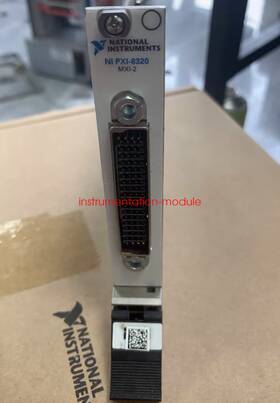
( Brand: National Instruments ), ( Manufacturer Part Number: PXI-8320 ), ( Part Type: Remote Control Module ), ( Country Of Origin: Hungary )
Review NATIONAL INSTRUMENTS Ni Remote Control Module Test Completed
The **National Instruments PXI-8320 NI Remote Control Module** is a sophisticated and versatile hardware solution designed to enhance the functionality of PXI (PCI eXtensions for Instrumentation) systems by enabling seamless remote control and monitoring capabilities over a network. This module is engineered to provide engineers, researchers, and technicians with the ability to remotely configure, operate, and troubleshoot PXI-based test and measurement systems with ease, eliminating the need for physical access to the equipment. Built on NI s robust LabVIEW and NI-DAQmx frameworks, the PXI-8320 integrates seamlessly with existing PXI platforms, allowing users to extend their instrumentation capabilities across distributed environments. Whether deployed in industrial automation, aerospace testing, or academic research settings, this module ensures high-speed, low-latency communication between the PXI chassis and remote control stations via Ethernet or other supported network protocols. Its compact yet rugged design ensures reliable performance in demanding environments, while its modular architecture allows for easy integration with a wide range of NI and third-party PXI devices. The PXI-8320 is particularly well-suited for applications requiring real-time data acquisition, signal generation, and automated testing, where remote oversight and control are critical for efficiency and safety. With features such as secure authentication, configurable network settings, and support for advanced communication protocols, this module empowers users to deploy sophisticated test systems in remote locations, reducing downtime and improving operational flexibility. Whether used in a laboratory, manufacturing floor, or field deployment, the PXI-8320 NI Remote Control Module serves as a cornerstone for building scalable, networked test systems that deliver precision, reliability, and unparalleled control.
**Pros and Cons of buying a National Instruments PXI-8320 NI Remote Control Module (Completed)**
The **National Instruments PXI-8320** is a remote control module designed for PXI (PCI Extensions for Instrumentation) systems, enabling remote management, monitoring, and control of PXI chassis via Ethernet. Below is a detailed analysis of its advantages and disadvantages.
---
### **Pros**
1. **Remote Management Capability**
The PXI-8320 allows administrators to remotely control and monitor PXI systems, including power cycling, slot management, and system diagnostics. This is particularly useful in distributed testing environments where physical access is limited or impractical.
2. **Enhanced Security Features**
It supports secure remote access through protocols like SSH (Secure Shell) and HTTPS, reducing the risk of unauthorized control or data breaches. This is critical for laboratory or industrial settings where security is a priority.
3. **Compatibility with NI Software**
The module integrates seamlessly with National Instruments software ecosystem, including LabVIEW, TestStand, and NI MAX. This ensures smooth operation with existing NI-based test systems and automation workflows.
4. **Diagnostic and Logging Tools**
The PXI-8320 provides detailed system logs, error reporting, and real-time monitoring of PXI chassis status. This helps in troubleshooting issues quickly and maintaining system health without physical intervention.
5. **Scalability for Large Systems**
It supports multi-chassis management, making it suitable for large-scale test systems where multiple PXI chassis need centralized control. This is beneficial in automated test environments (ATE) or manufacturing settings.
6. **Reduced Downtime**
Remote power cycling and reboot capabilities minimize downtime by allowing administrators to restart faulty systems without physical access, improving overall system reliability.
7. **Integration with Network Infrastructure**
Since it operates over Ethernet, it can be integrated into existing network architectures, allowing for centralized IT management alongside test systems.
8. **Supports Firmware Updates Remotely**
Administrators can push firmware updates to PXI systems remotely, ensuring all devices remain up-to-date with the latest features and security patches.
---
### **Cons**
1. **Cost**
The PXI-8320 is an additional hardware component, adding to the overall cost of a PXI system. For smaller setups or budget-conscious environments, this may not be justified unless remote management is a critical requirement.
2. **Complexity in Setup**
Configuring the module requires familiarity with NI software and network protocols. Users unfamiliar with PXI systems or remote management tools may face a steep learning curve during initial setup.
3. **Dependence on Network Stability**
Since the module relies on Ethernet connectivity, any network outages or instability can disrupt remote control functionality. This may be a concern in environments with unreliable network infrastructure.
4. **Limited to NI Ecosystem**
The PXI-8320 is optimized for National Instruments hardware and software. Users relying on non-NI instruments or third-party tools may encounter compatibility issues or require additional workarounds.
5. **Potential Latency in Remote Operations**
While generally negligible for most applications, remote control operations may introduce slight delays compared to local management, which could be problematic in real-time critical systems.
6. **Maintenance and Support Overhead**
As with any specialized hardware, troubleshooting issues may require support from NI or certified technicians, adding potential maintenance costs and downtime if problems arise.
7. **Security Risks if Misconfigured**
Poorly secured remote access settings could expose the PXI system to cyber threats. While the module includes security features, improper configuration by administrators could compromise system integrity.
8. **Not a Standalone Solution**
The PXI-8320 is not a replacement for local control interfaces (e.g., front-panel buttons or local management cards). It is supplementary, meaning users still need physical access for certain tasks.
---
### **Conclusion**
The **National Instruments PXI-8320** is a powerful tool for organizations requiring remote management of PXI systems. Its strengths lie in security, scalability, and integration with NI s software ecosystem, making it ideal for large-scale test environments, distributed laboratories, or industrial applications where remote access is essential. However, its cost, complexity, and dependency on network stability may pose challenges for smaller setups or users with limited technical expertise.
For users who prioritize remote control, security, and seamless integration with NI tools, the PXI-8320 is a valuable investment. Conversely, those with simpler setups or tight budgets may find alternative solutions (e.g., local management cards or basic network monitoring tools) sufficient.
---
### **Recommendation**
**Buy the PXI-8320 if:**- You operate a multi-chassis PXI system requiring centralized remote management.
- Security and remote diagnostics are critical for your testing environment.
- You are already invested in National Instruments software and hardware ecosystem.
- Your network infrastructure is stable and secure.
**Avoid or consider alternatives if:**- Your PXI system is small or used in a controlled, local environment where remote access is unnecessary.
- Budget constraints make additional hardware impractical.
- You lack expertise in configuring or maintaining NI remote management tools.
- Non-NI instruments dominate your setup, and compatibility concerns outweigh the benefits.
For most **large-scale or mission-critical PXI deployments**, the PXI-8320 is a worthwhile addition. For smaller or simpler applications, evaluate whether the cost and complexity justify its inclusion.
Details:
New product comes with a one-year warranty. Please feel free to purchase. For NI products. Then its 100% shipped from inventory in the USA.
Operating various types of industrial products, mechanical modules.
part #: pxi8320 prices
- $1154.04-$1470.00
specifications sensoindustria:
- brand: National Instruments
- mpn: Pxi-8320
- part type: Remote Control Module
- country of origin: Hungary
returns sensoindustria:
- time: 14 Days
- paid by: Buyer
- policy: Returns Accepted
- method: Money back
offer sensoindustria:
- availability: In Stock
- options: Ship-to-home
- started: April 16, 2026
- quantity: 3
- best offers: True
- sold: 0
seller sensoindustria:
- rating: 98.9%
- city: Los Angeles, California
- # reviews: 517
shipping sensoindustria:
- service: Standard
- cost: $10.00
- type: Fixed
- transit: 6-13 Days
- class: Standard
general sensoindustria:
- PLCs HMIs > PLC Peripheral Modules > PLC Input Output Modules
- condition: Used
payments sensoindustria:
- other
- credit card: Diners-club
- wallet: Apple-pay
National Instruments PXI-8320 Is Similar To:
- 182417-01 National Instruments Scxi-1325 Screw (50.4% similar) Used and in perfect working order. The winning bidder pays 7SINS in us lower 48 states via USPS priority mail. This listing is for one National Instruments SCXI-1325 screw terminal block. Comes as shown with no accessories...(July 12th, 2017)
- 182469c-01 National Instruments Shielded Connector Block (51.2% similar) With a 68 pin connector to accept the cable coming from your FAQ board screw terminals for I o devices. The SCB-68 is an interface device for several of National Instruments FAQ cards. This is a fully functional unit. Guaranteed not DOA...(January 7th, 2019)
- 184437c-02 National Instruments Ni Cfp-di-301 (47.4% similar) ...(January 1st, 2018)
- 185185a-01 National Instruments Module New (52.3% similar) See photos and. New National Instruments 185185A-01 I o module UL94V-0 manufacture: model: 185185A-01I other NUMBERS:PCI-6503 assay condition: this is but not sealed in original package...(January 6th, 2019)
- 189200d-01 Ni National Instruments 9472 (40.7% similar) Guaranteed not DOA...(November 17th, 2017)
- 194918a National Instruments Ni Pxi-1033 (47.7% similar) National Instruments ni PXI-1033 pxi chassis 194918A...(May 22nd, 2017)
- 199364b-01l 1b513d7 National Instruments Digital Output Module (48.9% similar) Please see my other listings for a CRIO-9025 real-time controller, ni 9201 analog input module and NI-9421 digital. Each channel is compatible with signals from 6 v to 30 v, features transient over voltage protection between the output channels and back plane, has an led that indicates status. ...(May 5th, 2018)
- 776229-10 National Instruments Voltage Input Module (50% similar) I try to schedule offers end when am where the item is. Shipping prices quoted are for the contiguous USA. Listing is for one module. I live in two different cities. Feel free to ask any questions...(June 22nd, 2018)
- 777318-421 National Instruments Cfp-rly-421 Ni (45.2% similar) ...(October 27th, 2017)
- 778069-08 National Instruments Instrument Fieldpoint Terminal Analog Input Module (42.7% similar) which do not in any way affect the functionality or performance of item. Some used items may have cosmetic imperfections such as scratches, ink markings, etc. This item has been described to the best of our ability. Happy buying. They may therefore have minor wear commensurate with age and usage...(August 27th, 2018)
- 778069-21 National Instruments Instrument Analog Thermocouple Input Module (44.8% similar) Which do not in any way affect the functionality or performance of item. This item has been described to the best of our ability. Happy buying. They may therefore have minor wear commensurate with age and usage. Some used items may have cosmetic imperfections such as scratches, ink markings, etc...(August 27th, 2018)
