LANDIS GYR PTM1.2Q250 Siemens
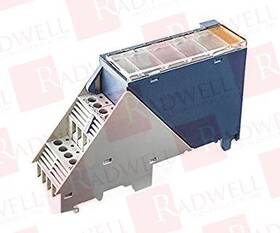
( Brand: Landis Gyr ), ( Manufacturer Part Number: PTM1.2Q250 )
Review LANDIS GYR Siemens Ptm12q250 Used
The **Landis Gyr PTM1.2Q250 (Siemens PTM12Q250)** is a high-performance, advanced metering infrastructure (AMI) smart meter designed to deliver precise, real-time energy monitoring and bidirectional communication for modern utility networks. Part of Siemens cutting-edge **PTM12** series, this intelligent meter combines robust engineering with seamless integration into smart grid ecosystems, making it an ideal solution for utilities seeking to enhance efficiency, reduce operational costs, and support demand response initiatives. Engineered with a **1.2-inch color display**, the PTM12Q250 provides clear, user-friendly visual feedback, allowing consumers to track energy consumption in real time, set consumption alerts, and access detailed usage trends empowering informed decision-making. Its **250A current rating** ensures compatibility with high-demand residential, commercial, and light industrial applications, accommodating both single-phase and three-phase systems with ease.
At the core of the PTM1.2Q250 s functionality is its **secure, bidirectional communication capability**, leveraging industry-standard protocols such as **DLMS/COSEM, IEC 61850, and Modbus** to facilitate seamless data exchange with utility systems, energy management platforms, and third-party software. This interoperability enables utilities to implement advanced metering solutions, including time-of-use (TOU) pricing, dynamic load management, and remote disconnect/reconnect services all while maintaining strict data security through **AES-128 encryption** and role-based access control. The meter s **compact, modular design** ensures easy installation in standard meter sockets, reducing fieldwork complexity and minimizing downtime during deployments. Additionally, its **wide operating temperature range (-40 C to 70 C)** and **IP66-rated enclosure** make it resilient against harsh environmental conditions, ensuring reliable performance in diverse climates.
Beyond its technical specifications, the PTM1.2Q250 is built with **future-proof scalability** in mind, supporting over-the-air (OTA) firmware updates and compatibility with emerging smart grid technologies such as **distributed energy resources (DERs), vehicle-to-grid (V2G) integration, and advanced analytics**. Its **low power consumption** and **long battery life** further enhance operational efficiency, reducing maintenance requirements while extending the meter s service life. Whether deployed in urban substations, rural networks, or behind-the-meter applications, the PTM12Q250 serves as a cornerstone for utilities aiming to transition toward a smarter, more sustainable energy infrastructure. With its blend of precision engineering, cybersecurity, and adaptability, this smart meter stands as a testament to Siemens commitment to driving innovation in the evolving energy landscape.
### **Pros and Cons of Buying a Landis Gyr PTM1.2Q250 (or Siemens PTM12Q250) Smart Meter**
#### **Pros:**1. **Energy Monitoring and Efficiency**
The PTM1.2Q250 provides real-time energy consumption data, allowing users to track electricity usage by time of day, appliance, or even per circuit. This helps identify energy-wasting habits and optimize usage, potentially reducing bills.
2. **Remote Meter Reading and Reduced Manual Checks**
The meter communicates wirelessly (via cellular or PLC) with utility providers, eliminating the need for manual meter readers. This improves billing accuracy and reduces operational costs for utilities.
3. **Demand Response and Time-of-Use (TOU) Billing Support**
The meter supports dynamic pricing models, allowing utilities to incentivize off-peak consumption. Users can adjust their energy use based on real-time pricing signals, further lowering costs.
4. **Advanced Fault Detection and Outage Management**
The meter can detect power interruptions and communicate outages to utilities quickly, enabling faster restoration. It also logs voltage fluctuations, which can help identify infrastructure issues.
5. **Compatibility with Smart Home Systems**
The PTM1.2Q250 integrates with smart home platforms (via APIs or third-party solutions), allowing for automated energy management, such as turning off non-essential loads during peak demand.
6. **Regulatory Compliance and Future-Proofing**
Many regions mandate smart meters for grid modernization and demand response programs. Owning a compatible meter ensures compliance with evolving energy policies and avoids potential fines or service disruptions.
7. **Reduced Theft and Tampering Risks**
Unlike traditional mechanical meters, the PTM1.2Q250 is tamper-resistant and sealed, making fraudulent manipulation difficult.
8. **Data Analytics for Utilities**
For commercial or industrial users, the meter provides detailed consumption data that can be analyzed for operational efficiency, cost savings, and sustainability reporting.
---
#### **Cons:**1. **Higher Upfront Cost**
Smart meters are more expensive to purchase and install than traditional analog meters. While utilities often cover the cost for residential users, commercial or off-grid installations may require upfront investment.
2. **Potential Privacy Concerns**
Real-time energy data can reveal household routines (e.g., when residents are home, appliance usage patterns). While encryption and anonymization measures exist, some users may be uncomfortable with the level of data exposure.
3. **Dependence on Communication Infrastructure**
The meter relies on cellular networks (e.g., LTE-M) or power line communication (PLC) to transmit data. Outages in these networks can temporarily disable remote monitoring, though local logging ensures data isn t lost permanently.
4. **Limited Lifespan Compared to Analog Meters**
While designed for long-term use (typically 15 20 years), smart meters may require firmware updates or replacements if communication protocols become obsolete. Analog meters, in contrast, have no moving parts and can last decades.
5. **Complexity for End Users**
The meter s advanced features (e.g., TOU billing, remote disconnection) may be confusing for users unfamiliar with digital systems. Utilities must provide adequate training or support to avoid frustration.
6. **Potential for Cybersecurity Risks**
As with any connected device, there is a (theoretical) risk of hacking or data breaches, though Landis Gyr/Siemens implements robust security measures. Utilities must maintain cybersecurity protocols to mitigate risks.
7. **Regulatory and Installation Delays**
In some regions, smart meter rollouts face regulatory hurdles, delays, or resistance from consumers. Installation may require utility approvals or third-party technicians, adding time and complexity.
8. **Limited Off-Grid or Remote Area Compatibility**
If deployed in areas with poor cellular coverage or unreliable PLC infrastructure, the meter may struggle to transmit data consistently. Backup solutions (e.g., manual readings) may be necessary.
---
### **Conclusion**
The **Landis Gyr PTM1.2Q250 (or Siemens PTM12Q250)** is a sophisticated smart meter that offers significant advantages for energy efficiency, remote monitoring, and grid integration. Its ability to enable demand response, reduce manual labor, and provide actionable data makes it a valuable asset for utilities and consumers alike. However, the higher cost, privacy considerations, and dependency on communication networks are notable drawbacks.
For **residential users**, the benefits often outweigh the drawbacks, especially if the utility covers installation costs. For **commercial or industrial users**, the data-driven insights and cost-saving potential justify the investment. **Off-grid or privacy-conscious users** may need to weigh these factors carefully, possibly opting for hybrid solutions or additional security measures.
### **Recommendation**
- **For Utilities and Large Consumers:** Deploy the PTM1.2Q250 as part of a broader smart grid strategy. Its scalability, demand response capabilities, and fault detection make it ideal for modernizing energy infrastructure.
- **For Residential Users:** Accept the meter if provided by your utility, as it simplifies billing and enables energy savings. If privacy is a concern, request data encryption or opt for a meter with minimal telemetry.
- **For Off-Grid or Remote Installations:** Consider pairing the meter with a backup communication method (e.g., manual logging) or explore alternative smart meters designed for low-connectivity environments.
- **For Cost-Sensitive Buyers:** Evaluate whether the long-term savings from energy monitoring justify the upfront or operational costs. If the meter is mandatory in your region, proceed with installation but monitor for potential privacy or technical issues.
Ultimately, the PTM1.2Q250 is a **forward-thinking solution** for energy management, but its suitability depends on specific use cases, regulatory environment, and user priorities.
Details:
Call to use a shipping service other than the ones listed. Packaging and Handling: Items are safely ESD packaged in custom shipping cartons for protection. Sells new and surplus product develops channels to purchase such. All products are guaranteed to be working but may show signs of use if purchasing a used product.
Part Number PTM1.2Q250.
part #: ptm12q250 prices
- $22.79-$499.00
specifications sensoindustria:
- brand: Landis Gyr
- mpn: Ptm1.2q250
shipping sensoindustria:
- service: Standard
- class: Standard
- transit: 29-34 Days
- cost: $12.90
- type: Fixed
payments sensoindustria:
- wallet: Paypal
- other
- credit card: Diners-club
returns sensoindustria:
- policy: Returns Accepted
- paid by: Buyer
- time: 30 Days
- method: Money back
seller sensoindustria:
- rating: 99.6%
- city: 1 Millennium Dr, Willingboro, NJ 08046
- # reviews: 191998
offer sensoindustria:
- quantity: 1
- sold: 0
- started: February 27, 2026
- availability: In Stock
- options: Ship-to-home
general sensoindustria:
- PLCs HMIs > PLC Peripheral Modules > PLC Input Output Modules
- condition: Used
Landis Gyr PTM1.2Q250 Is Similar To:
- Landis Gyr Siga-cc1-lg Siemens Sigacc1lg Used Tested Cleaned (55.4% similar) Sells new and surplus product develops channels to purchase such. The product is used surplus...(November 7th, 2023)
- Landis Gyr 550-495pa Siemens 550495pa Used Tested Cleaned (60.6% similar) The product is used surplus. Call to use a shipping service other than the ones listed. Sells new and surplus product develops channels to purchase such. Packaging and handling, items are safely eds packaged in custom shipping cartons for protection. All products are guaranteed to be working but may...(January 12th, 2024)
- Landis Gyr 549-612 Siemens 549612 Used Tested Cleaned (61% similar) Call to use a shipping service other than the ones listed. Packaging and handling: items are safely eds packaged in custom shipping cartons for protection. Sells new and surplus product develops channels to purchase such. All products are guaranteed to be working but may show signs of use...(August 12th, 2024)
- Landis Gyr Pxc00-pe96.a Siemens Pxc00pe96a Used (66.7% similar) Call to use a shipping service other than the ones listed. All products are guaranteed to be working but may show signs of use if purchasing a used product. Packaging and handling: items are safely eds packaged in custom shipping cartons for protection. Sells new and surplus product develops ...(November 13th, 2024)
- Landis Gyr Aem200-538920 Siemens Aem200538920 Used (72.5% similar) Condition is used. Shipped with USPS ground advantage. Siemens AEM200-538920 / AEM200538920 used...(December 26th, 2024)
- Siemens 20250-m Landis Point Termination Module Ptm6 (24% similar) Siemens Landis point termination module PTM6 20250-M, this unit is used and in good, working condition. Please review all pictures before purchasing...(January 5th, 2025)
- Landis Gyr Rwx62.5030 Siemens Rwx625030 Used (72.9% similar) Part number RWX62.5030. All products are guaranteed to be working but may show signs of use if purchasing a used product. Call to use a shipping service other than the ones listed. Packaging and handling: items are safely eds packaged in custom shipping cartons for protection. Sells new and surplus ...(January 24th, 2025)
- Landis Gyr Pxc24.2-ef32.a Siemens Pxc242ef32a Used (70.6% similar) All products are guaranteed to be working but may show signs of use if purchasing a used product. Call to use a shipping service other than the ones listed. Packaging and handling: items are safely eds packaged in custom shipping cartons for protection. A / PXC242EF32A used discontinued by ...(April 3rd, 2025)
- Landis Gyr 540-100n Siemens 540100n Used (71.7% similar) Call to use a shipping service other than the ones listed. All products are guaranteed to be working but may show signs of use. Sells new and surplus product develops channels to purchase such. Packaging and handling: items are safely eds packaged in custom shipping cartons for protection. The ...(May 9th, 2025)
- Landis Gyr 550-767a Siemens 550767a Used (71.7% similar) All products are guaranteed to be working but may show signs of use if purchasing a used product. Packaging and handling: items are safely eds packaged in custom shipping cartons for protection. Call to use a shipping service other than the ones listed. Sells new and surplus product develops ...(May 28th, 2025)
- Landis Gyr 545-730 Siemens 545730 Used (73.3% similar) All products are guaranteed to be working but may show signs of use. Call to use a shipping service other than the ones listed. Sells new and surplus product develops channels to purchase such. Packaging and handling: items are safely eds packaged in custom shipping cartons for protection. The ...(June 6th, 2025)
