MANITOWOC PT-420 Wireless Set Water Pressure Gauge 90046023
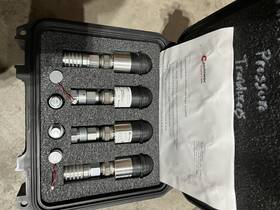
( Brand: Manitowoc ), ( Manufacturer Part Number: PT-420 ), ( Model: 90046023 ), ( Part Type: Pressure Gauge )
Review MANITOWOC Wireless Pressure Gauge Set
The **Manitowoc PT-420 (Part #90046023) Wireless Pressure Gauge Set** represents a cutting-edge advancement in hydraulic monitoring technology, designed to enhance efficiency, safety, and operational insight for heavy-duty equipment operators and fleet managers. This sophisticated system integrates seamlessly with Manitowoc s high-performance hydraulic systems, providing real-time, wireless data transmission to keep operators informed about critical pressure readings without the need for physical connections or cumbersome wiring. Engineered with precision, the PT-420 features a robust, durable construction capable of withstanding the harsh environments typically encountered in construction, mining, and industrial applications, ensuring reliable performance even under extreme conditions. The gauge set includes a high-accuracy pressure sensor paired with a wireless transmitter, allowing for instantaneous data transfer to compatible diagnostic tools, tablets, or fleet management software. This wireless capability eliminates the risk of signal interference or cable damage, while also reducing downtime associated with manual readings or troubleshooting. The intuitive display on the gauge itself provides clear, legible pressure values, complemented by customizable alerts for overpressure or underpressure conditions, helping operators maintain optimal system performance and prevent costly equipment failures. Whether used in a tower crane, excavator, or other heavy machinery, the PT-420 set enhances operational efficiency by enabling proactive maintenance, reducing fuel consumption through optimized hydraulic performance, and improving overall equipment reliability. Its compact yet rugged design ensures easy installation and minimal disruption to existing systems, making it an ideal upgrade for fleets seeking to modernize their monitoring capabilities. By combining advanced wireless technology with Manitowoc s reputation for quality engineering, this pressure gauge set is a game-changer for professionals who demand precision, durability, and seamless connectivity in their hydraulic systems.
The Manitowoc PT-420 (model number 90046023) is a wireless pressure gauge set designed for monitoring and controlling hydraulic systems, particularly in industrial applications like cranes, lifts, and other heavy machinery. Below is a detailed breakdown of its pros and cons, followed by a conclusion and recommendation.
---
### **Pros of the Manitowoc PT-420 Wireless Pressure Gauge Set**
1. **Wireless Connectivity**
The wireless capability eliminates the need for cumbersome wiring, reducing clutter and improving mobility. This is particularly useful in tight or dynamic work environments where cables could become damaged or obstruct movement.
2. **Real-Time Monitoring**
The gauge provides instant pressure readings, allowing operators to make quick adjustments and respond to system changes. This enhances safety by preventing overpressure conditions that could lead to equipment failure or accidents.
3. **Durability and Rugged Design**
Manitowoc equipment is known for its robustness, built to withstand harsh industrial environments, including exposure to dust, moisture, and temperature fluctuations. The PT-420 is likely designed to meet high durability standards, ensuring long-term reliability.
4. **Compatibility with Manitowoc Systems**
As part of the Manitowoc brand, this gauge is likely optimized for compatibility with other Manitowoc machinery, such as cranes and lifts. This seamless integration can simplify maintenance and troubleshooting processes.
5. **User-Friendly Interface**
Wireless gauges often feature intuitive displays and controls, making it easier for operators to read data without needing to stop work or navigate complex wiring. Some models may also include alarms or alerts for critical pressure thresholds.
6. **Reduced Maintenance**
Wireless systems can reduce wear and tear associated with cables, such as fraying or corrosion, which can lead to fewer maintenance interruptions and lower long-term costs.
7. **Flexibility in Installation**
The lack of physical connections allows for easier installation and repositioning of the gauge. This flexibility can be advantageous in applications where equipment layouts change frequently.
8. **Data Logging Capabilities**
Some wireless pressure gauges (depending on the model) can log data over time, providing historical records for maintenance analysis, predictive maintenance, or compliance purposes.
9. **Enhanced Safety**
Wireless gauges can help prevent accidents by providing immediate feedback on system pressure, reducing the risk of hydraulic failures or leaks. This is critical in heavy machinery where pressure fluctuations can be dangerous.
10. **Future-Proofing**
Wireless technology is increasingly integrated into industrial systems, making this gauge a step toward modernizing older equipment or preparing for future upgrades that may require digital connectivity.
---
### **Cons of the Manitowoc PT-420 Wireless Pressure Gauge Set**
1. **Higher Initial Cost**
Wireless technology typically comes with a premium price tag compared to traditional wired gauges. The cost of the PT-420 may be significantly higher than analog or basic digital alternatives.
2. **Battery Dependency**
Wireless gauges rely on batteries for power. This introduces the need for regular battery replacements or recharging, which can add operational complexity and downtime if not managed properly. Some models may require frequent battery checks or replacements, increasing maintenance overhead.
3. **Signal Interference**
Wireless signals can be susceptible to interference from other electronic devices, metal structures, or electromagnetic fields in industrial settings. This could lead to inconsistent readings or connectivity issues, particularly in large or complex machinery.
4. **Limited Range**
While wireless, the PT-420 likely has a finite range (e.g., 30-100 feet, depending on the model). Operators may need to stay within this range for reliable readings, which could be restrictive in large work areas or when monitoring multiple points simultaneously.
5. **Potential for Signal Loss**
In environments with heavy machinery or moving parts, physical obstructions (e.g., metal beams, hydraulic lines) could block or weaken the wireless signal, leading to unreliable data or loss of connection.
6. **Software or App Dependency**
Some wireless gauges require companion software or mobile apps for full functionality (e.g., data logging, alerts, or advanced diagnostics). This adds a layer of complexity, as operators may need training to use these tools effectively. Additionally, software updates or app compatibility issues could arise over time.
7. **Calibration and Accuracy Concerns**
Wireless gauges may require more frequent calibration to ensure accuracy, especially if they are exposed to harsh conditions. Over time, environmental factors could affect performance, necessitating additional maintenance.
8. **Vendor Lock-In**
Depending on the ecosystem, the PT-420 might be tied to specific software or proprietary systems from Manitowoc or its partners. This could limit flexibility if you later need to integrate with other brands or systems.
9. **Training Requirements**
Operators may need training to effectively use the wireless features, such as interpreting data, setting up alerts, or troubleshooting connectivity issues. This adds time and cost to implementation.
10. **Potential for Overkill**
If your application does not require real-time monitoring or wireless flexibility, a simpler wired gauge might suffice. Investing in wireless technology for a low-risk or static application could be unnecessary and costly.
11. **Regulatory or Compliance Considerations**
Depending on your industry (e.g., construction, manufacturing), there may be specific regulations or standards for pressure monitoring equipment. Ensure that the PT-420 meets these requirements, as wireless systems might introduce additional compliance considerations (e.g., data security, signal reliability).
12. **Resale or Upgrade Challenges**
Wireless technology can become outdated quickly as newer models or standards emerge. If you decide to upgrade or sell the equipment later, the resale value of the PT-420 might be lower than wired alternatives, especially if the wireless features are no longer in demand.
---
### **Conclusion**
The Manitowoc PT-420 wireless pressure gauge set offers significant advantages for applications where real-time monitoring, mobility, and modern connectivity are critical. Its wireless design enhances safety, reduces clutter, and provides flexibility in dynamic work environments. The durability and compatibility with Manitowoc systems further add value, making it a strong choice for industries like construction, manufacturing, or heavy equipment operation where precision and reliability are paramount.
However, the higher upfront cost, battery dependency, potential signal issues, and training requirements present notable drawbacks. These factors may outweigh the benefits for applications where wired gauges or simpler analog systems would suffice. Additionally, the need for ongoing maintenance (e.g., battery replacements, calibration) and potential vendor lock-in could add long-term operational complexities.
Ultimately, the decision to purchase the PT-420 depends on your specific needs:- If you prioritize **modernization, real-time monitoring, and wireless flexibility** in a high-risk or dynamic environment, the PT-420 is a worthwhile investment.
- If your application is **static, low-risk, or budget-sensitive**, a wired or analog gauge may be more cost-effective and sufficient.
---
### **Recommendation**
**Purchase the Manitowoc PT-420 if:**1. You operate in an environment where **wireless monitoring improves safety and efficiency** (e.g., large cranes, mobile lifts, or applications with frequent repositioning).
2. You are **upgrading older equipment** and want to integrate modern digital tools for better data management and predictive maintenance.
3. Your budget allows for the **higher initial cost**, and you can accommodate the **maintenance requirements** (e.g., battery management, calibration).
4. You are already using **Manitowoc systems** and benefit from seamless compatibility.
5. You anticipate **future-proofing** your equipment with wireless or digital connectivity options.
**Avoid the PT-420 if:**1. Your application **does not require real-time or wireless monitoring**, and a wired or analog gauge would be adequate.
2. You are **operating on a tight budget** and cannot justify the premium cost without clear ROI.
3. Your environment has **significant signal interference risks** (e.g., dense metal structures, high electromagnetic fields) that could compromise reliability.
4. You lack the **resources or training** to manage wireless technology effectively.
5. You plan to **minimize long-term maintenance** and prefer simpler, lower-tech solutions.
**Alternative Considerations:**- If wireless is not a must, explore **Manitowoc s wired pressure gauges** or other reputable brands (e.g., Moenchild, Wika) for cost-effective alternatives.
- If budget is a concern, consider **used or refurbished wireless gauges** from trusted suppliers, though ensure they meet your performance and safety standards.
- For advanced users, investigate **wireless pressure gauge systems with cloud connectivity** (e.g., IoT-enabled solutions) if you need remote monitoring or advanced analytics.
In summary, the PT-420 is a **high-quality, feature-rich option** for the right use case but may not be necessary for simpler applications. Carefully weigh the pros and cons against your operational needs before making a decision.
Details:
part #: pt420 prices
- $59.95-$165.00
specifications sensoindustria:
- brand: Manitowoc
- mpn: Pt-420
- model: 90046023
- part type: Pressure Gauge
offer sensoindustria:
- quantity: 1
- best offers: True
- options: Ship-to-home
- availability: In Stock
- started: February 20, 2026
- sold: 0
shipping sensoindustria:
- cost: $15.88
- service: UPS Ground
- class: Standard
- carrier: UPS
- type: Calculated
- transit: 4-10 Days
seller sensoindustria:
- # reviews: 91
- rating: 100.0%
- city: Payson, Utah
payments sensoindustria:
- money order
- credit card: Mastercard
- other
- wallet: Paypal
returns sensoindustria:
- policy: No Returns
general sensoindustria:
- condition: Used
- PLCs HMIs > PLC Peripheral Modules > PLC Input Output Modules
