AUTOMATIONDIRECT P1AM-GPIO Automation Productivity Mkr Pins Direct Extension Module
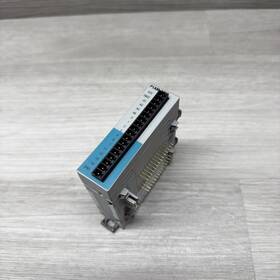
( Brand: Automationdirect ), ( Manufacturer Part Number: P1AM-GPIO ), ( Part Type: Pin Module ), ( Controller Platform: Productivity Open )
Review AUTOMATIONDIRECT Automation Direct Productivity Open Mkr Pins Extension Module Read De
The **AutomationDirect P1AM-GPIO Automation Productivity MKR Pins Extension Module** is a versatile and compact expansion board designed to enhance the functionality of AutomationDirect s **P1AM Automation Module**, a powerful yet flexible programmable automation controller. This module serves as a dedicated interface for accessing and utilizing the **MKR (Microcontroller Kit Reference) pins** on the P1AM, enabling users to seamlessly integrate analog and digital I/O capabilities into their automation projects with minimal wiring and maximum efficiency. Built with precision engineering, the P1AM-GPIO module provides a clean, organized layout of **16 digital I/O pins**, **4 analog input channels**, and **2 PWM (Pulse Width Modulation) outputs**, all accessible via high-quality, gold-plated connectors that ensure reliable signal integrity even in demanding industrial environments. Whether you're controlling relays, reading sensor data, or interfacing with external devices like PLCs, motor drivers, or HMI panels, this module simplifies the process by consolidating critical I/O functions into a single, easy-to-mount extension board. Its modular design allows for quick installation directly onto the P1AM s MKR pins, reducing clutter on the main controller and freeing up valuable space for other components. The P1AM-GPIO is particularly well-suited for applications requiring real-time data acquisition, such as process monitoring, machine vision integration, or custom automation sequences where precise timing and signal control are essential. With its **open-source-friendly compatibility** and **AutomationDirect s intuitive software ecosystem**, including **P1 Automation Studio** and **P1 Logic**, this module empowers engineers and technicians to prototype, test, and deploy automation solutions faster than ever before. Whether you're a seasoned automation professional or a hobbyist exploring the boundaries of programmable logic, the P1AM-GPIO extension module bridges the gap between hardware and software, delivering a robust, scalable solution for modern automation challenges.
The **AutomationDirect P1AM-GPIO Automation Productivity MKR Pins Extension Module** is designed to expand the I/O capabilities of Arduino MKR-based boards, particularly the MKR Zero, MKR WiFi 1010, and other MKR series devices. Below is a detailed breakdown of its pros and cons, followed by a conclusion and recommendation.
---
### **Pros**
1. **Compatibility with MKR Boards**
The module is specifically designed for Arduino MKR boards, ensuring seamless integration with their power and communication protocols. This avoids the need for additional level-shifting or voltage regulation, which can be problematic with other Arduino boards.
2. **Expands Digital and Analog I/O**
It provides additional digital I/O pins (up to 16, depending on the variant) and analog inputs, which can be useful for projects requiring more sensors, relays, or actuators than the base MKR board offers. This is particularly valuable for industrial or automation applications where multiple inputs/outputs are needed.
3. **Simplified Wiring**
The module uses a standard 0.1" header pin layout, making it easy to connect to breadboards, jumpers, or other modules without complex soldering or adapters. This reduces wiring errors and speeds up prototyping.
4. **Low-Cost Expansion**
Compared to buying separate breakout boards or shields for each function (e.g., digital I/O, analog inputs), this module offers a cost-effective way to add multiple pins in one package. It eliminates the need for multiple components and reduces the overall bill of materials.
5. **Easy to Use with Arduino IDE**
The module is compatible with the Arduino IDE, and AutomationDirect provides libraries or examples to simplify programming. Users familiar with Arduino can quickly integrate it into their projects without a steep learning curve.
6. **Compact and Modular Design**
The module is small and can be stacked or placed alongside other MKR-compatible modules, making it ideal for space-constrained projects. It follows the same form factor as other MKR accessories, ensuring a cohesive build.
7. **Supports High Pin Counts**
Depending on the variant (e.g., P1AM-GPIO-16 or P1AM-GPIO-32), it can provide a significant number of additional pins, which is beneficial for complex projects like PLC-like control systems, data logging, or interfacing with multiple sensors.
8. **Reliable Power Handling**
The module is designed to handle the current and voltage requirements of MKR boards, reducing the risk of damage from improper power supply or grounding issues. This is particularly important in industrial or high-reliability applications.
9. **Good Documentation and Support**
AutomationDirect provides technical documentation, datasheets, and customer support, which can be helpful for troubleshooting or understanding the module s capabilities. Their reputation in industrial automation also adds credibility.
10. **Versatile Use Cases**
The module can be used for a wide range of applications, including:- Industrial automation (e.g., controlling relays, reading limit switches).
- Data acquisition (e.g., logging sensor data from multiple sources).
- Robotics (e.g., expanding motor or sensor control).
- IoT projects (e.g., adding more inputs/outputs to a wireless MKR board).
---
### **Cons**
1. **Limited to MKR Boards**
The module is **not compatible** with other Arduino boards (e.g., Uno, Mega, Nano, or ESP32/ESP8266). If you re working with a different platform, this module will not be useful, and you may need to invest in alternative solutions.
2. **No Built-in Protection Features**
Unlike some industrial-grade I/O modules, this module lacks built-in protection features such as:- **Reverse polarity protection**: Connecting power incorrectly could damage the module or the MKR board.
- **Overvoltage or undervoltage protection**: Exposure to power spikes or unstable voltage could cause failure.
- **Short-circuit protection**: If a pin is shorted to ground or another pin, it may damage the module or connected components.
This makes it less suitable for harsh or unsupervised environments without additional safeguards.
3. **No Isolation**
The module does not provide electrical isolation between the MKR board and external circuits. This means that faults in connected devices (e.g., short circuits, high voltages) can directly affect the MKR board, potentially causing permanent damage.
4. **No Built-in Signal Conditioning**
The module provides raw digital and analog I/O without signal conditioning (e.g., filtering, amplification, or noise reduction). For applications requiring precise analog readings (e.g., measuring weak signals or high-impedance sensors), additional circuitry may be needed.
5. **Limited Analog Resolution**
The analog inputs on the MKR Zero (and thus this module) are 10-bit ADCs, which may not be sufficient for high-precision applications. For better resolution, you might need an external ADC or a different board.
6. **No Built-in Communication Protocols**
While the module expands I/O, it does not include communication interfaces like UART, SPI, or I2C on the module itself. These must be used on the host MKR board, which may limit parallel communication capabilities if the MKR s pins are already in use.
7. **Potential for Pin Conflicts**
If the MKR board s pins are already used for other functions (e.g., UART, SPI, or power), adding this module may require careful pin assignment to avoid conflicts. This could complicate wiring and programming.
8. **No Long-Term Availability Guarantee**
AutomationDirect s product lifecycle can vary, and while this module is currently available, there is no guarantee it will remain so indefinitely. For long-term projects, consider sourcing components from multiple suppliers or designing around the module.
9. **No Built-in Diagnostics**
Unlike some industrial I/O modules, this module does not include built-in diagnostics (e.g., LED indicators for pin states, fault reporting, or self-test capabilities). Troubleshooting may require external tools or additional code.
10. **Mechanical Fragility**
While the module is compact, it is not designed for rugged environments. Physical stress (e.g., vibration, repeated bending) could damage the pins or solder joints, especially if the module is not securely mounted.
---
### **Conclusion**
The **AutomationDirect P1AM-GPIO MKR Pins Extension Module** is a practical and cost-effective solution for expanding the I/O capabilities of Arduino MKR boards. It is well-suited for hobbyist projects, prototyping, and small-scale automation applications where additional digital or analog pins are needed. Its ease of use, compatibility with the Arduino ecosystem, and modular design make it a strong choice for developers comfortable with MKR boards.
However, its limitations such as lack of protection features, isolation, or signal conditioning make it less ideal for industrial, high-reliability, or high-precision applications. If your project involves harsh environments, high voltages, or critical safety requirements, you may need to supplement this module with additional hardware (e.g., optocouplers, relays, or isolation amplifiers) or consider a more robust I/O solution.
For most **hobbyist, educational, or low-risk automation projects** where compatibility with MKR boards is a priority, this module is a solid and affordable choice. For more demanding applications, weigh the trade-offs carefully or explore alternatives like industrial I/O modules, PLCs, or other Arduino-compatible expansion boards.
---
### **Recommendation**
- **Buy it if**:- You are working exclusively with **Arduino MKR boards** (e.g., MKR Zero, MKR WiFi 1010).
- You need a **simple, low-cost way to expand digital or analog I/O** for prototyping or small-scale projects.
- Your application does not involve **high voltages, isolation requirements, or harsh environments**.
- You are comfortable with **basic wiring and Arduino programming** and can add external protection if needed.
- **Avoid it if**:- You are using **non-MKR Arduino boards** (e.g., Uno, Mega, ESP32).
- Your project requires **industrial-grade reliability, isolation, or protection features**.
- You need **high-precision analog inputs, high-speed communication, or ruggedized components**.
- You are working in an environment where **power stability or mechanical stress** is a concern without additional safeguards.
- **Alternatives to Consider**:- For **higher reliability**: Use a **PLC or industrial I/O module** (e.g., Allen-Bradley, Siemens, or AutomationDirect s industrial-grade modules).
- For **more analog inputs**: Pair the MKR with an **external ADC** (e.g., MCP3008) or use a board with better resolution (e.g., Arduino Due).
- For **non-MKR compatibility**: Look for **generic Arduino shields** (e.g., Arduino Digital I/O Shield) or **Raspberry Pi HATs** if using a Pi.
- For **higher pin counts**: Consider **breakout boards with headers** (e.g., Adafruit or SparkFun modules) that can be wired directly to the MKR.
Details:
Automation Direct P1AM-GPIO Productivity Open MKR Pins Extension Shield Module. Used and untested.
part #: p1am price
- $60.00
specifications sensoindustria:
- brand: Automationdirect
- mpn: P1am-gpio
- part type: Pin Module
- controller platform: Productivity Open
payments sensoindustria:
- credit card: Discover
- wallet: Apple-pay
- other
seller sensoindustria:
- city: Oldtown, Idaho
- rating: 100.0%
- # reviews: 3997
offer sensoindustria:
- availability: In Stock
- started: May 17, 2026
- sold: 0
- quantity: 1
- best offers: True
- options: Ship-to-home
shipping sensoindustria:
- type: Fixed
- carrier: USPS
- class: Standard
- transit: 4-9 Days
- cost: $0.00
- service: USPS Ground Advantage
returns sensoindustria:
- method: Money back
- time: 30 Days
- policy: Returns Accepted
- paid by: Seller
general sensoindustria:
- PLCs HMIs > PLC Peripheral Modules > PLC Input Output Modules
- condition: Used
Automationdirect P1AM Is Similar To:
- Ad-ssr610-22-acz Automationdirect Automation Direct Solid State Relay (50.9% similar) Scar, 10A contact rating, vac load voltage , zero cross, led indicator scrod voltage : vac contact rating: 10ASWITCHING type: zero cross finger-safe design: yes indicator: LED021519NSDAVE-M2-DAVE. Technical attributes:item: solid state relay mounting: 35MM din rail hockey puck style: no input ...(April 1st, 2019)
- Automation Direct D2-08nd-3 Automationdirect D2-08nd3 (37.6% similar) You are buying 1 new automation direct D2-08ND3 with the box...(January 16th, 2018)
- Avs-5343 Automationdirect Automation Direct Nitra Pilot Valve (57.3% similar) Nita pilot valve 5-PORT 4-WAY 2-POSITION, single air spring return, 1/3 8IN font inlet's, 2 outlet 4IN exhaust CV...(March 13th, 2018)
- C0-00ac Automationdirect Koyo Automation Direct Click Plc Power Supply In Out (53.2% similar) Our cut-off time for shipping an item is 3:45PM ct. 5a this unit is new from unused stock. If you do not have an account no worries. Need this item next day. Messaging: through messages...(February 4th, 2019)
- C0-02dr-d Automationdirect Koyo Automation Direct Click Plc Analog Discrete Module (57.3% similar) Need this item next day. Our cut-off time for shipping an item is 3:45PM ct. Messaging: through messages. If you do not have an account no worries...(February 4th, 2019)
- C0-04ad-1 Automationdirect Koyo Automation Direct Click Plc Analog Input Module (59.4% similar) Our cut-off time for shipping an item is 3:45PM ct. Messaging: through messages. Need this item next day. If you do not have an account no worries...(February 4th, 2019)
- C0-08td2 Automationdirect Programmable Controller Output Module (39% similar) Removable terminal block included. C0-08TD2 discrete output module, 8-POINT, 12-24 CDC, sourcing, 1 isolated commons, 8 point per common...(March 14th, 2018)
- C0-16cdd2 Automationdirect Koyo Automation Direct Click Plc Module (59.3% similar) If you do not have an account no worries. Our cut-off time for shipping an item is 3:45PM ct. Need this item next day. Messaging: through messages...(February 4th, 2019)
- C0-16nd3 Automationdirect New No Box Automation Direct Module (54.8% similar) Shelving number BB54...(April 28th, 2018)
- Co-08ta Automationdirect Automation Direct Relay (52.8% similar) New and in the box...(September 11th, 2017)
- D0-16td2 Automationdirect Automation Direct Discrete Output Module (56.8% similar) Shipped with USPS priority mail. Automation direct D0-16TD2 discrete output module condition is used...(November 9th, 2018)
