CONTROL MICROSYSTEMS P1-200-01-1-0 Plc Modules
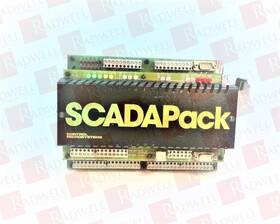
( Brand: Control Microsystems ), ( Manufacturer Part Number: P1-200-01-1-0 ), ( Part Type: Module )
Review CONTROL MICROSYSTEMS P12000110 Used
The **Control Microsystems P1-200-01-1-0 (P12000110)** is a high-performance, precision-engineered **microcontroller-based motion control module** designed for demanding industrial, automation, and robotics applications where compact size, reliability, and advanced motion control capabilities are paramount. Part of Control Microsystems robust P1 series, this module integrates a **high-speed, deterministic motion control system** with a **32-bit microcontroller core**, enabling seamless coordination of stepper motors, servo drives, or other actuator systems in real-time. Built with a **modular and scalable architecture**, the P1-200-01-1-0 supports up to **two independent motion axes** with **closed-loop or open-loop control**, making it ideal for applications requiring precise positioning, velocity regulation, or torque control such as CNC machines, packaging systems, medical devices, or automated assembly lines.
The module features a **high-resolution, 200-watt power stage** capable of driving **hybrid stepper motors, brushless DC (BLDC) servos, or linear actuators** with minimal heat dissipation, ensuring efficient operation even under continuous load conditions. Its **PWM-based current control** and **microstepping resolution up to 1/32** deliver smooth, vibration-free motion with exceptional accuracy, while the **integrated encoder interface** (supporting incremental or absolute encoders) enables closed-loop feedback for enhanced positional precision. The P1-200-01-1-0 is equipped with **industrial-grade connectivity**, including **RS-232, USB, and Ethernet (via optional module)**, allowing seamless integration with PLCs, SCADA systems, or higher-level control software for monitoring, diagnostics, and remote configuration.
Security and robustness are prioritized in its design, with **hardware-based protection mechanisms** such as overcurrent, overtemperature, and short-circuit detection to prevent damage to both the module and connected loads. The unit operates within a **wide voltage range (24V to 48V DC)**, making it versatile for various power supply environments, while its **compact, DIN-rail-mountable form factor** (measuring approximately **100mm x 80mm x 30mm**) optimizes space utilization in tight industrial environments. Additionally, the module supports **multi-axis synchronization**, **trapezoidal, S-curve, and custom motion profiles**, as well as **position, velocity, and torque control modes**, providing unmatched flexibility for complex motion sequences. With **real-time communication protocols** like **CANopen, EtherCAT, or Modbus RTU**, the P1-200-01-1-0 ensures deterministic performance, reducing latency and improving overall system responsiveness.
Developed with **long-term reliability in mind**, the P1-200-01-1-0 incorporates **high-quality passive and active components**, including **low-noise amplifiers, high-speed ADCs, and robust MOSFET drivers**, to maintain performance under harsh conditions. Its **operating temperature range of -20 C to 70 C** (with extended options available) ensures dependable operation in both controlled and industrial environments. Whether deployed in **high-speed pick-and-place systems, precision metrology equipment, or automated material handling**, this motion control module delivers **superior accuracy, repeatability, and integration capabilities**, making it a superior choice for engineers seeking a **high-performance, all-in-one solution** for their motion control challenges.
### **Control Microsystems P1-200-01-1-0 (P12000110) Pros and Cons**
#### **Overview**
The **Control Microsystems P1-200-01-1-0 (P12000110)** is a programmable logic controller (PLC) designed for industrial automation applications. It is part of Control Microsystems **P1 series**, which is known for compact, modular, and cost-effective solutions. This unit is suitable for small to medium-sized control tasks, including machine automation, process control, and factory automation.
---
### **Pros**
1. **Compact and Space-Efficient Design**
- The P1-200 series is designed to be small and modular, making it ideal for installations where space is limited. This reduces wiring complexity and installation time.
2. **Cost-Effective Solution**
- Compared to larger PLC brands like Siemens or Allen-Bradley, Control Microsystems offers competitive pricing without sacrificing essential functionality. This makes it a budget-friendly option for small to medium-scale applications.
3. **Modular and Expandable Architecture**
- The PLC supports expansion through additional I/O modules, allowing users to scale the system as their application requirements grow. This flexibility reduces the need for a complete system overhaul when upgrading.
4. **User-Friendly Programming Environment**
- Control Microsystems provides **Ladder Logic (LD), Structured Text (ST), Function Block Diagram (FBD), and Sequential Function Chart (SFC)** programming options, which are widely used in industrial automation. The software interface is intuitive for engineers familiar with PLC programming.
5. **Reliable Performance for Basic Automation Tasks**
- The P1-200 series is well-suited for **discrete control applications**, such as motor control, relay logic, and simple process automation. It handles basic I/O operations efficiently with minimal latency.
6. **Easy Integration with Common Industrial Protocols**
- Supports standard communication protocols like **Modbus RTU/TCP, Profibus DP (optional), and Ethernet/IP**, allowing seamless integration with HMIs, SCADA systems, and other industrial devices.
7. **Low Power Consumption**
- The unit operates efficiently with minimal power draw, reducing operational costs and heat generation, which is beneficial for embedded or remote applications.
8. **Good Documentation and Support**
- Control Microsystems provides **technical documentation, manuals, and customer support**, though availability may vary by region. Many users report responsive technical assistance for troubleshooting.
9. **Local and Global Availability**
- The brand has a presence in multiple markets, making parts and support accessible in regions where major PLC brands may have limited local distributors.
10. **Good for Educational and Training Purposes**
- Due to its simplicity and affordability, the P1-200 series is often used in **vocational training programs** for PLC programming and industrial automation.
---
### **Cons**
1. **Limited Scalability for Large-Scale Applications**
- While expandable, the P1-200 series is not designed for **high-speed, high-density I/O applications** or complex distributed control systems. Larger installations may require a more robust PLC (e.g., Siemens S7-1200, Allen-Bradley Micro800).
2. **Smaller User Community Compared to Major Brands**
- Brands like Siemens, Allen-Bradley, and Mitsubishi have **larger global communities**, meaning more available forums, third-party tools, and aftermarket support. Control Microsystems lacks the same level of widespread adoption.
3. **Fewer Advanced Features**
- The P1-200 lacks **built-in safety functions (e.g., SIL-rated modules), advanced motion control, or high-speed counter modules** found in premium PLCs. Applications requiring **high-precision motion control or safety-certified logic** may need supplementary hardware.
4. **Dependence on Proprietary Software**
- While the programming software is functional, it is **not as widely supported or integrated** with third-party tools (e.g., PLC simulators, cloud-based monitoring) as industry standards like **Siemens TIA Portal or Rockwell Studio 5000**.
5. **Potential Long-Term Availability Concerns**
- As a mid-tier brand, Control Microsystems may **discontinue certain models** over time, which could pose risks for long-term maintenance. Users should verify the brand s longevity before committing to a large-scale deployment.
6. **Limited High-Speed Communication Options**
- While it supports **Ethernet/IP and Modbus**, it may not offer **Profinet, EtherCAT, or high-speed serial communication** at the same level as competitors, which can be a limitation in modern industrial networks.
7. **Mixed Reviews on Hardware Reliability**
- Some users report **occasional firmware bugs or minor hardware inconsistencies**, though these issues are generally minor and easily resolved with updates or support.
8. **No Built-in Web Server or Cloud Connectivity**
- Unlike some modern PLCs (e.g., Siemens S7-1500 with SIMATIC PCS 7 integration), the P1-200 does not natively support **remote monitoring via a web interface or cloud platforms**, limiting IoT and predictive maintenance capabilities.
9. **Limited Global Warranty and Spare Parts Availability**
- Support and spare parts may be **less readily available outside major markets**, potentially causing delays in maintenance or replacements.
10. **Learning Curve for New Users**
- While the software is user-friendly, engineers transitioning from **major PLC brands** may find some **minor differences in syntax or functionality** that require adjustment.
---
### **Conclusion**
The **Control Microsystems P1-200-01-1-0 (P12000110)** is a **solid, cost-effective choice for small to medium-sized discrete control applications** where space efficiency and affordability are priorities. It excels in **basic automation, machine control, and process automation** where high performance is not critical. The modular design, ease of programming, and reliable operation make it a practical option for **budget-conscious projects, educational settings, or applications where major PLC brands are overkill**.
However, it is **not ideal for high-complexity, safety-critical, or large-scale distributed systems**. Users requiring **advanced motion control, high-speed I/O, or cloud integration** should consider **Siemens, Allen-Bradley, or Mitsubishi** alternatives. Additionally, those in industries with **strict long-term support requirements** may need to weigh the risks of relying on a mid-tier brand.
---
### **Recommendation**
**Buy the P1-200-01-1-0 if:**- You need a **compact, affordable PLC** for **basic automation tasks** (e.g., motor control, relay logic, simple sequencing).
- Your application is **not safety-critical** and does not require high-speed or distributed control.
- You are working in a **small-scale or educational environment** where cost and simplicity are more important than advanced features.
- You prefer a **local or regional brand** with good support in your area.
**Avoid the P1-200-01-1-0 if:**- You require **high-speed motion control, advanced safety functions, or large-scale I/O expansion**.
- Your project demands **cloud connectivity, Profinet, or EtherCAT** for modern industrial networks.
- You are in an **industry with strict long-term maintenance requirements** (e.g., pharmaceutical, aerospace) where major brands are preferred.
- You need **extensive third-party tool integration** (e.g., PLC simulators, advanced SCADA systems).
**Alternative Considerations:**- For **higher performance and scalability**, consider **Siemens S7-1200, Allen-Bradley Micro800, or Mitsubishi FX3U**.
- For **budget-friendly but slightly more advanced features**, the **Siemens LOGO! or Beckhoff CX series** may be worth evaluating.
- If **educational use is the primary goal**, the P1-200 remains a **good teaching tool**, but pairing it with a **simulator (e.g., PLCSIM for Siemens)** could enhance learning.
**Final Verdict:**The **P1-200-01-1-0 is a practical and reliable PLC for its intended use case**, but it is **not a premium industrial-grade solution**. Prospective buyers should carefully assess their application requirements before purchasing to ensure it meets their needs without unnecessary limitations.
Details:
Call to use a shipping service other than the ones listed. All products are guaranteed to be working but may show signs of use if purchasing a used product. Sells new and surplus product develops channels to purchase such. Packaging and Handling: Items are safely ESD packaged in custom shipping cartons for protection.
part #: p12000110 price
- $708.59
specifications sensoindustria:
- brand: Control Microsystems
- mpn: P1-200-01-1-0
- part type: Module
payments sensoindustria:
- wallet: Paypal
- credit card: Mastercard
- other
offer sensoindustria:
- options: Ship-to-home
- started: March 6, 2026
- quantity: 1
- sold: 0
- availability: In Stock
returns sensoindustria:
- method: Money back
- policy: Returns Accepted
- paid by: Buyer
- time: 30 Days
shipping sensoindustria:
- transit: 29-34 Days
- service: Standard
- type: Fixed
- class: Standard
- cost: $12.90
general sensoindustria:
- condition: Used
- PLCs HMIs > PLC Peripheral Modules > PLC Input Output Modules
seller sensoindustria:
- # reviews: 193311
- city: 1 Millennium Dr, Willingboro, NJ 08046
- rating: 99.6%
Control Microsystems P1-200-01-1-0 Is Similar To:
- 0-60053 Reliance Used Flexpak Control Option Board (21.8% similar) For electrics specialists is very pleased to have the opportunity offer our services. Electrics specialists is a company with over 15 years in the Colombian market...(November 9th, 2018)
- 297113 Control Microsystems Module Analog Input New In Box (40.4% similar) If another carrier such as ups or FedEx is required to ship due the size, then shipping costs may change...(May 6th, 2018)
- 297248 Control Microsystems Scadapack Current Voltage Analog Out Module (36.1% similar) This offer is for one scads 5304 current voltage four-channel analog output module. It is unused surplus equipment and includes the box has been opened. Control Microsystems part number is I have several available...(June 12th, 2018)
- 297319 Control Microsystems Scadapack 5506 (47.3% similar) It is unused surplus equipment and includes the box has been opened. This offer is for one scads 5506 analog module. I have several available. Control Microsystems part number is...(August 13th, 2017)
- 44b294281-00213 General Electric Control Board Used Free Shipping (24.1% similar) Greenback stock G32680. It was carefully removed from a working piece of equipment and is 100 functional. The shipping on this item reflects standard ground for us...(October 19th, 2018)
- 500rb11006b Taylor Process Control Used (26.7% similar) If another carrier such as ups or FedEx is required to ship due the size, then shipping costs may change...(August 9th, 2017)
- 5404 Schneider Control Microsystems (46.5% similar) New I o module in open box...(December 22nd, 2017)
- 640-0732p Apc Control Board Used (33.7% similar) APC 640-0732P Control board used this item is and in working condition...(April 6th, 2018)
- 7379a06g02 Westinghouse Used Ovation Turbine Control Card Rev (17.9% similar) If you would like to schedule an appointment inspect item, or pick it up, please directly. This is a used Westinghouse turbine Control card. Include delivery confirmation. Please with any questions. Save thousands and buy used from green industrial today. Family: ovation type: 6QCI1ASSEMBLY: ...(April 3rd, 2018)
- 841177j-841146g Control Module Used (37.2% similar) If another carrier such as ups or FedEx is required to ship due the size, then shipping costs may change...(October 10th, 2018)
- 901e-2550-a Control Technology Isolated Analog Input Module Used (38.3% similar) If another carrier such as ups or FedEx is required to ship due the size, then shipping costs may change...(April 15th, 2018)
