MITSUBISHI NZ2GN12A4-16D Link Remote Controller I/o 347697
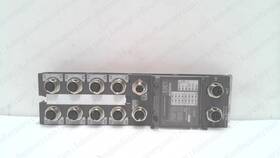
( Brand: Mitsubishi ), ( Manufacturer Part Number: NZ2GN12A4-16D ), ( Part Type: Remote Controller )
Review MITSUBISHI Cc link Remote I/o Controller #347697
The **Mitsubishi Electric NZ2GN12A4-16D CC-Link Remote I/O Controller (Product Code: 347697)** is a high-performance, industrial-grade remote I/O module designed to enhance communication efficiency and scalability within Mitsubishi s CC-Link IE network architecture. Engineered for demanding automation environments, this controller serves as a critical bridge between distributed I/O devices and central control systems, enabling seamless data exchange over long distances while maintaining robust reliability. With a **16-channel digital input/output (I/O) configuration**, the NZ2GN12A4-16D supports a versatile range of applications, including factory automation, process control, and machine monitoring, where real-time responsiveness and low-latency communication are essential. Its **CC-Link IE compliance** ensures seamless integration with Mitsubishi s advanced PLCs, such as the Q-series and FX-series, while also supporting high-speed data transfer rates of up to **10 Mbps**, making it ideal for complex, high-density I/O setups. The module features a **compact yet rugged design**, built to withstand harsh industrial conditions, with protection ratings suitable for environments exposed to dust, moisture, and temperature fluctuations. Its **remote I/O architecture** reduces wiring complexity and cable congestion by consolidating signals from field devices into a single, high-speed communication link, thereby simplifying system installation and maintenance. Additionally, the NZ2GN12A4-16D incorporates **diagnostic capabilities**, allowing operators to monitor device status, detect faults, and troubleshoot issues efficiently through integrated error reporting and logging functions. Whether deployed in a large-scale manufacturing facility or a precision automation system, this controller delivers a balance of performance, flexibility, and durability, ensuring optimal operational efficiency and long-term reliability in industrial automation applications.
### **Pros and Cons of buying a Mitsubishi NZ2GN12A4-16D CC-Link Remote I/O Controller (347697)**
#### **Pros:**1. **Compatibility with CC-Link Network** This device integrates seamlessly with Mitsubishi s CC-Link industrial network, allowing for high-speed communication between PLCs, HMIs, and other factory automation equipment. This ensures efficient data exchange in large-scale automation systems.
2. **High-Speed Data Transmission** CC-Link supports high-speed communication (up to 100 Mbps), making it ideal for applications requiring real-time control, such as robotics, CNC machines, and conveyor systems.
3. **Scalability** The device supports multiple I/O modules, allowing for easy expansion of input/output points as system requirements grow. This modularity reduces the need for frequent hardware upgrades.
4. **Reliability in Industrial Environments** Mitsubishi is known for producing robust industrial automation components designed to withstand harsh conditions, including temperature fluctuations, electrical noise, and mechanical stress.
5. **Standardized Communication Protocol** CC-Link is a widely adopted industrial protocol, meaning technicians and engineers familiar with it are readily available. This reduces training costs and simplifies troubleshooting.
6. **Integration with Mitsubishi PLCs** Works natively with Mitsubishi s Q-series, L-series, and FX-series PLCs, ensuring seamless operation in existing Mitsubishi-based systems.
7. **Support for Remote Monitoring** The device enables remote diagnostics and monitoring, which can improve system uptime and reduce downtime by allowing quick identification of issues.
8. **Future-Proofing** CC-Link is a mature and evolving standard, with support for newer technologies like Industry 4.0 and IoT integration, making it a long-term investment.
---
#### **Cons:**1. **Cost** Mitsubishi s industrial automation products, including CC-Link devices, are generally more expensive than some alternatives (e.g., Ethernet/IP or PROFINET-based systems). The initial purchase price may be higher, and additional licensing or software costs could apply.
2. **Vendor Lock-In** CC-Link is proprietary to Mitsubishi, meaning compatibility with non-Mitsubishi systems may require additional gateways or converters. This can limit flexibility if the system needs to integrate with other brands in the future.
3. **Learning Curve for Non-Mitsubishi Users** Engineers or technicians unfamiliar with Mitsubishi s ecosystem may require training to effectively configure and troubleshoot the device, adding to implementation time and costs.
4. **Limited Open-Source Support** Unlike some open-standard protocols (e.g., Modbus or OPC UA), CC-Link lacks widespread third-party tool support, which could complicate custom development or integration with non-Mitsubishi software.
5. **Hardware Dependency on CC-Link Infrastructure** If the system relies heavily on CC-Link, a failure in the network infrastructure (e.g., switches, cables) could disrupt the entire I/O communication, requiring redundant or backup solutions.
6. **Potential for Obsolescence** While CC-Link is stable, newer industrial networks (e.g., Ethernet-based protocols) are increasingly replacing traditional fieldbus systems. Future-proofing may require additional investment to transition away from CC-Link if Mitsubishi discontinues support.
7. **Limited Global Availability of Parts** Like many industrial components, replacement parts for older or discontinued models may be harder to source, especially outside major markets.
---
### **Conclusion**
The **Mitsubishi NZ2GN12A4-16D CC-Link Remote I/O Controller (347697)** is a high-performance device well-suited for Mitsubishi-based industrial automation systems requiring reliable, high-speed communication. Its strengths lie in seamless integration with Mitsubishi PLCs, scalability, and robustness in demanding environments. However, the higher cost, vendor lock-in risks, and potential learning curve for non-Mitsubishi users may be drawbacks depending on the application.
This device is **recommended** for:- **Existing Mitsubishi automation systems** where CC-Link is already in use.
- **Applications requiring high-speed, deterministic communication** (e.g., robotics, CNC, or conveyor systems).
- **Users prioritizing reliability and long-term support** from Mitsubishi.
It is **less ideal** for:- **Systems needing multi-vendor compatibility** or open-standard protocols.
- **Budget-sensitive projects** where cost-effective alternatives (e.g., Ethernet/IP or Modbus) are viable.
- **Applications where future flexibility** (e.g., easy migration to newer protocols) is critical.
### **Final Recommendation**
If your project is **fully integrated with Mitsubishi s ecosystem** and you require the performance benefits of CC-Link, this controller is a solid choice. However, if cost, flexibility, or long-term adaptability are concerns, evaluate alternatives like Ethernet/IP or PROFINET-based I/O controllers. Always verify compatibility with your existing system and consult Mitsubishi s technical support or a certified integrator to ensure optimal performance.
Details:
X2 5-PIN MALE FEMALE M12 L-CODED POWER CONNECTOR. MANUFACTURER PART NUMBER: NZ2GN12A4-16D. X8 5-PIN FEMALE M12 A-CODED I/O PORT. MITSUBISHI NZ2GN12A4-16D.
part #: nz2gn12a416d prices
- $217.94-$500.00
specifications sensoindustria:
- brand: Mitsubishi
- mpn: Nz2gn12a4-16d
- part type: Remote Controller
payments sensoindustria:
- other
- credit card: Mastercard
- wallet: Apple-pay
offer sensoindustria:
- sold: 0
- best offers: True
- options: Ship-to-home
- availability: In Stock
- quantity: 1
- started: February 11, 2026
seller sensoindustria:
- # reviews: 20702
- rating: 99.9%
- city: Clinton Township, Michigan
general sensoindustria:
- condition: Used
- PLCs HMIs > PLC Peripheral Modules > PLC Input Output Modules
returns sensoindustria:
- policy: No Returns
shipping sensoindustria:
- service: FedEx Ground / FedEx Home Delivery, UPS Ground, USPS Priority Mail, FedEx Standard Overnight
- transit: 2-7 Days
- carrier: FedEx, UPS, USPS
- class: Standard, Expedited, One-day
- type: Calculated
- cost: $21.48
Mitsubishi NZ2GN12A4-16D Is Similar To:
- A0j2hcpu Mitsubishi Melsec Plc Programable Controller (45.2% similar) Mitsubishi melees A0J2HCPU plc programmable controller A0J2H P21 R21 manufacturer: Mitsubishi model: A0J2HCPUTYPE: platform: new, in working condition. This item is new...(September 14th, 2018)
- A1sj51t64 Mitsubishi Io Link Master (39.2% similar) Mitsubishi A1SJ51T64 Io link unit master for communication to remote devices...(June 1st, 2018)
- A1sj71at21b Mitsubishi Data Link (34% similar) Mitsubishi A1SJ71AT21B data link unit melees net...(June 2nd, 2018)
- A3acpu Mitsubishi Melsec Programmable Controller (47.3% similar) This item is used. Mitsubishi melees A3ACPU programmable controller FG68 manufacturer: Mitsubishi model: type: controller controller platform: used, in working condition...(November 5th, 2017)
- A6tbxy36 Mitsubishi New Programmable Controller (47.7% similar) And 3:00 PO. These are typically larger items...(July 13th, 2017)
- Ad71 Mitsubishi Melsec Programmable Controller (48.1% similar) This item is used. Mitsubishi melees AD71 programmable controller FG59 manufacturer: Mitsubishi model: type: controller controller platform: used, in working condition...(April 4th, 2018)
- Aj65sbtb1-16t Mitsubishi Electric New Remote Output Module Unopened (40.3% similar) Mitsubishi AJ65SBTB1-16T cc-link remote output module new unopened in original box - see photos...(June 10th, 2019)
- Aj65sbtb1-32te1 Mitsubishi New Melsec Cc-link (37.4% similar) Info: the shipping price is only for us 48 contiguous states...(October 13th, 2017)
- Aj65vbtcu3-16d1 Mitsubishi Plc Remote Terminal Block (40.4% similar) This service usually takes 2-5 weeks, sometimes longer. We combine offers to save on shipping. Up for sale is a used Mitsubishi plc remote I o block part number AJ65VBTCU3-16D1...(May 30th, 2018)
- Ax70 Mitsubishi Electric Input Module Programmable Controller (45.5% similar) 50 9f this item is surplus stock in good condition...(April 17th, 2018)
- Ax81 Mitsubishi New Sealed Programmable Controller Melsec (48.7% similar) New sealed, Mitsubishi, AX81, programmable controller, melees...(March 21st, 2018)
