BAILEY CONTROLS NKTU01-16 Asea Boveri
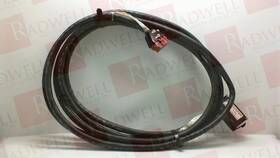
( Brand: Bailey Controls ), ( Manufacturer Part Number: NKTU01-16 ), ( Part Type: Boveri )
Review BAILEY CONTROLS Asea Brown Boveri Nktu0116 Used
The **NKTU01-16** from ABB (formerly ASEA Brown Boveri) is a robust and versatile **medium-voltage, dry-type, three-phase transformer** designed for reliable power distribution in industrial, commercial, and utility applications. This unit belongs to the **NKTU series**, a well-established line of compact, oil-free transformers engineered for high efficiency, minimal maintenance, and extended operational lifespan. The **NKTU01-16** model specifically features a **16 MVA (megavoltampere) nominal capacity**, making it suitable for demanding high-power applications such as substations, industrial plants, or large commercial buildings where stable and efficient voltage transformation is critical.
Constructed with **high-quality, dry-type insulation materials**, this transformer eliminates the need for oil, reducing fire hazards, environmental risks, and maintenance requirements while maintaining excellent thermal performance. The core and coil assembly utilize **high-grade silicon steel laminations** to minimize core losses and optimize magnetic efficiency, ensuring superior energy conversion with reduced heat generation. The windings are meticulously designed with **high-temperature-resistant materials**, allowing the transformer to operate reliably even under heavy loads or adverse environmental conditions, including elevated ambient temperatures.
The **NKTU01-16** is equipped with a **fully enclosed, self-cooled (AN) or forced-air cooled (FA) design**, depending on the specific configuration, which enhances cooling efficiency and extends the transformer s operational lifespan. Its **compact and modular construction** allows for easy installation in confined spaces, while the **rigid, welded steel tank** provides structural integrity and protection against mechanical stress, vibration, and external contaminants. The transformer is also designed with **built-in protection features**, such as **pressure relief devices, temperature monitoring, and bushings with high-voltage insulation**, to ensure safe and stable operation under fault conditions.
For connectivity, the **NKTU01-16** incorporates **high-voltage and low-voltage bushings** that support standard connection configurations, facilitating seamless integration into existing electrical grids or substation layouts. The **primary and secondary windings** are carefully balanced to minimize harmonic distortion and voltage fluctuations, contributing to overall system stability. Additionally, the transformer s **low-noise operation** and **minimal vibration** make it ideal for applications where operational quietness is a priority, such as in urban or residential areas.
ABB s rigorous testing and certification processes ensure that the **NKTU01-16** meets or exceeds international standards, including **IEC 60076, IEEE C57.12.00, and UL 1561**, making it a dependable choice for global markets. Whether deployed in **industrial manufacturing, renewable energy systems, or critical infrastructure**, this transformer delivers **high efficiency, durability, and operational reliability**, making it a cornerstone of modern electrical power distribution networks. Its **long-term performance and low total cost of ownership** further solidify its reputation as a premium solution for medium-voltage power transformation.
### **Analysis of the NKTU01-16 (ASEA Brown Boveri) Traction Motor**
The **NKTU01-16** is a DC series traction motor originally manufactured by **ASEA Brown Boveri (ABB)**. These motors were widely used in electric locomotives, trams, and industrial applications during the mid-to-late 20th century. Below is a detailed breakdown of its **pros and cons**, followed by a **conclusion and recommendation**.
---
### **Pros of the NKTU01-16**
1. **Proven Reliability and Durability**
- The motor was designed for heavy-duty traction applications, meaning it was built to withstand continuous high loads, frequent starts/stops, and harsh operating conditions.
- Many units have operated for decades with minimal major failures, especially when properly maintained.
2. **High Power Output for Its Size**
- The NKTU01-16 was a robust motor capable of delivering significant torque and power, making it suitable for pulling heavy loads (e.g., locomotives, trams, or industrial conveyors).
- Its design allowed for efficient power transfer, which was critical in early electric traction systems.
3. **Compatibility with Legacy Systems**
- Since these motors were widely used in older electric rail systems, spare parts and technical documentation are still available in some regions.
- They can often be retrofitted into older vehicles or used in restoration projects where modern replacements are impractical.
4. **Mechanical Simplicity**
- As a DC series motor, its construction is relatively straightforward compared to modern AC traction motors, which may have more complex inverter and control systems.
- This simplicity can make repairs easier for those familiar with DC motor technology.
5. **Historical and Collectible Value**
- For enthusiasts or museums, these motors hold historical significance and may be sought after for preservation or display purposes.
- Some collectors or restoration projects may be willing to pay a premium for well-preserved examples.
6. **Potential for Cost-Effective Repairs**
- If the motor is in good condition, repairs (e.g., commutator refurbishment, bearing replacement) can be less expensive than sourcing a new motor.
- Skilled electricians or mechanics familiar with vintage traction motors may be able to restore it to working order.
---
### **Cons of the NKTU01-16**
1. **Age-Related Wear and Obsolescence**
- The motor is **decades old**, meaning components like bearings, brushes, commutators, and insulation may be worn out or degraded over time.
- Many replacement parts (e.g., specific commutator segments, brush holders) may no longer be manufactured or may require custom fabrication.
2. **Maintenance Intensity**
- DC traction motors require **regular brush replacements**, commutator dressing, and bearing lubrication to prevent failure.
- Unlike modern AC motors, which often have brushless designs, the NKTU01-16 demands more frequent maintenance, increasing long-term costs.
3. **Energy Inefficiency Compared to Modern Standards**
- Older DC motors are less efficient than modern **AC traction motors** (e.g., permanent magnet or synchronous motors), which offer better power-to-weight ratios and lower energy consumption.
- This inefficiency can lead to higher operational costs, especially in large-scale applications.
4. **Limited Availability of Spare Parts**
- While some parts may still be available, **full sets of components (e.g., armature windings, field coils) are difficult to source** due to discontinued production.
- Custom winding or remanufacturing may be required, which can be time-consuming and expensive.
5. **Compatibility Issues with Modern Control Systems**
- Modern traction systems often use **microprocessor-controlled inverters and regenerative braking**, which are incompatible with the NKTU01-16 s DC series design.
- Retrofitting such a motor into a modern vehicle would require significant additional hardware (e.g., converters, choppers), increasing complexity and cost.
6. **Safety and Environmental Concerns**
- DC motors with commutators can produce **sparking**, which may pose a fire hazard in certain environments.
- Brush dust and commutator wear can also create **hazardous particles**, requiring additional maintenance to mitigate risks.
7. **Weight and Size Limitations**
- While robust, the NKTU01-16 is **heavier and bulkier** than modern traction motors, which may limit its use in applications where space or weight is a constraint.
- Modern motors often offer **higher power density**, meaning they can deliver more performance in a smaller package.
8. **Legal and Certification Challenges**
- If used in a **modern rail or industrial application**, the motor may need to meet **current safety and certification standards** (e.g., IEC, EN, or national regulations), which could require modifications or additional testing.
---
### **Conclusion**
The **NKTU01-16** is a **highly capable but aging traction motor** with strengths in reliability, durability, and historical value. However, its **maintenance demands, inefficiency, and parts availability issues** make it a less practical choice for most modern applications. It remains a **viable option for:**
- **Restoration projects** (e.g., vintage locomotives, trams, or industrial equipment).
- **Applications where weight and space are not critical**, and the motor can be maintained regularly.
- **Enthusiasts or museums** seeking authentic historical components.
For **new or large-scale applications**, modern **AC traction motors** (e.g., ABB ACS880, Siemens ASiG, or Hitachi traction motors) offer **superior efficiency, lower maintenance, and better compatibility with contemporary control systems**. However, if the NKTU01-16 is already in your possession and in good condition, it can still be a **cost-effective solution** with proper care.
---
### **Recommendation**
- **Buy if:**- You are restoring a **vintage vehicle or system** where the NKTU01-16 is a known-working component.
- You have **access to maintenance expertise** and are prepared for **regular upkeep** (brush replacements, commutator work, etc.).
- The motor is **already in good condition** and you can verify its functionality before purchase.
- You are purchasing it for **historical or collectible purposes** rather than active use.
- **Avoid if:**- You are looking for a **long-term, low-maintenance solution** modern AC motors are far superior in this regard.
- You cannot source **replacement parts easily** or lack the skills to perform necessary repairs.
- The motor is **not thoroughly inspected** for wear (e.g., commutator pitting, bearing damage, winding degradation).
- You intend to use it in a **modern traction system** without significant additional hardware (e.g., converters, braking systems).
- **Alternative Considerations:**- If you need a **replacement for the NKTU01-16**, consider **modern DC series motors** (e.g., ABB or Siemens vintage replacements) or **AC traction motors** if possible.
- For **industrial applications**, evaluate **brushless DC or AC induction motors** for better efficiency and reliability.
- If restoring a **rail vehicle**, consult with **rail preservation groups** they may have insights on compatible modern alternatives.
Ultimately, the NKTU01-16 is a **niche but valuable motor** for specific use cases, but its limitations make it less ideal for most contemporary applications. Always **inspect thoroughly** and **assess long-term maintenance feasibility** before committing to a purchase.
Details:
Call to use a shipping service other than the ones listed. All products are guaranteed to be working but may show signs of use if purchasing a used product. Sells new and surplus product develops channels to purchase such. Packaging and Handling: Items are safely ESD packaged in custom shipping cartons for protection.
specifications sensoindustria:
- brand: Bailey Controls
- mpn: Nktu01-16
- part type: Boveri
general sensoindustria:
- condition: Used
- PLCs HMIs > PLC Peripheral Modules > PLC Input Output Modules
seller sensoindustria:
- # reviews: 202318
- rating: 99.7%
- city: 1 Millennium Dr, Willingboro, NJ 08046
offer sensoindustria:
- availability: In Stock
- options: Ship-to-home
- started: May 4, 2026
- sold: 0
- quantity: 1
returns sensoindustria:
- policy: Returns Accepted
- time: 30 Days
- paid by: Buyer
- method: Money back
shipping sensoindustria:
- cost: $12.90
- service: Standard
- type: Fixed
- transit: 30-35 Days
- class: Standard
payments sensoindustria:
- other
- credit card: Mastercard
- wallet: Paypal
Bailey Controls NKTU01-16 Is Similar To:
- Iepas01 Bailey Controls Modular Power System Manual (47.3% similar) Includes the E96-506 update as shown original manual plus. E96-506 manual for all of the modular power system including IEPAS01 Bailey Controls NETWORK90 INFI90...(February 7th, 2019)
- Nkds05-5 Bailey Controls Cable (40.4% similar) NKDS05-5 digital logic station cable...(December 14th, 2018)
- Nklm01-10 Bailey Controls Cable (40% similar) NKLM01-10 communications interface cable Lima to NTPL01...(January 13th, 2019)
- Nrio02 Bailey Controls Remote Module Manual (41.2% similar) E93 manual for NRIO02 remote input output module...(February 7th, 2019)
- Stt02e Bailey Used Handheld Smart (23.9% similar) Bailey STT02E used handheld smart transmitter terminal powers up with A/C adapter...(November 17th, 2017)
- Bailey Controls P-hb-ain-2200c200 Asea Brown Boveri Phbain2200c200 Used (66.7% similar) Sells new and surplus product develops channels to purchase such. Packaging and handling, items are safely eds packaged in custom shipping cartons for protection. The product is used surplus...(December 30th, 2023)
- Bailey Namm02 Controls Network 90 Analog Master Module (47.8% similar) The item must be in the exact same condition as when first shipped and preferably packaging...(January 31st, 2024)
- Bailey Niao01 Used Network 90 I o Term Mod-analog Output Module 6636156a1 Rev.b (21.7% similar) Bailey i/o term mod-analog output module, model: NIAO01, system: network 90, part no. 6636156A1, rev...(September 13th, 2024)
- Bailey Niam02 Used Network 90 Term Mod-analog Master Module 6637052a1 Rev.a (22.4% similar) Bailey i/o term analog master module, model: NIAM02, system: network 90, part no. 6637052A1, rev...(September 13th, 2024)
- Bailey Nirl03 Used Network 90 Remote Link Termination Unit Mod 663742ia2 Rev.d (21.9% similar) Bailey remote link termination unit module, model: NIRL03, system: network 90, part no. 6633742IA2, rev...(September 13th, 2024)
- Bailey Nipl01 Used Network 90 I o Plant Loop Termination Mod 6636093a1 Rev B (21.9% similar) 6636093A1, rev. Bailey plant loop termination module, model: NIPL01, system: network 90, part no...(September 16th, 2024)
