BAILEY CONTROLS NKTU01-11 Asea Boveri
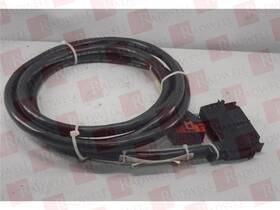
( Brand: Bailey Controls ), ( Manufacturer Part Number: NKTU01-11 ), ( Part Type: Boveri )
Review BAILEY CONTROLS Asea Brown Boveri Nktu0111 Used
The **ABB NKTU01-11 (formerly ASEA Brown Boveri)** is a robust and high-performance **11 kV, 1000 A, 50 Hz/60 Hz** medium-voltage circuit breaker designed for demanding industrial, commercial, and utility applications. Part of ABB s **NKTU series**, this vacuum circuit breaker is engineered for reliable arc interruption, minimal maintenance, and extended operational lifespan, making it ideal for use in switchgear, substations, and distribution systems where high fault-current interruption and long-term durability are critical. The NKTU01-11 leverages **vacuum interrupter technology**, which ensures rapid and clean arc quenching without the need for oil, SF , or other hazardous gases, significantly reducing environmental impact and maintenance requirements. Its compact yet sturdy design allows for efficient installation in limited spaces, while its **modular construction** facilitates easy integration into various switchgear configurations, including metal-enclosed or metal-clad systems.
This circuit breaker is equipped with **high-breaking capacity** (up to **50 kA asymmetrical** at 11 kV), ensuring it can safely interrupt severe fault currents while maintaining system stability. The **vacuum interrupters** within the NKTU01-11 are sealed under vacuum, eliminating the risk of contamination or degradation over time, which is a common issue with older oil or air-magnetic circuit breakers. Additionally, the breaker incorporates **mechanical and electrical trip units** that provide precise control over operation, allowing for both manual and automatic tripping based on overcurrent, undervoltage, or other protective relay signals. The **operating mechanism** is designed for smooth and consistent performance, with minimal wear, ensuring reliable tripping even after thousands of operations.
For enhanced safety and operational efficiency, the NKTU01-11 is often paired with **ABB s advanced protection relays and control systems**, enabling seamless coordination with other switchgear components. Its **standardized mounting dimensions** and **compatibility with ABB s NKTU series accessories** such as current transformers, disconnect switches, and auxiliary contacts make it a versatile choice for both new installations and retrofitting existing infrastructure. The breaker s **low maintenance requirements** stem from its sealed vacuum interrupters, which do not require periodic oil changes or gas replenishment, reducing downtime and operational costs. Furthermore, its **high insulation coordination** ensures optimal protection against transient overvoltages, contributing to the overall reliability of the electrical distribution network.
Ideal for applications in **industrial plants, commercial buildings, renewable energy systems, and utility substations**, the NKTU01-11 excels in environments where **high availability, fault tolerance, and long-term performance** are non-negotiable. Its **compact yet robust construction** ensures it can withstand harsh operating conditions, including temperature fluctuations, humidity, and mechanical stress, while its **standardized interfaces** simplify integration into existing or new electrical distribution schemes. Whether used in **primary distribution networks, motor control centers, or backup power systems**, this circuit breaker delivers **superior fault interruption performance** while minimizing maintenance burdens, making it a trusted solution for electrical engineers and system operators seeking both efficiency and longevity.
### **Pros and Cons of Buying an NKTU01-11 (ASEA Brown Boveri, ABB) Traction Inverter**
The **NKTU01-11** is a traction inverter originally designed for electric locomotives, particularly those built by ABB (now part of ABB Transportation). Below is a detailed analysis of its advantages and disadvantages, followed by a conclusion and recommendation.
---
### **Pros of Buying an NKTU01-11**
1. **Reliability and Proven Track Record**
- The NKTU01-11 was widely used in ABB s locomotive systems (e.g., in the **ABB AEG 644** and **ABB AEG 645** series) and is known for its robustness in heavy-duty railway applications.
- Many units have operated for decades with minimal failure, especially in well-maintained fleets.
- The design incorporates **IGBT (Insulated Gate Bipolar Transistor) technology**, which, despite being older, is still reliable in controlled environments.
2. **Compatibility with Existing Systems**
- If you are restoring or modifying an ABB-based locomotive (e.g., **ABB AEG 644, 645, or similar models**), this inverter is a **direct replacement part**, reducing integration challenges.
- It is designed to work with **ABB s traction motors (e.g., ABB TLD 644)**, ensuring seamless compatibility.
- Many spare parts and technical documentation are still available, making repairs easier.
3. **Mechanical and Thermal Durability**
- The unit is built for **high-power, high-voltage railway applications**, meaning it can handle **strong currents and thermal stress** better than consumer-grade electronics.
- The **forced-air cooling system** (if present in your unit) ensures stable operation under heavy loads.
- The **modular design** (if intact) allows for easier component swaps in case of failure.
4. **Second-Hand Availability and Cost Efficiency**
- Since these inverters are no longer in mass production, **used units can be acquired at a fraction of the original cost** (often **$1,000 $5,000**, depending on condition).
- This makes them a **cost-effective solution** for locomotive restoration projects.
- Many **railway salvage yards, auctions, and private sellers** list these units, increasing availability.
5. **Technical Familiarity and Community Support**
- ABB s locomotive systems have a **large user base**, meaning **forums, manuals, and repair guides** are widely available.
- Engineers and hobbyists familiar with **ABB/ACEA traction systems** can assist with troubleshooting.
- Some **railway museums and preservation groups** may have experience working with these units.
6. **Potential for Upgrading**
- While the NKTU01-11 is an older design, some components (e.g., **IGBTs, capacitors, and control boards**) can be **replaced with modern equivalents** to extend its lifespan.
- If you are working on a **restoration project**, upgrading certain parts (e.g., **fuses, cooling systems, or control firmware**) can improve reliability.
---
### **Cons of Buying an NKTU01-11**
1. **Age and Obsolescence of Components**
- The unit is **over 20 30 years old**, meaning **some parts (e.g., electrolytic capacitors, relays, and certain semiconductors) may be difficult to source**.
- **IGBTs and other power modules** from the 1990s/early 2000s may no longer be in production, requiring **specialized suppliers or replacements**.
- **Firmware and control logic** may be outdated, requiring **reverse engineering or compatibility checks** if interfacing with modern systems.
2. **High Maintenance Requirements**
- Unlike modern inverters with **self-diagnostic features**, the NKTU01-11 relies on **manual testing and visual inspections** for faults.
- **Thermal management** is critical poor cooling can lead to **premature failure of IGBTs or capacitors**.
- **Wiring and solder joints** may degrade over time, requiring **regular inspections and rework**.
3. **Limited Modern Compatibility**
- If you are integrating this inverter into a **modern locomotive or control system**, **interfacing issues** may arise due to:- **Different communication protocols** (e.g., CAN bus vs. older analog signals).
- **Voltage/current requirements** may not match newer traction systems.
- **Safety certifications** (e.g., **EN 50155, IEC 61373**) may need verification.
- **Software compatibility** (if any) may require **custom modifications**.
4. **Risk of Hidden Damage**
- Since these units are often **salvaged from decommissioned locomotives**, there is a **higher chance of hidden internal damage**, such as:- **Burnt IGBTs or traces** from previous failures.
- **Corroded or broken solder joints**.
- **Failed capacitors** (common in old power supplies).
- **Thorough testing (functional and electrical) is essential** before purchase.
5. **Limited Warranty and Support**
- **No manufacturer warranty** is available for used units.
- **Technical support** is minimal you may need to rely on **community knowledge or third-party repair shops**.
- **Liability risks** if the unit fails in a critical application (e.g., on a moving locomotive).
6. **Potential for Higher Long-Term Costs**
- While the **initial purchase price is low**, **repair and replacement costs** can add up over time due to:- **Specialized labor** required for railway-grade electronics.
- **Custom-made parts** if original components are unavailable.
- **Downtime costs** if the inverter fails in a restoration project.
7. **Environmental and Safety Concerns**
- Older inverters may contain **hazardous materials** (e.g., **lead in solder, PCBs with brominated flame retardants**) that require **proper disposal or recycling**.
- **Electrical safety risks** if the unit has been **improperly modified or stored** (e.g., exposed high-voltage components).
---
### **Conclusion**
The **NKTU01-11 is a viable purchase for specific use cases**, particularly if you are:- **Restoring an ABB-based locomotive** and need a **direct replacement part**.
- **Working on a hobbyist or museum project** where **cost efficiency and historical authenticity** are priorities.
- **Will to invest time in maintenance, testing, and potential upgrades**.
However, it is **not ideal** if you are:- **Building a new locomotive** with modern safety and efficiency standards.
- **Seeking a plug-and-play solution** without extensive troubleshooting.
- **Operating in a high-reliability environment** where **minimal downtime is critical**.
---
### **Recommendation**
1. **If You Are Restoring an ABB Locomotive:**- **Proceed with purchase**, but **inspect the unit thoroughly** (test for functionality, check for burnt components, verify cooling system).
- **Budget for repairs** expect to replace **capacitors, IGBTs, and possibly the control board**.
- **Consider upgrading critical components** (e.g., modern IGBTs, better cooling) if feasible.
- **Join railway electronics forums** (e.g., **TrainWeb, Railway Technology Groups**) for troubleshooting help.
2. **If You Are Building a New or Modernized Locomotive:**- **Avoid the NKTU01-11** opt for **modern ABB/GE or Siemens traction inverters** (e.g., **ABB ACS880, Siemens SIVACON**) that meet **current safety and efficiency standards**.
- **Used modern inverters** (e.g., from **Freightliner, Alstom, or Bombardier**) may offer better reliability with **easier spare parts availability**.
3. **If You Are a Hobbyist or Enthusiast:**- **Buy the NKTU01-11 for parts or learning purposes**, but **do not rely on it for critical operation** without extensive testing.
- **Document your restoration process** many future engineers may benefit from your work.
4. **If You Are Unsure:**- **Consult a railway electronics specialist** before purchasing to assess **compatibility and feasibility**.
- **Test the unit under load** (if possible) before committing to a full restoration.
### **Final Verdict:**The **NKTU01-11 is a good choice for niche, low-cost restoration projects** where **historical accuracy and cost savings** are more important than **modern reliability**. However, for **new builds or high-demand applications**, it is **not the best long-term solution**. Always **prioritize safety, testing, and maintenance** when working with vintage railway electronics.
Details:
Call to use a shipping service other than the ones listed. All products are guaranteed to be working but may show signs of use if purchasing a used product. Sells new and surplus product develops channels to purchase such. Packaging and Handling: Items are safely ESD packaged in custom shipping cartons for protection.
part #: nktu0111 prices
- $177.39-$2150.00
specifications sensoindustria:
- brand: Bailey Controls
- mpn: Nktu01-11
- part type: Boveri
payments sensoindustria:
- credit card: Visa
- wallet: Paypal
- other
returns sensoindustria:
- time: 30 Days
- policy: Returns Accepted
- method: Money back
- paid by: Buyer
shipping sensoindustria:
- class: Standard
- service: Standard
- cost: $12.90
- transit: 28-33 Days
- type: Fixed
offer sensoindustria:
- started: March 21, 2026
- availability: In Stock
- options: Ship-to-home
- quantity: 1
- sold: 0
seller sensoindustria:
- # reviews: 195703
- rating: 99.6%
- city: 1 Millennium Dr, Willingboro, NJ 08046
general sensoindustria:
- condition: Used
- PLCs HMIs > PLC Peripheral Modules > PLC Input Output Modules
Bailey Controls NKTU01-11 Is Similar To:
- Iepas01 Bailey Controls Modular Power System Manual (47.3% similar) Includes the E96-506 update as shown original manual plus. E96-506 manual for all of the modular power system including IEPAS01 Bailey Controls NETWORK90 INFI90...(February 7th, 2019)
- Nkds05-5 Bailey Controls Cable (40.4% similar) NKDS05-5 digital logic station cable...(December 14th, 2018)
- Nklm01-10 Bailey Controls Cable (40% similar) NKLM01-10 communications interface cable Lima to NTPL01...(January 13th, 2019)
- Nrio02 Bailey Controls Remote Module Manual (41.2% similar) E93 manual for NRIO02 remote input output module...(February 7th, 2019)
- Stt02e Bailey Used Handheld Smart (23.9% similar) Bailey STT02E used handheld smart transmitter terminal powers up with A/C adapter...(November 17th, 2017)
- Bailey Controls P-hb-ain-2200c200 Asea Brown Boveri Phbain2200c200 Used (66.7% similar) Sells new and surplus product develops channels to purchase such. Packaging and handling, items are safely eds packaged in custom shipping cartons for protection. The product is used surplus...(December 30th, 2023)
- Bailey Namm02 Controls Network 90 Analog Master Module (47.8% similar) The item must be in the exact same condition as when first shipped and preferably packaging...(January 31st, 2024)
- Bailey Niao01 Used Network 90 I o Term Mod-analog Output Module 6636156a1 Rev.b (23.2% similar) Bailey i/o term mod-analog output module, model: NIAO01, system: network 90, part no. 6636156A1, rev...(September 13th, 2024)
- Bailey Niam02 Used Network 90 Term Mod-analog Master Module 6637052a1 Rev.a (22.4% similar) Bailey i/o term analog master module, model: NIAM02, system: network 90, part no. 6637052A1, rev...(September 13th, 2024)
- Bailey Nirl03 Used Network 90 Remote Link Termination Unit Mod 663742ia2 Rev.d (21.9% similar) Bailey remote link termination unit module, model: NIRL03, system: network 90, part no. 6633742IA2, rev...(September 13th, 2024)
- Bailey Nipl01 Used Network 90 I o Plant Loop Termination Mod 6636093a1 Rev B (23.4% similar) 6636093A1, rev. Bailey plant loop termination module, model: NIPL01, system: network 90, part no...(September 16th, 2024)
