BAILEY CONTROLS NKTU01-09 Asea Boveri
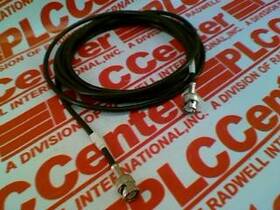
( Brand: Bailey Controls ), ( Manufacturer Part Number: NKTU01-09 ), ( Part Type: Boveri )
Review BAILEY CONTROLS Asea Brown Boveri Nktu0109 Used
The **NKTU01-09** from ABB (formerly ASEA Brown Boveri) is a robust and high-performance **medium-voltage, vacuum circuit breaker** designed for reliable protection and switching applications in industrial, commercial, and utility power systems. Part of ABB s **NKTU series**, this breaker is engineered to meet stringent international standards, ensuring exceptional durability, safety, and operational efficiency in demanding environments. The unit incorporates a **vacuum interrupter technology**, which provides superior arc-quenching capabilities, minimal maintenance requirements, and extended service life compared to traditional oil or SF -based breakers. Its compact yet sturdy design allows for seamless integration into medium-voltage switchgear panels, making it ideal for both indoor and outdoor installations in distribution networks, substations, and industrial plants.
The **NKTU01-09** is rated for **medium-voltage applications**, typically operating within the range of **6.9 kV to 15 kV**, with current ratings that can accommodate both **normal and short-circuit conditions** with precision. Its **vacuum interrupters** are sealed under vacuum, eliminating the need for gas refills or oil maintenance, thus reducing operational downtime and enhancing long-term reliability. The breaker is equipped with **mechanical and electrical trip units**, including **electromagnetic and spring-charged mechanisms**, ensuring rapid and dependable interruption of fault currents while maintaining system stability. Additionally, its **modular design** allows for easy customization, accommodating various mounting configurations, control schemes, and auxiliary devices such as current transformers, voltage transformers, and remote control interfaces.
Safety and performance are prioritized in the **NKTU01-09**, featuring **high breaking capacity** to handle severe fault conditions without degradation, and **low operating energy requirements** for efficient tripping and reclosing operations. The unit is also designed with **insulation coordination** in mind, ensuring optimal protection against transient overvoltages and improving overall system resilience. ABB s rigorous testing protocols, including **type testing per IEC 62271-100 and site acceptance testing**, guarantee that the breaker meets or exceeds industry benchmarks for performance, safety, and environmental compliance. Whether deployed in **substation automation, motor control centers, or renewable energy integration systems**, the **NKTU01-09** delivers a dependable solution for protecting electrical infrastructure against faults while ensuring seamless power distribution. Its legacy as part of ABB s heritage in electrical engineering rooted in the expertise of ASEA Brown Boveri further underscores its reputation for innovation, precision, and enduring performance in global power networks.
### **Pros and Cons of Buying an NKTU01-09 (ASEA Brown Boveri, ABB) Traction Inverter**
The **NKTU01-09** is a vintage traction inverter (also known as a **chopper**) originally used in electric locomotives, trams, and rail vehicles. These units were widely deployed in the mid-to-late 20th century, particularly in Europe and Asia. Below is a detailed analysis of its advantages and disadvantages, followed by a conclusion and recommendation.
---
### **Pros of Buying an NKTU01-09**
1. **Historical and Collectible Value**
- The NKTU01-09 is a classic piece of railway electronics, particularly valued by collectors of vintage ABB (formerly ASEA Brown Boveri) equipment. It holds nostalgia appeal for enthusiasts of rail history.
- Some units may have been used in notable trains or systems (e.g., Swedish SJ, German DB, or Chinese rail networks), increasing their desirability.
2. **Reliability (If Well-Maintained)**
- Early ABB traction inverters were built with robust components, including **thyristors (SCRs)** and **power transistors**, which, if preserved in good condition, can still function reliably.
- The mechanical and electrical design was simple compared to modern IGBT-based systems, making them easier to repair in some cases.
3. **Potential for Restoration and Modification**
- Skilled technicians and hobbyists can restore or repurpose these units for educational, museum, or even functional use in vintage rail vehicles.
- Some components (e.g., transformers, cooling systems) may be reusable in other projects.
4. **Lower Cost Compared to Modern Alternatives**
- Since these units are obsolete, they are often sold at a fraction of the cost of new traction inverters. This makes them accessible for collectors or those on a tight budget.
- Spare parts (where available) may also be cheaper than modern equivalents.
5. **Technical Learning Opportunity**
- Studying and working on an NKTU01-09 provides insight into **analog control systems, thyristor-based power conversion, and vintage electrical engineering** useful for engineers or students interested in historical technology.
6. **Possible Functional Use in Vintage Railcars**
- If restored properly, these inverters can still power **DC motors** in heritage trains, trams, or industrial equipment where modern systems are unavailable or impractical.
---
### **Cons of Buying an NKTU01-09**
1. **Obsolete and Difficult to Repair**
- **No longer manufactured** spare parts (especially thyristors, capacitors, and cooling systems) are extremely hard to find.
- **No official support** from ABB or ASEA; repairs rely on secondhand components or reverse-engineering.
2. **High Risk of Failure**
- **Aging components** (e.g., electrolytic capacitors, resistors, and wiring) are likely degraded and may fail unpredictably.
- **Thyristors and transistors** can degrade over time, leading to intermittent or complete failure.
- **Cooling systems** (if liquid-cooled) may have leaks or corroded seals.
3. **Safety Concerns**
- **High voltage and current ratings** (typically **1500V DC/AC, 1000A **) make these units dangerous to work on without proper expertise.
- **No modern safety standards** lack of insulation testing, proper grounding, or fail-safes increases accident risk.
- **Fire hazard** overheating or short circuits can occur due to degraded insulation.
4. **Compatibility Issues**
- **Modern traction systems** use **IGBTs, PWM control, and digital interfaces**, making it difficult to integrate an NKTU01-09 into contemporary rail vehicles.
- **Voltage and frequency mismatches** these units were designed for specific rail voltages (e.g., 1.5kV, 3kV DC or 25kV AC), and retrofitting may require extensive modifications.
5. **High Restoration Costs**
- Even if functional, **full restoration** (testing, part replacement, rewiring) can be **expensive** due to the need for specialized labor and rare components.
- **Testing equipment** (oscilloscopes, power analyzers) may be required to diagnose issues, adding to costs.
6. **Legal and Operational Restrictions**
- **Regulatory compliance** modern rail safety standards (e.g., EN 45545, IEC 61373) may not apply, making it illegal to use in active service without extensive modifications.
- **Insurance challenges** insurers may refuse coverage for vintage or modified rail equipment due to perceived risks.
7. **Limited Practical Use Cases**
- **Not suitable for new builds** modern locomotives and trams use **digital control, regenerative braking, and energy recovery**, which these units cannot provide.
- **Best suited for static displays or educational purposes** rather than active railway use.
8. **Environmental and Ethical Concerns**
- **Lead and asbestos** older units may contain hazardous materials that require careful disposal or removal.
- **Energy inefficiency** thyristor-based choppers are less efficient than modern IGBT converters, making them impractical for modern applications.
---
### **Conclusion**
The **NKTU01-09 is a fascinating piece of railway history** with **collectible and educational value**, but it is **not a practical or safe choice for modern railway applications**. Its **obsolete technology, high repair costs, and safety risks** far outweigh its advantages unless you are:
- A **collector** interested in preserving vintage equipment.
- A **technician or engineer** studying historical power electronics.
- A **heritage railway operator** with a **fully restored vintage vehicle** and no intention of using it in active service.
For **any functional railway use**, a **modern traction inverter (IGBT-based)** is the only viable option due to reliability, efficiency, and regulatory compliance.
---
### **Recommendation**
- **Buy only if:**- You are a **serious collector** with the means to properly store and preserve it.
- You have **expertise in electrical restoration** and can safely test/repair it.
- You intend to use it **exclusively for display or educational purposes**, not active railway service.
- **Do not buy if:**- You seek a **functional, reliable, or modern railway component**.
- You lack **experience with high-voltage electronics** and proper safety equipment.
- You are looking for a **cost-effective solution** modern inverters are cheaper in the long run despite higher upfront costs.
- **Alternatives to Consider:**- **Modern ABB or Siemens traction inverters** (e.g., **ABB ACS880, Siemens SIVACON**) for active railway use.
- **Vintage motor controllers** (e.g., **Westinghouse, General Electric**) if you prefer a different brand.
- **Educational kits** (e.g., **Arduino-based traction simulators**) for learning without high-risk equipment.
If you proceed with purchasing an NKTU01-09, **inspect it thoroughly, document its condition, and consider consulting a railway electrical engineer** before attempting restoration. Safety and feasibility should always be the top priorities.
Details:
Packaging and Handling: Items are safely ESD packaged in custom shipping cartons for protection. Call to use a shipping service other than the ones listed. All products are guaranteed to be working but may show signs of use if purchasing a used product. Sells new and surplus product develops channels to purchase such.
part #: nktu0109 prices
- $177.39-$2150.00
specifications sensoindustria:
- brand: Bailey Controls
- mpn: Nktu01-09
- part type: Boveri
payments sensoindustria:
- wallet: Apple-pay
- other
- credit card: Mastercard
returns sensoindustria:
- time: 30 Days
- policy: Returns Accepted
- paid by: Buyer
- method: Money back
shipping sensoindustria:
- transit: 29-33 Days
- service: Standard
- cost: $12.90
- class: Standard
- type: Fixed
offer sensoindustria:
- options: Ship-to-home
- quantity: 1
- started: March 9, 2026
- sold: 0
- availability: In Stock
general sensoindustria:
- PLCs HMIs > PLC Peripheral Modules > PLC Input Output Modules
- condition: Used
seller sensoindustria:
- # reviews: 193533
- city: 1 Millennium Dr, Willingboro, NJ 08046
- rating: 99.6%
Bailey Controls NKTU01-09 Is Similar To:
- Iepas01 Bailey Controls Modular Power System Manual (47.3% similar) Includes the E96-506 update as shown original manual plus. E96-506 manual for all of the modular power system including IEPAS01 Bailey Controls NETWORK90 INFI90...(February 7th, 2019)
- Nkds05-5 Bailey Controls Cable (40.4% similar) NKDS05-5 digital logic station cable...(December 14th, 2018)
- Nklm01-10 Bailey Controls Cable (40% similar) NKLM01-10 communications interface cable Lima to NTPL01...(January 13th, 2019)
- Nrio02 Bailey Controls Remote Module Manual (41.2% similar) E93 manual for NRIO02 remote input output module...(February 7th, 2019)
- Stt02e Bailey Used Handheld Smart (23.9% similar) Bailey STT02E used handheld smart transmitter terminal powers up with A/C adapter...(November 17th, 2017)
- Bailey Controls P-hb-ain-2200c200 Asea Brown Boveri Phbain2200c200 Used (69.7% similar) Sells new and surplus product develops channels to purchase such. Packaging and handling, items are safely eds packaged in custom shipping cartons for protection. The product is used surplus...(December 30th, 2023)
- Bailey Namm02 Controls Network 90 Analog Master Module (47.8% similar) The item must be in the exact same condition as when first shipped and preferably packaging...(January 31st, 2024)
- Bailey Niao01 Used Network 90 I o Term Mod-analog Output Module 6636156a1 Rev.b (21.7% similar) Bailey i/o term mod-analog output module, model: NIAO01, system: network 90, part no. 6636156A1, rev...(September 13th, 2024)
- Bailey Niam02 Used Network 90 Term Mod-analog Master Module 6637052a1 Rev.a (22.4% similar) Bailey i/o term analog master module, model: NIAM02, system: network 90, part no. 6637052A1, rev...(September 13th, 2024)
- Bailey Nirl03 Used Network 90 Remote Link Termination Unit Mod 663742ia2 Rev.d (21.9% similar) Bailey remote link termination unit module, model: NIRL03, system: network 90, part no. 6633742IA2, rev...(September 13th, 2024)
- Bailey Nipl01 Used Network 90 I o Plant Loop Termination Mod 6636093a1 Rev B (21.9% similar) 6636093A1, rev. Bailey plant loop termination module, model: NIPL01, system: network 90, part no...(September 16th, 2024)
