YOKOGAWA MX150-1 Plc Modules
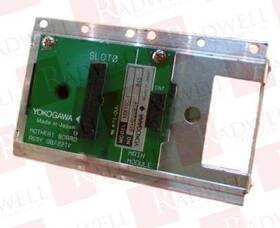
( Brand: Yokogawa ), ( Manufacturer Part Number: MX150-1 ), ( Part Type: Module )
Review YOKOGAWA Mx1501 Used
The Yokogawa MX150-1 and MX1501 are high-performance, modular, and ultra-compact industrial Ethernet switches designed to deliver exceptional reliability, flexibility, and scalability for demanding automation, control, and industrial networking environments. These switches are part of Yokogawa s advanced MX Series, engineered to meet the rigorous requirements of industrial applications where uptime, security, and deterministic communication are paramount. The MX150-1 is a 10/100 Mbps Ethernet switch featuring a single Gigabit Ethernet uplink port, making it ideal for small-scale networks or as a bridge between legacy systems and modern Ethernet infrastructure. Its compact, rugged design ensures seamless integration into control panels, PLC racks, or distributed control systems (DCS) without sacrificing performance. With support for full-duplex operation and a robust build quality, the MX150-1 excels in environments where space is limited but connectivity demands are high, such as in process automation, factory automation, or remote monitoring stations.
The MX1501, on the other hand, elevates functionality with a dual Gigabit Ethernet uplink port, enabling redundant or load-balanced connections for enhanced network resilience and bandwidth efficiency. This model is particularly well-suited for applications requiring high-speed data transfer, such as real-time monitoring, video surveillance, or integration with advanced control systems like Yokogawa s Exaquantum or Centum VP. Both switches incorporate Yokogawa s proprietary **MX Protocol**, which ensures deterministic communication by prioritizing time-sensitive traffic, reducing latency, and minimizing packet loss a critical feature for industrial applications where even milliseconds of delay can impact system performance. The MX150-1 and MX1501 also support **IEEE 1588 Precision Time Protocol (PTP)**, enabling synchronized timing across distributed systems, which is essential for applications like motion control, power distribution, or coordinated safety systems.
Security is a cornerstone of these switches, with built-in **IEEE 802.1X authentication**, **port security**, and **VLAN support** to segment networks and prevent unauthorized access. The MX Series further enhances protection through **MAC address filtering**, **DHCP snooping**, and **ARP inspection**, ensuring that only authorized devices can communicate within the network. Additionally, the switches are designed with **industrial-grade components**, including wide operating temperature ranges (from -40 C to 75 C for the MX150-1 and -40 C to 60 C for the MX1501), extended humidity resistance, and compliance with **IEC 61850-3** and **IEC 62430** standards, making them suitable for harsh environments such as oil and gas refineries, chemical plants, or outdoor substations. Their **fanless operation** in the MX150-1 model further reduces maintenance requirements and operational noise, while the MX1501 offers optional fan cooling for higher performance in demanding thermal conditions.
Both switches are fully manageable via **SNMP (Simple Network Management Protocol)**, **Telnet**, and **web-based interfaces**, allowing administrators to monitor network health, configure VLANs, set QoS (Quality of Service) policies, and troubleshoot issues remotely. The MX Series also supports **Yokogawa s proprietary MX Manager software**, which simplifies deployment, configuration, and monitoring across multiple switches in large-scale networks. Whether deployed as standalone units or integrated into a larger Yokogawa automation ecosystem, the MX150-1 and MX1501 provide a robust, future-proof solution for industries where reliability, security, and performance are non-negotiable. Their modularity, combined with Yokogawa s reputation for innovation in industrial automation, makes them a trusted choice for engineers and system integrators seeking to build resilient, high-performance networks.
### **Pros and Cons of buying a Yokogawa MX150-1 (MX1501) Industrial PC**
The **Yokogawa MX150-1 (MX1501)** is a rugged, industrial-grade embedded computer designed for harsh environments such as manufacturing, automation, and process control. Below is a detailed analysis of its advantages and disadvantages.
---
### **Pros**
1. **High Reliability and Durability**
- Built for industrial use with **IP65-rated enclosure protection**, making it resistant to dust, water splashes, and solid contaminants.
- Operates in **extended temperature ranges** (-40 C to 70 C), suitable for extreme environments like outdoor installations or factory floors.
- **Vibration and shock resistance** ensures stable performance in dynamic industrial settings.
2. **Robust Performance for Automation**
- Equipped with **high-performance processors** (typically Intel Celeron or Pentium, depending on model), providing sufficient processing power for real-time control and data acquisition.
- Supports **multiple I/O interfaces** (serial, Ethernet, USB, etc.), allowing seamless integration with PLCs, sensors, and other industrial devices.
- **Low power consumption** (typically 10 20W) makes it energy-efficient for continuous operation.
3. **Scalability and Flexibility**
- Modular design allows for **easy upgrades** users can replace or expand components (e.g., RAM, storage) without replacing the entire unit.
- Supports **multiple operating systems**, including Windows Embedded, Linux, and real-time OS options, catering to different automation needs.
- **Compact and space-efficient** design fits well in confined industrial environments.
4. **Long-Term Availability and Support**
- Yokogawa is a **reputable industrial automation manufacturer**, ensuring long-term product support, spare parts, and software updates.
- Designed for **extended product lifecycles**, reducing the need for frequent replacements.
5. **Security Features**
- Includes **hardware-based security options** (e.g., secure boot, encrypted storage) to protect against cyber threats in industrial networks.
- Supports **remote management and monitoring**, allowing IT teams to maintain systems without physical access.
6. **Cost-Effective for Industrial Applications**
- While not the cheapest option, its **durability and reliability reduce long-term maintenance costs** compared to consumer-grade PCs.
- Lower total cost of ownership (TCO) due to **minimal downtime** and **extended operational life**.
---
### **Cons**
1. **Limited Upgrade Path**
- Some models have **fixed or non-user-upgradable components** (e.g., soldered RAM or storage), restricting future modifications.
- **Processor upgrades may not be possible**, limiting performance enhancements over time.
2. **Higher Initial Cost**
- Compared to consumer-grade embedded systems or off-the-shelf PCs, the **MX150-1 is more expensive**, which may be a barrier for small businesses or startups.
- Additional costs may arise for **custom I/O modules or specialized software licenses**.
3. **Complexity in Customization**
- Not all models support **custom BIOS or firmware modifications**, which can be a drawback for advanced users needing tailored configurations.
- **Limited expansion slots** (if any) may restrict connectivity options compared to desktop PCs.
4. **Software Compatibility Issues**
- Some **industrial software applications** (e.g., SCADA, MES) may require **specialized drivers or certifications**, leading to compatibility challenges.
- **Windows Embedded versions** may lack support for the latest applications, requiring workarounds.
5. **Potential for Overkill in Some Applications**
- For **low-end automation tasks** (e.g., simple data logging), a more basic industrial PC or even a Raspberry Pi with proper shielding might suffice, making the MX150-1 unnecessarily expensive.
- **Over-engineering** for small-scale projects can lead to wasted investment.
6. **Vendor Lock-In Risks**
- Yokogawa s ecosystem is **proprietary in some aspects**, meaning reliance on their support for troubleshooting or replacements.
- **Longer procurement cycles** compared to generic embedded systems, which may delay project timelines.
---
### **Conclusion**
The **Yokogawa MX150-1 (MX1501)** is an **excellent choice for demanding industrial applications** where reliability, durability, and long-term performance are critical. Its **rugged construction, extended temperature support, and integration capabilities** make it ideal for **manufacturing plants, process control systems, and automated environments** where downtime is costly.
However, for **budget-conscious projects, low-complexity tasks, or applications where frequent upgrades are needed**, alternatives like **commercial-grade embedded systems, Raspberry Pi-based solutions, or other industrial PCs** (e.g., Advantech, Beckhoff) may be more cost-effective.
### **Recommendation**
- **Buy the MX150-1 if:**- You require **high reliability in harsh industrial conditions**.
- Your application demands **long-term stability and minimal maintenance**.
- You need **seamless integration with Yokogawa s automation ecosystem** (e.g., PLCs, SCADA systems).
- Budget constraints allow for a **premium industrial-grade solution**.
- **Consider alternatives if:**- Your project has **strict cost constraints** and can tolerate slightly less rugged hardware.
- You need **frequent software or hardware upgrades** that the MX150-1 does not support.
- The application is **low-risk** (e.g., office automation, non-critical data logging), where consumer-grade embedded systems would suffice.
For most **serious industrial automation deployments**, the **MX150-1 is a strong, well-supported choice** that justifies its cost through **longevity and performance**. However, always evaluate whether its features align with your specific requirements before purchasing.
Details:
All products are guaranteed to be working but may show signs of use if purchasing a used product. Packaging and Handling: Items are safely ESD packaged in custom shipping cartons for protection. YOKOGAWA MX150-1 / MX1501 USED DISCONTINUED BY MANUFACTURER, MOTHERBOARD BASE PLATE, FOR SINGLE I/O MODULE. Call to use a shipping service other than the ones listed.
Sells new and surplus product develops channels to purchase such.
part #: mx1501 prices
- $150.00-$189.05
specifications sensoindustria:
- brand: Yokogawa
- mpn: Mx150-1
- part type: Module
offer sensoindustria:
- sold: 0
- availability: In Stock
- options: Ship-to-home
- quantity: 1
- started: March 1, 2026
shipping sensoindustria:
- cost: $12.90
- class: Standard
- service: Standard
- transit: 22-34 Days
- type: Fixed
returns sensoindustria:
- method: Money back
- policy: Returns Accepted
- paid by: Buyer
- time: 30 Days
payments sensoindustria:
- wallet: Paypal
- other
- credit card: Discover
seller sensoindustria:
- # reviews: 192450
- rating: 99.6%
- city: 1 Millennium Dr, Willingboro, NJ 08046
general sensoindustria:
- PLCs HMIs > PLC Peripheral Modules > PLC Input Output Modules
- condition: Used
Yokogawa MX150-1 Is Similar To:
- K9296ba Yokogawa Used Module (44.8% similar) Shelving number M32...(April 12th, 2018)
- Yokogawa Aai543-h00 Aai543h00 Used (63.6% similar) Sells new and surplus product develops channels to purchase such. Packaging and handling, items are safely eds packaged in custom shipping cartons for protection. The product is used surplus...(January 7th, 2024)
- Yokogawa Dt200-11-s1 Dt20011s1 Used (65.7% similar) Packaging and handling, items are safely eds packaged in custom shipping cartons for protection. Sells new and surplus product develops channels to purchase such...(February 13th, 2024)
- Yokogawa F3xs04-3n Used And Tested Plc Module (45.3% similar) Product feature: Yokogawa F3XS04-3N. Used tested Yokogawa F3XS04-3N plc module. Product specifications: brand name. Package content: 1 x used tested Yokogawa F3XS04-3N plc module...(September 10th, 2024)
- Yokogawa F3ad08-1n Input output Analog Module Type S1 Used (50% similar) F3AD08-1N Yokogawa input/output analog module, a/d converter, type: S1.: condition: used item - all used products are guaranteed to be working but may show signs of use. For example, programmable logic controllers plc's, distributed control systems DC's's, human machine interface him's, variable ...(November 28th, 2024)
- Yokogawa Pm1 C Pm1 C Discontinued Plc Module Card Used (42.9% similar) Condition: used item - all used products are guaranteed to be working but may show signs of use. For example, programmable logic controllers plc's, distributed control systems DC's's, human machine interface him's, variable speed drives BSD's, power supplies, pressure transmitters and everything in ...(November 28th, 2024)
- Yokogawa F3yd32-1b Transistor Output Module Source Type Used (42.2% similar) For example, programmable logic controllers plc's, distributed control systems DC's's, human machine interface him's, variable speed drives BSD's, power supplies, pressure transmitters and everything in between. F3YD32-1B Yokogawa transistor output module, source type, 12 to 24VDC, 115MA. Is ...(November 28th, 2024)
- Yokogawa F3ad04-0r Analog Input Module 1 To 5vdc Used S1 (48.8% similar) Condition: used item - all used products are guaranteed to be working but may show signs of use. Is Yokogawa F3AD04-0R not the part you are wanting. For example, programmable logic controllers plc's, distributed control systems DC's's, human machine interface him's, variable speed drives BSD's, ...(December 3rd, 2024)
- Yokogawa F3le01-5t Ethernet Interface Module 10base 5 10base-t Used S1 (32% similar) Is Yokogawa F3LE01-5T not the part you are wanting. F3LE01-5T Yokogawa Ethernet interface module, 10BASE, 5/10BASE-T. For example, programmable logic controllers plc's, distributed control systems DC's's, human machine interface him's, variable speed drives BSD's, power supplies, pressure ...(December 3rd, 2024)
- Yokogawa F3yc16-0n Relay Output Module 16 Used S1 (50.6% similar) Condition: used item - all used products are guaranteed to be working but may show signs of use. For example, programmable logic controllers plc's, distributed control systems DC's's, human machine interface him's, variable speed drives BSD's, power supplies, pressure transmitters and everything in ...(December 4th, 2024)
- Yokogawa Adv551-p03-s2 Adv551p03s2 Used (59.2% similar) All products are guaranteed to be working but may show signs of use if purchasing a used product. Yokogawa ADV551-P03-S2 / ADV551P03S2 used discontinued by manufacturer, digital output module, 32 channel, 50MA, 24VDC. Call to use a shipping service other than the ones listed. Packaging and handling...(December 13th, 2024)
