YOKOGAWA MX110-UNV-M10 Daqmaster Analog Module
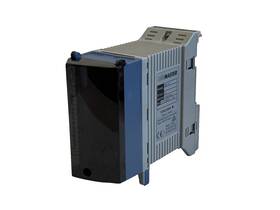
( Brand: Yokogawa ), ( Manufacturer Part Number: MX110-UNV-M10 ), ( Model: YOKOGAWA MX110-UNV-M10 DAQMASTER ), ( Part Type: Module ), ( Analog/digital: Analog )
Review YOKOGAWA Used Daqmaster Analog Input Module
The **Yokogawa MX110-UNV-M10 DAQMaster Analog Module** is a high-performance, versatile data acquisition solution designed to deliver exceptional precision, reliability, and flexibility for industrial automation, research, and testing applications. Part of Yokogawa s advanced DAQMaster series, this module integrates seamlessly into the MX110 series of modular data acquisition systems, offering engineers and technicians a robust platform for capturing, processing, and analyzing high-speed analog signals with unparalleled accuracy. Engineered with Yokogawa s signature engineering excellence, the MX110-UNV-M10 features **10 differential analog input channels**, each capable of resolving signals with a resolution of **24 bits**, ensuring minimal noise and maximum fidelity in even the most demanding environments. Its **unipolar ( 10 V) input range** provides broad compatibility with a wide array of sensors, transducers, and instrumentation, while its **sampling rate of up to 100 kHz per channel** (configurable via software) allows for real-time monitoring of dynamic processes without sacrificing detail. The module s **isolated inputs (up to 500 VDC per channel)** enhance safety and reduce ground-loop interference, making it ideal for applications in harsh industrial settings where electrical noise and voltage spikes are concerns.
Beyond its technical specifications, the MX110-UNV-M10 excels in its seamless integration with Yokogawa s **DAQMaster software**, a powerful, user-friendly platform that simplifies data acquisition, visualization, and analysis. The software supports advanced features such as **triggering, filtering, and signal conditioning**, enabling users to configure the module for complex applications like vibration analysis, motor testing, or process monitoring with ease. Its **PXI/PXIe compatibility** further extends its utility, allowing it to be deployed in modular test systems where space efficiency and high-density signal acquisition are critical. Additionally, the module s **low noise floor** and **high common-mode rejection ratio (CMRR)** ensure that even the smallest signals such as those from strain gauges or high-impedance sensors are captured with clarity and consistency. Whether deployed in a laboratory for precision research or in an industrial facility for predictive maintenance, the MX110-UNV-M10 delivers a balance of performance, durability, and ease of use that sets it apart as a cornerstone of modern data acquisition systems.
The Yokogawa MX110-UNV-M10 is a universal analog input module designed for use with Yokogawa s DAQMaster data acquisition system. Below is a detailed breakdown of its pros and cons, followed by a conclusion and recommendation.
---
### **Pros of the Yokogawa MX110-UNV-M10**
1. **High Accuracy and Precision**
The module offers high-resolution analog input with a 24-bit ADC (Analog-to-Digital Converter), ensuring precise measurements for critical applications. This level of accuracy is essential in industries like process control, research, and industrial automation where small variations can impact outcomes.
2. **Wide Input Range and Flexibility**
The MX110-UNV-M10 supports a universal input range of 10 V, 5 V, 2.5 V, 0 10 V, and 0 5 V, making it adaptable to various sensor types and signal conditioning requirements. This versatility reduces the need for additional signal conversion hardware.
3. **Isolation and Safety Features**
The module provides galvanic isolation (typically 1 kV or higher) between the input channels and the system bus. This isolation protects the system from electrical noise, voltage spikes, and ground loops, enhancing reliability in harsh industrial environments. It also ensures compliance with safety standards in high-risk applications.
4. **Compatibility with Yokogawa s DAQMaster**
As part of Yokogawa s DAQMaster platform, the module integrates seamlessly with Yokogawa s software ecosystem, including data acquisition, logging, and visualization tools. This compatibility simplifies setup, configuration, and troubleshooting, particularly for users already invested in Yokogawa s systems.
5. **High Channel Density**
The MX110-UNV-M10 supports up to 16 single-ended or 8 differential analog input channels in a single module. This high channel density allows for compact data acquisition solutions in applications requiring simultaneous monitoring of multiple signals.
6. **Robust Construction and Reliability**
Yokogawa modules are known for their durability and resistance to environmental factors such as temperature fluctuations, vibration, and humidity. The MX110-UNV-M10 is designed for industrial use, ensuring long-term reliability in demanding conditions.
7. **Support for High-Speed Sampling**
Depending on the specific configuration and DAQMaster setup, the module can support relatively high sampling rates, which is beneficial for dynamic signal analysis or real-time monitoring applications.
8. **Easy Integration with PLCs and SCADA Systems**
The module can be easily interfaced with programmable logic controllers (PLCs) or supervisory control and data acquisition (SCADA) systems, making it suitable for industrial automation and process control applications.
9. **Low Noise Performance**
The 24-bit ADC and careful shielding design minimize noise, ensuring clean and accurate signal acquisition even in electrically noisy environments.
10. **Software Support and Documentation**
Yokogawa provides comprehensive software tools, documentation, and technical support for its modules. This reduces the learning curve for users and ensures smoother implementation.
---
### **Cons of the Yokogawa MX110-UNV-M10**
1. **Cost**
Yokogawa modules are generally more expensive than alternatives from other manufacturers, such as National Instruments, Advantech, or some industrial PC-based DAQ solutions. The higher cost may be a barrier for budget-conscious projects or small-scale applications.
2. **Limited Open-Source or Third-Party Software Support**
Unlike some other DAQ systems (e.g., those based on LabVIEW or Python libraries), Yokogawa s ecosystem is proprietary. While this ensures compatibility, it may limit flexibility for users who prefer open-source tools or custom scripting.
3. **Complexity for Non-Yokogawa Users**
Users unfamiliar with Yokogawa s DAQMaster software or hardware may face a steeper learning curve compared to more widely adopted platforms. Configuration and troubleshooting might require additional training or support.
4. **Hardware Dependency on Yokogawa s Platform**
The module is designed specifically for Yokogawa s DAQMaster system. If a user later decides to switch to a different DAQ platform (e.g., moving to a PC-based system), the module may become obsolete or require additional adapters, increasing long-term costs.
5. **Sampling Rate Limitations**
While the MX110-UNV-M10 supports decent sampling rates, it may not match the performance of high-end, specialized DAQ systems (e.g., those with FPGA acceleration or ultra-fast ADCs) for applications requiring extremely high-speed or high-resolution sampling.
6. **Limited Analog Output Options**
If the application requires analog output functionality, the MX110-UNV-M10 is an input-only module. Users would need to pair it with separate analog output modules, adding to the system complexity and cost.
7. **Potential Latency in Large Systems**
In systems with multiple Yokogawa modules, data acquisition and processing latency may increase, particularly if the system is not optimized for real-time performance. This could be a concern for applications requiring ultra-low latency.
8. **Vendor Lock-In Risks**
Relying solely on Yokogawa s ecosystem means that users are locked into their hardware and software. If Yokogawa discontinues support for the module or DAQMaster in the future, users may face challenges in maintaining or upgrading their systems.
9. **Physical Size and Rack Space**
While the module is compact for its channel density, it still occupies space in a rack-mounted system. For very space-constrained applications, this may be a minor but notable consideration.
10. **Limited Customization**
The MX110-UNV-M10 is a standard module with fixed specifications. Users cannot customize parameters like input impedance, filtering, or other features, which may limit its applicability in highly specialized applications.
---
### **Conclusion**
The Yokogawa MX110-UNV-M10 is a high-quality, reliable analog input module well-suited for industrial process control, research, and automation applications where accuracy, isolation, and compatibility with Yokogawa s ecosystem are critical. Its 24-bit resolution, wide input range, and robust construction make it a strong choice for environments with demanding signal requirements. However, its higher cost, proprietary nature, and potential vendor lock-in may deter users who prioritize flexibility, open-source tools, or cost efficiency.
For users already invested in Yokogawa s DAQMaster platform or operating in industries where Yokogawa s reputation for reliability is valued (e.g., oil and gas, chemical processing, or power generation), this module is an excellent investment. Conversely, users seeking lower-cost alternatives, greater software flexibility, or high-end performance in niche applications may find other DAQ solutions more aligned with their needs.
---
### **Recommendation**
**Buy the Yokogawa MX110-UNV-M10 if:**- You are working within Yokogawa s DAQMaster ecosystem and require high-accuracy, isolated analog inputs for industrial or process control applications.
- Your application demands a robust, reliable module with minimal noise and high channel density.
- You prioritize long-term support and compatibility with Yokogawa s software and hardware.
- Budget constraints are not a limiting factor, and the module s features justify its cost.
**Consider alternatives if:**- You need a lower-cost solution and are open to other DAQ platforms (e.g., National Instruments, Advantech, or industrial PC-based systems).
- You require open-source software support, customization, or third-party tool integration.
- Your application involves ultra-high-speed sampling or requires analog output functionality, which may not be fully supported by this module alone.
- You are unsure about long-term vendor support and prefer a more flexible or modular system.
For most industrial or research applications where Yokogawa s strengths align with your needs, the MX110-UNV-M10 is a sound choice. However, always evaluate your specific requirements and compare it with other options to ensure it meets your project s goals.
Details:
USED Yokogawa MX110-UNV-M10 Daqmaster Analog Input Module, - Shelf A14 Tote 290.
part #: mx110unvm10 prices
- $210.00-$1121.99
specifications sensoindustria:
- brand: Yokogawa
- mpn: Mx110-unv-m10
- model: Yokogawa Mx110-unv-m10 Daqmaster
- part type: Module
- analog/digital: Analog
seller sensoindustria:
- rating: 100.0%
- city: Ray, Michigan
- # reviews: 2181
payments sensoindustria:
- wallet: Paypal
- other
- credit card: Diners-club
offer sensoindustria:
- started: April 8, 2026
- best offers: True
- options: Ship-to-home
- quantity: 1
- sold: 0
- availability: In Stock
general sensoindustria:
- condition: Used
- PLCs HMIs > PLC Peripheral Modules > PLC Input Output Modules
returns sensoindustria:
- time: 30 Days
- paid by: Seller
- method: Money back
- policy: Returns Accepted
shipping sensoindustria:
- cost: $0.00
- carrier: USPS
- transit: 3-7 Days
- service: USPS Priority Mail
- class: Expedited
- type: Fixed
Yokogawa MX110-UNV-M10 Is Similar To:
- Cp14 B Yokogawa Suffix Plc Processor Card Module Centum Xl Working Pull (35.9% similar) 50 or 25 of your original purchase price. Guaranteed fully functional. Offer template ship script - modified by midpoint. Please base your standards for speedy delivery upon that window of time. Condition: working pull. May have cosmetic signs of use or storage. Green penguin inc. 50 or our original...(August 11th, 2018)
- Cp21 A Yokogawa Suffix Plc Processor Card Module Centum Xl Working Pull (35.9% similar) 50 or 25 of your original purchase price. Offer template ship script - modified by midpoint. Please base your standards for speedy delivery upon that window of time. Guaranteed fully functional. Green penguin inc. Condition: working pull. May have cosmetic signs of use or storage...(August 11th, 2018)
- Dt200-11 Yokogawa Alarm Contact Output Module (45.1% similar) Yokogawa DT200-11 alarm contact output module used...(June 25th, 2018)
- F3pu10-0n Yokogawa Power Supply Module (42.1% similar) ...(March 27th, 2018)
- H7f03210 Yokogawa Juxta Analog Transmitter (44.4% similar) ...(September 2nd, 2017)
- K9296ba Yokogawa Used Module (47.1% similar) Shelving number M32...(April 12th, 2018)
- Mx120-vao-m08 Yokogawa Daqmaster Output Module (56.3% similar) Yokogawa daqmaster MX120-VAO-M08 output module brand name:Yokogawa model : MX120-VAO-M08 condition: used specs:-item is in good used condition, please see pictures...(April 2nd, 2019)
- Aai143s00 Yokogawa New In Box Analog Input Module (58.5% similar) Our product team will keep the products up-to-date, which can allows you to purchase latest and valuable from stores. Do you ship to my country. The purchase history link on left side of page. Where can I find a rma. How many months warranty do you provide. Return items should include the original ...(May 2nd, 2021)
- Yokogawa Aai543-h00 Aai543h00 Used (34.4% similar) Sells new and surplus product develops channels to purchase such. Packaging and handling, items are safely eds packaged in custom shipping cartons for protection. The product is used surplus...(January 7th, 2024)
- Yokogawa Dt200-11-s1 Dt20011s1 Used (38.3% similar) Packaging and handling, items are safely eds packaged in custom shipping cartons for protection. Sells new and surplus product develops channels to purchase such...(February 13th, 2024)
- Yokogawa Adv859 p00 S1 Style Digital Input output Module Multiple Available (47.4% similar) Listing is for 1 unit, have up to 4 available. Listing is for hardware only. All are in similar condition. Off-lease plc automation equipment!, Yokogawa ADV859 style: s1 digital input/output module. Units were pulled from working environment and fully functional. 30 day warranty provided...(April 18th, 2024)
