TEXAS INSTRUMENTS LAUNCHXL-F28069M Development Board
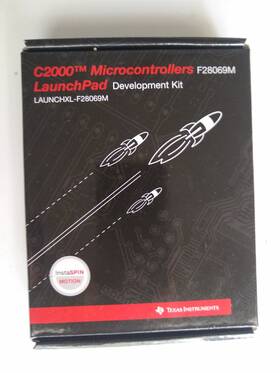
( Brand: Texas Instruments ), ( Manufacturer Part Number: LAUNCHXL-F28069M ), ( Type: Development Board )
Review TEXAS INSTRUMENTS Used Development Board
The **Texas Instruments LaunchXL-F28069M** is a high-performance, feature-rich development platform designed to accelerate the design and prototyping of real-time control systems, motor drives, and industrial automation applications using TI s advanced **F28069M ControlLaw ** fixed-point digital signal controller (DSC). Built around the **TMS570LS31x ControlLaw processor**, this board delivers an exceptional blend of computational power, precision analog interfaces, and robust connectivity, making it an ideal choice for engineers targeting high-efficiency motor control, power conversion, and embedded systems requiring deterministic performance. The **F28069M** leverages TI s **ControlLaw architecture**, which integrates a high-performance **32-bit C2000 core** with specialized peripherals optimized for control algorithms, including a **32-bit floating-point unit (FPU)**, **enhanced quadrature encoder pulse (eQEP) modules**, and **synchronized PWM generators** capable of driving up to **six half-bridge gate drivers** with dead-time control. This ensures seamless implementation of complex control schemes like field-oriented control (FOC), sensorless control, and space vector modulation (SVM) with minimal latency.
At the heart of the LaunchXL-F28069M is a **high-density, low-power TMS570LS31x processor** running at up to **150 MHz**, paired with **1 MB of embedded Flash memory** and **256 KB of SRAM**, providing ample space for firmware, control algorithms, and real-time operating system (RTOS) environments. The board supports **Code Composer Studio (CCS)**, TI s industry-leading integrated development environment (IDE), which integrates seamlessly with **RTOSes like FreeRTOS, TI-RTOS, or Linux**, enabling developers to deploy sophisticated control logic alongside communication stacks and user interfaces. For analog signal processing, the **F28069M** offers **12-bit, 16-channel ADCs** with **1.25 MSPS sampling rates**, **12-bit DACs**, and **high-precision analog comparators**, making it well-suited for closed-loop control applications requiring precise sensor feedback. Additionally, the board features **three isolated digital I/O ports**, **two CAN FD interfaces**, **Ethernet (10/100 Mbps)**, and **USB 2.0 Full-Speed connectivity**, facilitating seamless integration into larger systems, fieldbus networks, or cloud-based monitoring solutions.
The LaunchXL-F28069M is engineered for ease of use, with a **comprehensive set of on-board peripherals** that reduce prototyping time. The board includes **six half-bridge gate drivers** (with **10 A/20 A current ratings**) for driving power MOSFETs or IGBTs, **three phase current sensors**, and **hall-effect sensor inputs**, allowing engineers to rapidly test and iterate motor control algorithms without additional hardware. For debugging and validation, the board supports **JTAG, ePWM debug headers**, and **analog/digital signal probes**, while the **on-board oscilloscope and logic analyzer** capabilities (via CCS) enable real-time signal inspection and waveform analysis. The **LaunchPad ecosystem** further enhances usability, as the board is compatible with TI s **SensorTag, CC32xx Wi-Fi modules, and other expansion boards**, enabling rapid prototyping of IoT-enabled control systems. Whether developing a **brushless DC (BLDC) motor driver**, a **variable frequency drive (VFD)**, or a **high-precision industrial actuator**, the **LaunchXL-F28069M** provides the computational muscle, analog precision, and connectivity required to bring designs from concept to production with confidence. Its **low-power operation** and **rugged design** also make it suitable for embedded applications in automotive, aerospace, renewable energy, and industrial automation sectors.
The **Texas Instruments LaunchXL-F28069M** is a popular development board for controlling and monitoring motors, drives, and other high-performance applications using TI s **F28069M** controlCARD module, which is based on the **TMS320F28069M** floating-point DSP. Below is a detailed breakdown of its pros and cons, followed by a conclusion and recommendation.
---
### **Pros of the LaunchXL-F28069M**
1. **High-Performance DSP Core**
The board features a **300 MHz C28x floating-point DSP**, which is ideal for real-time control applications requiring precise timing, high-speed calculations, and efficient signal processing. The floating-point unit (FPU) accelerates mathematical operations, making it suitable for complex algorithms like PID control, FOC (Field-Oriented Control), and digital filters.
2. **Rich Peripheral Set**
The **TMS320F28069M** includes a comprehensive set of peripherals:- **Enhanced PWM modules** (up to 64 channels) for motor control, inverter drives, and power electronics.
- **ADC modules** (12-bit, up to 16 channels) with high-resolution sampling, useful for sensor interfacing (e.g., Hall sensors, current/voltage measurements).
- **eCAP (enhanced capture)** and **ePWM** modules for precise timing and synchronization, critical in motor commutation and closed-loop control.
- **SPI, I2C, and UART** interfaces for communication with external sensors, microcontrollers, or RTOS systems.
- **CAN (Controller Area Network)** for industrial or automotive applications requiring robust communication.
- **DMA (Direct Memory Access)** for offloading CPU tasks, improving real-time performance.
3. **Built-in Debugging and Programming Support**
The board includes **JTAG and eZdsp debug interfaces**, allowing seamless debugging with TI s **Code Composer Studio (CCS)** or **TI s free Real-Time Workshop Embedded Coder (RTW)**. This simplifies development workflows, especially for beginners.
4. **Pre-Configured for Motor Control**
TI provides **reference designs and code examples** for common motor control applications (e.g., BLDC, PMSM, AC induction motors). This accelerates prototyping and reduces development time for engineers familiar with TI s motor control toolbox.
5. **Expandability and Modularity**
The board supports **additional controlCARD modules** (e.g., F2802x, F2803x) via the **controlCARD connector**, allowing users to upgrade or experiment with different DSPs without replacing the entire board. It also has **I/O expansion headers** for connecting sensors, relays, or other peripherals.
6. **Power Management Features**
The board includes **voltage regulators and isolated power inputs**, making it suitable for applications requiring precise voltage regulation or operation in noisy environments. The **F28069M** also supports **low-power modes**, which can be useful for battery-powered applications.
7. **Community and Documentation Support**
TI provides extensive **documentation, tutorials, and forums** for the F28069M. Additionally, the board is widely used in academic and industrial settings, leading to a large user base for troubleshooting and sharing knowledge.
8. **Cost-Effective for Prototyping**
While the board itself is not the cheapest option, its **long-term value** is high due to its performance and flexibility. For serious motor control or DSP projects, it offers a better balance of cost and capability compared to alternatives like FPGAs or lower-end MCUs.
9. **Compatibility with TI s Ecosystem**
The board integrates seamlessly with TI s **motor control toolbox**, **RTOS (FreeRTOS, TI-RTOS)**, and **analog front-end (AFE) solutions** (e.g., DRV8301 for motor drivers). This reduces the need for third-party tools and simplifies system integration.
10. **Educational Value**
The LaunchXL-F28069M is an excellent tool for **teaching DSP-based control systems**, real-time embedded systems, and motor control principles. Its open architecture and TI s educational resources make it ideal for universities and hobbyists.
---
### **Cons of the LaunchXL-F28069M**
1. **Steep Learning Curve**
The **C28x architecture** and **TI s DSP toolchain (CCS)** have a learning curve, especially for developers unfamiliar with assembly-like code or TI s specific libraries. Debugging and optimizing code can be challenging compared to more user-friendly platforms like Arduino or STM32.
2. **Limited On-Board Memory**
The **F28069M** has **512 KB of flash and 64 KB of RAM**, which may be insufficient for large applications requiring extensive firmware or data storage. Users may need external memory (e.g., SD cards, SPI flash) for complex projects.
3. **No Built-in Oscilloscope or Logic Analyzer**
Unlike some other development boards (e.g., Arduino with external tools), the LaunchXL-F28069M lacks built-in **signal analysis tools**. Debugging analog signals or timing issues requires external equipment (e.g., oscilloscopes, logic analyzers), adding to the cost.
4. **Power Consumption**
The **300 MHz DSP** and active peripherals can draw significant power, making it less suitable for **low-power or battery-operated applications** without additional power management strategies. External voltage regulators may also generate heat.
5. **Physical Size and Form Factor**
The board is **larger and bulkier** than microcontroller-based boards (e.g., STM32 Nucleo), which may be a limitation for compact embedded designs. The **controlCARD connector** adds to the overall footprint.
6. **Limited Analog Input Channels**
While the **12-bit ADCs** are high-resolution, the **16-channel limit** may be restrictive for applications requiring many analog inputs (e.g., multi-axis sensor systems). External ADC ICs (e.g., TI s ADS1256) may be needed for expanded analog interfacing.
7. **Cost of Additional Components**
For practical motor control projects, users often need to purchase **external motor drivers (e.g., DRV8301, DRV8323R)**, **sensors (Hall effect, current sensors)**, and **power supplies**, increasing the total project cost beyond the board itself.
8. **Software Dependency on TI Tools**
Development heavily relies on **Code Composer Studio (CCS)**, which is a **proprietary and resource-intensive** IDE. While TI offers a **free version**, advanced features (e.g., multi-core debugging) require a paid license. Alternatives like **RTOS** or **FreeRTOS** add complexity.
9. **No Built-in Wi-Fi or Bluetooth**
Unlike some modern development boards (e.g., ESP32, STM32 with Wi-Fi modules), the LaunchXL-F28069M lacks **wireless communication capabilities**. Users must add external modules (e.g., CC3200) for wireless connectivity, adding complexity.
10. **Overkill for Simple Applications**
For **basic microcontroller tasks** (e.g., sensor reading, simple motor control without advanced algorithms), the **F28069M is more powerful than necessary**. A **lower-cost MCU (e.g., STM32, PIC)** or **FPGA (e.g., Lattice iCE40)** might suffice, reducing development time and cost.
11. **Limited GPIO and Digital I/O**
While the **F28069M has 128 GPIOs**, not all are available on the LaunchXL-F28069M s headers. Users may need to **solder wires or use breakout boards** to access all pins, which can be cumbersome for rapid prototyping.
12. **No Built-in USB or JTAG Emulator**
The board does **not include a built-in USB-to-JTAG emulator**, requiring users to purchase a separate **DSL or XDS debugger** ( $100 $300) for programming and debugging. This adds to the initial setup cost.
---
### **Conclusion**
The **Texas Instruments LaunchXL-F28069M** is a **powerful and versatile development board** tailored for **high-performance motor control, DSP-based signal processing, and real-time embedded systems**. Its **300 MHz floating-point DSP, rich peripherals, and TI s extensive motor control toolbox** make it an excellent choice for engineers and hobbyists working on **advanced motor drives, power electronics, or control systems requiring precise timing and computation**.
However, it is **not the best fit** for:- **Beginner-friendly projects** (due to steep learning curve and complex toolchain).
- **Low-power or battery-operated applications** (without additional power management).
- **Simple sensor or I/O tasks** (where a microcontroller would suffice).
- **Projects requiring wireless connectivity** (Wi-Fi/Bluetooth must be added externally).
The board s **strength lies in its performance and flexibility**, making it ideal for **serious developers, academic research, and industrial applications** where **real-time control and high-speed processing** are critical. If your project demands **floating-point DSP power, motor control, or complex signal processing**, the LaunchXL-F28069M is a **strong
Details:
TI F28069M.
part #: launchxlf28069m prices
- $8.00-$20.00
specifications sensoindustria:
- brand: Texas Instruments
- mpn: Launchxl-f28069m
- type: Development Board
general sensoindustria:
- condition: Used
- PLCs HMIs > PLC Peripheral Modules > PLC Input Output Modules
offer sensoindustria:
- started: April 17, 2026
- options: Ship-to-home
- quantity: 1
- availability: In Stock
- sold: 0
shipping sensoindustria:
- service: USPS Ground Advantage
- cost: $8.46
- carrier: USPS
- type: Calculated
- transit: 5-11 Days
- class: Standard
returns sensoindustria:
- policy: No Returns
seller sensoindustria:
- city: Pflugerville, Texas
- # reviews: 200
- rating: 100.0%
payments sensoindustria:
- credit card: Visa
- wallet: Apple-pay
- other
Texas Instruments LAUNCHXL-F28069M Is Similar To:
- 2586265-0003 Siemens New Texas Instruments (34.3% similar) This item is new in original packaging from the manufacturer, opened for inspection by our QC department...(December 7th, 2017)
- 305-01n Texas Instruments Input Module (50.5% similar) ...(December 5th, 2017)
- 305-02b Texas Instruments Series Plc Modules (41.6% similar) 305-02B main module D3-16TR D3-16NE3...(July 23rd, 2018)
- 305-05b Texas Instruments Programmable Controller Unit Cpu (41.7% similar) Inspected and tested for functionality through spartan integrated systems...(May 30th, 2018)
- 305-10t Texas Instruments Insturments Output Module (50% similar) ...(March 4th, 2018)
- 305-35t-c Texas Instruments 24vdc Output (43.3% similar) Shipping quotes are for the USA lower 48 states only. Please for shipping quote...(January 23rd, 2018)
- 305-55t Texas Instruments Output Module Used (49.5% similar) If another carrier such as ups or FedEx is required to ship due the size, then shipping costs may change...(October 25th, 2018)
- 500-2101 Texas Instruments Model Channel Controller (46.3% similar) Items are sold as is. Shipping: domestic shipping is to the lower 48 us. A small shipping charge is added to items purchased for less than 100 and weighing more 20 lbs. This charge is for shipping, handling and materials. All prices are negotiable...(March 19th, 2018)
- 500-2151a Siemens Ti Texas Instruments Power Supply Module (38.3% similar) ...(August 2nd, 2018)
- 500-50 Siemens Texas Instruments Output Module (46.6% similar) ...(August 16th, 2018)
- 500-5005 Texas Instruments Model Input Module Vac (49.1% similar) LOC:05 describe. We primary injection test and secondary all breakers that are listed as tested. Most items ship same day...(March 12th, 2019)
