ETAS ES410.1 Isolated Analog Module 8-CHANNEL A/d
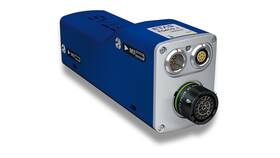
( Brand: Etas ), ( Manufacturer Part Number: ES410.1 ), ( Part Type: Module ), ( Country Of Origin: Germany )
Review ETAS 8-channel Isolated A/d Analog Input Module
The **ETAS ES410.1** is a high-performance, 8-channel isolated analog-to-digital (A/D) conversion module designed for demanding automotive, industrial, and embedded systems applications where precision, reliability, and robust signal conditioning are critical. Engineered to meet the stringent requirements of modern test and measurement environments, this module delivers exceptional accuracy and stability, making it an ideal choice for data acquisition, vehicle diagnostics, and real-time monitoring systems. Each of its eight independent channels is fully isolated, ensuring electrical safety and protection against noise interference, which is particularly advantageous in harsh electromagnetic environments such as automotive powertrains or industrial machinery. The module features a **24-bit resolution**, enabling ultra-fine granularity in signal measurement with a high dynamic range, allowing users to capture subtle variations in analog signals with minimal quantization error. With a **sampling rate of up to 100 kS/s per channel**, the ES410.1 excels in applications requiring high-speed data acquisition, such as engine sensor monitoring, battery management systems, or vibration analysis, where temporal precision is essential for accurate trend detection and fault diagnosis.
Beyond its technical specifications, the ES410.1 is built with modularity and integration in mind, seamlessly interfacing with ETAS INCA, LABCAR, and other ETAS software platforms through standardized communication protocols like CAN, Ethernet, or USB, depending on the system configuration. Its **programmable gain amplifiers (PGAs)** allow for flexible input range adjustment, accommodating signals from low-level thermocouples to high-voltage industrial sensors, while its **built-in anti-aliasing filters** ensure clean, high-fidelity digitization by mitigating unwanted high-frequency noise. The module s **wide input voltage range (typically 10V or 0 5V, configurable per channel)** further enhances its versatility, catering to a broad spectrum of sensor types without requiring additional signal conditioning hardware. Additionally, the ES410.1 incorporates **diagnostic features** such as input overload detection, short-circuit protection, and configurable thresholds for signal validation, which help prevent data corruption and improve system robustness in field deployments.
Designed with durability in mind, the ES410.1 adheres to rigorous industrial standards, including compliance with **AUTOSAR** and **ISO 26262** (for automotive safety-critical applications), ensuring it meets the highest reliability and safety requirements. Its compact yet rugged form factor, often housed in a DIN-rail or chassis-mounted enclosure, allows for easy integration into existing test benches, ECU validation setups, or portable measurement systems. Whether deployed in a laboratory for R&D validation, on a test track for vehicle performance tuning, or in an industrial plant for predictive maintenance, the ES410.1 provides engineers and technicians with a dependable tool for capturing and analyzing critical analog data with unmatched precision. Its combination of **high resolution, isolation, and flexibility** makes it a cornerstone for applications where accuracy and reliability are non-negotiable, empowering users to make data-driven decisions with confidence.
### **Pros and Cons of the ETAS ES410.1 (8-Channel Isolated A/D Analog Module)**
#### **Pros:**1. **High Isolation and Safety** The module features **2500V DC isolation** between channels and the host system, making it suitable for industrial and automotive applications where electrical noise and ground loops are concerns. This reduces the risk of damage from voltage spikes or ground faults.
2. **High Accuracy and Precision** With **16-bit resolution**, the module provides fine granularity for analog signal measurements, which is essential for applications requiring precise data acquisition (e.g., sensor monitoring, control systems).
3. **Wide Input Range** Supports ** 10V, 5V, or 0 10V** input ranges, allowing flexibility in interfacing with various sensors and transducers without requiring additional signal conditioning.
4. **Fast Sampling Rates** Capable of **high-speed data acquisition** (up to **100 kS/s per channel**), making it suitable for dynamic signal analysis in real-time applications.
5. **Compatibility with ETAS CAN-Based Systems** Designed to integrate seamlessly with **ETAS CAN-based test and diagnostic tools**, such as **INCA, MATRIX, or LABCAR**, which are widely used in automotive development and testing.
6. **Robust Construction** Built for **industrial and automotive environments**, with features like **wide temperature operation (-40 C to 85 C)** and **vibration resistance**, ensuring reliability in harsh conditions.
7. **Scalability** The **8-channel configuration** allows for expansion if more inputs are needed, though additional modules may be required for larger setups.
8. **Deterministic Data Transfer** Works over **CAN bus**, ensuring **low-latency, synchronized data acquisition**, which is critical for real-time control and testing applications.
9. **Software Support** Comes with **ETAS software tools** for configuration, calibration, and data logging, reducing development time.
10. **Automotive Compliance** Meets **AUTOSAR and ISO 26262 (ASIL-B)** standards, making it suitable for safety-critical automotive applications.
---
#### **Cons:**1. **High Cost** As an **ETAS-branded module**, it is **expensive** compared to generic or off-the-shelf A/D converters. The price may be a barrier for small-scale or non-automotive applications.
2. **Vendor Lock-In** Primarily designed for **ETAS software ecosystem**, which means compatibility with third-party tools may require additional interfaces or workarounds.
3. **Limited Analog Input Types** Does not support **differential inputs** (only single-ended), which may require external signal conditioning for certain applications.
4. **No Built-in Signal Conditioning** Unlike some industrial A/D modules, it **does not include built-in amplification, filtering, or offset adjustment**, meaning external circuitry may be needed for weak signals.
5. **CAN Dependency** Requires a **CAN bus connection**, which adds complexity if the system does not already use CAN for communication.
6. **No Built-in Digital I/O** Unlike some multi-function modules, it **does not include digital input/output channels**, limiting its versatility in mixed-signal applications.
7. **Firmware Dependency** Performance and features may be **limited by ETAS firmware updates**, and customization options are restricted compared to open-source or FPGA-based solutions.
8. **Power Requirements** May need **stable power supply** (typically 12V or 24V), which could be a constraint in battery-powered or low-power systems.
9. **Learning Curve** ETAS tools (e.g., **INCA, MATRIX**) have a **steep learning curve**, requiring training for effective use, especially for non-experts.
10. **Limited Off-the-Shelf Availability** Since it is a **specialized automotive/industrial module**, stock availability may be slower compared to mass-market alternatives.
---
### **Conclusion**
The **ETAS ES410.1** is an **excellent choice** for **automotive and industrial applications** where **high isolation, precision, and CAN-based integration** are critical. Its **16-bit resolution, wide input range, and compliance with safety standards** make it ideal for **sensor testing, control system validation, and diagnostic applications**.
However, its **high cost, vendor lock-in, and lack of flexibility** (e.g., no differential inputs, limited signal conditioning) may make it **overkill or impractical** for **general-purpose data acquisition, research labs, or budget-conscious projects**. If **CAN integration and automotive compliance** are not requirements, a **generic high-speed A/D module (e.g., National Instruments, ADI, or TI)** may offer better **cost-performance** without sacrificing performance.
---
### **Recommendation**
- **Buy the ETAS ES410.1 if:**- You are working in **automotive development, testing, or diagnostics** and need **CAN-based, isolated, high-precision analog inputs**.
- Your project **requires compliance with AUTOSAR or ISO 26262 standards**.
- You already use **ETAS tools (INCA, MATRIX, LABCAR)** and want seamless integration.
- You need **deterministic, high-speed data acquisition** in a **harsh industrial environment**.
- **Avoid the ETAS ES410.1 if:**- You are on a **tight budget** and can use a **generic high-speed A/D module** (e.g., **NI cDAQ, ADI AD7606, or TI ADC161S021**).
- Your application **does not require CAN communication** and would benefit from **USB, Ethernet, or PCIe-based solutions**.
- You need **differential inputs, built-in signal conditioning, or digital I/O** in a single module.
- You are working in a **non-automotive field** (e.g., general research, embedded prototyping) where **ETAS-specific tools are unnecessary**.
For most **non-automotive or cost-sensitive applications**, a **commercial-grade A/D module with similar specs but lower cost** (e.g., **National Instruments USB-600x series, ADI s isolated converters, or TI s high-speed ADCs**) would be a **more practical alternative**. However, if **ETAS ecosystem integration is mandatory**, the **ES410.1 remains one of the best choices** in its category.
Details:
Input voltage range between 100 MTV and 60 V. Corner frequency, Electrical isolation of inputs Channel to channel and supply, Max. In great shape and warranted non-DOA. Signal oversampling is supported by independent setting of corner frequency and sampling rate.
Software configurable high-order low-pass filter. Dropped or otherwise abused your Hymnbook. The ES410 module has 8 input voltage ranges between 100 MTV and 60 V.ES410 signals can be passed through a high quality configurable FIR filter of 8th order to suppress signal noise avoid aliasing effects. This product has been developed and released for use in automotive applications.
For best measurement results also at low sample rates, the FIR filter is always using all avails, Your benefits: 8 electrically isolated A/D analog input channels. The ES410 is an A/D module with 8 electrically isolated channels. Cost effective.
part #: es4101 prices
- $2250.00-$2828.80
specifications sensoindustria:
- brand: Etas
- mpn: Es410.1
- part type: Module
- country of origin: Germany
returns sensoindustria:
- policy: No Returns
general sensoindustria:
- PLCs HMIs > PLC Peripheral Modules > PLC Input Output Modules
- condition: Used
offer sensoindustria:
- started: April 16, 2026
- options: Ship-to-home
- quantity: 2
- availability: In Stock
- sold: 0
seller sensoindustria:
- city: Berkeley, California
- rating: 100.0%
- # reviews: 9760
shipping sensoindustria:
- carrier: FedEx, UPS
- service: FedEx Ground Economy, UPS Ground, FedEx Ground / FedEx Home Delivery
- cost: $18.62
- class: Economy, Standard
- type: Calculated
- transit: 9-15 Days
payments sensoindustria:
- wallet: Google-pay
- credit card: Discover
- other
