ABB DSQC-351A Control Interbus Follower Unit Dsqc
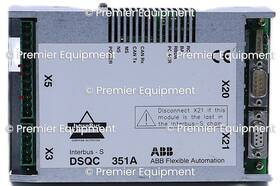
( Brand: Abb ), ( Manufacturer Part Number: DSQC-351A ), ( Part Type: Control Unit )
Review ABB Dsqc 351a Control Interbus Follower Unit
The **ABB DSQC-351A DSQC 351A Control Interbus Follower Unit** is a high-performance, modular communication interface designed to seamlessly integrate industrial automation systems with ABB s robust Interbus-S communication network. Part of ABB s advanced Digital Substation Control (DSQC) series, this compact yet powerful unit serves as a critical link between higher-level control systems and field devices, ensuring reliable data transmission, synchronization, and coordination within substation automation architectures. Engineered with precision, the DSQC-351A operates as an Interbus Follower, adhering to the Interbus-S master-slave protocol while facilitating bidirectional communication with other Interbus-compatible devices, such as sensors, actuators, and intelligent electronic devices (IEDs). Its robust design accommodates demanding substation environments, featuring high immunity to electrical noise, electromagnetic interference (EMI), and transient surges qualities essential for maintaining operational integrity in critical infrastructure applications.
At its core, the DSQC-351A is built to support the stringent requirements of modern substation automation, including real-time monitoring, fault detection, and synchronized control actions. The unit leverages ABB s proven Interbus-S technology, which ensures deterministic communication with minimal latency, making it ideal for applications where precise timing and data consistency are paramount. Its modular construction allows for easy integration into existing or new control systems, offering flexibility in configuration and scalability to accommodate evolving substation needs. The device is equipped with robust protection mechanisms, including overvoltage, undervoltage, and short-circuit protection, to safeguard both the unit itself and the connected devices from potential electrical faults.
The DSQC-351A is designed with a focus on reliability and ease of maintenance, featuring a user-friendly interface for configuration and diagnostics. ABB s intuitive software tools enable engineers to program and monitor the unit s performance, including real-time status updates, error logging, and parameter adjustments all of which contribute to streamlined troubleshooting and reduced downtime. Additionally, the unit s compliance with international standards, such as IEC 61850 and IEC 60255, ensures interoperability with a wide range of industry-standard protocols and devices, further enhancing its versatility in diverse automation environments. Whether deployed in new substation projects or retrofitted into existing systems, the DSQC-351A Control Interbus Follower Unit exemplifies ABB s commitment to delivering high-performance, dependable solutions for the challenges of modern electrical infrastructure.
### **Pros and Cons of buying a ABB DSQC-351A (DSQC 351A Control Interbus Follower Unit)**
#### **Pros:**1. **Compatibility with Interbus-S System** The DSQC-351A is designed specifically for the Interbus-S communication network, ensuring seamless integration with existing ABB or third-party Interbus-S devices. This reduces the need for additional gateways or converters, simplifying system architecture.
2. **High Reliability and Robustness** ABB is a well-established manufacturer known for producing industrial automation components with strong reliability. The DSQC-351A is built to withstand harsh factory environments, including temperature fluctuations, electrical noise, and mechanical stress.
3. **Modular and Flexible Design** The unit is likely designed for easy installation and replacement within an Interbus-S network. Its follower functionality allows it to receive commands and data from a master device (e.g., PLC or controller) without needing to initiate communication, making it ideal for slave applications.
4. **Support for Multiple Communication Protocols** While primarily an Interbus-S follower, the unit may support additional diagnostic or configuration interfaces (e.g., RS-232, USB, or Ethernet if paired with other ABB modules), enhancing troubleshooting and integration capabilities.
5. **Long-Term Availability** ABB components, especially older or widely adopted models like the DSQC-351A, are often easier to source for spare parts or replacements compared to proprietary or niche solutions. This reduces the risk of obsolescence.
6. **Industrial-Grade Quality** The unit is likely constructed with materials and components that meet strict industrial standards, ensuring durability and minimal downtime in production environments.
7. **Potential Cost-Effectiveness** If the unit is being used to replace a failing or outdated component in an existing system, purchasing it may be more economical than upgrading the entire network. It can also reduce wiring complexity by consolidating communication paths.
---
#### **Cons:**1. **Limited Functionality as a Standalone Unit** The DSQC-351A is primarily a follower device, meaning it cannot act as a master or initiate communication. If your application requires bidirectional control or master functionality, you may need additional hardware (e.g., an ABB PLC or Interbus-S master module).
2. **Potential for Obsolescence** While ABB components are generally reliable, older models like the DSQC-351A may eventually be discontinued. This could lead to challenges in finding replacements, spare parts, or software/firmware updates in the future. Always verify the unit s current support status with ABB or a distributor.
3. **Dependence on Interbus-S Network** If your system relies heavily on Interbus-S, the failure of this unit or the network itself could disrupt operations. Redundancy or backup communication paths may be necessary for critical applications.
4. **Learning Curve for Configuration** ABB s Interbus-S network requires proper configuration of addressing, data structures, and communication parameters. Misconfiguration could lead to communication errors or system malfunctions, potentially requiring technical expertise to troubleshoot.
5. **Compatibility Issues with Non-ABB Devices** While the DSQC-351A is designed for Interbus-S, integrating it with non-ABB third-party devices may require additional adapters, drivers, or protocol converters, adding complexity and potential costs.
6. **Limited Diagnostic Features** Compared to modern PLCs or advanced control units, the DSQC-351A may offer fewer built-in diagnostic tools (e.g., real-time monitoring, logging, or remote access). This could make troubleshooting more difficult without additional tools.
7. **Potential for Higher Long-Term Costs** If the unit requires frequent maintenance, replacements, or upgrades due to its age or limited functionality, the total cost of ownership (TCO) over time may outweigh the initial purchase price. Evaluating the unit s lifespan and maintenance requirements is crucial.
8. **Availability and Lead Times** Depending on the region and distributor, older or less commonly ordered units like the DSQC-351A may have longer lead times or higher prices due to limited stock. Always confirm availability before purchasing.
---
### **Conclusion:**The **ABB DSQC-351A (DSQC 351A Control Interbus Follower Unit)** is a reliable and well-suited choice for applications requiring a simple, robust follower device within an Interbus-S network. Its strengths lie in its compatibility, durability, and ease of integration into existing ABB systems. However, its limitations such as lack of master functionality, potential obsolescence, and reliance on Interbus-S must be carefully considered, especially in modern or highly dynamic industrial environments.
If your application demands **bidirectional communication, advanced diagnostics, or future scalability**, pairing the DSQC-351A with a more modern PLC or control system may be advisable. Conversely, if you are maintaining or upgrading an **existing Interbus-S network with minimal changes**, the DSQC-351A remains a practical and cost-effective solution.
---
### **Recommendation:**1. **Verify Current Availability and Support** Confirm with ABB or a trusted distributor that the DSQC-351A is still supported and available. Check for any newer alternatives (e.g., ABB s DSQC series updates) that may offer improved features.
2. **Assess System Requirements** If the unit is being purchased for a new installation, ensure that its follower-only role aligns with your application. If master functionality or advanced features are needed, consider a more comprehensive control solution (e.g., ABB s AC500 or AC800P PLCs).
3. **Evaluate Long-Term Viability** If the unit is critical to your operations, plan for redundancy or backup communication paths to mitigate risks associated with network or device failure.
4. **Consult ABB Documentation and Support** Review the unit s manual, technical specifications, and any available updates or patches. ABB s technical support can provide guidance on compatibility, configuration, and troubleshooting.
5. **Consider Alternatives if Needed** If the DSQC-351A does not meet all requirements, explore newer Interbus-S devices from ABB or other manufacturers (e.g., Phoenix Contact, ifcom) that offer expanded functionality or modern interfaces.
6. **Budget for Maintenance and Spare Parts** Account for potential future costs related to spare parts, calibration, or replacement. Older units may require more frequent attention than newer models.
**Final Verdict:**The **ABB DSQC-351A is a sound purchase for maintaining or upgrading an Interbus-S network where a simple, reliable follower device is sufficient**. However, for applications requiring advanced control, scalability, or future-proofing, investing in a more modern or versatile control solution may be justified. Always prioritize compatibility, long-term support, and alignment with your system s evolving needs.
Details:
Consignor: 4-7-2026 PES p-r. MPN: DSQC 351A. Condition: Used.
part #: dsqc351a prices
- $420.00-$471.47
specifications sensoindustria:
- brand: Abb
- mpn: Dsqc-351a
- part type: Control Unit
seller sensoindustria:
- rating: 99.8%
- # reviews: 12011
- city: Rutherfordton, North Carolina
general sensoindustria:
- condition: Used
- PLCs HMIs > PLC Peripheral Modules > PLC Input Output Modules
offer sensoindustria:
- started: April 7, 2026
- sold: 0
- options: Ship-to-home
- quantity: 1
- availability: In Stock
- best offers: True
shipping sensoindustria:
- type: Fixed
- service: Expedited
- cost: $16.89
- class: Expedited
- transit: 3-8 Days
payments sensoindustria:
- wallet: Paypal
- credit card: Diners-club
- other
returns sensoindustria:
- time: 30 Days
- paid by: Buyer
- method: Money back
- policy: Returns Accepted
Abb DSQC-351A Is Similar To:
- 3aua266001b166 Abb Asea Brown Boveri Pc Control Controller Board Relay (41.9% similar) The results of all tests that are performed disclosed in ad. Abb sea brown Bovary 3AUA266001B166 PC control controller board relay we gladly ship worldwide. Abb sea brown Bovary 3AUA266001B166 PC control controller board relay in good condition as seen the pictures. Not retaining the original box ...(August 2nd, 2018)
- 3hab2241-1 Abb Cpu Main Control (32.9% similar) ...(January 7th, 2018)
- 40pb3205a Abb Mod Rb Transnet Control (33% similar) This was just turned in by the city water dept. Used Abb 40PB3205A mod rb transient control. Due to a system replacement. Don't miss out...(October 8th, 2018)
- 61002774 Abb Ypk Serial Link Unit Code Kit (27.1% similar) Abb pk 113A serial link unit code: kit...(September 10th, 2018)
- 63985252 Abb Ddcs Branching Unit Code (30.8% similar) Abb NDBU-95 DDS branching unit, 9 ch...(May 2nd, 2018)
- 63985317b Abb Drive Control Unit Code (39.6% similar) Terminal plugs not included. Unit comes as shown in pictures. Abb NDCU-21 drive control unit code: 63985317BUSED, refurbished, working...(April 7th, 2018)
- 64008498d Abb Master Board For Center Phase Control Card Code (36.5% similar) Main circuit interface board mint: this gives the control commands and sends measurement signals. Abb NINT-68C master board for phase control card ACS600 code: 64008498DFOR AC's 600 series drives. Mounted to plate code...(November 10th, 2018)
- 64008501d Abb Control Distribution Card (36.6% similar) Abb control distribution card NXPP-02C code: 64008501D, kit: 64120662KIT board 2 ribbon cables: 64120662THIS is the conformal coating version of NXPP-02 code 61298622E printed circuit. Conformal coatings are designed to protect assembled printed circuit board circuitry from harsh environmental ...(January 7th, 2018)
- Ai845 Abb With Base Unit Analog Input (28.6% similar) Used- Abb AI845...(September 30th, 2018)
- Dsqc-223 Abb Circuit Board Rev Used Free Shipping (25.2% similar) I have a used Abb DSQC-223 o circuit board Bud 3 rev - for sale. The shipping on this item reflects standard ground for us. Cosmetically I would rate it a 7 out of 10. Greenback stock G14111 G14578-80 G15480-1. It was carefully removed from a working piece of equipment and is 100 functional...(August 1st, 2018)
- Dsqc 328 3hab 7229-1 328 Abb (24.4% similar) Please send questions...(December 13th, 2017)
