OMRON DRT1-0D16 Remote Terminal
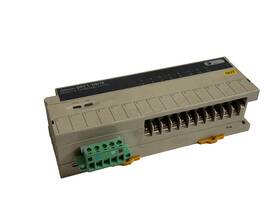
( Brand: Omron ), ( Manufacturer Part Number: DRT1-0D16 ), ( Model: OMRON DRT1-0D16 ), ( Part Type: Remote )
Review OMRON Used Remote Terminal
The **Omron DRT1-0D16 Remote Terminal** is a compact yet highly versatile industrial communication device designed to bridge the gap between field devices and higher-level control systems with seamless efficiency. Engineered for reliability and ease of integration, this terminal serves as a critical link in automation networks, enabling real-time data acquisition, monitoring, and control across a wide range of applications. Built with Omron s signature precision, the DRT1-0D16 supports multiple communication protocols, including **CC-Link, CC-Link IE, DeviceNet, Profibus DP, and Modbus RTU**, making it an ideal solution for diverse industrial environments such as manufacturing plants, process control systems, and building automation setups. Its robust construction ensures durability in harsh conditions, with an IP65-rated enclosure that protects against dust and water ingress, while its wide operating temperature range of **-10 C to 60 C** guarantees consistent performance even in demanding environments.
At the heart of the DRT1-0D16 lies its **dual-port design**, featuring one **CC-Link/CC-Link IE port** and one **fieldbus port**, allowing for flexible connectivity to both higher-level PLCs or SCADA systems and lower-level sensors or actuators. The terminal supports **up to 16 digital inputs and 16 digital outputs**, configurable via intuitive software tools, which simplifies wiring and reduces installation complexity. Its **high-speed data transfer capabilities** ensure minimal latency, making it suitable for applications requiring precise timing and synchronization, such as motion control or real-time process monitoring. Additionally, the device incorporates **Omron s Sysmac technology**, enabling seamless integration with other Sysmac-compatible components like PLCs, HMIs, and drives, fostering a unified automation ecosystem.
For enhanced functionality, the DRT1-0D16 includes **diagnostic and troubleshooting features**, such as built-in error logging and status monitoring, which help operators quickly identify and resolve issues without interrupting production. Its **low-power consumption** and energy-efficient design further contribute to cost savings and sustainability, while its **compact form factor** allows for easy mounting in tight spaces. Whether deployed in a discrete manufacturing line, a water treatment facility, or an energy management system, this remote terminal delivers **reliable, scalable, and future-proof communication**, ensuring seamless operation and long-term investment protection. With Omron s commitment to innovation and quality, the DRT1-0D16 stands as a dependable solution for industries seeking to optimize connectivity, reduce downtime, and enhance overall system performance.
**Pros and Cons of buying a Omron DRT1-0D16 Remote Terminal**
The Omron DRT1-0D16 is a compact, modular remote terminal unit (RTU) designed for industrial automation, monitoring, and control applications. Below is a detailed breakdown of its advantages and disadvantages.
---
### **Pros**
1. **Compact and Space-Efficient Design**
The DRT1-0D16 is a small, DIN-rail-mounted unit, making it ideal for installations where space is limited. Its modular design allows for easy expansion without requiring additional rack space.
2. **High Reliability and Durability**
Omron is a well-established brand known for robust industrial equipment. The DRT1-0D16 is built to withstand harsh environmental conditions, including temperature fluctuations, humidity, and electrical noise, ensuring long-term operation in demanding industrial settings.
3. **Modular and Scalable Architecture**
The unit supports multiple communication protocols (e.g., Modbus RTU, Modbus TCP, Profibus DP, Ethernet/IP) and can be easily extended with additional modules for analog/digital inputs, outputs, or special functions. This flexibility allows users to tailor the system to their specific needs without replacing the entire unit.
4. **Wide Range of Input/Output Options**
The DRT1-0D16 supports a variety of input/output types, including:- Digital inputs/outputs (for discrete signals like sensors or actuators)
- Analog inputs/outputs (for temperature, pressure, flow, etc.)
- Pulse counting (for monitoring motor speed or energy consumption)
This versatility makes it suitable for a broad range of applications, from basic monitoring to complex control tasks.
5. **Built-in Communication Protocols**
The terminal supports multiple communication protocols, enabling seamless integration with PLCs, SCADA systems, or enterprise networks. This reduces the need for additional gateways or converters, simplifying system architecture.
6. **Easy Configuration and Programming**
Omron s software tools (e.g., Sysmac Studio, CX-Programmer) provide intuitive interfaces for configuring and programming the DRT1-0D16. The unit also supports ladder logic (IEC 61131-3), making it accessible to engineers familiar with PLC programming.
7. **Low Power Consumption**
Compared to some larger RTUs or PLCs, the DRT1-0D16 consumes minimal power, which can be advantageous in battery-powered or energy-sensitive applications.
8. **Good Support and Documentation**
Omron offers extensive technical support, including manuals, tutorials, and customer service. The unit s widespread use in industrial automation also means a large community of users and third-party resources.
9. **Cost-Effective for Small to Medium Applications**
While not the cheapest RTU on the market, the DRT1-0D16 offers a good balance between price and functionality for applications where a full-fledged PLC might be overkill. Its modularity can also reduce long-term costs by avoiding the need for frequent upgrades.
10. **Compatibility with Omron Ecosystem**
If you already use Omron PLCs (e.g., CP1E, CJ2, CS1), the DRT1-0D16 integrates seamlessly with these systems, reducing integration complexity and potential compatibility issues.
---
### **Cons**
1. **Limited Processing Power for Complex Tasks**
The DRT1-0D16 is designed as a remote terminal, not a high-performance PLC. While it can handle basic monitoring and control tasks, it may struggle with complex algorithms, large-scale data processing, or real-time control requirements that demand significant computational resources. For such applications, a dedicated PLC or a more powerful RTU might be necessary.
2. **Learning Curve for New Users**
While Omron s software is user-friendly, the DRT1-0D16 s advanced features (e.g., multi-protocol communication, modular expansion) may require some training, especially for users unfamiliar with industrial automation or Omron s specific tools.
3. **Dependence on Omron s Software**
The unit relies on Omron s proprietary software (e.g., Sysmac Studio) for configuration and programming. This can be a drawback if your organization prefers open-source or third-party tools. However, Omron does provide APIs and SDKs for custom integration.
4. **Higher Upfront Cost for Advanced Modules**
While the base unit is reasonably priced, adding specialized modules (e.g., high-speed counters, advanced analog modules) can increase the total cost. For applications requiring only basic I/O, this may not be cost-effective.
5. **Limited Local Display and HMI Options**
The DRT1-0D16 lacks built-in human-machine interface (HMI) capabilities. Users must rely on external HMIs or SCADA systems for operator interaction, which adds complexity to the setup.
6. **Firmware and Software Updates**
Omron occasionally releases firmware updates to improve functionality or fix bugs. While these updates are generally stable, they may occasionally introduce compatibility issues or require downtime for installation, which could disrupt operations.
7. **Not Ideal for High-Speed Data Acquisition**
For applications requiring high-speed data logging (e.g., motor control, real-time process monitoring), the DRT1-0D16 may not offer the performance of specialized data acquisition systems or high-end PLCs.
8. **Vendor Lock-In Risks**
As with any proprietary system, there is a risk of vendor lock-in. If Omron discontinues support for the DRT1-0D16 or changes its pricing strategy significantly, future upgrades or replacements could become problematic.
9. **Physical Size Still Requires Installation Space**
Although compact, the DRT1-0D16 still occupies some space on a DIN rail. In extremely space-constrained environments, this may be a minor but notable limitation.
10. **Limited Global Availability**
While Omron is a global brand, the availability of the DRT1-0D16 and its modules may vary by region. Users in less common markets might face longer lead times or higher shipping costs.
---
### **Conclusion**
The Omron DRT1-0D16 is a well-rounded remote terminal unit that excels in applications requiring reliable, modular, and scalable monitoring and control. Its compact design, robust build, and support for multiple communication protocols make it a strong choice for small to medium-sized industrial automation tasks where a full PLC is unnecessary. The unit is particularly suitable for environments where space is limited, and integration with existing Omron systems is desired.
However, it is not ideal for applications demanding high processing power, complex real-time control, or advanced HMIs. Users should carefully evaluate their specific requirements such as the need for high-speed data acquisition, extensive local monitoring, or compatibility with non-Omron systems to determine if the DRT1-0D16 meets their needs.
For users already invested in Omron s ecosystem or those seeking a cost-effective, modular solution for basic to moderately complex control tasks, the DRT1-0D16 is a solid recommendation. For applications requiring more advanced features or higher performance, a more specialized RTU or PLC may be preferable.
---
### **Recommendation**
**Buy the Omron DRT1-0D16 if:**- You need a compact, reliable RTU for monitoring and control in industrial environments.
- Your application requires support for multiple communication protocols (Modbus, Profibus, Ethernet/IP, etc.).
- You are already using Omron PLCs or other Omron devices, and seamless integration is a priority.
- Your requirements include analog/digital I/O, pulse counting, or other modular extensions.
- You prioritize long-term reliability and Omron s technical support.
**Consider alternatives if:**- Your application demands high-speed data processing, complex algorithms, or real-time control.
- You require built-in HMI or advanced local monitoring capabilities.
- You prefer open-source or non-proprietary tools for configuration and programming.
- Your budget is tight, and you can find a simpler or more cost-effective solution for your specific needs.
In summary, the DRT1-0D16 is a practical choice for many industrial automation scenarios, but it is not universally the best option. Carefully assess your project s demands before making a purchase.
Details:
USED Omron DRT1-0D16 Remote Terminal, - Shelf A14 Tote 288.
part #: drt10d16 prices
- $125.00-$494.00
specifications sensoindustria:
- brand: Omron
- mpn: Drt1-0d16
- model: Omron Drt1-0d16
- part type: Remote
offer sensoindustria:
- started: March 30, 2026
- availability: In Stock
- quantity: 1
- best offers: True
- sold: 0
- options: Ship-to-home
shipping sensoindustria:
- type: Fixed
- service: USPS Priority Mail
- class: Expedited
- transit: 3-8 Days
- cost: $0.00
- carrier: USPS
seller sensoindustria:
- rating: 100.0%
- # reviews: 2167
- city: Ray, Michigan
returns sensoindustria:
- paid by: Seller
- policy: Returns Accepted
- method: Money back
- time: 30 Days
general sensoindustria:
- condition: Used
- PLCs HMIs > PLC Peripheral Modules > PLC Input Output Modules
payments sensoindustria:
- wallet: Apple-pay
- other
- credit card: Mastercard
Omron DRT1-0D16 Is Similar To:
- 3g2a5-rm201 Omron Remote Master Unit Plc Module (41% similar) Unit is missing some components but connections are in good cosmetic condition. Cosmetics unit has light scratches and discoloration from normal use. Function this unit is in very good working condition. Features an RS485 connection...(May 12th, 2018)
- C200h-0c222 Omron Output Unit Module Used (33.8% similar) Used good condition. Some signs of use dust, light scratches. From working environment. Omron C200H-OC222 output unit module C200H-0C222...(March 4th, 2018)
- C200h-0c224 Omron N1-1-1 1 Used (41.8% similar) This item is to be installed and maintained by qualified individuals. E-mail any questions. If are looking to combine shipping, please send a note through. Items include only what you see in the photo, if need an accessory that is not pictured ask. 1 used Omron C200H-0C224 C200H-OC224 output unit. ...(August 26th, 2017)
- C200h-id215 Omron Good Used And (41.8% similar) Model C200H-ID215. For your consideration is a good used and working Omron input module...(December 27th, 2017)
- C200h-im211 Omron Good Used And (41.8% similar) For your consideration is a good used and working Omron input module. Model C200H-IM212...(December 27th, 2017)
- C200h-lk201 Omron Good Used And (41.8% similar) For your consideration is a good used and working Omron input module. Model C200H-LK201...(December 27th, 2017)
- C200h-od411 Omron Good Used And (41.8% similar) For your consideration is a good used and working Omron input module. Model C200H-OD411...(October 26th, 2017)
- C200h-rm201 Omron Remote I-o Unit (40.6% similar) Reach out to us. No manuals,no standard power cords, even if it appears in the photo, accessories, software etc are included unless pictured and noted. All statements regarding products and their configurations are made to the best of our ability with assumption that buyer is knowledgeable ...(December 28th, 2017)
- C200hg-cpu43-e Omron Programmable Controller Unit Used Free Shipping (36.5% similar) I have a nice used Omron C200HG-CPU43-E programmable controller CPU43 unit - for sale. The shipping on this item reflects standard ground for us. Greenback stock G31025. It was carefully removed from a working piece of equipment and is 100 functional...(August 8th, 2018)
- C200hw-bc081 Omron Cpu Backplane Base Unit Used Free Shipping (37.1% similar) I have a nice used Omron C200HW-BC081 CPU back plane 8-SLOT base unit - for sale. Greenback stock G31026. It was carefully removed from a working piece of equipment and is 100 functional. The shipping on this item reflects standard ground for us...(August 8th, 2018)
- C250hl-od213-mk Omron Output Module Used (34.2% similar) Selling 1 board. Its still in original rack...(June 13th, 2019)
