OPTIM ELECTRONICS DI-5032 Digital Module Di
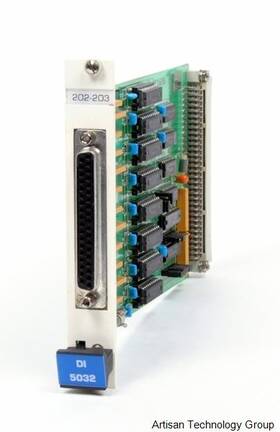
( Brand: Optim Electronics ), ( Manufacturer Part Number: DI-5032 ), ( Part Type: Digital Module ), ( Country Of Origin: United States )
Review OPTIM ELECTRONICS Di 5032 Digital Input Module
The **Optima DI-5032** is a high-performance, digital input module designed to deliver precision, reliability, and seamless integration into industrial automation and control systems. Engineered for environments where accuracy and durability are paramount, this module features a robust **50-channel digital input configuration**, each capable of accommodating a wide range of input types, including both **NO (Normally Open) and NC (Normally Closed)** signals. With a **24V DC power supply**, the DI-5032 ensures compatibility with standard industrial control systems, providing a stable and efficient operation across diverse applications such as manufacturing, process control, and building automation. Its **digital interface** enables high-speed data acquisition, with a **scan rate of up to 10 ms per channel**, allowing for real-time monitoring and response critical for applications requiring split-second decision-making.
The DI-5032 is built with **industrial-grade components**, offering exceptional resistance to electrical noise, voltage spikes, and environmental fluctuations. Its **isolated inputs** (up to 500V AC/DC) enhance safety and prevent ground loops, ensuring data integrity even in harsh conditions. The module s **compact yet sturdy design** makes it ideal for integration into control panels, PLC systems, or distributed I/O architectures, while its **modular flexibility** allows for easy expansion or reconfiguration as system requirements evolve. Whether used for discrete sensor monitoring, machine status tracking, or safety interlocks, the DI-5032 delivers consistent performance with minimal maintenance demands.
Backed by **Optima s reputation for quality and innovation**, this digital input module is equipped with **diagnostic features** such as input status indicators, fault detection, and configurable thresholds, enabling proactive troubleshooting and system optimization. Its **compatibility with major industrial protocols**, including Modbus RTU, Profibus, and Ethernet/IP, ensures smooth interoperability with existing automation infrastructure. Whether deployed in a high-speed production line, a critical infrastructure facility, or a data-intensive research environment, the DI-5032 stands as a dependable solution for capturing and processing digital signals with unmatched precision and reliability.
### Pros and Cons of buying a Optim Di-5032 Digital Module
The **Optim DI-5032** is a digital input module designed for industrial automation, particularly for use with PLCs (Programmable Logic Controllers). Below is a detailed breakdown of its advantages and disadvantages.
---
### **Pros**
1. **High Input Capacity**
The DI-5032 supports **32 digital inputs**, making it suitable for applications requiring a large number of discrete signals. This eliminates the need for multiple smaller modules, simplifying wiring and installation.
2. **Compact and Modular Design**
It is part of the **Optim series**, which is known for its compact and standardized modular design. This allows for easy integration into existing racks or enclosures, saving space in control panels.
3. **High Reliability and Durability**
Optim modules are built for industrial environments, featuring robust construction, protection against electrical noise, and resistance to harsh conditions (e.g., temperature fluctuations, vibration). The DI-5032 is designed for long-term operation with minimal maintenance.
4. **Compatibility with Major PLC Brands**
The DI-5032 is compatible with a wide range of **PLC brands**, including Siemens, Allen-Bradley (Rockwell), Mitsubishi, and others. This flexibility makes it a versatile choice for different automation setups.
5. **Easy Installation and Wiring**
The module features **screw-terminal connections**, which are straightforward to wire and secure. The design also includes clear labeling and spacing for inputs, reducing the risk of wiring errors.
6. **Support for Various Signal Types**
The DI-5032 can handle **DC and AC signals** (typically 24V DC or 120V AC), making it adaptable to different sensor and switch types. This versatility reduces the need for additional conversion modules.
7. **Diagnostic Features**
Many Optim modules include **diagnostic LEDs** that indicate the status of inputs (e.g., active, fault, or communication issues). This helps in quickly identifying problems during troubleshooting.
8. **Backward and Forward Compatibility**
Optim modules are often designed to work with newer and older PLC generations, ensuring that upgrades or replacements can be made without compatibility issues.
9. **Low Latency**
As a digital module, it provides **fast response times**, which is critical for applications requiring real-time input processing (e.g., motion control, safety systems).
10. **Cost-Effective for High-Input Applications**
While the upfront cost may be higher than basic analog or smaller digital modules, the **cost per input decreases** as the number of inputs increases. For applications requiring 32 inputs, it can be more economical than purchasing multiple smaller modules.
11. **Support for Optim Bus Communication**
The DI-5032 communicates via the **Optim Bus**, a high-speed, deterministic network that reduces wiring complexity and improves overall system performance compared to traditional PLC I/O expansion methods.
12. **Easy Integration with Other Optim Modules**
Since it is part of the Optim ecosystem, it can be paired seamlessly with other Optim modules (e.g., analog input/output, relay output modules) for a unified control system.
---
### **Cons**
1. **Higher Initial Cost**
Compared to basic digital input modules (e.g., 8- or 16-input modules), the DI-5032 has a **higher upfront cost**. This may be a barrier for small-scale or budget-constrained projects.
2. **Vendor Lock-In Risk**
While Optim modules are compatible with many PLC brands, some advanced features or firmware updates may be **optimized for specific PLCs**. This could limit flexibility if you later switch to a non-compatible system or require proprietary features.
3. **Requires Optim Bus Infrastructure**
The DI-5032 relies on the **Optim Bus**, which means you need to invest in the necessary **Optim Bus cables, terminators, and possibly a bus coupler** for your PLC. This adds complexity and cost if you re not already using Optim technology.
4. **Limited Availability of Spare Parts**
Optim modules are less common than universal or brand-specific I/O modules (e.g., Allen-Bradley 17xx series). Finding **spare parts or replacements** may be more difficult, especially for older models.
5. **Learning Curve for New Users**
If you re unfamiliar with the **Optim Bus or modular I/O systems**, setting up the DI-5032 may require additional training or documentation review. This could slow down implementation in time-sensitive projects.
6. **No Built-In Isolation for All Inputs**
While many inputs are isolated, some configurations may require **additional isolation modules** for high-voltage or noisy environments. This adds to the system cost and complexity.
7. **Potential for Overkill in Small Applications**
If your application only requires **fewer than 32 inputs**, purchasing the DI-5032 may be **overkill**. In such cases, a smaller module (e.g., 8 or 16 inputs) would be more cost-effective.
8. **Dependence on PLC Firmware Support**
Some features of the DI-5032 (e.g., advanced diagnostics, high-speed scanning) may require **specific PLC firmware versions**. Outdated PLC software could limit functionality.
9. **Physical Space Requirements**
While compact, the DI-5032 still occupies **one slot in a rack or panel**, which may be a constraint in very space-limited setups. You ll need to ensure your control cabinet can accommodate it.
10. **No Built-In Redundancy for Critical Inputs**
Unlike some high-end industrial modules, the DI-5032 does not offer **redundant input paths** for critical signals. If an input fails, it may require manual intervention to restore functionality.
11. **Limited Support for High-Speed Counting**
While it excels at digital input scanning, it may not support **high-speed pulse counting** or advanced timing functions that are available in specialized modules.
12. **Potential for Compatibility Issues with Non-Optim PLCs**
While it works with many PLCs, **non-Optim PLCs** (e.g., some third-party or legacy systems) may require additional **gateways or converters**, adding complexity.
---
### **Conclusion**
The **Optim DI-5032** is a **high-performance, reliable digital input module** ideal for industrial automation projects requiring **32 discrete inputs**. Its strengths lie in its **scalability, modularity, compatibility with major PLC brands, and robust design**, making it a strong choice for large-scale or long-term applications.
However, its **higher cost, dependency on the Optim Bus, and potential vendor lock-in** may make it less suitable for **small-scale, budget-sensitive, or non-Optim-based systems**. Additionally, users unfamiliar with modular I/O systems may face a **learning curve** during setup.
If your project demands **high input capacity, deterministic communication, and long-term reliability**, the DI-5032 is a **solid investment**. For smaller applications or systems with limited budgets, evaluating **alternative modules** (e.g., 16-input or brand-specific I/O) may be more practical.
---
### **Recommendation**
**Buy the Optim DI-5032 if:**- You need **32 digital inputs** in a single module.
- Your system is **PLC-based (Siemens, Allen-Bradley, Mitsubishi, etc.)** and already uses or plans to use **Optim technology**.
- You prioritize **reliability, modularity, and long-term scalability** over cost savings.
- Your application requires **fast, deterministic input scanning** (e.g., motion control, safety systems).
- You have the **infrastructure (Optim Bus, cables, terminators)** to support it.
**Avoid the Optim DI-5032 if:**- Your project requires **fewer than 16 inputs**, making a smaller module more cost-effective.
- You are working with a **non-Optim PLC** and cannot justify the additional complexity of the Optim Bus.
- Your budget is **limited**, and you can find a **lower-cost alternative** (e.g., Allen-Bradley 1756-I8, Siemens ET 200SP).
- You lack experience with **modular I/O systems**, and training time would delay your project.
- You need **high-speed counting or advanced timing functions** that the DI-5032 does not support.
**Alternatives to Consider:**- **Allen-Bradley 1756-I8/I16/I32** (for Rockwell PLCs)
- **Siemens ET 200SP/ET 200PRO** (for Siemens S7 PLCs)
- **Mitsubishi FX/DX Series I/O Modules** (for Mitsubishi PLCs)
- **Universal I/O Modules** (e.g., from Keyence, if compatibility is not a concern)
Ultimately, the DI-5032 is a **premium choice** for users who value **performance, integration, and future-proofing** in their automation systems. For most other cases, a **targeted, lower-cost module** may be the better option.
Details:
Condition: Used and in Excellent Condition. Fast and hassle-free. Are not included with this equipment unless pictured and/or listed in the above.
part #: di5032 price
- $1650.00
specifications sensoindustria:
- brand: Optim Electronics
- mpn: Di-5032
- part type: Digital Module
- country of origin: United States
seller sensoindustria:
- rating: 99.9%
- city: Champaign, Illinois
- # reviews: 17365
general sensoindustria:
- PLCs HMIs > PLC Peripheral Modules > PLC Input Output Modules
- condition: Used
shipping sensoindustria:
- carrier: FedEx
- service: FedEx Ground / FedEx Home Delivery, FedEx Standard Overnight, FedEx Ground Economy
- type: Calculated
- class: Standard, One-day, Economy
- transit: 3-9 Days
- cost: $31.82
offer sensoindustria:
- sold: 0
- quantity: 1
- started: February 11, 2026
- options: Ship-to-home
- availability: In Stock
payments sensoindustria:
- wallet: Google-pay
- credit card: Discover
- other
returns sensoindustria:
- paid by: Buyer
- time: 30 Days
- method: Money back
- policy: Returns Accepted
Optim Electronics DI-5032 Is Similar To:
- Optim Electronics Ad-885sh Ad 885sh Analog Input Module (71.6% similar) Fast and hassle-free. Are not included with this equipment unless pictured and/or listed in the above. Condition: used and in excellent condition. Part number: PL-A1638-11, PL-A1638-19, PC1140B...(February 11th, 2026)
