HITACHI CPU2-10H Plc Modules
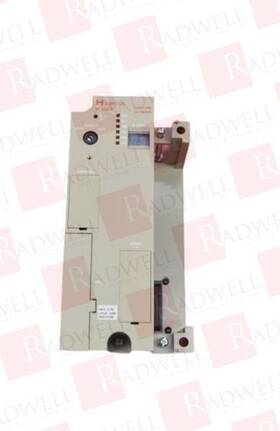
( Brand: Hitachi ), ( Manufacturer Part Number: CPU2-10H ), ( Part Type: Module )
Review HITACHI Cpu210h Used
The **Hitachi CPU2-10H (CPU210H)** is a robust, high-performance industrial controller designed to deliver reliable automation solutions for demanding manufacturing, process control, and factory automation environments. Part of Hitachi s **ZENON** and **Ethernet-based automation** ecosystem, this compact yet powerful CPU serves as the central brain for distributed control systems, offering seamless integration with PLC, SCADA, and motion control applications. Engineered with a focus on scalability and flexibility, the CPU2-10H supports a wide range of communication protocols, including **PROFINET, EtherNet/IP, Modbus TCP, and OPC UA**, ensuring compatibility with modern industrial networks and third-party devices. Its **dual-core processor architecture** enhances real-time processing capabilities, enabling precise control over complex machinery, conveyor systems, and automated production lines with minimal latency. The unit features **10 high-speed digital I/O ports**, providing ample connectivity for direct interfacing with sensors, actuators, and field devices, while its **integrated Ethernet port** facilitates high-speed data exchange, enabling real-time monitoring and remote diagnostics. Built to withstand harsh industrial conditions, the CPU2-10H is housed in a **durable metal enclosure** with an IP65 rating, ensuring protection against dust, moisture, and temperature fluctuations, making it ideal for environments such as food and beverage processing, pharmaceutical manufacturing, or automotive assembly lines. Additionally, its **expandable memory** and support for **Hitachi s ZENON SCADA software** allow for advanced visualization, historical trend analysis, and seamless integration with enterprise resource planning (ERP) systems, enhancing overall operational efficiency. Whether deployed in a small-scale automation project or as part of a larger distributed control network, the CPU2-10H combines **performance, reliability, and ease of integration** to deliver a turnkey solution for modern industrial automation challenges.
The Hitachi CPU2-10H (also referred to as the CPU210H) is a programmable logic controller (PLC) designed for industrial automation, particularly in applications requiring high reliability, compact size, and modular flexibility. Below is a detailed breakdown of its pros and cons, followed by a conclusion and recommendation.
---
### **Pros of the Hitachi CPU2-10H (CPU210H)**
1. **Compact and Space-Efficient Design**
The CPU2-10H is a compact PLC, making it ideal for installations where space is limited. Its small footprint reduces wiring complexity and installation time, which is beneficial in tight or retrofitted environments.
2. **High Reliability and Durability**
Hitachi PLCs are known for their robust construction, designed to withstand harsh industrial conditions, including temperature fluctuations, vibration, and electrical noise. The CPU2-10H is no exception, offering long-term stability in demanding applications.
3. **Modular Expandability**
The CPU2-10H supports modular expansion through various input/output (I/O) modules, allowing users to tailor the system to their specific needs. This modularity ensures scalability as requirements evolve, without the need for a complete system overhaul.
4. **High-Speed Processing**
The CPU2-10H features a fast scan cycle, which is critical for applications requiring real-time control, such as motion control, high-speed packaging, or process automation. Its processing power ensures minimal latency in decision-making and execution.
5. **Comprehensive Communication Protocols**
The CPU2-10H supports a wide range of communication protocols, including:- **Hitachi s proprietary protocols** (e.g., HOST LINK, DeviceNet, Profibus DP).
- **Industry-standard protocols** like Ethernet/IP, Modbus TCP, and OPC UA.
This versatility allows seamless integration with other industrial devices, SCADA systems, and enterprise networks.
6. **User-Friendly Programming Environment**
Hitachi s **iGPS (Integrated Graphics Programming System)** or **HITACHI PLC Programming Software** provides an intuitive interface for ladder logic (LD), structured text (ST), and other programming languages. The software includes debugging tools, simulation capabilities, and offline programming, reducing downtime during development.
7. **Energy Efficiency**
The CPU2-10H is designed with power-saving features, such as low-power modes and efficient processing, which can reduce operational costs in energy-sensitive applications.
8. **Global Support and Availability**
Hitachi PLCs are widely supported in industrial markets, particularly in Asia, Europe, and parts of the Americas. Spare parts, technical support, and training are relatively accessible, though availability may vary by region.
9. **Security Features**
The CPU2-10H includes basic security measures such as password protection for program access and user roles, which help prevent unauthorized modifications. While not as advanced as newer PLCs with built-in cybersecurity, it provides a foundational level of protection.
10. **Backward and Forward Compatibility**
The CPU2 series is part of Hitachi s long-standing PLC line, meaning it can often interface with older Hitachi systems while also supporting newer technologies. This compatibility extends the lifespan of the PLC in legacy systems.
---
### **Cons of the Hitachi CPU2-10H (CPU210H)**
1. **Limited Modern Features**
Compared to newer PLCs from competitors like Siemens, Allen-Bradley (Rockwell), or Mitsubishi, the CPU2-10H lacks advanced features such as:- **Built-in cybersecurity** (e.g., encryption, firewall capabilities).
- **Advanced motion control** (e.g., high-resolution encoders, servo integration).
- **Cloud connectivity** or **edge computing** capabilities.
- **Touchscreen HMI integration** (though this can be added via third-party HMIs).
2. **Software Limitations**
While Hitachi s programming software is functional, it may not be as feature-rich as alternatives like **RSLogix 5000 (Rockwell)** or **TIA Portal (Siemens)**. For example:
- Fewer built-in simulation tools.
- Less support for advanced diagnostics or predictive maintenance features.
- Smaller community or third-party tool ecosystem (e.g., fewer PLC programming books or online tutorials).
3. **Deprecation and End-of-Life Risks**
Hitachi has phased out some of its older PLC lines in favor of newer models (e.g., the **Hitachi ZENRIN** or **Hitachi CP1E** series). While the CPU2-10H is still supported, there is a risk that:
- **Spare parts may become harder to find** over time.
- **Technical support may be reduced** as Hitachi shifts focus to newer technologies.
- **Compatibility with future systems** may decline if Hitachi discontinues related modules or protocols.
4. **Higher Cost of Ownership in Some Cases**
While the initial purchase price of the CPU2-10H may be competitive, the **long-term cost of ownership** could be higher if:- **Custom I/O modules** require additional development effort.
- **Training for engineers** is needed to master Hitachi s software.
- **Integration with non-Hitachi systems** requires additional gateways or converters.
5. **Limited Global Support Network**
Compared to global giants like Siemens or Rockwell, Hitachi s support network may be less extensive in some regions, particularly in North America or emerging markets. This could lead to longer response times for technical issues or training.
6. **No Built-in Redundancy Options**
The CPU2-10H does not natively support **hot-swappable redundancy** or **fail-safe configurations**, which are critical for high-availability applications. Users must rely on external solutions (e.g., backup PLCs) for redundancy.
7. **Learning Curve for New Users**
Engineers familiar with **Siemens TIA Portal, Rockwell Studio 5000, or Mitsubishi GX Works** may find Hitachi s software less intuitive, requiring additional training time.
8. **Limited Support for Advanced Diagnostics**
Modern PLCs often include **predictive maintenance tools, vibration monitoring, or energy analytics**. The CPU2-10H lacks these advanced diagnostic features, which could limit its use in Industry 4.0 applications.
---
### **Conclusion**
The **Hitachi CPU2-10H (CPU210H)** is a **reliable, compact, and modular PLC** that excels in **traditional industrial automation applications** where space efficiency, durability, and high-speed processing are priorities. It is particularly well-suited for:
- **Legacy system upgrades** where Hitachi PLCs are already in use.
- **Applications requiring Hitachi-specific protocols** (e.g., DeviceNet, Profibus).
- **Industries with existing Hitachi infrastructure** (e.g., manufacturing, packaging, or process control).
- **Budget-conscious projects** where advanced features are not critical.
However, for **modern industrial environments** that demand **cybersecurity, cloud integration, advanced motion control, or Industry 4.0 capabilities**, the CPU2-10H may be **outdated or limiting**. In such cases, newer PLCs from **Siemens (S7-1200/1500), Rockwell (Logix5550), or Mitsubishi (Q Series)** would be more appropriate.
---
### **Recommendation**
- **Buy the Hitachi CPU2-10H if:**- You are maintaining or expanding an **existing Hitachi PLC ecosystem**.
- Your application requires **compact size, high-speed processing, and modular I/O** without advanced features.
- You prioritize **reliability and durability** in a **non-critical or legacy system**.
- You have **limited budget** and do not require cutting-edge technology.
- **Avoid the Hitachi CPU2-10H if:**- You need **modern cybersecurity, cloud connectivity, or predictive maintenance** features.
- Your project requires **high-availability redundancy** (e.g., dual CPU setups).
- You are working in a **competitive market** where **long-term support and global availability** are critical.
- You plan to integrate with **non-Hitachi systems** that require **standardized protocols** (e.g., Ethernet/IP, Modbus over TCP/IP).
- You anticipate **future scalability** beyond basic I/O expansion.
- **Alternative Considerations:**- For **budget-friendly, modern PLCs**, explore **Siemens S7-1200, Rockwell Micro850, or Mitsubishi Q03UDE**.
- For **high-reliability industrial applications**, consider **Siemens S7-1500 or Allen-Bradley CompactLogix**.
- If **cybersecurity and cloud integration** are priorities, look into **Siemens S7-1500 with SIMATIC PCS 7 or Rockwell Studio 5000 with FactoryTalk**.
Ultimately, the **CPU2-10H remains a solid choice for specific industrial needs**, but its **lack of modern features and potential long-term support risks** should be carefully weighed against alternatives. If your project aligns closely with its strengths, it can be a **cost-effective and dependable solution**. Otherwise, investing in a **more future-proof PLC** may be justified.
Details:
All products are guaranteed to be working but may show signs of use if purchasing a used product. Sells new and surplus product develops channels to purchase such. Call to use a shipping service other than the ones listed. Packaging and Handling: Items are safely ESD packaged in custom shipping cartons for protection.
part #: cpu210h prices
- $2160.00-$2800.56
specifications sensoindustria:
- brand: Hitachi
- mpn: Cpu2-10h
- part type: Module
returns sensoindustria:
- paid by: Buyer
- policy: Returns Accepted
- method: Money back
- time: 30 Days
shipping sensoindustria:
- class: Standard
- transit: 30-34 Days
- service: Standard
- cost: $12.90
- type: Fixed
payments sensoindustria:
- wallet: Paypal
- credit card: Diners-club
- other
general sensoindustria:
- PLCs HMIs > PLC Peripheral Modules > PLC Input Output Modules
- condition: Used
offer sensoindustria:
- quantity: 1
- sold: 0
- best offers: True
- started: March 15, 2026
- options: Ship-to-home
- availability: In Stock
seller sensoindustria:
- rating: 99.6%
- city: 1 Millennium Dr, Willingboro, NJ 08046
- # reviews: 194677
Hitachi CPU2-10H Is Similar To:
- Knox50034328-actana-2 Hitachi Used (36.9% similar) If another carrier such as ups or FedEx is required to ship due the size, then shipping costs may change...(October 8th, 2018)
- Hitachi Ehyt16 Used Eh-yt16 Plc Module (43.5% similar) Model #EH-YTP16 this part is in used condition...(December 10th, 2024)
- Hitachi Rom16h Used And Tested Rom-16h Memory Cassette Module (32.6% similar) Return items should include the original packaging and all accessories. This module supports efficient and long-term data handling. The Hitachi ROM-16H memory cassette module offers robust data storage solutions for industrial systems. Product specifications. Used tested Hitachi ROM-16H memory ...(January 11th, 2025)
- Hitachi Cpu2-07h Cpu207h Used (93.5% similar) Packaging and handling: items are safely eds packaged in custom shipping cartons for protection. Hitachi CPU2-07H / CPU207H used discontinued by manufacturer, H-702 enhanced cpu, 1280 points, 0.9S/COMMAND, RS-232C serial port i/f; 15.7K steps ram/prom, paid functionality. All products are guaranteed...(January 29th, 2025)
- Hitachi Ram16h Used And Tested Ram-16h Memory Module (36.1% similar) Return items should include the original packaging and all accessories. Product specifications. Provides reliable data handling in automation environments. Product feature. All shipping charges are not negotiable. Used tested Hitachi RAM-16H memory module module. Do remember sign your rma# on the ...(May 30th, 2025)
- Hitachi Vws2.5sf3eh 1pc Used Tested In Good Condition (40.5% similar) 1PC used Hitachi VWS2.5SF3EH tested in good condition...(June 7th, 2025)
- Hitachi Eh-a28drp Eha28drp Used (56.3% similar) Call to use a shipping service other than the ones listed. All products are guaranteed to be working but may show signs of use if purchasing a used product. Sells new and surplus product develops channels to purchase such. Packaging and handling: items are safely eds packaged in custom shipping ...(June 9th, 2025)
- Hitachi Eh-yr16 Ehyr16 Used (60% similar) Sells new and surplus product develops channels to purchase such. Packaging and handling: items are safely eds packaged in custom shipping cartons for protection. All products are guaranteed to be working but may show signs of use if purchasing a used product. Call to use a shipping service other ...(July 8th, 2025)
- Hitachi Xdc48bh 48vac dc Input Module 32 Points Used (48.2% similar) XDC48BH Hitachi 48VAC/DC input module, 32 points.: condition: used item - all used products are guaranteed to be working but may show signs of use. 32 input points. 33-60VAC 50/60HZ sine wave. For example, programmable logic controllers plc's, distributed control systems DC's's, human machine ...(July 15th, 2025)
- Hitachi Xagc12h Analog Input 8ch 4-20ma 12-bit Used (48.8% similar) 100 input impedance. Channel-to-PC photocopier insulation. Analog current input module.: condition: used item - all used products are guaranteed to be working but may show signs of use. For example, programmable logic controllers plc's, distributed control systems DC's's, human machine interface him...(July 15th, 2025)
- Hitachi Cpu-02h Cpu02h Used (90% similar) Sells new and surplus product develops channels to purchase such. Packaging and handling: items are safely eds packaged in custom shipping cartons for protection. Call to use a shipping service other than the ones listed. All products are guaranteed to be working but may show signs of use if ...(August 18th, 2025)
