CAMBRIDGE APPLIED SYSTEMS CCV300I Viscosity Temperature Display Circuit Board
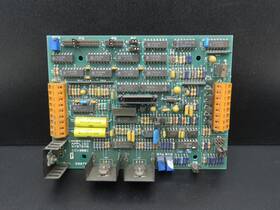
( Brand: Cambridge Applied Systems ), ( Manufacturer Part Number: CCV300I ), ( Part Type: Display Circuit Board )
Review CAMBRIDGE APPLIED SYSTEMS Viscosity Temperature Display Circuit Board
The **Cambridge Applied CCV300i Viscosity-Temperature Display Circuit Board** is a high-precision, industrial-grade module designed to provide accurate and real-time monitoring of fluid viscosity and temperature in demanding applications. Engineered with advanced analog and digital signal processing, this compact yet robust circuit board integrates seamlessly into process control systems, ensuring reliable performance in environments where consistency and precision are critical. Built around a sophisticated sensor interface, the CCV300i interfaces with a wide range of viscosity sensors, including rotational viscometers, capillary viscometers, and other specialized measurement devices, delivering highly accurate readings even under fluctuating conditions. Its temperature compensation algorithms dynamically adjust for thermal variations, eliminating the need for manual corrections and reducing operational downtime.
The circuit board features a user-friendly **LCD display** with a clear, backlit interface that presents viscosity and temperature data in real-time, alongside configurable parameters such as measurement units (cP, mPa s, or other industry standards), setpoints, and alarm thresholds. Programmable via an intuitive front-panel keypad or through RS-232/RS-485 communication interfaces, the CCV300i allows for seamless integration with SCADA systems, PLCs, or other industrial automation platforms. Its robust **4-20mA analog output** and **digital I/O ports** enable direct connection to data loggers, recorders, or control systems, making it an ideal solution for batch processing, quality assurance, and process optimization in industries such as pharmaceuticals, food and beverage, petrochemicals, and polymer manufacturing.
Constructed with **industrial-grade components** and housed in a durable, IP65-rated enclosure, the CCV300i is built to withstand harsh environments, including exposure to moisture, dust, and temperature extremes. Its **wide operating temperature range** (typically -20 C to 70 C) ensures reliable performance in both controlled laboratory settings and rugged field applications. Additionally, the board incorporates **fail-safe diagnostics**, including sensor fault detection, communication error alerts, and self-test routines, minimizing unplanned interruptions and enhancing overall system reliability. Whether used for quality control in production lines, research and development in R&D labs, or critical monitoring in industrial processes, the Cambridge Applied CCV300i circuit board delivers unmatched accuracy, flexibility, and durability, making it a cornerstone of modern fluid measurement and process automation.
### **Pros and Cons of buying a Cambridge Applied CCV300i Viscosity-Temperature Display Circuit Board**
#### **Pros**
1. **Precision Measurement** The CCV300i is designed for accurate viscosity and temperature monitoring, making it suitable for industrial applications where consistency is critical (e.g., lubricants, fuels, or process fluids).
2. **Compact and Modular Design** The circuit board is likely part of a modular system, allowing for easier integration into existing setups without requiring major infrastructure changes.
3. **Compatibility with Cambridge Applied Systems** If you already use other Cambridge Applied instruments, this board may offer seamless connectivity and data logging capabilities.
4. **Temperature Compensation** The ability to display and adjust for temperature variations ensures more reliable viscosity readings, reducing the need for manual corrections.
5. **Potential for Automation** If paired with a control system, it can enable automated quality checks or process adjustments, improving efficiency.
6. **Durability in Industrial Settings** Cambridge Applied products are generally built for rugged environments, offering resistance to vibration, dust, and temperature fluctuations.
7. **Support and Documentation** Cambridge Applied provides technical support and documentation, which can be helpful for troubleshooting and calibration.
#### **Cons**
1. **Limited Off-the-Shelf Availability** Specialized industrial components like this may not be as widely stocked as consumer electronics, potentially leading to longer lead times.
2. **High Cost Relative to Basic Alternatives** For applications requiring only basic viscosity measurement, a simpler or less expensive sensor (e.g., a digital viscometer without a dedicated display board) might suffice.
3. **Dependence on Cambridge-Specific Software/Hardware** If the system requires proprietary software or additional interfaces, compatibility issues or licensing costs could arise.
4. **Maintenance and Calibration Requirements** Like any precision instrument, the CCV300i may need periodic calibration to maintain accuracy, adding to long-term operational costs.
5. **Learning Curve for Non-Experts** Users unfamiliar with viscosity measurement principles or Cambridge s software may struggle with setup and interpretation of data.
6. **Potential for Overkill in Small-Scale Use** If you only need occasional viscosity checks rather than continuous monitoring, investing in this board may not be cost-effective.
7. **Warranty and Repair Considerations** If the board fails, repair or replacement may be expensive, especially if it s a niche component with limited service providers.
---
### **Conclusion**
The **Cambridge Applied CCV300i Viscosity-Temperature Display Circuit Board** is a high-quality, precision instrument ideal for industrial applications where accurate, real-time viscosity and temperature monitoring are essential. Its strengths lie in its reliability, modularity, and integration capabilities within Cambridge s ecosystem. However, its specialized nature, higher cost, and potential complexity may make it less suitable for small-scale or casual users.
If your application demands **continuous, high-precision viscosity control** (e.g., in manufacturing, petrochemical processing, or quality assurance), the CCV300i is a strong investment. For **basic or intermittent measurements**, a simpler, more affordable alternative (such as a handheld viscometer or a basic digital sensor) may be more practical.
---
### **Recommendation**
- **Buy if:**- You operate in an industry where viscosity consistency is critical (e.g., lubricant production, fuel blending, or polymer processing).
- You already use Cambridge Applied equipment and need seamless integration.
- You require automated monitoring with temperature compensation.
- Budget constraints allow for a premium industrial-grade solution.
- **Avoid if:**- You only need occasional or basic viscosity checks.
- Your application can tolerate lower precision or simpler alternatives.
- You lack technical expertise to calibrate or maintain the system.
- Cost is a major concern, and a less expensive sensor would meet your needs.
For the best decision, evaluate whether the **long-term benefits of accuracy and automation** outweigh the **initial cost and complexity** of the CCV300i. If possible, consult with a Cambridge Applied representative or a system integrator to assess compatibility with your specific workflow.
Details:
Model CCV300I. Condition Used. And the cost of return shipping. Items in Lot1.
Part NumberCCV300I. Shipping Dimensions: length 6 in. Ask our experts. Country of Manufacture/A.
part #: ccv300i prices
- $229.99-$599.99
specifications sensoindustria:
- brand: Cambridge Applied Systems
- mpn: Ccv300i
- part type: Display Circuit Board
shipping sensoindustria:
- service: Expedited
- type: Fixed
- class: Expedited
- cost: $0.00
- transit: 2-5 Days
general sensoindustria:
- condition: Used
- PLCs HMIs > PLC Peripheral Modules > PLC Input Output Modules
returns sensoindustria:
- method: Money back
- policy: Returns Accepted
- paid by: Buyer
- time: 30 Days
payments sensoindustria:
- credit card: Discover
- wallet: Apple-pay
- other
offer sensoindustria:
- options: Ship-to-home
- availability: In Stock
- best offers: True
- started: March 5, 2026
- quantity: 1
- sold: 0
seller sensoindustria:
- # reviews: 18047
- city: Millersburg, Indiana
- rating: 99.9%
