YOKOGAWA C2CE17121H Optical Bus Repeater Module ANT502-50 S1
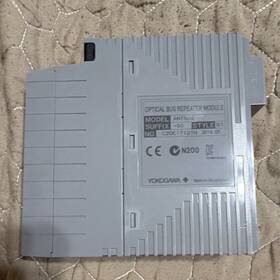
( Brand: Yokogawa ), ( Manufacturer Part Number: C2CE17121H ), ( Model: ANT502-50 S1 ), ( Part Type: Repeater Module )
Review YOKOGAWA S1 Optical Bus Repeater Module
The **Yokogawa C2CE17121H (ANT502-50 S1) Optical Bus Repeater Module** is a high-performance, field-proven solution designed to extend the reach and reliability of industrial communication networks, particularly within Yokogawa s **ANT500 series** of distributed I/O systems. This advanced optical bus repeater module is engineered to bridge communication gaps in harsh environments where electrical interference, long cable runs, or signal degradation pose challenges to data integrity. Built with Yokogawa s signature precision engineering, the C2CE17121H operates as a transparent repeater, seamlessly amplifying and regenerating optical signals across the **ANT500 bus network** while maintaining full compatibility with the protocol s robust, deterministic communication framework. Its **dual-port optical design** ensures bidirectional signal transmission, allowing it to connect two separate segments of the bus either extending the network s physical length or creating redundant paths for enhanced fault tolerance. The module features **industrial-grade optics** with a **1310 nm wavelength** transmission, optimized for long-distance communication with minimal signal attenuation, making it ideal for large-scale factory automation, power generation, or process control applications where infrastructure spans hundreds of meters. With **built-in diagnostics and monitoring capabilities**, operators can remotely track signal strength, link status, and potential faults via Yokogawa s **Exaquantum** or **ANTweb** platforms, ensuring proactive maintenance and minimizing downtime. The rugged, compact housing is designed to withstand extreme temperatures, humidity, and electromagnetic interference, adhering to strict **IEC 61131-2** and **IEC 62026-2** standards, while its **hot-swappable** design allows for seamless integration into existing networks without disrupting operations. Whether deployed in a high-voltage substation, a petrochemical refinery, or a smart manufacturing facility, the C2CE17121H serves as a critical enabler for scalable, high-speed communication, ensuring real-time data acquisition and control all while maintaining the integrity and performance demanded by mission-critical industrial applications.
### **Pros and Cons of buying a Yokogawa C2CE17121H (ANT502-50 S1 Optical Bus Repeater Module)**
#### **Pros:**1. **High Reliability and Durability** Yokogawa is a well-established manufacturer in industrial automation, known for robust and long-lasting equipment. This module is designed for harsh environments, ensuring stable performance in factory or process control settings.
2. **Compatibility with Yokogawa Systems** As part of Yokogawa s product line, it integrates seamlessly with existing C2000H, C2000K, and other compatible controllers, reducing integration challenges and ensuring smooth data transmission.
3. **Enhanced Signal Strength and Distance Coverage** The module acts as an optical bus repeater, extending the reach of communication lines (typically PROFIBUS DP or similar industrial protocols) over longer distances without significant signal degradation. This is particularly useful in large facilities where wiring long runs of copper cables is impractical.
4. **Reduced Maintenance and Downtime** By maintaining signal integrity over extended distances, the module minimizes communication errors, reducing the need for frequent troubleshooting or cable replacements.
5. **Future-Proofing** Yokogawa s industrial-grade components are designed to withstand temperature fluctuations, electrical noise, and other environmental stressors, making them suitable for long-term use in automation systems.
6. **Support for High-Speed Data Transfer** Depending on the protocol, it can handle high-speed data transmission, which is critical for real-time process control applications.
7. **Modular and Easy to Install** The design is modular, allowing for straightforward integration into existing systems without major infrastructure changes.
---
#### **Cons:**1. **High Initial Cost** Yokogawa products are premium-priced, and this module may be more expensive than generic or aftermarket alternatives, especially for smaller operations with tight budgets.
2. **Limited Vendor Support Outside Yokogawa Ecosystem** If the system relies on non-Yokogawa components, finding specialized support or spare parts may be more difficult compared to more widely supported industrial protocols (e.g., Modbus or Ethernet/IP).
3. **Potential Overkill for Small Systems** If the installation does not require long-distance communication or high-speed data transfer, the cost of this module may not justify its use. Smaller setups might achieve similar results with simpler repeaters or extenders.
4. **Dependence on Yokogawa s Software/Firmware Updates** Like all proprietary systems, updates or firmware changes may require Yokogawa s support, which could introduce delays or compatibility issues if not managed properly.
5. **Single-Vendor Lock-In Risk** Investing heavily in Yokogawa equipment may limit flexibility if future system upgrades or migrations to other vendors are planned.
6. **Physical Space Requirements** Optical bus repeaters require proper mounting and may need additional rack space or conduit routing, depending on the installation environment.
7. **Learning Curve for Non-Yokogawa Technicians** Staff unfamiliar with Yokogawa s systems may require additional training to configure, troubleshoot, or maintain the module effectively.
---
### **Conclusion:**The **Yokogawa C2CE17121H (ANT502-50 S1) Optical Bus Repeater Module** is a high-quality, reliable solution for extending communication distances in industrial automation environments where Yokogawa systems are already in use. Its strengths lie in its durability, seamless integration, and ability to maintain signal integrity over long distances qualities that are invaluable in large-scale or mission-critical applications.
However, the decision to purchase this module should be based on the specific needs of the system. For **large facilities, process plants, or environments where signal stability and long-distance communication are critical**, the investment is justified. For **smaller setups, budget-conscious projects, or non-Yokogawa ecosystems**, alternative solutions (such as generic repeaters, fiber optic extenders, or different communication protocols) may offer a more cost-effective or flexible approach.
---
### **Recommendation:** - **Buy if:**- You are already using Yokogawa controllers (e.g., C2000H/K series) and need to extend communication distances reliably.
- Your application involves harsh industrial conditions where signal integrity is non-negotiable.
- Long-term reliability and vendor support are priorities over cost savings.
- **Consider Alternatives if:**- Your budget is constrained, and a lower-cost repeater or extender would suffice.
- The system is not Yokogawa-based, and compatibility or support concerns exist.
- The communication distance requirements are modest, and simpler solutions (e.g., copper cable extensions or wireless alternatives) could work.
For most **large-scale industrial automation projects where Yokogawa is the primary vendor**, this module is a **strong recommendation** due to its proven performance and integration benefits. For other scenarios, a cost-benefit analysis against alternatives is advised.
Details:
Yokogawa ANT502-50 S1 Optical Bus Repeater Module MPN C2CE17121H.
part #: c2ce17121h prices
- $150.00-$350.00
specifications sensoindustria:
- brand: Yokogawa
- mpn: C2ce17121h
- model: Ant502-50 S1
- part type: Repeater Module
offer sensoindustria:
- started: February 16, 2026
- availability: In Stock
- options: Ship-to-home
- sold: 0
- quantity: 1
- best offers: True
returns sensoindustria:
- policy: No Returns
shipping sensoindustria:
- service: USPS Ground Advantage
- carrier: USPS
- type: Calculated
- transit: 5-11 Days
- class: Standard
- cost: $8.46
general sensoindustria:
- PLCs HMIs > PLC Peripheral Modules > PLC Input Output Modules
- condition: Used
seller sensoindustria:
- city: Nesbit, Mississippi
- # reviews: 4
- rating: 100.0%
payments sensoindustria:
- other
- wallet: Apple-pay
- credit card: Diners-club
Yokogawa C2CE17121H Is Similar To:
- Cp14 B Yokogawa Suffix Plc Processor Card Module Centum Xl Working Pull (32.6% similar) 50 or 25 of your original purchase price. Guaranteed fully functional. Offer template ship script - modified by midpoint. Please base your standards for speedy delivery upon that window of time. Condition: working pull. May have cosmetic signs of use or storage. Green penguin inc. 50 or our original...(August 11th, 2018)
- Cp21 A Yokogawa Suffix Plc Processor Card Module Centum Xl Working Pull (32.6% similar) 50 or 25 of your original purchase price. Offer template ship script - modified by midpoint. Please base your standards for speedy delivery upon that window of time. Guaranteed fully functional. Green penguin inc. Condition: working pull. May have cosmetic signs of use or storage...(August 11th, 2018)
- Dt200-11 Yokogawa Alarm Contact Output Module (42.2% similar) Yokogawa DT200-11 alarm contact output module used...(June 25th, 2018)
- F3pu10-0n Yokogawa Power Supply Module (35.3% similar) ...(March 27th, 2018)
- K9296ba Yokogawa Used Module (39.1% similar) Shelving number M32...(April 12th, 2018)
- Mx120-vao-m08 Yokogawa Daqmaster Output Module (38.2% similar) Yokogawa taskmaster MX120-VAO-M08 output module brand name:Yokogawa model : MX120-VAO-M08 condition: used specs:-item is in good used condition, please see pictures...(April 2nd, 2019)
- Aai143s00 Yokogawa New In Box Analog Input Module (44.2% similar) Our product team will keep the products up-to-date, which can allows you to purchase latest and valuable from stores. Do you ship to my country. The purchase history link on left side of page. Where can I find a rma. How many months warranty do you provide. Return items should include the original ...(May 2nd, 2021)
- Yokogawa Adv859 p00 S1 Style Digital Input output Module Multiple Available (47.9% similar) Listing is for 1 unit, have up to 4 available. Listing is for hardware only. All are in similar condition. Off-lease plc automation equipment!, Yokogawa ADV859 style: s1 digital input/output module. Units were pulled from working environment and fully functional. 30 day warranty provided...(April 18th, 2024)
- Yokogawa K9296ca Pre-owned Ch Module Some Chips Damage To Plastic Housing (34.5% similar) Part #: Yokogawa K9296CA for sale...(September 9th, 2024)
- Yokogawa F3xs04-3n Used And Tested Plc Module (44% similar) Product feature: Yokogawa F3XS04-3N. Used tested Yokogawa F3XS04-3N plc module. Product specifications: brand name. Package content: 1 x used tested Yokogawa F3XS04-3N plc module...(September 10th, 2024)
- Yokogawa 701251 High-speed High Resolution 1ms s 16bit Isolation Module (43% similar) Flow indicators. Circuit breakers. Motor starters. Knife gate valves. Pressure regulator valves. Motor drives...(September 11th, 2024)
