TURCK BL67-B-1M12 Interbus Hub
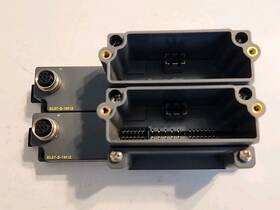
( Brand: Turck ), ( Manufacturer Part Number: BL67-B-1M12 ), ( Part Type: Hub )
Review TURCK Interbus Hub Warranty And Free Shipping
The **Turck BL67-B-1M12 Interbus-SL Hub** is a robust and versatile industrial communication hub designed to seamlessly integrate Interbus-SL networks into modern automation systems. Engineered for demanding environments, this compact yet high-performance device serves as a critical bridge between master stations and slave devices, ensuring reliable data transmission across extended network segments. With a robust **12-port configuration**, the BL67-B-1M12 supports both **master and slave functions**, allowing for flexible network topologies while maintaining optimal signal integrity. Built to withstand harsh industrial conditions, it features a **metal enclosure** with an **IP67 rating**, making it resistant to dust, moisture, and mechanical stress, ensuring uninterrupted operation in factories, manufacturing plants, and other challenging settings.
The hub operates on the **Interbus-SL protocol**, a high-speed, deterministic communication standard that delivers real-time data transfer with minimal latency, making it ideal for applications requiring precise synchronization, such as motion control, PLC communication, and sensor-actuator networks. Its **12 Mbit/s data rate** ensures efficient handling of large volumes of data, while the **built-in diagnostics** provide real-time monitoring of network health, including error detection and automatic recovery mechanisms to minimize downtime. The device also incorporates **redundant power supply options**, enhancing system reliability by allowing seamless failover in the event of a power interruption.
Designed with modularity in mind, the BL67-B-1M12 features **hot-swappable ports**, enabling easy expansion or replacement of connected devices without disrupting network operations. Its **compact yet sturdy construction** allows for flexible installation in tight spaces, whether mounted on a panel, DIN rail, or directly integrated into machinery. Additionally, the hub supports **multiple communication interfaces**, including **RS-232, RS-422, and Ethernet (via optional modules)**, expanding its compatibility with a wide range of industrial controllers and gateways. With its **low power consumption** and **long operational lifespan**, this hub is not only a reliable communication solution but also an economically efficient choice for automation engineers seeking durability and performance in their network infrastructure.
The **Turck BL67-B-1M12 Interbus Hub** is a fieldbus hub designed for industrial automation, specifically supporting the Interbus-SP communication protocol. Below is a detailed analysis of its pros and cons, followed by a conclusion and recommendation.
---
### **Pros of the Turck BL67-B-1M12 Interbus Hub**
1. **High Reliability and Robustness**
The BL67-B series is built for industrial environments, featuring rugged construction with protection against dust, moisture, and temperature fluctuations (IP67 rating). This ensures long-term operation in harsh conditions such as factories, oil and gas plants, or outdoor installations.
2. **Scalability and Flexibility**
The hub supports up to 12 slave devices (M12 connections) on a single unit, allowing for modular expansion of an Interbus network. This makes it suitable for growing automation systems where additional devices may need to be added later without overhauling the entire setup.
3. **Low Latency and High Performance**
Interbus-SP is known for its deterministic communication, which is critical for real-time control applications like CNC machines, robotics, or PLC-based systems. The BL67-B hub maintains this performance by efficiently managing data traffic between master and slave devices.
4. **Easy Integration with Turck s Ecosystem**
Turck offers a wide range of compatible devices, including sensors, actuators, and I/O modules, which can seamlessly connect to this hub. This simplifies system design and reduces compatibility issues when working within a Turck-centric infrastructure.
5. **Diagnostic and Monitoring Features**
The hub includes built-in diagnostics, such as error logging, status monitoring, and loop testing capabilities. This helps in quickly identifying and resolving communication issues, reducing downtime and maintenance costs.
6. **Compact and Space-Efficient Design**
The M12 connectors and compact form factor allow for dense wiring and installation in confined spaces, which is advantageous in space-constrained industrial environments.
7. **Support for Mixed Voltage Devices**
The hub can accommodate a variety of slave devices with different power requirements, making it versatile for applications where devices operate at 24V DC, 48V DC, or other standard voltages.
8. **Compliance with Industry Standards**
The device meets international safety and electromagnetic compatibility (EMC) standards (e.g., CE, UL, IEC), ensuring it can be deployed in regulated industries without additional certification hurdles.
---
### **Cons of the Turck BL67-B-1M12 Interbus Hub**
1. **Limited Ports for Large Networks**
While the 12-port configuration is sufficient for many applications, larger installations requiring hundreds of devices may necessitate multiple hubs or repeaters, increasing complexity and cost.
2. **Vendor Lock-In Risks**
Turck s proprietary Interbus-SP protocol, while robust, may limit flexibility if the system needs to integrate with non-Turck devices or alternative fieldbus standards (e.g., Profibus, Ethernet/IP) in the future. Migration to another protocol could require significant rework.
3. **Higher Upfront Cost**
Compared to generic or open-standard fieldbus hubs, Turck s specialized hardware may have a higher price point. For budget-sensitive projects, this could be a drawback unless justified by long-term reliability or ecosystem benefits.
4. **Dependence on Interbus Expertise**
Interbus-SP is less common than protocols like Profibus or Ethernet-based systems. Organizations without in-house expertise in Interbus may face challenges in configuration, troubleshooting, or training staff, potentially increasing support costs.
5. **Physical Constraints of M12 Connectors**
While M12 connectors are durable, their smaller size compared to traditional industrial connectors (e.g., 7/8" or 1" connectors) can make wiring and termination more time-consuming, especially in high-density installations.
6. **Limited Software Integration**
Turck s software tools for Interbus are robust but may not offer the same level of integration with third-party SCADA or MES systems as more widely adopted protocols (e.g., OPC UA over Ethernet). This could complicate data visualization or enterprise-level monitoring.
7. **Potential for Obsolescence**
As industrial automation trends shift toward Ethernet-based protocols (e.g., EtherNet/IP, PROFINET), legacy bus systems like Interbus may become less dominant over time. While Interbus remains viable, future-proofing may require additional planning if the system is expected to evolve.
---
### **Conclusion**
The **Turck BL67-B-1M12 Interbus Hub** is an excellent choice for industrial applications requiring deterministic, high-reliability communication within a Turck-centric or Interbus-focused environment. Its robustness, scalability, and diagnostic features make it ideal for environments where uptime and performance are critical. However, its proprietary nature, higher cost, and potential vendor lock-in may pose challenges for organizations with diverse fieldbus needs or long-term flexibility requirements.
For projects where Interbus-SP is the standard, the hub s advantages far outweigh its drawbacks. Conversely, if the system is expected to integrate with non-Turck devices or transition to more modern protocols in the future, alternative solutions (e.g., Ethernet-based hubs) might be worth considering.
---
### **Recommendation**
**Buy the Turck BL67-B-1M12 Interbus Hub if:**- Your system is already using Interbus-SP or Turck devices.
- Reliability, determinism, and industrial-grade protection (IP67) are top priorities.
- You require a compact, scalable solution for up to 12 slave devices.
- Your team has experience with Interbus or is willing to invest in training.
**Consider alternatives if:**- Your budget is constrained, and cost-effective generic hubs are available.
- You anticipate needing to integrate with non-Turck or non-Interbus devices in the future.
- Your long-term strategy involves migrating to Ethernet-based protocols (e.g., EtherNet/IP, PROFINET).
- You require larger-scale networks that may exceed the hub s port limitations without additional infrastructure.
For most **Interbus-specific industrial applications**, the BL67-B-1M12 is a sound investment due to its proven performance and compatibility. However, conduct a thorough cost-benefit analysis and assess your system s future needs before purchasing.
Details:
60 day warranty included. Free shipping in the continental US. Used in good working condition.
part #: bl67b1m12 prices
- $39.61-$77.60
specifications sensoindustria:
- brand: Turck
- mpn: Bl67-b-1m12
- part type: Hub
offer sensoindustria:
- options: Ship-to-home
- best offers: True
- started: February 27, 2026
- sold: 0
- quantity: 1
- availability: In Stock
shipping sensoindustria:
- service: USPS Ground Advantage
- class: Standard
- type: Calculated
- transit: 4-10 Days
- carrier: USPS
- cost: $0.00
returns sensoindustria:
- policy: Returns Accepted
- paid by: Buyer
- method: Money back
- time: 60 Days
payments sensoindustria:
- credit card: Visa
- other
- wallet: Apple-pay
seller sensoindustria:
- rating: 100.0%
- # reviews: 1793
- city: Maryville, Tennessee
general sensoindustria:
- PLCs HMIs > PLC Peripheral Modules > PLC Input Output Modules
- condition: Used
Turck BL67-B-1M12 Is Similar To:
- Rsm2rkm57 Turck Minifast Bus Line Tee Connector Used Free Shipping (45.7% similar) The shipping on this item reflects standard ground for us. I have a nice used Turck RSM2RKM57 manifest drop-off bus line tee connector - for sale. Greenback stock G29838 G29991-3...(July 20th, 2018)
- 3z-1.5-psg3 3z-1.5-psg Pkg3z-1.5-psg3 Turck Cable Pkg Ident No U2134-5 Free Shipping (40% similar) New unopened package...(July 31st, 2016)
- S1600892 Turck Sensor New 60 Day Warranty (37.3% similar) Current shipping displayed on offer is for us lower 48 states only. Not all offers are the same. This listing is for a Turck sensor S1600892 new, clean w 60 day warranty this unit is clean, ready to go, and in nice condition. Also, complete address, contact name and phone number is required. Some ...(April 7th, 2016)
- Turck Q28-31-03-1824100-00 Card Backplane Lot 3 Used Free Ship (45.5% similar) Turck Q28-31-03-1824100-00 card back plane, lot 3, used, free ship Eric bin...(May 5th, 2024)
- Turck Bl20gwbrdnet Used And Tested Bl20-gwbr-dnet Interface Module (31.5% similar) Return items should include the original packaging and all accessories. Product specifications. Ideal for use in complex automation setups, this interface module enhances system efficiency and communication. Used tested Turck BL20-GWBR-DNET interface module module. The purchase history link on left ...(October 19th, 2024)
- Turck Bl20-e-16di-24vdc-p 6827231 16dip 24vdc Digital Input Module Free Shipping (49.6% similar) The digital input module is a working pull and will come as pictured. P58 you are buying a used Turck BL20-E-16DI-24VDC-P 6827231 16DIP 24VDC digital input module...(January 12th, 2025)
- Turck 8mb12z-5p3-cs19h 8 Port Actuator And Sensor Junction Box Distribution (29.4% similar) 30 day guarantee, buyer pays return shipping. Used 8 port Turck distribution block...(February 15th, 2025)
- Turck Tben-lg-8dip-8dop Input Output Terminal Plc And Automated Tooling (37.9% similar) Used part pulled from stock room 30DAY warranty see pictures...(February 25th, 2025)
- Turck 4mb12z-4p2 4mb12z-4p2 W 4 Allen Bradley 889d-f48cde-2 Cables And 4-sick Sensors B-s1 (33.5% similar) Turck 4MB12Z-4P2- with 4 Allen Bradley 889D-F48CDE cables and 4 sick VTE18-3F4740 sensors...(July 12th, 2025)
- Turck Tbil-m1-16dxp-b Digital Remote Block I o Hub 100000881 348806 (31% similar) Manufacturer part number: TBIL-M1-16DXP-B. Designed for: digital signal connection to i/o link master. Supply voltage : 18V. Turck TBIL-M1-16DXP-B. 30V dc, 24V dc...(February 11th, 2026)
