OMRON B100-OD211-SM Smc Remote Terminal Unit IN313-TA1
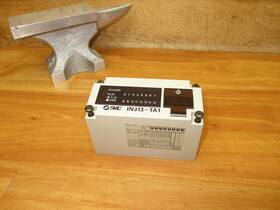
( Brand: Omron ), ( Manufacturer Part Number: B100-OD211-SM ), ( Model: IN313-TA1 ), ( Type: Remote Terminal Unit ), ( Country Of Origin: Japan )
Review OMRON Used Smc Remote Terminal Unit
The **Omron B100-OD211-SMC IN313-TA1 Remote Terminal Unit (RTU)** is a robust, high-performance industrial communication device designed to bridge the gap between field instrumentation and advanced automation systems, ensuring seamless data acquisition, monitoring, and control in demanding environments. Part of Omron s reliable B100 series, this RTU combines cutting-edge technology with rugged engineering to deliver unparalleled reliability, scalability, and flexibility for applications in process automation, building management, and industrial control systems. Engineered with a modular architecture, the B100-OD211-SMC integrates seamlessly with Omron s Sysmac platform, enabling effortless integration with PLCs, SCADA systems, and other industrial networks while supporting a wide range of communication protocols, including **Modbus RTU/TCP, Profibus DP, DeviceNet, and EtherNet/IP**, ensuring compatibility with virtually any automation infrastructure. Its compact yet durable design, featuring a **metal enclosure with an IP65 rating**, protects against dust, moisture, and harsh environmental conditions, making it ideal for deployment in factories, power plants, water treatment facilities, and other challenging operational settings.
At the heart of the B100-OD211-SMC is its **high-speed, dual-port communication capability**, allowing for redundant network connections to enhance system resilience and minimize downtime. The unit supports **up to 256 analog inputs (AI) and 256 digital inputs (DI)** via its expandable I/O modules, providing precise monitoring of temperature, pressure, flow, and other critical process variables with exceptional accuracy and repeatability. Additionally, the **IN313-TA1** designation indicates its compatibility with Omron s **Sysmac Studio** software, enabling intuitive configuration, programming, and diagnostics through a user-friendly interface, while its **TA1** variant ensures compatibility with Omron s **CP1E/CJ2M** series PLCs for streamlined data exchange. The RTU s **built-in watchdog timer and self-diagnostic features** further enhance operational stability, alerting engineers to potential issues before they escalate into costly failures. Whether deployed in a **remote substation, HVAC system, or industrial automation setup**, this RTU delivers a perfect blend of performance, adaptability, and long-term reliability, empowering operators to optimize efficiency, reduce maintenance costs, and achieve superior control over their processes.
The **Omron B100-OD211-SMC IN313-TA1** is a Remote Terminal Unit (RTU) designed for industrial automation, particularly for monitoring and controlling field devices in SCADA (Supervisory Control and Data Acquisition) systems. Below is a detailed analysis of its pros and cons, followed by a conclusion and recommendation.
---
### **Pros of the Omron B100-OD211-SMC IN313-TA1 RTU**
1. **Reliability and Durability**
The Omron B100 series is known for its robust construction, designed to operate in harsh industrial environments. It is built to withstand temperature fluctuations, humidity, and electrical noise, making it suitable for outdoor or remote installations.
2. **Modular and Scalable Design**
The RTU supports modular expansion, allowing users to add additional input/output modules (such as analog, digital, or communication modules) as needed. This scalability ensures the system can grow with evolving requirements without a complete replacement.
3. **Wide Range of Communication Protocols**
The unit supports multiple communication protocols, including:- **Modbus RTU/TCP** (for compatibility with most industrial systems)
- **PROFIBUS DP** (for integration with Omron PLCs and other industrial networks)
- **Ethernet/IP** (for high-speed data exchange in modern automation systems)
This flexibility simplifies integration with existing or new control systems.
4. **High-Speed Data Acquisition**
The RTU can handle high-speed data sampling and processing, which is critical for applications requiring real-time monitoring (e.g., power systems, water treatment, or HVAC control).
5. **Remote Monitoring and Diagnostics**
The unit supports remote access via Ethernet or wireless connections, enabling technicians to diagnose issues, update firmware, and monitor system health without physical site visits. This reduces downtime and maintenance costs.
6. **Energy Efficiency**
Omron s B100 series is designed with power-saving features, such as low-power sleep modes and efficient processing, which can reduce operational costs, especially in battery-powered or off-grid installations.
7. **Compatibility with Omron ECOSTRUCTURE**
The RTU integrates seamlessly with Omron s **ECOSTRUCTURE** architecture, which includes software tools like **CX-One** for configuration, **Sysmac Studio** for programming, and **SCADA software** for visualization. This ecosystem simplifies development, debugging, and system management.
8. **Redundancy and Fault Tolerance**
The unit supports redundant power supplies and communication links, enhancing system reliability in critical applications where downtime is unacceptable.
9. **Easy Installation and Configuration**
Omron provides user-friendly configuration tools and documentation, making setup and commissioning more straightforward compared to some competitors products.
10. **Support for Advanced Features**
- **Time Synchronization (IEEE 1588/PTP)** for precise timing in distributed systems.
- **Security Features** such as encryption and authentication to protect against cyber threats.
- **Event Logging and Alarm Handling** for proactive issue resolution.
---
### **Cons of the Omron B100-OD211-SMC IN313-TA1 RTU**
1. **Higher Upfront Cost**
Compared to some generic or off-brand RTUs, Omron s products are premium-priced. The cost may be prohibitive for small-scale or budget-constrained projects unless long-term reliability justifies the investment.
2. **Complexity for Non-Experienced Users**
While Omron provides robust software tools, the initial learning curve for configuring the RTU, especially for users unfamiliar with industrial automation, can be steep. Training may be required for optimal use.
3. **Limited Physical I/O Capacity**
The specific model **B100-OD211-SMC** (with IN313-TA1) may have a limited number of I/O points depending on the configuration. For applications requiring hundreds of inputs/outputs, additional modules or a larger RTU platform (e.g., Omron s B200 series) might be necessary, increasing complexity and cost.
4. **Dependency on Omron Ecosystem**
The RTU is tightly integrated with Omron s software and hardware. If a user is already invested in a different automation platform (e.g., Siemens, Allen-Bradley, or Schneider Electric), compatibility may require additional gateways or protocol converters, adding layers of complexity.
5. **Firmware and Software Updates**
While Omron provides updates for security and functionality, relying on a single vendor for long-term support could be a concern if Omron discontinues the product line. Users should ensure the model has a clear roadmap for future updates.
6. **Physical Size and Installation Constraints**
The RTU is designed for industrial use, which means it may be larger and heavier than some compact or plug-and-play alternatives. Installation in space-constrained environments may require careful planning.
7. **Potential Latency in Communication**
While the RTU supports high-speed protocols, latency can still occur in large-scale networks, especially if multiple devices are competing for bandwidth. This may impact real-time performance in critical applications.
8. **Limited Open-Source or Third-Party Support**
Unlike some open-platform RTUs, Omron s products have limited support for third-party software or open-source tools. Customization may be restricted to Omron s approved methods.
9. **Power Requirements**
The unit may require a dedicated power supply or backup battery, depending on the application. In remote locations, ensuring reliable power can add to the system s complexity and cost.
10. **Vendor Lock-In Risks**
The integration with Omron s ecosystem can create vendor lock-in, making it difficult to migrate to a different automation platform in the future without significant rework.
---
### **Conclusion**
The **Omron B100-OD211-SMC IN313-TA1 RTU** is a high-quality, reliable, and feature-rich device well-suited for industrial applications requiring robust monitoring, control, and communication. Its strengths lie in its durability, modularity, support for multiple protocols, and seamless integration with Omron s automation tools. These advantages make it an excellent choice for projects where reliability, scalability, and long-term support are priorities.
However, the higher cost, complexity for non-experts, and potential vendor dependency may pose challenges for smaller projects or users with limited budgets or existing automation ecosystems. Additionally, the need for careful planning around I/O capacity, power, and installation should not be overlooked.
---
### **Recommendation**
**Buy the Omron B100-OD211-SMC IN313-TA1 RTU if:**- You are working on an **industrial SCADA or automation project** where reliability, real-time data acquisition, and long-term support are critical.
- Your system is already part of or planning to integrate with **Omron s ECOSTRUCTURE** or **Sysmac** ecosystem.
- You require **multiple communication protocols** (Modbus, PROFIBUS, Ethernet/IP) and need a scalable solution that can grow with your needs.
- The project budget allows for a **premium, high-performance RTU** with minimal long-term maintenance concerns.
- Your team has access to **training or experience** with Omron s configuration tools to maximize the unit s capabilities.
**Consider alternatives if:**- You are working on a **small-scale or budget-constrained project** where cost is a major factor. In this case, evaluate generic RTUs from brands like **Siemens, Allen-Bradley, or Advantech**, which may offer similar functionality at a lower price.
- Your existing automation system is **non-Omron**, and compatibility with other vendors is a priority. In this case, a multi-protocol RTU with open standards (e.g., Modbus, OPC UA) might be more flexible.
- You require **extremely high I/O density** or specialized inputs/outputs (e.g., high-speed analog, high-voltage control) that this specific model does not support. Larger RTU platforms (e.g., Omron B200 or B300 series) or third-party solutions may be more appropriate.
- Your project involves **open-source or highly customizable** requirements, where Omron s proprietary ecosystem could be restrictive.
**Final Verdict:**For most **industrial automation, SCADA, or control system applications** where reliability and Omron ecosystem integration are valued, the **Omron B100-OD211-SMC IN313-TA1** is a strong and justified purchase. However, conduct a thorough cost-benefit analysis and ensure compatibility with your broader system requirements before committing. If budget or ecosystem constraints are significant, explore alternatives that align better with your specific needs.
Details:
Part No: B100-OD211-SM. Location: DB4-GB052926. The item available here is an Omron / SMC remote terminal unit. It comes as shown in very good condition.
part #: b100od211 prices
- $69.75-$288.99
specifications sensoindustria:
- brand: Omron
- mpn: B100-od211-sm
- model: In313-ta1
- type: Remote Terminal Unit
- country of origin: Japan
shipping sensoindustria:
- service: USPS Ground Advantage, USPS Priority Mail, UPS Ground
- transit: 10-15 Days
- carrier: USPS, UPS
- cost: $15.10
- type: Calculated
- class: Standard, Expedited
payments sensoindustria:
- other
- credit card: Mastercard
- wallet: Apple-pay
seller sensoindustria:
- # reviews: 4429
- city: Painesville, Ohio
- rating: 100.0%
general sensoindustria:
- condition: Used
- PLCs HMIs > PLC Peripheral Modules > PLC Input Output Modules
offer sensoindustria:
- availability: In Stock
- options: Ship-to-home
- started: May 29, 2026
- quantity: 1
- best offers: True
- sold: 0
returns sensoindustria:
- policy: Returns Accepted
- method: Money back
- paid by: Buyer
- time: 30 Days
Omron B100-OD211 Is Similar To:
- 32et1 Omron Output Unit For (30.2% similar) Get business information that counts...(March 19th, 2019)
- 3g2a3-ia221 Omron Input Ouput Module Unit Type (34.3% similar) Omron 3G2A3-IA221 input output I o module unit type IA221 s6 4-POINT has been repaired...(January 7th, 2019)
- 3g2a5-0a222 Omron Output Unit C500-0a222 (26.3% similar) Used Omron 3G2A5-0A222 output unit C500-0A222...(December 5th, 2017)
- 3g2a5-od412 Omron Output Unit (29.5% similar) Omron C500-OD4123G2A5-OD412 output unit removed from working installation, nice condition...(April 9th, 2018)
- 3g2a5-rm201 Omron Remote Master Unit Plc Module (37.7% similar) Unit is missing some components but connections are in good cosmetic condition. Cosmetics unit has light scratches and discoloration from normal use. Function this unit is in very good working condition. Features an RS485 connection...(May 12th, 2018)
- 3g2c4-sc021e Omron Expansion Unit Outputs And Inputs (23.4% similar) Used Omron plc expansion part number 3G2C4-SC021 input module C120-D217 for 24 volt inputs. 32 inputs and outputs total. Pulled from working system. The output module is a C120-OD412 transistor for CDC out...(March 21st, 2018)
- 61f-11 Omron Relay Unit (34.1% similar) Database glitches resulting in under priced surplus. Contact: 1-855-HADALGO outside us...(May 8th, 2017)
- C16p-id-a Omron Sysmac Expansion Unit Inputs Year New (30.4% similar) 48 states will automatically be insured, either by us or the shipper. All information contained herein, including pictures, are property of industrial surplus co. 48 states please. 25 of our sales volume. The product may a discontinued from manufacturer. Canada USPS or ups ground USPS, ups, FedEx ...(June 2nd, 2019)
- C1k-da Omron D-a Unit Output (29.9% similar) Condition: used. The information provided on this page may be partial, incomplete, contain mistakes and or inaccurate. Does not include a power adapter or any other accessories. Item is untested for use. Includes: only the items in picture are on sale. No risk guarantee. Item is in good physical ...(November 10th, 2017)
- C200h-0c222 Omron Output Unit Module Used (26% similar) Used good condition. Some signs of use dust, light scratches. From working environment. Omron C200H-OC222 output unit module C200H-0C222...(March 4th, 2018)
- C200h-0c224 Omron N1-1-1 1 Used (28.9% similar) This item is to be installed and maintained by qualified individuals. E-mail any questions. If are looking to combine shipping, please send a note through. Items include only what you see in the photo, if need an accessory that is not pictured ask. 1 used Omron C200H-0C224 C200H-OC224 output unit. ...(August 26th, 2017)
