SCHNEIDER AS-BDEP-257 Digital
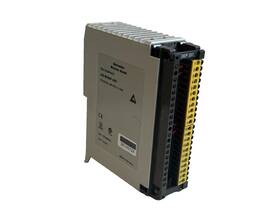
( Brand: Schneider ), ( Manufacturer Part Number: AS-BDEP-257 ), ( Model: SCHNEIDER AS-BDEP-257 ), ( Part Type: Digital )
Review SCHNEIDER Used Digital Input
The **Schneider Electric AS-BDEP-257 Digital** is a high-performance, modular bus coupler designed to bridge the gap between legacy analog and modern digital communication systems in industrial automation environments. Engineered for reliability and flexibility, this device serves as a critical interface within Schneider s EcoStruxure architecture, enabling seamless integration between field devices and digital control networks. The AS-BDEP-257 operates as a digital bus coupler, converting analog signals such as 4-20mA or 0-10V into digital data packets that can be transmitted over Ethernet or other digital protocols like Modbus TCP, PROFINET, or Ethernet/IP. This conversion eliminates the need for traditional analog wiring, reducing installation complexity and minimizing signal degradation over long distances. With its compact, DIN-rail mountable design, the AS-BDEP-257 is ideal for applications in manufacturing plants, process industries, or building automation systems where space efficiency and scalability are paramount.
At its core, the AS-BDEP-257 is equipped with advanced digital signal processing capabilities, ensuring high accuracy and precision in signal conversion. It supports multiple communication protocols, allowing it to integrate seamlessly with PLCs, HMIs, or other industrial controllers, while its built-in diagnostics and fault detection features enhance system uptime by providing real-time monitoring of signal integrity. The device also features configurable parameters, including signal scaling, filtering, and alarm thresholds, which can be tailored to specific application requirements. Additionally, its robust construction, with an IP67 rating, ensures protection against harsh environmental conditions, making it suitable for use in dusty, wet, or temperature-fluctuating environments. Whether deployed in a control cabinet or directly on a process line, the AS-BDEP-257 delivers a reliable, future-proof solution for digitalizing analog signals, thereby simplifying system architecture and improving overall operational efficiency.
### **Pros and Cons of buying a Schneider AS-BDEP-257 Digital Energy Meter**
#### **Pros:**1. **High Accuracy and Reliability** The AS-BDEP-257 is designed for precise energy measurement, ensuring accurate billing and monitoring of electrical consumption. Its advanced digital technology reduces human error compared to analog meters.
2. **Remote Monitoring and Communication Capabilities** It supports communication protocols like Modbus, DLMS/COSEM, and other industry standards, allowing for seamless integration with smart grid systems, energy management software, and remote metering solutions. This enables utilities and businesses to monitor consumption in real time, detect anomalies, and optimize energy usage.
3. **Durability and Weather Resistance** The meter is built to withstand harsh environmental conditions, including extreme temperatures, humidity, and dust. Its robust construction ensures long-term reliability, reducing maintenance needs and downtime.
4. **Multi-Tariff Support** The AS-BDEP-257 supports multiple tariffs, allowing for differentiated pricing based on time-of-use (TOU), peak/off-peak periods, or other billing structures. This is particularly useful for commercial and industrial customers looking to manage costs efficiently.
5. **Data Logging and Historical Tracking** The meter stores consumption data internally, enabling detailed historical analysis. This feature is valuable for demand response programs, energy audits, and identifying consumption patterns.
6. **Security Features** It includes encryption and authentication mechanisms to prevent tampering and unauthorized access, ensuring data integrity and compliance with regulatory requirements.
7. **Scalability and Flexibility** The meter can be easily integrated into larger energy management systems, making it suitable for both small businesses and large-scale deployments. Its modular design allows for future upgrades without replacing the entire system.
8. **Compliance with Standards** Schneider Electric products are designed to meet international standards (e.g., IEC 62052-31, IEC 61000-4-3), ensuring compatibility with global regulations and reducing certification challenges.
9. **Low Maintenance Requirements** Digital meters require minimal physical maintenance compared to mechanical meters, reducing operational costs over time.
10. **Support for Advanced Features** The meter can interface with smart metering platforms, enabling features like automatic meter reading (AMR), demand response, and integration with renewable energy sources.
---
#### **Cons:**1. **Higher Initial Cost** Digital meters like the AS-BDEP-257 are more expensive upfront compared to traditional analog meters. The cost includes not only the meter itself but also installation, communication infrastructure, and potential software licensing.
2. **Complex Installation and Configuration** Unlike plug-and-play analog meters, digital meters require professional setup, network configuration, and sometimes custom programming to ensure proper functionality. This may involve additional labor costs and expertise.
3. **Dependence on Infrastructure** The meter relies on communication networks (e.g., cellular, PLC, or wired connections) for remote monitoring. If the network fails, the meter may lose connectivity, limiting its ability to transmit data in real time. Backup power or local storage may be needed to mitigate this.
4. **Potential for Cybersecurity Risks** While the meter includes security features, its connectivity also exposes it to potential cyber threats if not properly secured. Hacking or unauthorized access could compromise data integrity or disrupt operations.
5. **Vendor Lock-In Risks** Schneider Electric s proprietary protocols and software may limit flexibility if the user later decides to switch to a different metering or energy management system. Compatibility issues could arise during transitions.
6. **Training Requirements** Staff responsible for managing the meter or the associated software may need training to fully utilize its features, adding to the operational learning curve.
7. **Regulatory and Compliance Challenges** Depending on the region, digital meters may need to comply with specific local regulations regarding data privacy, billing transparency, or interoperability. Ensuring compliance can add complexity to deployment.
8. **Potential for Overkill for Small-Scale Use** For very small consumers (e.g., residential users or tiny businesses), the advanced features of the AS-BDEP-257 may be unnecessary, making a simpler or cheaper meter more cost-effective.
9. **Limited Local Support in Some Regions** In areas where Schneider Electric has a smaller presence, technical support or spare parts may be harder to obtain, potentially delaying troubleshooting or repairs.
10. **Data Storage and Retention Costs** While the meter logs data internally, storing and analyzing large volumes of historical data may require additional cloud storage or on-premises servers, incurring ongoing costs.
---
### **Conclusion:**The **Schneider AS-BDEP-257 Digital Energy Meter** is a high-performance, feature-rich solution ideal for businesses, utilities, and industrial applications where accurate energy monitoring, remote access, and scalability are critical. Its advanced capabilities such as multi-tariff support, communication protocols, and security features make it a strong choice for modern energy management systems. However, its higher cost, complexity, and dependency on infrastructure may not justify its purchase for very small-scale or low-budget applications.
For **commercial, industrial, or utility-scale deployments** where long-term cost savings, efficiency gains, and advanced analytics are priorities, the AS-BDEP-257 is a **highly recommended investment**. It aligns well with smart grid initiatives and can significantly enhance operational efficiency.
For **residential or very small business use**, a simpler or lower-cost digital meter might be more practical. Additionally, organizations should carefully assess their **budget, technical expertise, and long-term needs** before committing to this meter.
### **Final Recommendation:** **Buy the Schneider AS-BDEP-257 if:**- You require precise, remote-monitorable energy metering for commercial, industrial, or utility applications.
- You need multi-tariff support, advanced communication, and integration with smart grid systems.
- You are prepared for the higher upfront cost and potential complexity of installation and maintenance.
- Your organization prioritizes long-term efficiency, data-driven decision-making, and scalability.
**Avoid or consider alternatives if:**- Your budget is constrained, and a simpler meter would suffice.
- You lack the technical expertise or infrastructure to support a digital meter.
- Your application does not require advanced features like remote monitoring or multi-tariff billing.
Details:
USED Schneider AS-BDEP-257 Digital Input, Shelf A14 Tote 265.
part #: asbdep257 prices
- $325.00-$349.00
specifications sensoindustria:
- brand: Schneider
- mpn: As-bdep-257
- model: Schneider As-bdep-257
- part type: Digital
seller sensoindustria:
- # reviews: 2095
- city: Ray, Michigan
- rating: 100.0%
shipping sensoindustria:
- carrier: USPS
- service: USPS Ground Advantage
- transit: 2-7 Days
- class: Standard
- type: Fixed
- cost: $0.00
general sensoindustria:
- condition: Used
- PLCs HMIs > PLC Peripheral Modules > PLC Input Output Modules
offer sensoindustria:
- options: Ship-to-home
- best offers: True
- availability: In Stock
- sold: 0
- quantity: 1
- started: February 12, 2026
returns sensoindustria:
- policy: No Returns
payments sensoindustria:
- credit card: Discover
- wallet: Google-pay
- other
Schneider AS-BDEP-257 Is Similar To:
- 140-ati-030-00 Schneider Modicon Thermocouple Input Module Tsx Tb (36.2% similar) This item is used. Schneider mod icon 140ATI03000 Thermopylae input module 140-ATI STX tb manufacturer: model: type: used, in working condition. Marketing, listing apps, application...(March 7th, 2018)
- 140-ddi-841-00 Schneider Electric Modicon Vdc Sink Input Module New Tb (30.9% similar) Marketing, listing apps, application. Schneider mod icon 140DDI84100 CDC sink input module 140-DDI new tb manufacturer: model: type: new, in working condition. This item is new...(April 7th, 2018)
- 140-ddi-853-00 Schneider Automation Modicon Tsx Quantum Ch Input (36.5% similar) This item has been fully tested by our tech department and is in good working condition...(January 23rd, 2019)
- 140cps11420 Schneider Modicon Ac Power Supply Unit Xlnt Used Takeout (40.7% similar) Item is an XLT used takeout. Schneider mod icon 140CPS11420 115 230V ac power supply unit. Make OFFERBB-3 r f-t...(March 27th, 2019)
- 140da155300 Schneider Electric Input Module (41% similar) If another carrier such as ups or FedEx is required to ship due the size, then shipping costs may change...(February 2nd, 2018)
- 140dai35300 Schneider Module Plc Input (46.2% similar) Module, plc, input, discrete, mod icon quantum, 32 24VAC Schneider 140DAI35300 characteristics main range of product: quantum automation platform product or component type: vac discrete input modules software name: concept prolix unity pro number: complementary group channels: 4 addressing ...(February 18th, 2018)
- 140dai54300 Schneider Tsx Quantum Input (48.1% similar) ...(November 17th, 2017)
- 170 Adi 35000 Modicon Schneider Digital Input Module New Sealed (44.7% similar) Schneider mod icon 170ADI35000 aid digital input module this is new in the original factory sealed box. I will consider shipping outside north America, contact me before buying. Shipping cost is an estimate...(May 2nd, 2018)
- 171-ccc-960-30 Schneider Electric Processor Adapter Module Ethernet Used (30.4% similar) Schneider electric 171-CCC processor adapter module Ethernet I o used this item is and in working condition...(April 26th, 2018)
- 399635 Schneider Electric Modicon Analog Input Module Square 3595863996357 (35.1% similar) Expansion, ANA8E 0-10V, 0-20MA. Item is new in box. Quantity 1 Schneider electric mod icon TM2AMI8HT analog input module square...(May 2nd, 2018)
- 5405-24 Schneider Electric Scadapack Digital Input Module New (53.5% similar) Items shipped by USPS cannot be tracked. Domestic shipping. Bitter end trading is an asset recovery wholesaler specializing in new and used surplus industrial equipment. See individual item for cost. Listing includes only what is shown in pictures no way to test items money back if DOA will combine ...(April 3rd, 2019)
