YOKOGAWA AIP434-S1 Plc Modules
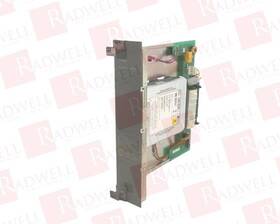
( Brand: Yokogawa ), ( Manufacturer Part Number: AIP434-S1 ), ( Part Type: Module )
Review YOKOGAWA Aip434s1 Used
The **Yokogawa AIP434-S1 (AIP434S1)** is a high-performance, modular analog input module designed for industrial automation and process control applications, offering exceptional precision, reliability, and flexibility in demanding environments. Part of Yokogawa s advanced **EJX Series** of fieldbus communication modules, this device is engineered to seamlessly integrate with distributed control systems (DCS), programmable logic controllers (PLCs), and other industrial networks, ensuring real-time data acquisition and processing. The AIP434-S1 is specifically tailored for analog input tasks, supporting a wide range of signals including thermocouples, RTDs (Resistance Temperature Detectors), voltage, and current inputs, making it versatile for monitoring temperature, pressure, flow, and other critical process variables in industries such as oil and gas, chemical processing, power generation, and manufacturing.
At its core, the AIP434-S1 features a **dual-channel configuration**, allowing it to simultaneously acquire and convert analog signals into digital data with high accuracy and low noise. Each channel is equipped with advanced signal conditioning circuitry, including **high-precision analog-to-digital converters (ADCs)** and **anti-aliasing filters**, which minimize interference and ensure clean, reliable data transmission. The module supports multiple input types, such as **J, K, N, R, S, T, E, B, and C thermocouples**, as well as **Pt100/Pt1000 RTDs** (with optional cold junction compensation), 4-20 mA current loops, and 0-10 V or 0-5 V voltage signals, catering to a broad spectrum of sensor technologies. This flexibility eliminates the need for external signal conditioning devices, reducing system complexity and enhancing overall efficiency.
One of the standout features of the AIP434-S1 is its **Fieldbus Foundation H1 (FF H1) communication protocol**, which enables high-speed, two-way communication with other field devices and control systems. This protocol supports **Foundation Fieldbus HSE (High-Speed Ethernet)** for advanced diagnostics, device configuration, and real-time monitoring, while also ensuring compatibility with **PROFIBUS PA** and other industrial networks through optional interfaces. The module s **intrinsically safe (IS) design** (when paired with appropriate fieldbus segments) allows it to operate safely in hazardous areas, adhering to **IEC 60079-29** and **IEC 61508** standards, making it ideal for applications in explosive environments such as refineries, petrochemical plants, and gas processing facilities. Additionally, the AIP434-S1 incorporates **Yokogawa s proprietary Smart Signal Processing (SSP) technology**, which enhances signal integrity by dynamically adjusting to environmental noise and drift, further improving measurement accuracy over time.
The AIP434-S1 is built to withstand the rigors of industrial settings, featuring a robust **NEMA 4X or IP66-rated enclosure** that protects against dust, moisture, and mechanical shock. Its compact, modular design allows for easy installation and replacement within Yokogawa s **EX Series** or **EJX Series** control systems, minimizing downtime and simplifying maintenance. The module also supports **remote I/O configurations**, enabling distributed data acquisition across large-scale facilities while maintaining centralized control. For enhanced usability, the AIP434-S1 includes **Yokogawa s Device Description Language (DDL)** and **Device Type Manager (DTM)**, which provide intuitive configuration tools for engineers, streamlining setup and reducing configuration errors. Furthermore, the module s **diagnostic capabilities** offer real-time alerts for signal failures, sensor drift, or communication issues, enabling proactive maintenance and minimizing unplanned downtime.
Beyond its technical specifications, the AIP434-S1 exemplifies Yokogawa s commitment to **industrial reliability and innovation**, combining decades of expertise in process automation with cutting-edge technology. Whether deployed in a high-temperature refinery, a precision chemical plant, or a critical infrastructure facility, this analog input module delivers **unmatched precision, durability, and connectivity**, ensuring seamless integration into modern control architectures. Its ability to handle diverse input types, resist environmental interference, and communicate efficiently with higher-level systems makes it an indispensable component for industries where accuracy and uptime are non-negotiable. By leveraging the AIP434-S1, engineers and operators can achieve **superior process control, enhanced safety, and operational excellence**, driving efficiency and productivity in even the most challenging applications.
### **Pros and Cons of buying a Yokogawa AI-P434-S1 (AI-P434S1)**
#### **Pros**
1. **High Precision and Reliability** The AI-P434S1 is a high-end pH meter designed for industrial and laboratory applications, offering accurate measurements with minimal drift. Yokogawa is a well-established brand known for robust instrumentation, ensuring long-term stability and repeatability.
2. **Advanced Features for Industrial Use** The device includes features such as automatic temperature compensation (ATC), dual-channel measurement, and compatibility with Yokogawa s other systems (e.g., SCADA integration). This makes it suitable for process control in manufacturing, water treatment, and pharmaceutical industries.
3. **Durable Construction** Built for harsh environments, the AI-P434S1 is likely to have a rugged design, resistant to vibrations, dust, and moisture, making it ideal for field applications.
4. **Wide Measurement Range** Supports a broad pH range (typically -2.00 to 20.00 pH) and temperature compensation from -10 C to 100 C, accommodating various industrial and laboratory needs.
5. **Compatibility with Yokogawa Ecosystem** If you already use Yokogawa equipment, this meter integrates seamlessly with their software and communication protocols (e.g., Profibus, Modbus, Ethernet/IP), reducing setup complexity.
6. **Long-Term Calibration Stability** Yokogawa instruments are known for maintaining calibration over extended periods, reducing the need for frequent recalibration and maintenance.
7. **Regulatory Compliance** Many Yokogawa instruments meet industry standards (e.g., ISO, FDA, ATEX for hazardous areas), ensuring compliance in regulated environments.
---
#### **Cons**
1. **High Initial Cost** As a premium industrial-grade instrument, the AI-P434S1 is likely more expensive than basic or mid-range pH meters from other brands. The cost may be justified for industrial use but could be prohibitive for small labs or budget-conscious buyers.
2. **Complexity for Basic Use** The advanced features (e.g., dual-channel, ATC, communication protocols) may be unnecessary for simple pH measurements in educational or small-scale applications, making it overkill for such needs.
3. **Maintenance and Spare Parts** While durable, industrial-grade equipment may require specialized maintenance or replacement parts, which could be costly or difficult to source, especially if Yokogawa s support is limited in your region.
4. **Learning Curve** The device s advanced functionalities may require training to operate efficiently, particularly for users unfamiliar with Yokogawa s interface or industrial instrumentation.
5. **Overkill for Non-Industrial Use** If you only need occasional or laboratory-grade pH measurements, a simpler, more affordable meter (e.g., from Hanna Instruments, Mettler Toledo, or Orion) may suffice without the extra features.
6. **Limited Portability** Industrial meters like this are often larger and less portable than handheld or benchtop alternatives, which may be a drawback for fieldwork or mobile applications.
7. **Software Dependency** Some advanced features (e.g., data logging, remote monitoring) may require additional Yokogawa software or hardware, adding to the total cost of ownership.
---
### **Conclusion**
The **Yokogawa AI-P434S1** is an excellent choice for **industrial applications** where precision, reliability, and integration with existing systems are critical. Its advanced features, durability, and compliance with industry standards make it ideal for **manufacturing, water treatment, pharmaceuticals, and process control environments**. However, for **small labs, educational settings, or basic pH measurements**, the high cost and complexity may not justify its purchase. If you already invest in Yokogawa s ecosystem or require robust, long-term instrumentation, this meter is a strong recommendation. For other users, a more affordable alternative with similar core functionality might be preferable.
### **Recommendation**
- **Buy the AI-P434S1 if:**- You operate in an **industrial or regulated environment** (e.g., manufacturing, water treatment, pharmaceuticals).
- You need **high precision, dual-channel measurement, and integration with Yokogawa systems**.
- You prioritize **long-term reliability and minimal maintenance**.
- Budget constraints are not a major concern.
- **Consider alternatives if:**- You require a **simpler, more affordable pH meter** for laboratory or educational use.
- Your application does not need **industrial-grade durability or advanced features**.
- You prefer **portability or handheld devices** for fieldwork.
- You are already using a different brand s ecosystem (e.g., Mettler Toledo, Orion) and lack compatibility needs.
For most **industrial users**, the AI-P434S1 is a **solid investment** due to its performance and longevity. For others, evaluating lower-cost options with comparable core functionality may be more practical.
Details:
All products are guaranteed to be working but may show signs of use if purchasing a used product. Sells new and surplus product develops channels to purchase such. Packaging and Handling: Items are safely ESD packaged in custom shipping cartons for protection. YOKOGAWA AIP434-S1 / AIP434S1 USED DISCONTINUED BY MANUFACTURER, HARD DRIVE MOUDLE, SOLID STATE DRIVE, 4.55 GB, RACK MOUNTED.
Call to use a shipping service other than the ones listed.
part #: aip434s1 prices
- $184.03-$1049.00
specifications sensoindustria:
- brand: Yokogawa
- mpn: Aip434-s1
- part type: Module
shipping sensoindustria:
- transit: 25-38 Days
- type: Fixed
- class: Standard
- service: Standard
- cost: $12.90
general sensoindustria:
- condition: Used
- PLCs HMIs > PLC Peripheral Modules > PLC Input Output Modules
returns sensoindustria:
- policy: Returns Accepted
- time: 30 Days
- paid by: Buyer
- method: Money back
offer sensoindustria:
- quantity: 1
- options: Ship-to-home
- started: February 9, 2026
- sold: 0
- availability: In Stock
payments sensoindustria:
- wallet: Apple-pay
- other
- credit card: Mastercard
seller sensoindustria:
- # reviews: 189497
- city: 1 Millennium Dr, Willingboro, NJ 08046
- rating: 99.5%
Yokogawa AIP434-S1 Is Similar To:
- K9296ba Yokogawa Used Module (41.9% similar) Shelving number M32...(April 12th, 2018)
- Yokogawa Aai543-h00 Aai543h00 Used (74.3% similar) Sells new and surplus product develops channels to purchase such. Packaging and handling, items are safely eds packaged in custom shipping cartons for protection. The product is used surplus...(January 7th, 2024)
- Yokogawa Dt200-11-s1 Dt20011s1 Used (62% similar) Packaging and handling, items are safely eds packaged in custom shipping cartons for protection. Sells new and surplus product develops channels to purchase such...(February 13th, 2024)
- Yokogawa F3xs04-3n Used And Tested Plc Module (45.6% similar) Product feature: Yokogawa F3XS04-3N. Used tested Yokogawa F3XS04-3N plc module. Product specifications: brand name. Package content: 1 x used tested Yokogawa F3XS04-3N plc module...(September 10th, 2024)
- Yokogawa F3ad08-1n Input output Analog Module Type S1 Used (50% similar) F3AD08-1N Yokogawa input/output analog module, a/d converter, type: S1.: condition: used item - all used products are guaranteed to be working but may show signs of use. For example, programmable logic controllers plc's, distributed control systems DC's's, human machine interface him's, variable ...(November 28th, 2024)
- Yokogawa Pm1 C Pm1 C Discontinued Plc Module Card Used (40.9% similar) Condition: used item - all used products are guaranteed to be working but may show signs of use. For example, programmable logic controllers plc's, distributed control systems DC's's, human machine interface him's, variable speed drives BSD's, power supplies, pressure transmitters and everything in ...(November 28th, 2024)
- Yokogawa F3yd32-1b Transistor Output Module Source Type Used (36.2% similar) For example, programmable logic controllers plc's, distributed control systems DC's's, human machine interface him's, variable speed drives BSD's, power supplies, pressure transmitters and everything in between. F3YD32-1B Yokogawa transistor output module, source type, 12 to 24VDC, 115MA. Is ...(November 28th, 2024)
- Yokogawa F3ad04-0r Analog Input Module 1 To 5vdc Used S1 (46.7% similar) Condition: used item - all used products are guaranteed to be working but may show signs of use. Is Yokogawa F3AD04-0R not the part you are wanting. For example, programmable logic controllers plc's, distributed control systems DC's's, human machine interface him's, variable speed drives BSD's, ...(December 3rd, 2024)
- Yokogawa F3le01-5t Ethernet Interface Module 10base 5 10base-t Used S1 (36.5% similar) Is Yokogawa F3LE01-5T not the part you are wanting. F3LE01-5T Yokogawa Ethernet interface module, 10BASE, 5/10BASE-T. For example, programmable logic controllers plc's, distributed control systems DC's's, human machine interface him's, variable speed drives BSD's, power supplies, pressure ...(December 3rd, 2024)
- Yokogawa F3yc16-0n Relay Output Module 16 Used S1 (48.2% similar) Condition: used item - all used products are guaranteed to be working but may show signs of use. For example, programmable logic controllers plc's, distributed control systems DC's's, human machine interface him's, variable speed drives BSD's, power supplies, pressure transmitters and everything in ...(December 4th, 2024)
- Yokogawa Adv551-p03-s2 Adv551p03s2 Used (64% similar) All products are guaranteed to be working but may show signs of use if purchasing a used product. Yokogawa ADV551-P03-S2 / ADV551P03S2 used discontinued by manufacturer, digital output module, 32 channel, 50MA, 24VDC. Call to use a shipping service other than the ones listed. Packaging and handling...(December 13th, 2024)
