DELTA TAU ACC-65M Controlled Digital Peripheral Board I/o
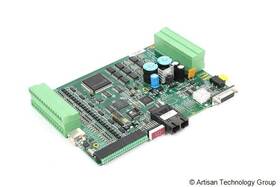
( Brand: Delta Tau ), ( Manufacturer Part Number: ACC-65M ), ( Part Type: Digital Board )
Review DELTA TAU Macro controlled Digital I/o Peripheral Board
The **Delta Tau ACC-65M Macro-Controlled Digital I/O Peripheral Board** is a high-performance, versatile peripheral interface designed to seamlessly integrate with Delta Tau s advanced data acquisition and motion control systems, offering unparalleled flexibility for industrial automation, research applications, and custom control systems. Engineered with precision and scalability in mind, this board provides a robust solution for users requiring precise digital input/output (I/O) control with programmable logic and macro capabilities, enabling complex automation workflows without the need for external programming. Featuring a **64-channel digital I/O architecture**, the ACC-65M delivers high-speed signal handling with configurable input thresholds, debouncing, and edge-triggered detection, ensuring reliable operation in demanding environments. Its **macro-controlled functionality** allows users to define custom logic sequences, state machines, or event-driven routines directly on the board, reducing the burden on host systems and accelerating real-time decision-making. Whether used for machine synchronization, sensor interfacing, or high-speed switching, the ACC-65M s **TTL/CMOS-compatible I/O** ensures compatibility with a wide range of industry-standard devices, while its **isolated inputs and outputs** enhance safety and noise immunity in noisy environments. Built with Delta Tau s reputation for reliability, the board incorporates **low-latency signal processing** and **deterministic timing**, making it ideal for applications requiring sub-microsecond response times. Additionally, its **plug-and-play compatibility** with Delta Tau s data acquisition and motion controllers such as the PowerDAQ and PowerMotion series simplifies integration into existing systems, allowing engineers to extend functionality without overhauling their infrastructure. With features like **configurable handshaking, pulse-width modulation (PWM) output, and programmable counters**, the ACC-65M empowers users to implement sophisticated control algorithms, from simple relay switching to complex event sequencing, all while maintaining seamless communication via Ethernet, USB, or PCIe interfaces. Whether deployed in laboratory settings for experimental automation, manufacturing for precise process control, or research for high-speed data synchronization, the Delta Tau ACC-65M stands as a powerful yet accessible tool for engineers seeking to bridge the gap between digital logic and real-world applications with unmatched precision and ease of use.
The **Delta Tau ACC-65M Macro-Controlled Digital I/O Peripheral Board** is a versatile and widely used device in industrial automation, data acquisition, and control systems. Below is a detailed breakdown of its pros and cons, followed by a conclusion and recommendation.
---
### **Pros**
1. **High Reliability and Durability**
The ACC-65M is built with robust components and industrial-grade construction, making it suitable for harsh environments. It supports a wide operating temperature range (-40 C to 70 C) and is designed for continuous operation, reducing downtime.
2. **Extensive Digital I/O Capabilities**
The board offers a large number of digital I/O points (up to 64), including configurable inputs and outputs (TTL, NPN/PNP, relay, etc.). This flexibility allows it to interface with a variety of sensors, actuators, and control systems, making it adaptable to diverse applications.
3. **Macro-Control Programming**
The built-in macro-control feature enables advanced sequencing, timing, and conditional logic without requiring external programming. This simplifies control logic for tasks like stepper motor sequencing, relay timing, or event-driven operations, reducing the need for additional PLCs or microcontrollers in some cases.
4. **High-Speed Data Transfer**
The board supports fast data acquisition and control via its **RS-232/422/485** and **USB** interfaces (depending on the model variant). This ensures real-time communication with host systems, which is critical for applications requiring quick response times.
5. **Compatibility with Multiple Systems**
It is compatible with a wide range of platforms, including **LabVIEW, MATLAB, Python (via serial/USB), and custom C/C applications**. This makes it accessible for both research and industrial environments.
6. **Low Latency and High Precision**
The digital I/O channels are designed for precise timing and low-latency operations, which is advantageous for applications like motor control, timing experiments, or synchronized data logging.
7. **Modular and Expandable**
The ACC-65M can be used as part of a larger Delta Tau system, allowing for expansion with additional modules (e.g., analog I/O, counter/timer modules) if needed. This scalability is beneficial for growing applications.
8. **Good Documentation and Support**
Delta Tau provides comprehensive documentation, including programming guides, example code, and technical support. This makes implementation and troubleshooting easier for engineers and developers.
9. **Cost-Effective for Mid-Range Applications**
Compared to high-end PLCs or FPGAs, the ACC-65M offers a cost-effective solution for applications requiring digital control without the complexity of full-scale automation systems.
10. **Versatile Use Cases**
It is commonly used in:- **Industrial automation** (machine control, sequencing)
- **Scientific research** (timing experiments, data acquisition)
- **Robotics** (motor control, sensor interfacing)
- **Education and prototyping** (due to its ease of use)
---
### **Cons**
1. **Limited Analog I/O**
The ACC-65M is primarily a digital I/O board and lacks built-in analog inputs/outputs. If your application requires analog signals (e.g., voltage/current measurement or control), you would need to pair it with additional Delta Tau modules (e.g., ACC-100 series), adding to the cost and complexity.
2. **No Built-in Counter/Timer Channels**
While it has digital I/O, it does not include high-resolution counter/timer channels (unlike some Delta Tau models like the ACC-107). Applications requiring precise pulse counting or frequency measurement may need external hardware.
3. **Dependence on Host System for Complex Logic**
Although the macro-control feature simplifies some tasks, highly complex control algorithms (e.g., PID with adaptive tuning, advanced motion control) may still require offloading to a PLC or microcontroller. This can limit its standalone capability in sophisticated automation setups.
4. **Software Dependency**
The board relies on host software (e.g., Delta Tau s **DMC ** or third-party tools like LabVIEW) for full functionality. Without proper software, the board s capabilities are limited to basic digital control, which may not be ideal for standalone applications.
5. **No Built-in Isolation for High-Voltage Applications**
The digital I/O lines are not inherently isolated for high-voltage environments. If interfacing with high-voltage signals (e.g., industrial relays or motors), additional isolation components (optocouplers, relays) may be required, adding to the design complexity.
6. **USB/Serial Interface Limitations**
While the USB and serial interfaces are functional, they may not support high-speed data transfer for very large datasets compared to dedicated PCIe or Ethernet-based solutions. For high-throughput applications, this could be a bottleneck.
7. **Learning Curve for Macro Programming**
The macro-control language is powerful but requires some learning. Engineers unfamiliar with Delta Tau s macro syntax may find it challenging to implement complex sequences without documentation or support.
8. **Limited Expansion Beyond Delta Tau Ecosystem**
While the board is modular within Delta Tau s product line, integrating it with non-Delta Tau systems (e.g., other PLCs or FPGAs) may require additional gateways or protocols, increasing system complexity.
9. **No Built-in Diagnostics for All Channels**
While the board provides status indicators for power and communication, it may lack detailed per-channel diagnostics (e.g., fault detection on individual I/O lines) compared to some industrial-grade PLCs.
10. **Potential Latency in USB Mode**
For applications requiring sub-millisecond timing precision, USB communication (especially in high-latency environments) may introduce slight delays compared to dedicated serial or Ethernet interfaces.
---
### **Conclusion**
The **Delta Tau ACC-65M** is a highly capable digital I/O peripheral board that excels in applications requiring reliable, macro-controlled digital sequencing, timing, and interfacing with sensors/actuators. Its strengths lie in its **flexibility, ease of use for digital control, and compatibility with multiple platforms**, making it a strong choice for mid-range industrial, research, and educational applications.
However, its **lack of built-in analog I/O, counters, and high-voltage isolation**, along with its reliance on host software, may limit its suitability for highly complex or standalone automation tasks. Additionally, users with strict timing requirements or large-scale analog data acquisition may need to supplement it with additional hardware.
If your application primarily involves **digital control, sequencing, or timing without heavy analog requirements**, the ACC-65M is an excellent and cost-effective choice. For applications requiring **analog signals, high-resolution counters, or full PLC functionality**, pairing it with complementary Delta Tau modules or a separate PLC may be necessary.
---
### **Recommendation**
- **Buy the ACC-65M if:**- You need a **reliable, macro-controlled digital I/O solution** for sequencing, timing, or interfacing with digital sensors/actuators.
- Your application does not require **analog I/O or high-resolution counters**.
- You are working within **Delta Tau s ecosystem** or using platforms like LabVIEW/MATLAB for control.
- You prioritize **cost-effectiveness and ease of integration** over advanced analog capabilities.
- **Consider alternatives if:**- You require **analog inputs/outputs** (e.g., voltage/current measurement) Opt for the **Delta Tau ACC-100 series** or a PLC with built-in A/D converters.
- Your application demands **high-resolution counters or pulse counting** Look into the **Delta Tau ACC-107** or a dedicated counter module.
- You need **full PLC functionality** (e.g., advanced motion control, HMI integration) Consider a **Siemens, Allen-Bradley, or Beckhoff PLC**.
- You require **high-speed Ethernet or PCIe interfaces** for large data throughput Explore **FPGA-based solutions** or industrial Ethernet I/O modules.
For most **digital-centric control tasks**, the ACC-65M remains a **solid, well-supported, and versatile choice** that balances performance, flexibility, and cost.
Details:
Are not included with this equipment unless pictured and/or listed in the above. Hours / Location. Fast and hassle-free. Fiber Optic MACRO Transceiver.
part #: acc65m prices
- $929.15-$1565.00
specifications sensoindustria:
- brand: Delta Tau
- mpn: Acc-65m
- part type: Digital Board
shipping sensoindustria:
- carrier: FedEx
- type: Calculated
- service: FedEx Ground / FedEx Home Delivery, FedEx Standard Overnight, FedEx Ground Economy
- transit: 4-7 Days
- cost: $25.01
- class: Standard, One-day, Economy
returns sensoindustria:
- method: Money back
- time: 30 Days
- paid by: Buyer
- policy: Returns Accepted
offer sensoindustria:
- sold: 0
- started: May 28, 2026
- availability: In Stock
- quantity: 1
- options: Ship-to-home
seller sensoindustria:
- rating: 99.8%
- city: Champaign, Illinois
- # reviews: 17947
general sensoindustria:
- condition: Used
- PLCs HMIs > PLC Peripheral Modules > PLC Input Output Modules
payments sensoindustria:
- credit card: Mastercard
- wallet: Paypal
- other
Delta Tau ACC-65M Is Similar To:
- 602378-10x Delta Tau Data Systems (31.3% similar) Please look at pictures carefully, what you see is will get. Calculated shipping charge is only within the 48 USA states, all others must contact first. Delta Tau data systems ACC-39 hand wheel encoder assay 10X es-MC Jay new item in opened box. No cables, CD, manuals, software or anything else not ...(July 15th, 2017)
- Acc-24e2a Delta Tau 4-axis Analog (33.3% similar) For sale is a new Delta Tau 4-AXIS ACC-24E2A analog interface board that and unused but I removed from the cardboard box just to get picture show in electrostatic packaging was opened it never installed. This is just excess that I don't need as the machine it went to no longer in service so sure ...(July 1st, 2017)
- Delta Tau 603985-104 Acc-f2 Umac 24vdc Power Supply (40.4% similar) If you find a similar item can be shipped for less from elsewhere, chances are they located closer. If the option for a faster service isn't shown, please to work out. Same day shipping processing for confirmed orders paid m-f before 12:00 pm PST. Other cc arrangements can be made with prior ...(February 8th, 2024)
- Delta Tau Acc-11e 603307-101 3u 24in 24out Lo Power Opto Interface Board (48.9% similar) All it takes is one message. Free shipping only to the lower 48 states. This Delta Tau ACC-11E 603307-101 3u 24IN/24OUT lo power opt interface board is a high-quality module for industrial automation and motion control applications. No buyer remorse...(September 24th, 2024)
- Delta Tau Data Sys 4-3871c3-2004-50109 43871c3200450109 Used (27.2% similar) Sells new and surplus product develops channels to purchase such. All products are guaranteed to be working but may show signs of use if purchasing a used product. Call to use a shipping service other than the ones listed. Packaging and handling: items are safely eds packaged in custom shipping ...(October 15th, 2024)
- Omron Acc-24e3 Delta Tau Acc24e3 (28.9% similar) Used but guaranteed to work...(January 3rd, 2025)
- Delta Tau Data Systems Acc-65e 24 In 24 Out Ultra Digital I o Accessory For Umac Controllers (45.2% similar) This lot is in good cosmetic condition. Buyer pays for all shipping costs. Notes: this lot was removed from a decommissioned system and not tested separately. Comes in non-original packaging. Ur protected 24 IN/24 out i/o sourcing. Specifications. Delta Tau ACC-65E 24 IN/24 out ultra digital i/o ...(February 24th, 2025)
- Delta Tau Data Sys Acc-14d Acc14d Used (36.9% similar) Sells new and surplus product develops channels to purchase such. All products are guaranteed to be working but may show signs of use if purchasing a used product. Call to use a shipping service other than the ones listed. Packaging and handling: items are safely eds packaged in custom shipping ...(April 8th, 2025)
- Delta Tau Acc-24p Axis Expansion Board (47.5% similar) This unit has j6 and j7 connectors installed. Part numbers: 602192-103, 602192-553 this is the newer version of ACC-24P...(April 25th, 2025)
- Delta Tau Acc-54e Turbo-umac Usb ethernet Communications Board (52.8% similar) Configuration: option 1: USB port, 2: Ethernet part number: 603467-103 port. This unit comes with face plate that accepts the PMAC2 CPU along upper and lower...(May 1st, 2025)
- Emerson Pcb595b 2 Delta Mtl8111-mtl8114 Kj3001x1-bc1 Internal Board (35.4% similar) Emerson Delta PCB595B/2 MTL8111-MTL8114 KJ3001X1-BC1 internal board, used, this item is sold as used, working with 30 day warranty. Has some scuffs/scratches/signs of usage...(September 23rd, 2025)
