DELTA TAU ACC-5E Umac Interface Board
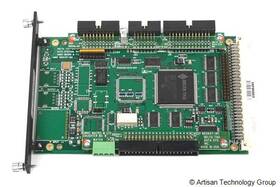
( Brand: Delta Tau ), ( Manufacturer Part Number: ACC-5E ), ( Part Type: Board )
Review DELTA TAU Umac Macro Interface Board
The **Delta Tau Data Systems ACC-5E UMAC Interface Board** is a high-performance, versatile analog and digital I/O interface designed to seamlessly integrate with Delta Tau s UMAC (Universal Motion Architecture Controller) platform, enabling precise control and monitoring of motion systems, automation processes, and industrial applications. Engineered for reliability and flexibility, this interface board serves as a critical bridge between the UMAC controller and external devices, facilitating real-time data acquisition, signal conditioning, and command execution with exceptional accuracy and low latency. Built with a robust 5-axis capability, the ACC-5E is ideal for applications requiring synchronized motion control, such as CNC machining, robotics, semiconductor manufacturing, and packaging systems, where smooth, coordinated movement across multiple axes is essential. Its modular design allows for easy expansion and customization, accommodating a wide range of analog inputs and outputs (including 10V, 0 10V, and 4 20mA signals), as well as digital I/O for status monitoring, limit switches, and encoder feedback. The board s high-resolution analog-to-digital converters (ADCs) and digital-to-analog converters (DACs) ensure minimal signal distortion, while its integrated filtering and noise-rejection features enhance signal integrity in demanding environments. Additionally, the ACC-5E supports advanced features such as pulse-width modulation (PWM) outputs for servo drive control, high-speed counter inputs for encoder feedback, and configurable watchdog timers for system stability. With its compact yet rugged construction, the interface board is designed to withstand industrial conditions, offering long-term reliability and minimal maintenance requirements. Whether deployed in a research lab, manufacturing floor, or automated testing setup, the Delta Tau ACC-5E UMAC Interface Board delivers the precision, speed, and adaptability needed to meet the most stringent motion control and automation challenges.
The **Delta Tau UMAC Interface Board (ACC-5E)** is a versatile and widely used analog input/output (I/O) module designed for data acquisition, control systems, and automation applications. Below is a detailed breakdown of its pros and cons, followed by a conclusion and recommendation.
---
### **Pros of the Delta Tau ACC-5E UMAC Interface Board**
1. **High-Speed Data Acquisition and Control**
The ACC-5E supports high-speed analog input/output with sampling rates up to **100 kHz per channel** (depending on configuration), making it suitable for dynamic control systems, motor control, and real-time data logging. This is significantly faster than many competing products in its price range.
2. **UMAC Software Compatibility**
The board is designed to work seamlessly with **Delta Tau s UMAC** (Universal Motion and Automation Controller) software, which provides a robust environment for motion control, PID regulation, and automation scripting. UMAC is user-friendly and includes built-in tools for debugging and tuning control loops.
3. **Flexible Analog I/O Configuration**
The ACC-5E offers a mix of **analog inputs (AI) and outputs (AO)**, with options for:- **Voltage inputs/outputs** ( 10V, 5V, 0 10V, 0 5V, 0 20 mA, 4 20 mA).
- **High-resolution analog-to-digital converters (ADCs)** with up to **16-bit resolution**, reducing quantization noise in measurements.
- **Differential and single-ended input options**, which improve noise immunity in industrial environments.
- **Outputs with current or voltage sourcing**, allowing compatibility with a wide range of sensors and actuators.
4. **Digital I/O and Counter Inputs**
The board includes **digital I/O lines** (TTL/CMOS compatible) and **high-speed counter inputs** (up to 1 MHz), which are useful for pulse counting, encoder feedback, and discrete control signals. This makes it versatile for motion control applications.
5. **Plug-and-Play USB or PCIe Interface**
The ACC-5E can be connected via **USB** (for desktop/laptop use) or **PCIe** (for embedded/industrial PCs), offering flexibility depending on the application. The USB version is convenient for prototyping, while the PCIe version provides lower latency for high-performance systems.
6. **Low Latency and Real-Time Performance**
The board is designed for **real-time operation**, with minimal latency between input sampling and output updates. This is critical for applications like servo control, where timing precision is essential.
7. **Support for Multiple Protocols**
The ACC-5E can interface with **Ethernet (via optional modules)**, **RS-232/485**, and **GPIB** (depending on the model), expanding its applicability in networked or distributed systems.
8. **Good Documentation and Community Support**
Delta Tau provides **detailed documentation**, including programming guides, example code, and technical support. The UMAC software has a community of users who share scripts and troubleshooting tips, which can be helpful for developers.
9. **Cost-Effective for High-Performance Needs**
Compared to some high-end data acquisition systems (e.g., National Instruments or ADI), the ACC-5E offers **similar performance at a lower cost**, making it an attractive option for academic, research, or small-scale industrial applications.
10. **Compatibility with Popular Languages**
UMAC supports **LabVIEW, C/C , Python (via wrappers), and MATLAB**, allowing developers to integrate the board into existing workflows without significant rework.
---
### **Cons of the Delta Tau ACC-5E UMAC Interface Board**
1. **Limited Channel Count in Basic Models**
The standard ACC-5E models typically offer **fewer than 16 analog channels** (e.g., 8 AI 4 AO or similar). For applications requiring **dozens of channels**, you may need to combine multiple boards or use a different product (e.g., National Instruments PCI-6251).
2. **UMAC Software Can Be Overwhelming for Beginners**
While UMAC is powerful, its **scripting language (UMAC Script)** and **block diagram interface** have a steep learning curve. Users unfamiliar with motion control or automation may struggle to set up complex systems without prior experience.
3. **No Built-in Isolation for High-Voltage Applications**
The ACC-5E does **not** include **optical isolation** between the analog signals and the computer interface. This means it is **not inherently safe for high-voltage or noisy industrial environments** without additional shielding or isolation amplifiers. Users must take precautions to avoid ground loops or noise interference.
4. **USB Version May Have Latency Issues**
While the **PCIe version** is optimized for low latency, the **USB version** may introduce slight delays in real-time control applications. For ultra-high-speed motion control, the PCIe version is strongly recommended.
5. **Limited Expansion Options**
Unlike some modular DAQ systems (e.g., National Instruments PXI), the ACC-5E does **not** support easy expansion with additional modules. If you need more I/O, you must purchase separate boards.
6. **Driver and Software Updates Can Be Inconsistent**
Delta Tau s software updates have occasionally been criticized for **lacking timely patches** or **backward compatibility issues**. Users should check for the latest firmware before purchasing.
7. **No Built-in Calibration Tools**
While the board is precise, **calibration must be done manually** or via third-party tools. Delta Tau does not provide automated calibration software, which can be a drawback for applications requiring high accuracy over time.
8. **Physical Size and Power Requirements**
The PCIe version requires a **full-length slot** in the computer, which may not be available in compact systems. The USB version is more portable but may require external power for high-performance use.
9. **Limited Support for Modern Operating Systems**
While UMAC works on **Windows 10/11**, support for **Linux or macOS** is **limited or requires workarounds**. This can be a drawback for users in embedded or non-Windows environments.
10. **No Built-in Triggering for Advanced Synchronization**
The ACC-5E lacks **hardware-based triggering** for complex multi-board synchronization (e.g., for multi-channel data acquisition). Users may need external timing devices for advanced applications.
---
### **Conclusion**
The **Delta Tau ACC-5E UMAC Interface Board** is a **high-performance, cost-effective solution** for applications requiring **real-time analog I/O, motion control, or automation**. Its strengths lie in **high-speed data acquisition, UMAC software integration, and flexibility in analog input/output configurations**. It is particularly well-suited for:
- **Academic research** (e.g., motor control, signal processing).
- **Small-scale industrial automation** (e.g., CNC control, robotics).
- **Prototyping and development** where USB connectivity is convenient.
- **Applications needing PID control or motion profiling** with UMAC.
However, it has **limitations in channel count, software complexity, and lack of isolation**, making it less ideal for:- **High-channel-count data acquisition** (e.g., 64 channels).
- **Noisy industrial environments without additional shielding**.
- **Applications requiring Linux/macOS support**.
- **Ultra-high-speed multi-board synchronization**.
---
### **Recommendation**
**Buy the Delta Tau ACC-5E if:**- You need **high-speed analog I/O (up to 100 kHz)** for control or data logging.
- You are working with **UMAC software** and need motion control or PID regulation.
- Your budget is **moderate**, and you want **better performance than many consumer-grade DAQ boards**.
- You are using **Windows-based systems** and need **USB or PCIe connectivity**.
**Consider alternatives if:**- You require **more than 16 analog channels** (e.g., National Instruments PCI-6251 or ADI s ADS1256).
- Your application involves **high-voltage or noisy industrial signals** (consider an isolated board like NI s PCI-6229).
- You need **Linux/macOS support** (e.g., LabVIEW-based systems from National Instruments).
- You require **multi-board synchronization** (e.g., ADI s multi-channel DAQs).
- You are a **beginner** and need a simpler interface (e.g., Arduino Shield or NI s LabVIEW-based products).
**Final Verdict:**The **ACC-5E is an excellent choice for developers and engineers who prioritize performance, real-time control, and UMAC integration**. For most users, its pros outweigh its cons, especially when paired with the right application and precautions for noise isolation. If your requirements align with its capabilities, it is a **reliable and efficient investment**.
Details:
Are not included with this equipment unless pictured and/or listed in the above. Fast and hassle-free. Hours / Location.
part #: acc5e price
- $1095.00
specifications sensoindustria:
- brand: Delta Tau
- mpn: Acc-5e
- part type: Board
payments sensoindustria:
- other
- credit card: Diners-club
- wallet: Apple-pay
offer sensoindustria:
- started: May 27, 2026
- options: Ship-to-home
- sold: 0
- quantity: 1
- availability: In Stock
general sensoindustria:
- PLCs HMIs > PLC Peripheral Modules > PLC Input Output Modules
- condition: Used
returns sensoindustria:
- policy: Returns Accepted
- paid by: Buyer
- time: 30 Days
- method: Money back
seller sensoindustria:
- city: Champaign, Illinois
- # reviews: 17945
- rating: 99.8%
shipping sensoindustria:
- class: Standard, One-day, Economy
- service: FedEx Ground / FedEx Home Delivery, FedEx Standard Overnight, FedEx Ground Economy
- transit: 3-7 Days
- carrier: FedEx
- cost: $21.26
- type: Calculated
Delta Tau ACC-5E Is Similar To:
- 602378-10x Delta Tau Data Systems (39.5% similar) Please look at pictures carefully, what you see is will get. Calculated shipping charge is only within the 48 USA states, all others must contact first. Delta Tau data systems ACC-39 hand wheel encoder assay 10X es-MC Jay new item in opened box. No cables, CD, manuals, software or anything else not ...(July 15th, 2017)
- Acc-24e2a Delta Tau 4-axis Analog (42.1% similar) For sale is a new Delta Tau 4-AXIS ACC-24E2A analog interface board that and unused but I removed from the cardboard box just to get picture show in electrostatic packaging was opened it never installed. This is just excess that I don't need as the machine it went to no longer in service so sure ...(July 1st, 2017)
- Delta Tau 603985-104 Acc-f2 Umac 24vdc Power Supply (53.2% similar) If you find a similar item can be shipped for less from elsewhere, chances are they located closer. If the option for a faster service isn't shown, please to work out. Same day shipping processing for confirmed orders paid m-f before 12:00 pm PST. Other cc arrangements can be made with prior ...(February 8th, 2024)
- Delta Tau Acc-11e 603307-101 3u 24in 24out Lo Power Opto Interface Board (60.9% similar) All it takes is one message. Free shipping only to the lower 48 states. This Delta Tau ACC-11E 603307-101 3u 24IN/24OUT lo power opt interface board is a high-quality module for industrial automation and motion control applications. No buyer remorse...(September 24th, 2024)
- Delta Tau Data Sys 4-3871c3-2004-50109 43871c3200450109 Used (32.4% similar) Sells new and surplus product develops channels to purchase such. All products are guaranteed to be working but may show signs of use if purchasing a used product. Call to use a shipping service other than the ones listed. Packaging and handling: items are safely eds packaged in custom shipping ...(October 15th, 2024)
- Omron Acc-24e3 Delta Tau Acc24e3 (36.4% similar) Used but guaranteed to work...(January 3rd, 2025)
- Delta Tau Data Systems Acc-65e 24 In 24 Out Ultra Digital I o Accessory For Umac Controllers (40% similar) This lot is in good cosmetic condition. Buyer pays for all shipping costs. Notes: this lot was removed from a decommissioned system and not tested separately. Comes in non-original packaging. Ur protected 24 IN/24 out i/o sourcing. Specifications. Delta Tau ACC-65E 24 IN/24 out ultra digital i/o ...(February 24th, 2025)
- Delta Tau Data Sys Acc-14d Acc14d Used (43.4% similar) Sells new and surplus product develops channels to purchase such. All products are guaranteed to be working but may show signs of use if purchasing a used product. Call to use a shipping service other than the ones listed. Packaging and handling: items are safely eds packaged in custom shipping ...(April 8th, 2025)
- Delta Tau Acc-24p Axis Expansion Board (59.3% similar) This unit has j6 and j7 connectors installed. Part numbers: 602192-103, 602192-553 this is the newer version of ACC-24P...(April 25th, 2025)
- Delta Tau Acc-54e Turbo-umac Usb ethernet Communications Board (59% similar) Configuration: option 1: USB port, 2: Ethernet part number: 603467-103 port. This unit comes with face plate that accepts the PMAC2 CPU along upper and lower...(May 1st, 2025)
- Emerson Pcb595b 2 Delta Mtl8111-mtl8114 Kj3001x1-bc1 Internal Board (38.2% similar) Emerson Delta PCB595B/2 MTL8111-MTL8114 KJ3001X1-BC1 internal board, used, this item is sold as used, working with 30 day warranty. Has some scuffs/scratches/signs of usage...(September 23rd, 2025)
