SIEMENS 873-3A Plc Modules 6EC18733A
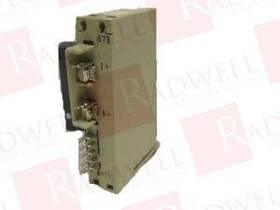
( Brand: Siemens ), ( Manufacturer Part Number: 873-3A ), ( Part Type: Module )
Review SIEMENS 6ec1 Used
The **Siemens 873-3A (6EC1 6EC18733A)** is a high-performance, modular **SIMATIC S7-300 CPU 313C-2 DP**, a robust and versatile programmable logic controller (PLC) designed for demanding industrial automation applications. Part of Siemens renowned SIMATIC S7-300 series, this CPU is engineered to deliver reliable, high-speed processing for control tasks in manufacturing, process automation, and machine automation environments. With its **32 MB of user memory** (expandable via optional memory extensions), the 313C-2 DP provides ample storage for complex control programs, data tables, and communication protocols, ensuring seamless integration with a wide range of field devices, sensors, and actuators. The **DP (Decentralized Peripherals) interface** allows for direct connection to decentralized I/O modules, reducing wiring complexity and enhancing system scalability, while the **PROFIBUS DP** communication port enables high-speed, deterministic data exchange with other PLCs, HMIs, or industrial networks, making it ideal for distributed automation architectures.
Built with Siemens signature engineering precision, the **873-3A** features a **32-bit CPU** with a clock rate of **16 MHz**, delivering fast execution of ladder logic, function blocks, and structured text programs. Its **real-time operating system** ensures deterministic response times, critical for applications requiring precise timing control, such as motion synchronization, batch processing, or safety-critical operations. The unit supports a comprehensive set of **communication protocols**, including **PROFIBUS DP, MPI (Multi-Point Interface), and Ethernet (via optional ET 200M or CP modules)**, enabling seamless integration into modern industrial networks like **PROFINET, OPC UA, or Siemens TIA Portal** environment. Additionally, the **S7-300 s open architecture** allows for easy expansion through a variety of **analog and digital I/O modules**, **high-speed counters**, and **specialized function modules**, such as temperature control, motion control, or safety relays, catering to diverse automation needs.
Designed for **industrial durability**, the **873-3A** operates reliably in harsh environments, with a **wide temperature range** (0 C to 60 C for standard operation, extendable to -25 C to 70 C with optional cooling) and **high resistance to electrical noise and vibration**, making it suitable for factory floors, chemical plants, or outdoor installations. The **compact yet robust housing** (100 x 144 x 120 mm) ensures easy installation in control panels or on DIN rails, while its **front-mounted status LEDs** provide quick visual feedback on power, communication, and error states. The **SIMATIC S7-300 s compatibility with Siemens TIA Portal software** simplifies programming, debugging, and maintenance, offering a user-friendly interface for creating, simulating, and monitoring control logic. Whether used in **discrete manufacturing, packaging systems, or process automation**, the **873-3A** delivers a perfect balance of performance, flexibility, and reliability, making it a cornerstone of modern industrial automation solutions.
The Siemens 873-3A (part number 6EC1 873-3A) is a compact, modular, and widely used industrial controller, often employed in automation systems for machinery, conveyor belts, and other process control applications. Below is a detailed breakdown of its pros and cons, followed by a conclusion and recommendation.
---
### **Pros of the Siemens 873-3A (6EC1 873-3A)**
1. **Reliability and Durability**
The 873-3A is part of Siemens robust industrial automation lineup, known for high-quality manufacturing and long-term reliability. It is designed to withstand harsh environments, including temperature fluctuations, vibration, and electrical noise, making it suitable for continuous operation in factories or automated systems.
2. **Modular and Expandable Architecture**
The controller is modular, allowing users to expand functionality by adding additional input/output (I/O) modules, communication interfaces (e.g., PROFIBUS, Ethernet/IP), or memory cards. This flexibility accommodates growing automation needs without requiring a complete system overhaul.
3. **Wide Range of I/O Options**
The 873-3A supports a variety of digital and analog I/O modules, including discrete inputs/outputs, analog voltage/current inputs, and special-purpose modules (e.g., temperature sensors, encoders). This versatility ensures compatibility with diverse sensors and actuators in industrial setups.
4. **Integration with Siemens Ecosystem**
It seamlessly integrates with other Siemens automation products, such as PLCs (e.g., S7-1200, S7-300), HMIs (e.g., KTP series), and SCADA systems (e.g., SIMATIC WinCC). This compatibility simplifies programming, debugging, and system-wide control, reducing integration challenges.
5. **Programming Flexibility**
The controller supports ladder logic (S7 programming language) and structured text, enabling engineers to implement complex control logic. Siemens TIA Portal software provides a user-friendly interface for programming, monitoring, and troubleshooting, even for non-experts.
6. **Communication Protocols**
The 873-3A supports multiple communication protocols, including:- **PROFIBUS DP** (for fieldbus communication with sensors/actuators).
- **Ethernet/IP** (for integration with Allen-Bradley or other Ethernet-based systems).
- **Modbus RTU/TCP** (for compatibility with third-party devices).
This makes it adaptable to different industrial networks and legacy systems.
7. **Energy Efficiency**
Siemens controllers are designed with power-saving features, such as sleep modes and optimized CPU usage, which can reduce energy consumption in low-activity periods. This is particularly beneficial for large-scale automation systems running 24/7.
8. **Support for Safety Functions**
While not a safety-rated PLC, the 873-3A can be paired with Siemens safety modules (e.g., S7-1500T or ET 200SP) to implement safety functions like emergency stops or door monitoring. This enhances its applicability in safety-critical applications.
9. **Global Availability and Support**
Siemens has a widespread distribution network and technical support, ensuring easy access to spare parts, documentation, and training. This is advantageous for maintenance and troubleshooting in remote or large-scale operations.
10. **Cost-Effective for Mid-Sized Applications**
Compared to higher-end PLCs (e.g., S7-1500), the 873-3A offers a balanced combination of performance and cost, making it ideal for mid-sized automation projects where full-scale PLCs may be overkill.
---
### **Cons of the Siemens 873-3A (6EC1 873-3A)**
1. **Limited Processing Power**
The 873-3A is a compact controller with a relatively modest CPU (compared to modern PLCs like the S7-1500 or S7-1200 with advanced features). It may struggle with highly complex algorithms, real-time simulations, or large-scale data processing. For CPU-intensive tasks, a more powerful PLC (e.g., S7-1500) might be necessary.
2. **Outdated Technology**
The 873-3A is part of Siemens older generation of compact controllers (introduced in the late 1990s/early 2000s). While it remains functional, it lacks modern features such as:
- Built-in Ethernet ports (requires additional modules for Ethernet/IP).
- Advanced diagnostics (e.g., predictive maintenance tools).
- Support for newer communication protocols like OPC UA natively.
This can limit its long-term compatibility with emerging industrial trends.
3. **Dependence on Siemens Ecosystem**
While integration with Siemens products is seamless, reliance on the Siemens ecosystem can be a drawback if the system needs to interact with non-Siemens devices. For example, configuring Modbus or other third-party protocols may require additional effort or third-party software.
4. **Limited Memory and Storage**
The internal memory of the 873-3A is relatively small compared to modern PLCs. Users may need to rely on external memory cards (e.g., SIMATIC Memory Card) for large programs or data logging, which adds complexity and potential points of failure.
5. **Higher Maintenance Costs Over Time**
As Siemens phases out older products, finding replacement parts or technical support for the 873-3A may become more difficult. While still available, the cost of spare parts or upgrades could increase compared to newer models.
6. **No Built-in HMI or Visualization**
Unlike some modern PLCs (e.g., S7-1200 with integrated touchscreens), the 873-3A requires separate HMIs (e.g., KTP or third-party panels) for operator interfaces. This adds to the overall system cost and installation complexity.
7. **Learning Curve for New Users**
Siemens programming environment (TIA Portal) can be steep for beginners, especially when dealing with legacy systems. The 873-3A s documentation and training resources, while extensive, may require time investment for new engineers.
8. **Physical Size and Installation Constraints**
The 873-3A is a rack-mounted unit (typically 19-inch rack) and requires dedicated space. In compact or space-constrained environments, this may not be ideal compared to smaller, panel-mounted PLCs (e.g., S7-1200).
9. **Limited Support for Cloud or Edge Computing**
Modern industrial trends emphasize cloud connectivity, edge computing, and IoT integration. The 873-3A lacks native support for these features, making it less suitable for smart factory applications or remote monitoring solutions.
10. **Potential for Obsolescence**
While not immediately obsolete, the 873-3A is approaching the end of its lifecycle in Siemens product roadmap. Future-proofing may require migrating to newer platforms (e.g., S7-1500 or S7-300) to avoid compatibility issues with upcoming technologies.
---
### **Conclusion**
The Siemens 873-3A (6EC1 873-3A) is a reliable, modular, and versatile compact controller well-suited for mid-sized industrial automation tasks where integration with Siemens ecosystem is a priority. Its strengths lie in its robustness, expandability, and compatibility with legacy systems, making it a practical choice for applications that do not require cutting-edge processing power or modern connectivity features.
However, its limitations such as outdated technology, limited processing capabilities, and lack of support for advanced industrial trends may pose challenges for future-proofing or complex automation projects. If the application involves high-speed control, cloud integration, or large-scale data handling, a newer PLC (e.g., S7-1500 or S7-1200) would be a more appropriate choice.
---
### **Recommendation**
**Buy the Siemens 873-3A if:**- You are maintaining or upgrading an existing Siemens-based automation system where the 873-3A is already integrated.
- Your application requires a compact, modular controller with PROFIBUS or Modbus compatibility for mid-sized machinery or conveyor systems.
- You prioritize reliability and have access to Siemens support for maintenance and spare parts.
- The project budget is constrained, and the 873-3A offers a cost-effective solution for your specific needs.
**Avoid or Consider Alternatives if:**- Your project demands high-speed processing, advanced diagnostics, or cloud/edge computing features. In this case, consider the **S7-1500** or **S7-1200** series.
- You require built-in Ethernet/IP or OPC UA support without additional modules. The **S7-1200** or **Allen-Bradley Micro800** may be better suited.
- The system is intended for long-term use (10 years), as the 873-3A may become harder to support or obsolete. Upgrading to a newer Siemens PLC or a modern controller (e.g., Beckhoff, Rockwell Automation) could be wiser.
- Space is limited, and a smaller, panel-mounted PLC (e.g., **S7-1200** or **Siemens LOGO!**) would suffice.
**Final Verdict:**The Siemens 873-3A remains a solid choice for **legacy or Siemens-centric automation projects** where
Details:
Call to use a shipping service other than the ones listed. Sells new and surplus product develops channels to purchase such. All products are guaranteed to be working but may show signs of use if purchasing a used product. Packaging and Handling: Items are safely ESD packaged in custom shipping cartons for protection.
Part Number 6EC1 873-3A.
part #: 8733a prices
- $99.00-$142.82
specifications sensoindustria:
- brand: Siemens
- mpn: 873-3a
- part type: Module
returns sensoindustria:
- policy: Returns Accepted
- time: 30 Days
- paid by: Buyer
- method: Money back
seller sensoindustria:
- # reviews: 191192
- city: 1 Millennium Dr, Willingboro, NJ 08046
- rating: 99.5%
general sensoindustria:
- PLCs HMIs > PLC Peripheral Modules > PLC Input Output Modules
- condition: Used
offer sensoindustria:
- sold: 0
- quantity: 1
- options: Ship-to-home
- started: February 21, 2026
- availability: In Stock
shipping sensoindustria:
- type: Fixed
- class: Standard
- transit: 23-35 Days
- cost: $12.90
- service: Standard
payments sensoindustria:
- other
- wallet: Paypal
- credit card: Diners-club
Siemens 873-3A Is Similar To:
- 222-1bf22-0xa0 Siemens Used Output Module Make Offer (27.3% similar) All technical questions problems should be addressed through messages for the fastest possible service. Any damaged package received should be addressed with the delivering USPS office and a claim filed there. This lot consists of: 1 used Siemens 6ES7 222-1BF22-0XA0 output module no box condition: ...(March 7th, 2019)
- 3rk1304-0hs00-7aa0 Siemens Isolator Module Used (38.6% similar) If another carrier such as ups or FedEx is required to ship due the size, then shipping costs may change...(February 17th, 2018)
- 3tf4422-0b Unbranded Siemens Used (34.8% similar) If another carrier such as ups or FedEx is required to ship due the size, then shipping costs may change...(June 15th, 2017)
- 462008.7604.01 Siemens Drive Circuit Board Used Free Shipping (35.1% similar) The shipping on this item reflects standard ground for us. 01 drive circuit board - used for sale. Greenback stock G29329...(July 2nd, 2018)
- 500-5016 Siemens Ti Two Channel Analog Output Module Used (34.4% similar) For sale is a ti Siemens two channel analog output module - used no wiring terminals...(July 21st, 2018)
- 505-6308 Siemens Input Module Used (42.9% similar) If another carrier such as ups or FedEx is required to ship due the size, then shipping costs may change...(January 21st, 2018)
- 505-6516 Siemens Slot Plc Chasis Rack Used (43.6% similar) Siemens 16 slot plc chassis rack model: 505-6516ITEM from surplus inventory...(August 1st, 2018)
- 545-1106 Siemens Texas Instruments Plc Module Cpu Used (33.3% similar) ...(September 8th, 2018)
- 6es7-222-1ef22-0xa0 Siemens Used Output Module (29.3% similar) For sale is a used Siemens 6ES7-222-1EF22-0XA0 output module...(July 16th, 2018)
- 6es7-235-0kd00-0xa0 Siemens Used Analog I-o (30.4% similar) Please e-mail with any questions. This item is guaranteed to be as described. Left right side e-stand, please specify which one you are interested. Siemens 6ES7-235-0KD00-0XA0 used analog I o module 235-0KD00-0XA0 note: 2 units available...(February 24th, 2018)
- 6es7-235-0kd22-0xa0 Siemens Used Analog I-o (30.4% similar) This item is guaranteed to be as described. Please e-mail with any questions...(February 17th, 2018)
