TENOR 763-7-0116 Triac Module T235163
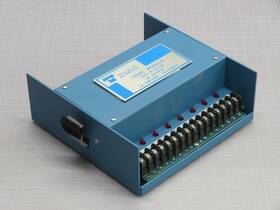
( Brand: Tenor ), ( Manufacturer Part Number: 763-7-0116 ), ( Part Type: Module )
Review TENOR Triac Module
The **Tenor 763-7-0116 T235163 Triac Module** is a high-performance, industrial-grade AC solid-state relay designed for precise control of high-power resistive, inductive, and capacitive loads in a wide range of automation, HVAC, and manufacturing applications. Engineered with robust construction and advanced semiconductor technology, this triac module operates as a zero-crossing switch, ensuring smooth and efficient power regulation without the mechanical wear associated with traditional relays. Its compact yet durable housing, typically constructed from high-temperature plastic or metal, is built to withstand harsh environmental conditions, including temperature fluctuations, humidity, and electrical noise, making it ideal for both indoor and outdoor installations in demanding industrial settings.
The core of this module features a **T235163 triac chip**, a high-current, high-voltage component capable of handling up to **16 amps RMS per phase** (depending on the specific variant and mounting configuration) and **up to 600 volts AC**, allowing it to manage heavy-duty loads such as motors, heaters, solenoids, and lighting systems with minimal energy loss. The module employs a **zero-crossing firing mechanism**, which activates the triac precisely at the AC waveform s zero-voltage point, significantly reducing electromagnetic interference (EMI) and radio frequency interference (RFI) while extending the lifespan of connected devices. This feature also prevents inrush current surges, which can damage sensitive equipment or cause voltage spikes in the power supply.
For enhanced safety and reliability, the Tenor 763-7-0116 is equipped with **overload protection circuitry**, including built-in thermal shutdown mechanisms that automatically disconnect the load in the event of excessive current or overheating, preventing catastrophic failures. The module s **optocoupler isolation** ensures galvanic separation between the control circuit and the high-voltage AC side, protecting sensitive control electronics from voltage spikes, transients, or ground loops while maintaining clean signal integrity. This isolation also simplifies integration into existing systems, as it eliminates the need for complex grounding strategies or additional shielding.
The control interface of the Tenor triac module is straightforward and versatile, accommodating a variety of input signals, including **DC control voltages (typically 3 32V DC)**, TTL logic levels, or even solid-state relay (SSR) control signals, depending on the specific application requirements. The module s **fast switching response** often measured in milliseconds allows for precise timing control, making it suitable for applications requiring rapid on/off cycling, such as motor speed regulation, dimming systems, or process automation. Additionally, the module s **low leakage current** in the off-state ensures minimal power dissipation, further improving energy efficiency in continuous-duty applications.
Designed with modularity in mind, the Tenor 763-7-0116 can be easily mounted on DIN rails, circuit boards, or panel-mounted enclosures, depending on the system design. Its **standardized pin configuration** and clear labeling facilitate quick installation and troubleshooting, reducing downtime during maintenance. For applications requiring redundancy or fail-safe operation, this triac module can be paired with complementary components such as current sensors, fuses, or auxiliary relays to create a more robust control system. Whether used in **industrial automation, HVAC systems, lighting control, or motor management**, the Tenor 763-7-0116 delivers a reliable, efficient, and cost-effective solution for high-power AC switching needs.
### **Pros and Cons of buying a Tenor 763-7-0116 (T235163) Triac Module**
#### **Pros:**1. **Reliability and Durability** The Tenor 763 series is known for its robust construction, suitable for industrial and high-power applications. The T235163 model is designed to handle significant current and voltage loads, making it dependable for long-term use in motor control, heating elements, and other AC switching tasks.
2. **High Current and Voltage Ratings** This module supports up to **7A RMS** (with proper heat sinking) and **600V AC**, making it suitable for medium-power applications like fans, solenoids, and small motors. It can handle higher loads than many low-cost alternatives.
3. **Fast Switching Speed** Triacs like this one offer quick turn-on and turn-off times, which is beneficial for applications requiring precise control, such as dimming LED strips or motor speed regulation.
4. **Wide Operating Temperature Range** The module typically operates between **-40 C to 125 C**, ensuring performance in both cold and hot environments, which is useful for outdoor or industrial setups.
5. **Easy Integration** It comes with standard **TO-220 or TO-247 packaging**, making it easy to mount on a heatsink and integrate into circuits. The pinout is straightforward, with clear gate, main terminal (MT), and auxiliary terminal (AT) connections.
6. **Cost-Effective for Medium-Power Needs** Compared to high-end industrial-grade triacs, this module offers a balance between performance and price, making it a practical choice for DIY projects, automation, and small-scale industrial applications.
7. **Compatibility with Common Drivers** It can be driven by standard triac gate drivers (e.g., MOC3021, BT139), zero-crossing detectors, or microcontroller-based PWM signals, offering flexibility in control methods.
---
#### **Cons:**1. **Requires External Heatsink for High Loads** While it can handle **7A RMS**, sustained operation at or near this current without adequate cooling will lead to overheating and potential failure. A proper heatsink and thermal paste are necessary for reliable performance.
2. **No Built-In Protection Features** Unlike some high-end triacs, this module lacks integrated features such as **snubber circuits, overcurrent protection, or dv/dt protection**. Users must manually add protective components (e.g., RC snubbers, flyback diodes) to prevent damage from voltage spikes or inductive loads.
3. **Limited to AC Applications Only** Triacs are designed for **AC switching** and cannot be used for DC control. If you need DC switching, you would require a different component (e.g., MOSFET or IGBT).
4. **Sensitivity to Gate Voltage and Current** The triac s switching behavior depends on the gate drive signal. Insufficient gate current or voltage may result in unreliable triggering, especially at low power levels. A proper gate driver circuit is often required for consistent operation.
5. **Potential for False Triggering** If not properly isolated or if the circuit has high dv/dt (rate of change of voltage), the triac may trigger unintentionally, leading to erratic behavior. Additional filtering or snubber circuits may be needed.
6. **No Built-In Isolation** Unlike some optocoupler-driven triacs, this module does not provide electrical isolation between the control and power sides. This means the control circuit must be carefully designed to avoid ground loops or noise interference.
7. **Limited Availability of Documentation** While Tenor is a reputable brand, some users report that detailed datasheets or application notes for specific models (like the 763-7-0116) may be less accessible compared to more mainstream components (e.g., BT139, MAC97A). Always verify the exact specifications before purchasing.
8. **Not Ideal for High-Frequency Switching** Triacs are generally not optimized for high-frequency applications (e.g., >1 kHz). For PWM dimming or high-speed switching, MOSFETs or IGBTs may be more suitable.
---
### **Conclusion:**The **Tenor 763-7-0116 (T235163) Triac Module** is a **solid choice for medium-power AC switching applications** where reliability, current handling, and cost-effectiveness are priorities. It excels in **motor control, heating elements, and general-purpose AC switching**, provided the user implements proper **heat dissipation, snubber circuits, and gate drive solutions**.
However, it is **not a plug-and-play component** it requires additional protective circuitry and careful design to ensure safe and efficient operation. If you are working on a **DIY project, automation system, or small-scale industrial application**, this triac can be a great fit. For **high-frequency, high-isolation, or DC applications**, other components (e.g., MOSFETs, IGBTs, or optocoupler-driven triacs) may be more appropriate.
---
### **Recommendation:** - **Buy it if:**- You need a **reliable, medium-power AC switch** (up to 7A with cooling).
- Your application involves **motors, solenoids, or resistive loads** (e.g., heating elements).
- You are comfortable designing **protective circuits** (snubbers, flyback diodes, heatsinking).
- You prefer a **well-known brand** (Tenor) over cheaper, less reliable alternatives.
- **Avoid it if:**- You require **high-frequency switching** (use MOSFETs instead).
- Your application involves **DC loads** (use a MOSFET or IGBT).
- You need **built-in protection features** (consider a high-end triac like the MAC97A or BT139 with optocoupler).
- You are a beginner and lack experience with **triac driving circuits**.
- **Pair it with:**- A **proper heatsink** (e.g., TO-220 or TO-247 compatible).
- A **gate driver** (e.g., MOC3021, ULN2003, or a microcontroller-based PWM circuit).
- **Snubber circuits** (RC network) to protect against voltage spikes.
- A **flyback diode** (e.g., 1N4007) for inductive loads.
For most **DIY enthusiasts and hobbyists**, this triac is a **good mid-range option**, but always **verify the exact model s datasheet** before purchasing, as specifications can vary slightly between batches or revisions. If possible, check for **alternative models** (e.g., Tenor 763-10 or 763-15) if your current requirements exceed 7A.
Details:
We proudly sell hard-to-find parts, components, and machines to makers manufacturers. Glad you stopped by.
part #: 76370116 prices
- $237.49-$792.00
specifications sensoindustria:
- brand: Tenor
- mpn: 763-7-0116
- part type: Module
returns sensoindustria:
- method: Money back
- paid by: Seller
- time: 30 Days
- policy: Returns Accepted
general sensoindustria:
- PLCs HMIs > PLC Peripheral Modules > PLC Input Output Modules
- condition: Used
seller sensoindustria:
- city: El Paso, Texas
- rating: 99.7%
- # reviews: 21418
shipping sensoindustria:
- transit: 4-8 Days
- cost: $13.17
- carrier: UPS
- service: UPS Ground, UPS 2nd Day Air, UPS 3 Day Select, UPS Next Day Air
- type: Calculated
- class: Standard, Expedited, One-day
offer sensoindustria:
- availability: In Stock
- options: Ship-to-home
- quantity: 1
- best offers: True
- sold: 0
- started: March 8, 2026
payments sensoindustria:
- other
- wallet: Apple-pay
- credit card: Diners-club
