ABSOLUTE PROCESS INSTRUMENTS 7580G Api Frequency Transmitter Signal Conditioner 115VAC
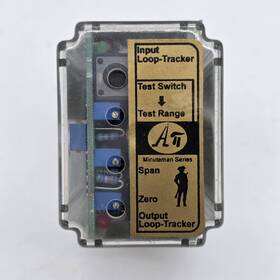
( Brand: Absolute Process Instruments ), ( Manufacturer Part Number: 7580G ), ( Part Type: Signal )
Review ABSOLUTE PROCESS INSTRUMENTS Api Frequency Dc Transmitter Wide Range Signal Conditioner 115vac
The **Process API 7580G Frequency Transmitter Signal Conditioner** is a high-performance, field-proven instrument designed to deliver precise and reliable signal conversion for industrial process control applications. Engineered to meet the rigorous demands of automation and instrumentation systems, this device serves as a versatile interface between analog input signals such as 4-20 mA, 0-20 mA, or RTD/Pt100 temperature inputs and standardized frequency outputs (typically 0-10 kHz or 0-20 kHz). Its robust construction and advanced signal conditioning capabilities make it an ideal solution for environments where accuracy, stability, and durability are paramount, including oil and gas, chemical processing, power generation, and water treatment facilities.
The 7580G operates on a standard **115VAC** power supply, ensuring compatibility with most industrial electrical infrastructures while maintaining energy efficiency. Its compact yet rugged design allows for easy integration into existing control panels or direct field mounting, minimizing installation complexity. The transmitter features a **high-precision analog-to-frequency conversion algorithm**, which ensures linear and repeatable output signals even under varying load conditions or environmental fluctuations. This is particularly advantageous in applications where signal integrity must be maintained over long distances or through noisy environments, as the frequency output is inherently immune to common electrical interference issues that plague traditional analog signals.
One of the standout features of the 7580G is its **configurable input ranges and scaling options**, allowing users to tailor the device to specific process variables such as pressure, flow, level, or temperature. Whether interfacing with a standard 4-20 mA loop or a resistance temperature detector (RTD), the transmitter provides seamless signal conditioning, including linearization, filtering, and zero/span adjustments, all of which can be fine-tuned via its intuitive front-panel controls or optional communication interfaces. Additionally, the device incorporates **overload protection and fault diagnostics**, ensuring operational reliability and reducing downtime by alerting operators to potential issues before they escalate.
Built to withstand harsh industrial conditions, the 7580G is housed in a **NEMA 4X-rated enclosure**, offering protection against dust, water, and corrosion, while its wide operating temperature range (-40 C to 85 C) ensures consistent performance in extreme climates. The frequency output, which can be configured for either **0-10 kHz or 0-20 kHz**, is ideal for compatibility with modern digital control systems, PLCs, or SCADA platforms that leverage frequency-based communication for enhanced data transmission and reduced signal degradation. This makes the 7580G particularly well-suited for applications requiring long-distance signal transmission or where analog signal loss is a concern.
For enhanced flexibility, the transmitter supports **optional communication protocols**, including Modbus RTU or HART, enabling seamless integration with supervisory control systems and facilitating remote monitoring, calibration, and diagnostics. This level of connectivity not only simplifies maintenance but also allows for advanced features such as predictive maintenance alerts and real-time performance tracking. Whether deployed in a critical process control loop or as part of a larger automation network, the Process API 7580G Frequency Transmitter Signal Conditioner delivers uncompromising accuracy, durability, and adaptability, making it a cornerstone of reliable industrial instrumentation.
### **Pros and Cons of buying a API 7580G Frequency Transmitter/Signal Conditioner (115VAC)**
#### **Pros**
1. **High Accuracy and Reliability**
The API 7580G is known for its precise frequency output, making it suitable for applications requiring stable and repeatable signals. It is designed for industrial use, where consistency is critical.
2. **Wide Input Range and Flexibility**
It supports multiple input types, including 4-20mA, RTD (Pt100, Pt1000), thermocouples (J, K, T, E, R, S, B, N), and voltage signals. This versatility allows it to integrate with various sensors and measurement systems without requiring additional signal conditioning.
3. **Modular and Configurable**
The device features programmable parameters, including output frequency, scaling, and filtering. Users can adjust settings to match specific application requirements, reducing the need for additional hardware.
4. **Industrial-Grade Durability**
Built for harsh environments, the API 7580G is designed to withstand temperature fluctuations, electrical noise, and mechanical stress. This makes it ideal for factory floors, oil and gas, and other demanding industrial settings.
5. **Compliance with Industry Standards**
It meets regulatory and safety standards, including UL, CE, and ATEX (for certain models), ensuring compliance in global markets. This reduces the risk of operational disruptions due to certification issues.
6. **Easy Installation and Integration**
The device is designed for straightforward mounting and wiring, often requiring minimal additional components. It can be paired with HMI systems, PLCs, or SCADA platforms for seamless data transmission.
7. **Low Maintenance Requirements**
As a solid-state device with no moving parts, the API 7580G has a long lifespan with minimal maintenance needs. This reduces downtime and operational costs over time.
8. **Support for Remote Monitoring**
Many models include communication interfaces (e.g., Modbus, HART, or Profibus) that enable remote diagnostics and configuration, improving system efficiency and troubleshooting capabilities.
9. **Cost-Effective for Long-Term Use**
While the initial purchase price may be higher than basic signal conditioners, its reliability and longevity often justify the investment in industrial applications where failures can be costly.
---
#### **Cons**
1. **Higher Upfront Cost**
Compared to simpler signal conditioners or basic frequency transmitters, the API 7580G is more expensive. This may be a barrier for small businesses or applications with tight budgets.
2. **Complexity for Non-Experts**
The device s advanced features and programming options require a basic understanding of industrial instrumentation. Users unfamiliar with frequency transmitters or signal conditioning may need training or technical support to configure it correctly.
3. **Limited Local Support in Some Regions**
Depending on the region, finding authorized distributors or technical support for the API 7580G may be challenging. This could delay troubleshooting or repairs if issues arise.
4. **Power Dependency**
As a 115VAC-powered device, it requires a stable power supply. In environments with frequent power fluctuations or outages, additional protection (e.g., UPS or surge suppressors) may be necessary.
5. **Potential Overkill for Simple Applications**
If the application only requires basic signal conversion (e.g., a single 4-20mA to frequency output), a simpler or cheaper device might suffice. The API 7580G s advanced features may not be fully utilized, making it unnecessary.
6. **Calibration and Maintenance Needs**
While low-maintenance, periodic calibration may be required to ensure accuracy, especially in critical applications. This adds a minor but ongoing operational cost.
7. **Compatibility Issues with Legacy Systems**
Older systems or non-standard protocols may not integrate seamlessly with the API 7580G. Compatibility testing may be required before full deployment.
8. **Limited Output Options**
The device primarily outputs frequency signals, which may not be suitable for applications requiring analog voltage or current outputs. Additional converters may be needed.
---
### **Conclusion**
The **API 7580G Frequency Transmitter/Signal Conditioner** is a robust, versatile, and high-performance device ideal for industrial applications where accuracy, reliability, and flexibility are paramount. Its ability to handle multiple input types, programmable features, and compliance with industry standards make it a strong choice for complex measurement and control systems.
However, its higher cost, complexity, and potential over-specification for simpler applications may not justify the purchase for all users. If budget constraints or lack of technical expertise are concerns, evaluating alternative devices or consulting with an instrumentation specialist could help determine the best fit.
### **Recommendation**
**Buy the API 7580G if:**- You require a high-accuracy, multi-input signal conditioner for industrial or critical applications.
- Your system demands frequency output with programmable scaling and filtering.
- You prioritize long-term reliability and minimal maintenance.
- Your budget allows for a premium device that will integrate seamlessly with existing or future systems.
**Consider alternatives if:**- Your application is simple and does not require advanced features.
- Cost is a major constraint, and a basic signal conditioner or frequency transmitter would suffice.
- Your team lacks experience with configuring or maintaining advanced instrumentation.
For most industrial users seeking a durable, versatile, and precise signal conditioner, the API 7580G is a **strong recommendation**. However, always conduct a cost-benefit analysis and ensure compatibility with your specific application before purchasing.
Details:
Shipped with UPS Ground. API 7580G Frequency DC Transmitter Wide Range Signal Conditioner 115VAC. Condition is Used.
part #: 7580g prices
- $45.00-$443.39
specifications sensoindustria:
- brand: Absolute Process Instruments
- mpn: 7580g
- part type: Signal
shipping sensoindustria:
- transit: 5-11 Days
- service: UPS Ground
- cost: $0.00
- type: Fixed
- class: Standard
- carrier: UPS
seller sensoindustria:
- city: Circle Pines, Minnesota
- rating: 100.0%
- # reviews: 155
payments sensoindustria:
- credit card: Visa
- other
- wallet: Paypal
returns sensoindustria:
- method: Money back
- policy: Returns Accepted
- time: 30 Days
- paid by: Buyer
general sensoindustria:
- PLCs HMIs > PLC Peripheral Modules > PLC Input Output Modules
- condition: Used
offer sensoindustria:
- availability: In Stock
- quantity: 1
- started: May 28, 2026
- sold: 0
- options: Ship-to-home
- best offers: True
Absolute Process Instruments 7580G Is Similar To:
- Api 4380 G Absolute Process Instruments Wideranging Isolator (51.3% similar) Review the pictures for included elements and condition of item. To make sure you are getting an accurate quote via the shipping calculator, your zip code is default when calculating cost for this item. Absolute Process Instruments, inc...(July 26th, 2018)
