SIEMENS 6FM1-705-3AA00 Plc Modules
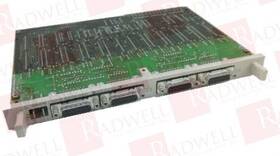
( Brand: Siemens ), ( Manufacturer Part Number: 6FM1-705-3AA00 ), ( Part Type: Module )
Review SIEMENS 6fm17053aa00 Used
The **Siemens 6FM1705-3AA00** is a high-performance, industrial-grade **SIMATIC ET 200SP** (S7-1200/1500) **Digital Input Module**, designed for robust and reliable integration into Siemens modular automation systems. This compact, DIN-rail-mounted module is specifically engineered for use in demanding industrial environments where precise, high-speed digital signal processing is essential. With a **24V DC input voltage range**, the 6FM1705-3AA00 supports up to **8 isolated digital inputs**, each featuring a configurable input threshold (24V DC or 110V AC) to accommodate a wide variety of sensors, switches, and control devices. Its **optically isolated inputs** ensure immunity to electrical noise and interference, making it ideal for applications in manufacturing, process control, and automation systems where signal integrity is critical. The module s **S7-1200/1500 compatibility** allows seamless integration with Siemens advanced PLC platforms, enabling real-time monitoring, diagnostics, and control via TIA Portal software. Featuring a **compact, space-saving design**, the 6FM1705-3AA00 is built to withstand harsh conditions, with an operating temperature range of **-25 C to 60 C** and compliance with industrial standards such as **IP20** for protection against solid particles and limited liquid ingress. Additionally, its **low power consumption** and **high reliability** make it a cost-effective solution for expanding automation systems without compromising performance. Whether used in discrete manufacturing, energy management, or building automation, this module delivers the precision, durability, and flexibility required to meet the evolving demands of modern industrial applications.
### **Pros and Cons of buying a Siemens 6FM1-705-3AA00 (6FM17053AA00)**
#### **Overview**
The **Siemens 6FM1-705-3AA00** is a **CPU module (CPU 6ES7-705-3AA00)** used in Siemens SIMATIC S7-700 series programmable logic controllers (PLCs). It serves as the central processing unit for controlling industrial automation tasks. Below is a detailed analysis of its advantages and disadvantages.
---
### **Pros**
1. **Reliability and Durability**
- Siemens is a well-established brand in industrial automation, known for robust and long-lasting hardware.
- The **700 series PLCs** are designed for harsh industrial environments, with features like wide temperature ranges (-40 C to 70 C) and resistance to vibrations and electromagnetic interference.
- The CPU module is built with high-quality components, reducing the risk of sudden failures.
2. **Compatibility and Integration**
- Fully compatible with **SIMATIC S7-700** systems, allowing seamless integration with other Siemens components such as HMIs, drives, and communication modules (e.g., CPUs, DP, PROFIBUS).
- Supports **S7 programming (LAD, FBD, STL, SCL)** and integrates with **TIA Portal** for modern programming and diagnostics.
- Works with **S7-700 expansion modules**, increasing system flexibility.
3. **Performance and Processing Power**
- The **6ES7-705-3AA00** is a **32-bit CPU**, offering sufficient processing power for medium to large automation tasks, including motion control, process automation, and complex logic.
- Supports **real-time operation** with fast scan times, crucial for time-sensitive applications.
- Includes **16 KB of user memory** (expandable via additional memory modules), adequate for many industrial applications.
4. **Communication Capabilities**
- Built-in **PROFIBUS DP** port for direct connection to field devices, reducing wiring complexity.
- Supports **S7 communication (S7 protocol)** for easy integration with higher-level systems (e.g., SCADA, MES).
- Can be extended with additional communication modules (e.g., Ethernet, AS-i) for broader connectivity.
5. **Maintainability and Diagnostics**
- Siemens provides **comprehensive diagnostics** via **S7 diagnostics tools**, allowing for quick fault detection and troubleshooting.
- The CPU includes **error LEDs and status indicators**, making it easier to identify issues without extensive programming.
- Siemens offers **technical support and documentation**, including manuals, firmware updates, and troubleshooting guides.
6. **Cost-Effectiveness for Medium-Sized Applications**
- While not the cheapest option, the **700 series** strikes a balance between performance and cost for applications that require **reliability and Siemens compatibility**.
- Compared to newer **S7-1200/1500** CPUs, it may be more cost-effective for legacy systems or applications where **PROFIBUS** is preferred over Ethernet.
7. **Legacy System Support**
- If your existing system uses **S7-700**, replacing a faulty CPU with a **6FM1-705-3AA00** ensures **full backward compatibility** without requiring major system overhauls.
- Many industrial facilities still rely on **700 series PLCs**, making this CPU a practical choice for upgrades or replacements.
---
### **Cons**
1. **Outdated Technology Compared to Newer Siemens CPUs**
- The **S7-700 series** is **older** than the **S7-1200, S7-1500, or ET 200SP**, which offer:- **Ethernet-based communication** (more reliable and faster than PROFIBUS in some cases).
- **Higher processing power** and **larger memory options**.
- **Simpler programming** (e.g., structured text in TIA Portal is more intuitive than STL).
- If your application can accommodate newer technology, upgrading may offer **better performance and future-proofing**.
2. **Limited Memory and Scalability**
- The **32-bit architecture** and **16 KB user memory** may be restrictive for **large-scale automation projects** requiring extensive logic or data storage.
- Unlike newer CPUs, it **cannot be easily upgraded** to a higher memory capacity without replacing the entire module.
- Expansion requires additional **memory modules (e.g., 6ES7-705-3AA00 with 6ES7-705-3AA01 for 32 KB)**, adding complexity.
3. **Higher Power Consumption**
- The **700 series CPUs** generally consume **more power** than modern counterparts (e.g., S7-1200 at 5V, 100 mA vs. 700 series at 24V, 100-200 mA).
- This may require **larger power supplies** in some setups, increasing system costs.
4. **Programming Complexity**
- While **S7 programming** is powerful, it has a **steeper learning curve** compared to newer Siemens platforms.
- **Ladder Logic (LAD) and Structured Text (STL)** can be less intuitive for beginners than **graphical programming** in TIA Portal.
- Debugging can be **more time-consuming** due to limited built-in diagnostics compared to modern CPUs.
5. **Limited Support for Modern Protocols**
- The **6FM1-705-3AA00** lacks **built-in Ethernet support** (unlike S7-1200/1500), requiring additional modules (e.g., **CP 340-5**) for Ethernet communication.
- **OPC UA** and **cloud connectivity** are not natively supported; additional software or modules are needed.
- If your application requires **Industry 4.0 features** (e.g., remote monitoring, IoT integration), this CPU may not be the best choice without significant add-ons.
6. **Higher Cost of Replacement Parts**
- As the **S7-700 series** is **older**, finding replacement parts (e.g., CPUs, modules) may be **more expensive** than newer Siemens products.
- Siemens may **discontinue support** for this model in the future, leading to potential **obsolete stock issues**.
- **Third-party compatibility** is limited, increasing dependency on Siemens for replacements.
7. **Physical Size and Installation Constraints**
- The **700 series** CPUs are **larger and heavier** than modern CPUs (e.g., S7-1200), which may limit installation options in **space-constrained environments**.
- Requires **dedicated rack space** and proper cooling, unlike compact PLCs that can be mounted on panels.
8. **Firmware and Software Limitations**
- **Older firmware versions** may lack security patches or compatibility with the latest **SIMATIC software updates**.
- Some **advanced features** (e.g., advanced motion control, high-speed counting) may require **additional modules** that are not as seamless as in newer systems.
- **No built-in cybersecurity features** (e.g., encryption, secure boot) that are increasingly important in modern industrial networks.
---
### **Conclusion**
The **Siemens 6FM1-705-3AA00 (6ES7-705-3AA00)** is a **reliable, robust, and well-supported CPU** for **S7-700 systems**, making it an excellent choice for:
- **Legacy system replacements** where compatibility with existing hardware is critical.
- **Medium-sized automation tasks** requiring **PROFIBUS communication** and **S7 programming**.
- **Industrial environments** where **durability, wide temperature ranges, and Siemens support** are prioritized over cutting-edge features.
However, if your application can benefit from **modern advancements**, such as:- **Ethernet-based communication** (for faster, more flexible networking).
- **Higher processing power and memory** (for complex logic or large-scale systems).
- **Simpler programming and diagnostics** (via TIA Portal).
- **Industry 4.0 readiness** (cloud connectivity, OPC UA, cybersecurity).
- **Lower power consumption and compact size** (for space-efficient installations).
...then **newer Siemens CPUs (e.g., S7-1200, S7-1500, or ET 200SP)** may be a **better long-term investment**.
---
### **Recommendation**
- **Buy the 6FM1-705-3AA00 if:**- You are **maintaining or upgrading a legacy S7-700 system**.
- Your application **relies heavily on PROFIBUS** and does not require Ethernet.
- You need a **proven, reliable CPU** with **strong Siemens support**.
- Budget constraints make newer CPUs impractical.
- **Consider an alternative (e.g., S7-1200 or S7-1500) if:**- You can **upgrade to a newer Siemens platform** without breaking existing integrations.
Details:
Sells new and surplus product develops channels to purchase such. Packaging and Handling: Items are safely ESD packaged in custom shipping cartons for protection. All products are guaranteed to be working but may show signs of use if purchasing a used product. Call to use a shipping service other than the ones listed.
part #: 6fm17053aa00 prices
- $78.33-$478.85
specifications sensoindustria:
- brand: Siemens
- mpn: 6fm1-705-3aa00
- part type: Module
returns sensoindustria:
- paid by: Buyer
- policy: Returns Accepted
- method: Money back
- time: 30 Days
seller sensoindustria:
- rating: 99.5%
- # reviews: 190829
- city: 1 Millennium Dr, Willingboro, NJ 08046
payments sensoindustria:
- credit card: Mastercard
- other
- wallet: Apple-pay
offer sensoindustria:
- availability: In Stock
- sold: 0
- quantity: 1
- options: Ship-to-home
- started: February 19, 2026
shipping sensoindustria:
- type: Fixed
- cost: $12.90
- service: Standard
- class: Standard
- transit: 29-34 Days
general sensoindustria:
- PLCs HMIs > PLC Peripheral Modules > PLC Input Output Modules
- condition: Used
Siemens 6FM1-705-3AA00 Is Similar To:
- 222-1bf22-0xa0 Siemens Used Output Module Make Offer (25.5% similar) All technical questions problems should be addressed through messages for the fastest possible service. Any damaged package received should be addressed with the delivering USPS office and a claim filed there. This lot consists of: 1 used Siemens 6ES7 222-1BF22-0XA0 output module no box condition: ...(March 7th, 2019)
- 3rk1304-0hs00-7aa0 Siemens Isolator Module Used (33.7% similar) If another carrier such as ups or FedEx is required to ship due the size, then shipping costs may change...(February 17th, 2018)
- 3tf4422-0b Unbranded Siemens Used (32% similar) If another carrier such as ups or FedEx is required to ship due the size, then shipping costs may change...(June 15th, 2017)
- 462008.7604.01 Siemens Drive Circuit Board Used Free Shipping (31.1% similar) The shipping on this item reflects standard ground for us. 01 drive circuit board - used for sale. Greenback stock G29329...(July 2nd, 2018)
- 500-5016 Siemens Ti Two Channel Analog Output Module Used (34.3% similar) For sale is a ti Siemens two channel analog output module - used no wiring terminals...(July 21st, 2018)
- 505-6308 Siemens Input Module Used (36.8% similar) If another carrier such as ups or FedEx is required to ship due the size, then shipping costs may change...(January 21st, 2018)
- 505-6516 Siemens Slot Plc Chasis Rack Used (40.5% similar) Siemens 16 slot plc chassis rack model: 505-6516ITEM from surplus inventory...(August 1st, 2018)
- 545-1106 Siemens Texas Instruments Plc Module Cpu Used (33.3% similar) ...(September 8th, 2018)
- 6es7-222-1ef22-0xa0 Siemens Used Output Module (27.3% similar) For sale is a used Siemens 6ES7-222-1EF22-0XA0 output module...(July 16th, 2018)
- 6es7-235-0kd00-0xa0 Siemens Used Analog I-o (28.2% similar) Please e-mail with any questions. This item is guaranteed to be as described. Left right side e-stand, please specify which one you are interested. Siemens 6ES7-235-0KD00-0XA0 used analog I o module 235-0KD00-0XA0 note: 2 units available...(February 24th, 2018)
- 6es7-235-0kd22-0xa0 Siemens Used Analog I-o (28.2% similar) This item is guaranteed to be as described. Please e-mail with any questions...(February 17th, 2018)
