SIEMENS 6ES7223-1PL22-0XA8 Plc Modules
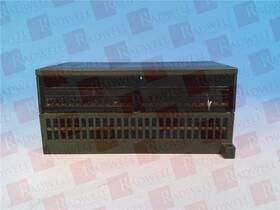
( Brand: Siemens ), ( Manufacturer Part Number: 6ES7223-1PL22-0XA8 ), ( Part Type: Module )
Review SIEMENS 6es72231pl220xa8 Used
The **Siemens 6ES7223-1PL22-0XA8** is a high-performance, modular **S7-200 CPU 226** programmable logic controller (PLC) designed for industrial automation applications requiring robust processing power, expandability, and reliability. Part of Siemens proven S7-200 series, this compact yet powerful controller is engineered to handle complex control tasks in manufacturing, process automation, and machine automation environments. The **CPU 226** features a **32-bit processor** with a clock speed of **20 MHz**, delivering efficient execution of ladder logic (LD), function block diagrams (FBD), and structured text (ST) programs, making it suitable for applications demanding real-time control and high-speed data processing.
This PLC is equipped with **12 digital inputs (DI)** and **6 digital outputs (DO)**, all configurable as either input or output via software, providing flexibility for integration with a wide range of sensors, actuators, and peripheral devices. The **12 DI channels** support a maximum input current of **24 V DC** and are designed to interface with standard industrial signals, including dry contacts, PNP/NPN transistors, and resistive sensors, ensuring compatibility with most field devices. The **6 DO channels**, meanwhile, offer **24 V DC sinking or sourcing outputs** with a maximum current of **0.5 A per channel**, enabling direct control of relays, solenoids, motors, and other low-power actuators. Additionally, the CPU includes **2 analog input channels (AI)** with a resolution of **12-bit** and a measurement range of **0 to 10 V DC or 0 to 20 mA**, allowing for precise monitoring of temperature, pressure, or flow sensors, while the **1 analog output channel (AO)** supports **0 to 10 V DC or 0 to 20 mA** control signals for driving actuators like valves or motor drives.
One of the standout features of the **6ES7223-1PL22-0XA8** is its **expansion capabilities**, which include **two built-in PROFIBUS DP ports** (one master and one slave) for seamless communication with higher-level systems, HMIs, or other PLCs. This enables advanced networking, remote monitoring, and integration into larger automation architectures, such as Siemens **S7-300/400 systems** or third-party SCADA platforms. The CPU also supports **S7 communication protocols**, including **S7-200-specific commands**, as well as **MPI (Multi-Point Interface)** for local network connectivity, ensuring compatibility with Siemens extensive range of industrial communication solutions. For enhanced data handling, the unit includes **128 KB of user program memory** and **64 KB of data memory**, providing ample space for complex control algorithms, trend logging, and process variables, while the **16 KB of non-volatile RAM (NVRAM)** ensures program retention even during power interruptions.
The **6ES7223-1PL22-0XA8** is housed in a **compact, DIN-rail-mountable enclosure** measuring **90 mm (width) x 90 mm (height) x 120 mm (depth)**, making it ideal for space-constrained control panels. Its robust construction, with an **IP20 protection rating**, ensures durability in standard industrial environments, though additional protection measures (such as enclosures or gasketing) may be required for exposure to dust, moisture, or harsh chemicals. The CPU operates within a **temperature range of 0 C to 55 C**, with a **humidity tolerance of 0% to 90% non-condensing**, further enhancing its suitability for a variety of industrial settings. Power requirements are modest, with a **24 V DC supply** (included in the standard package) that can be sourced from a dedicated power supply or integrated into a larger control system.
Beyond its technical specifications, the **S7-200 CPU 226** is renowned for its **user-friendly programming environment**, which is accessible via **Siemens TIA Portal (Totally Integrated Automation Portal)** or **Step 7 Micro/WIN software**, allowing engineers to develop, debug, and optimize control logic efficiently. The PLC supports **structured programming languages**, including **Ladder Logic (LD)**, **Function Block Diagram (FBD)**, and **Structured Text (ST)**, catering to both traditional and modern programming methodologies. Additionally, the **S7-200 series** benefits from **Siemens extensive library of function blocks and function calls**, accelerating development time for common automation tasks such as PID control, motion profiling, and safety-related functions.
For applications requiring **high-speed data acquisition or advanced motion control**, the **6ES7223-1PL22-0XA8** can be paired with compatible **S7-200 expansion modules**, such as the **EM 223 (analog expansion)**, **EM 224 (digital expansion)**, or **EM 225 (high-speed counter module)**, expanding its I/O capacity and functionality. The **PROFIBUS DP interface** also enables integration with **Siemens SIMATIC HMI devices**, such as the **TP 170 or KTP 700**, for operator interfaces, or with **S7-300/400 CPUs** for hierarchical control systems. This modularity ensures that the **CPU 226** can scale alongside evolving automation requirements, making it a versatile choice for both small-scale and medium-sized control applications.
In summary, the **Siemens 6ES7223-1PL22-0XA8** is a **highly capable, expandable PLC** designed for industrial automation tasks that demand reliability, flexibility, and advanced control capabilities. Whether used in **discrete manufacturing, process control, or machine automation**, this CPU delivers **efficient processing, robust I/O options, and seamless communication** to meet the demands of modern industrial environments. Its **proven performance, ease of programming, and compatibility with Siemens broader automation ecosystem** make it a trusted solution for engineers and technicians seeking a balance of power and simplicity in PLC-based control systems.
### **Analysis of Siemens 6ES7223-1PL22-0XA8 (CPU 224XP) Pros and Cons**
#### **Overview**
The **Siemens 6ES7223-1PL22-0XA8** is a **CPU 224XP** module, part of Siemens **S7-200 series**, designed for small-scale automation tasks. It is a programmable logic controller (PLC) used in industrial applications for control, monitoring, and automation. Below is a detailed breakdown of its advantages and disadvantages.
---
### **Pros**
1. **Compact and Space-Efficient Design**
- The CPU 224XP is a **modular, DIN-rail-mounted unit** that occupies minimal space, making it ideal for installations with limited rack space. Its small footprint is particularly useful in retrofitting existing systems or applications with tight spatial constraints.
2. **Cost-Effective for Small-Scale Applications**
- Compared to higher-end PLCs (e.g., S7-1200, S7-300, or S7-400), the **224XP is relatively inexpensive**, making it a practical choice for **low-budget projects, educational purposes, or simple automation tasks**. It reduces overall system costs without sacrificing core functionality.
3. **Easy Installation and Setup**
- The **S7-200 series** is known for its **plug-and-play simplicity**. The CPU 224XP can be quickly installed on a DIN rail, and programming via **SIMATIC STEP 7 Micro/WIN** or **TIA Portal Lite** is straightforward, even for users with limited PLC experience.
- No complex wiring or additional hardware (like communication modules) is required for basic applications.
4. **Sufficient Processing Power for Basic Automation**
- While not as powerful as modern PLCs, the **224XP handles standard tasks efficiently**, such as:- **Digital I/O control** (on/off operations, motor starters, relays).
- **Analog signal processing** (temperature, pressure, flow control within its 12-bit resolution).
- **Simple motion control** (via integrated position control for stepper/dc motors).
- It supports **up to 256 digital I/O points** and **8 analog inputs/outputs** (depending on the configuration), which is adequate for many small industrial or process control applications.
5. **Reliability and Durability**
- Siemens PLCs are **industry-standard** and built for **harsh environments**, with features like:- **Wide operating temperature range** (typically -25 C to 60 C).
- **High resistance to electrical noise** (suitable for factory floors with motors and variable frequency drives).
- **Long lifespan** (many units remain operational for **15 years** with proper maintenance).
- The **224XP lacks advanced diagnostics** compared to newer models, but its simplicity reduces points of failure.
6. **Compatibility with Legacy Systems**
- The **S7-200 series** has been in production for decades, ensuring **easy integration with older Siemens hardware** (e.g., 200-series modules, HMIs, or legacy SCADA systems).
- It supports **PROFIBUS DP** (via optional modules) and **RS-232/RS-485 communication**, making it compatible with many industrial networks.
7. **Low Power Consumption**
- The CPU 224XP operates on **24V DC**, consuming minimal power (typically **
8. **Educational and Prototyping Value**
- Due to its **affordability and simplicity**, the 224XP is widely used in **vocational training, universities, and DIY automation projects**. It helps beginners learn PLC programming without high costs.
9. **No Licensing or Subscription Costs**
- Unlike some modern PLCs (e.g., Allen-Bradley CompactLogix with required licenses), the **224XP does not require additional software fees** beyond the basic programming environment.
10. **Backward Compatibility with Older Software**
- Programming can be done using **STEP 7 Micro/WIN (v4.0 or later)** or **TIA Portal Lite**, which are still supported by Siemens (though newer versions may require updates).
---
### **Cons**
1. **Outdated Technology**
- The **S7-200 series (including the 224XP) is no longer in active production**, meaning:- **Limited availability** of spare parts (though it remains widely stocked by distributors).
- **No official support or firmware updates** from Siemens.
- **Deprecated communication protocols** (e.g., no native Ethernet TCP/IP without additional modules).
2. **Limited I/O and Expansion Capabilities**
- The **224XP supports only 256 digital I/O points in total** (shared across all modules in the rack), which may be insufficient for **larger or more complex systems**.
- **No built-in Ethernet port** (unlike newer PLCs); communication requires **RS-232/RS-485 or PROFIBUS via optional modules**, adding complexity.
- **No integrated safety functions** (e.g., fail-safe outputs, safety relays) unless paired with external safety modules.
3. **Poor Analog Resolution**
- The **12-bit analog resolution (4096 steps)** is **inferior to modern PLCs** (e.g., 16-bit or higher in S7-1200/1500), leading to **less precise control** in applications requiring high-resolution analog signals (e.g., precise temperature control, high-speed motion).
4. **No Built-in Web Server or Modern Connectivity**
- Unlike newer PLCs (e.g., S7-1200, S7-1500), the **224XP lacks built-in web server functionality**, making remote monitoring or cloud integration difficult without third-party solutions.
- **No native support for OPC UA, MQTT, or modern industrial IoT protocols**.
5. **Limited Memory and Storage**
- The **224XP has a small program memory** (typically **16KB 32KB**, depending on the variant), which can be restrictive for **complex ladder logic programs** or applications requiring large data storage.
- **No built-in data logging** (unlike newer PLCs with integrated historian functions).
6. **No Built-in Motion Control (Beyond Basic Steps)**
- While it supports **basic position control for stepper/dc motors**, it lacks **advanced motion control features** (e.g., high-speed interpolation, servo control) found in modern PLCs.
7. **Dependence on Legacy Programming Tools**
- Programming requires **STEP 7 Micro/WIN or TIA Portal Lite**, which are **less user-friendly** than modern IDEs (e.g., Siemens TIA Portal for S7-1200/1500).
- **No graphical programming options** (e.g., structured text, function blocks) as robust as those in newer PLCs.
8. **No Built-in Diagnostics or Predictive Maintenance Features**
- Modern PLCs offer **advanced diagnostics, fault prediction, and self-monitoring**, but the **224XP provides minimal built-in error logging**, making troubleshooting less efficient.
9. **Compatibility Issues with Newer Siemens Hardware**
- While it can communicate with **S7-300/400 via CP modules**, integrating it with **S7-1200/1500 or SIMATIC WinCC** may require **additional gateways or protocol converters**, adding complexity.
10. **Environmental Limitations**
- While durable, the **224XP is not rated for extreme environments** (e.g., high humidity, dust, or corrosive atmospheres) without additional protection (e.g., enclosure).
- **No IP67/IP65 rating** (unlike newer industrial-grade PLCs).
---
### **Conclusion**
The **Siemens 6ES7223-1PL22-0XA8 (CPU 224XP)** is a **cost-effective, reliable, and simple PLC** well-suited for:- **Small-scale automation** (e.g., machine control, simple process automation).
- **Legacy system integration** where newer PLCs are not feasible.
- **Educational or prototyping applications** due to its affordability.
- **Low-budget projects** where advanced features are unnecessary.
However, its **outdated technology, limited connectivity, poor analog resolution, and lack of modern diagnostics** make it **unideal for**:- **Complex or high-precision applications** (e.g., CNC machines, advanced motion control).
- **Modern industrial IoT or remote monitoring** requirements.
- **Large-scale systems** needing high I/O capacity or cloud integration.
- **New installations** where future-proofing and scalability are priorities.
---
### **Recommendation**
#### **Buy the 6ES7223-1PL22-0XA8 If:**You need a **budget-friendly PLC** for a **simple, low-risk application**.
Your system **requires compatibility with legacy Siemens hardware**.
Details:
All products are guaranteed to be working but may show signs of use if purchasing a used product. Sells new and surplus product develops channels to purchase such. Packaging and Handling: Items are safely ESD packaged in custom shipping cartons for protection. Call to use a shipping service other than the ones listed.
part #: 6es72231pl220xa8 prices
- $87.84-$287.00
specifications sensoindustria:
- brand: Siemens
- mpn: 6es7223-1pl22-0xa8
- part type: Module
seller sensoindustria:
- # reviews: 192665
- city: 1 Millennium Dr, Willingboro, NJ 08046
- rating: 99.6%
payments sensoindustria:
- credit card: Visa
- other
- wallet: Paypal
shipping sensoindustria:
- cost: $12.90
- type: Fixed
- service: Standard
- transit: 29-33 Days
- class: Standard
offer sensoindustria:
- availability: In Stock
- quantity: 1
- started: March 2, 2026
- sold: 0
- options: Ship-to-home
general sensoindustria:
- PLCs HMIs > PLC Peripheral Modules > PLC Input Output Modules
- condition: Used
returns sensoindustria:
- policy: Returns Accepted
- paid by: Buyer
- time: 30 Days
- method: Money back
Siemens 6ES7223-1PL22-0XA8 Is Similar To:
- 222-1bf22-0xa0 Siemens Used Output Module Make Offer (23.5% similar) All technical questions problems should be addressed through messages for the fastest possible service. Any damaged package received should be addressed with the delivering USPS office and a claim filed there. This lot consists of: 1 used Siemens 6ES7 222-1BF22-0XA0 output module no box condition: ...(March 7th, 2019)
- 3rk1304-0hs00-7aa0 Siemens Isolator Module Used (37.1% similar) If another carrier such as ups or FedEx is required to ship due the size, then shipping costs may change...(February 17th, 2018)
- 3tf4422-0b Unbranded Siemens Used (28.9% similar) If another carrier such as ups or FedEx is required to ship due the size, then shipping costs may change...(June 15th, 2017)
- 462008.7604.01 Siemens Drive Circuit Board Used Free Shipping (30.6% similar) The shipping on this item reflects standard ground for us. 01 drive circuit board - used for sale. Greenback stock G29329...(July 2nd, 2018)
- 500-5016 Siemens Ti Two Channel Analog Output Module Used (29.9% similar) For sale is a ti Siemens two channel analog output module - used no wiring terminals...(July 21st, 2018)
- 505-6308 Siemens Input Module Used (38.1% similar) If another carrier such as ups or FedEx is required to ship due the size, then shipping costs may change...(January 21st, 2018)
- 505-6516 Siemens Slot Plc Chasis Rack Used (37% similar) Siemens 16 slot plc chassis rack model: 505-6516ITEM from surplus inventory...(August 1st, 2018)
- 545-1106 Siemens Texas Instruments Plc Module Cpu Used (34.6% similar) ...(September 8th, 2018)
- 6es7-222-1ef22-0xa0 Siemens Used Output Module (25% similar) For sale is a used Siemens 6ES7-222-1EF22-0XA0 output module...(July 16th, 2018)
- 6es7-235-0kd00-0xa0 Siemens Used Analog I-o (25.8% similar) Please e-mail with any questions. This item is guaranteed to be as described. Left right side e-stand, please specify which one you are interested. Siemens 6ES7-235-0KD00-0XA0 used analog I o module 235-0KD00-0XA0 note: 2 units available...(February 24th, 2018)
- 6es7-235-0kd22-0xa0 Siemens Used Analog I-o (25.8% similar) This item is guaranteed to be as described. Please e-mail with any questions...(February 17th, 2018)
