SIEMENS 6ES5450-8FA11 Plc Modules
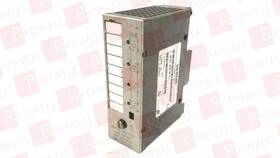
( Brand: Siemens ), ( Manufacturer Part Number: 6ES5450-8FA11 ), ( Part Type: Module )
Review SIEMENS 6es54508fa11 Used
The **Siemens 6ES5450-8FA11** is a high-performance, modular **SIMATIC ET 200SP** (S7-1200/1500-compatible) terminal block designed for use in industrial automation systems, particularly within the **SIMATIC S7-1200/1500** architecture. This compact yet robust component is part of Siemens **ET 200SP** series, which is engineered to provide reliable signal processing in demanding environments such as manufacturing plants, process automation, and machine control applications. The **6ES5450-8FA11** features an **8-channel terminal block** with **isolated inputs**, making it ideal for connecting discrete signals such as limit switches, pushbuttons, or proximity sensors while ensuring galvanic isolation between channels to prevent ground loops and enhance system stability. Its **screw-type terminal design** ensures secure and easy wiring, accommodating standard **0.5 2.5 mm ** copper conductors, which simplifies installation and maintenance. The terminal block is compatible with the **SIMATIC S7-1200/1500** CPU modules, allowing seamless integration into Siemens scalable automation platform, where it can be configured via **TIA Portal** software for precise parameterization of input thresholds, filtering, and signal processing. Built to withstand harsh industrial conditions, the **6ES5450-8FA11** is rated for operation in temperatures ranging from **-25 C to 70 C**, with an IP20 protection rating, ensuring durability in environments with moderate dust and moisture exposure. Its modular design allows for easy expansion or replacement, making it a versatile solution for both new installations and retrofitting existing systems. Whether used in a high-speed packaging machine, a CNC control system, or a distributed automation setup, this terminal block delivers consistent performance, reducing downtime and improving overall system reliability.
### **Analysis of Siemens 6ES5450-8FA11 (S7-300 CPU 319-3DP) Pros and Cons**
#### **Overview**
The **Siemens 6ES5450-8FA11** is a **S7-300 CPU 319-3DP**, a programmable logic controller (PLC) widely used in industrial automation. It is a **32-bit, dual-core processor** with integrated **PROFIBUS DP, PROFINET, and MPI** communication capabilities. Below is a detailed breakdown of its advantages and disadvantages.
---
### **Pros**
1. **High Performance and Processing Power**
- The **dual-core architecture** (up to 100 MHz per core) significantly improves execution speed compared to single-core S7-300 CPUs, allowing for faster response times in complex control applications.
- Supports **real-time control** with **32-bit floating-point arithmetic**, making it suitable for advanced motion control, PID regulation, and high-speed data processing.
2. **Integrated Communication Interfaces**
- **PROFINET IO** (via optional module) enables high-speed Ethernet communication, reducing wiring complexity and improving network flexibility.
- **PROFIBUS DP** (built-in) allows direct connection to field devices, simplifying I/O expansion.
- **MPI (Multi-Point Interface)** provides backward compatibility with older Siemens systems.
3. **Enhanced Memory and Storage**
- **512 KB user program memory** (expandable via optional modules) allows for larger control programs.
- **128 KB data memory** provides sufficient space for variables, trends, and process data.
- Supports **SIMATIC NET** for distributed I/O and remote access.
4. **Reliability and Industrial-Grade Build**
- Designed for **harsh industrial environments** (IP20 standard, but can be enclosed in a protective housing).
- **Wide operating temperature range** (-10 C to 55 C), ensuring stable operation in varying conditions.
- **Long-term availability** (Siemens supports legacy products for extended periods, though some modules may require sourcing).
5. **Compatibility with Siemens Ecosystem**
- Works seamlessly with **TIA Portal** (Siemens engineering software) for programming, debugging, and monitoring.
- Supports **S7-300/400/1200/1500** communication protocols, enabling integration with larger automation systems.
- **SIMATIC HMI (Human-Machine Interface)** and **SCADA** systems can be easily connected.
6. **Cost-Effective for Mid-Range Applications**
- More affordable than **S7-400 or S7-1500** CPUs while offering **better performance than older S7-300 single-core models**.
- Suitable for **automation tasks requiring moderate speed and complexity**, such as packaging machines, conveyor systems, and process control.
7. **Scalability and Expansion Options**
- Supports **up to 256 digital inputs/outputs** and **16 analog inputs/outputs** via expansion modules (e.g., **EM 221, EM 231**).
- Can be extended with **S7-300 I/O modules** for additional control points.
8. **Energy Efficiency**
- Consumes **less power** compared to higher-end PLCs, reducing operational costs in long-running applications.
---
### **Cons**
1. **Limited Memory Compared to Modern PLCs**
- **512 KB user program memory** may be insufficient for **very large or complex programs** (e.g., advanced motion control with multiple axes, high-resolution data logging).
- **No built-in SD card slot** (unlike some newer models), requiring external storage for backups.
2. **Outdated Technology Relative to Newer Siemens PLCs**
- **No built-in PROFINET port** (requires an optional **CP 342-1** or **CP 343-1** module for Ethernet).
- **No integrated safety functions** (unlike **S7-1200/1500 with SIL2/3 compliance**).
- **Slower than S7-1500 or S7-1200** in terms of **floating-point operations and cycle times**.
3. **Deprecated Status and Parts Availability**
- **No longer in active production** (discontinued by Siemens), meaning:- **Limited new stock** (mostly found in used/refurbished markets).
- **Potential delays in sourcing replacement parts** (e.g., power supplies, communication modules).
- **Higher long-term costs** if maintenance or upgrades are needed.
- Some **optional modules (e.g., PROFINET adapters)** may be **hard to find** or expensive.
4. **Programming Complexity**
- Requires **S7-300-specific knowledge** in **LAD (Ladder Logic), FBD (Function Block Diagram), or STL (Statement List)**.
- **Less intuitive for beginners** compared to **S7-1200/1500**, which have **graphical programming tools** (e.g., Structured Text with better debugging).
5. **Physical Size and Installation Constraints**
- **Larger and heavier** than modern **S7-1200/1500 CPUs**, requiring more space in control panels.
- **No compact or DIN-rail-only options** (must be mounted in a **19" rack or panel**).
6. **Limited Support for Modern Protocols**
- **No native OPC UA support** (requires additional modules or third-party software).
- **Weaker integration with cloud/IIoT platforms** compared to newer Siemens PLCs.
7. **Potential Compatibility Issues with Newer Systems**
- **May not work seamlessly** with **modern HMI/SCADA systems** optimized for **S7-1200/1500**.
- **Some Siemens software updates** may no longer support **S7-300**, limiting access to the latest features.
8. **Higher Maintenance Burden**
- **No built-in diagnostics** as advanced as **S7-1500 s fault prediction tools**.
- **Manual troubleshooting** may be required more frequently due to **lack of self-healing features**.
---
### **Conclusion**
The **Siemens 6ES5450-8FA11 (CPU 319-3DP)** remains a **capable and reliable PLC** for **mid-range industrial automation tasks**, particularly in applications where **PROFIBUS, MPI, and moderate processing power** are sufficient. Its **dual-core architecture** provides a **noticeable performance boost** over older S7-300 models, making it suitable for **complex control logic without the need for a higher-end PLC**.
However, its **discontinued status, limited memory, and lack of modern communication features** (e.g., native PROFINET, OPC UA) make it **less ideal for future-proofing**. If the application **does not require advanced motion control, high-speed Ethernet, or cloud integration**, this CPU can still be a **cost-effective and efficient choice**.
For **new projects**, considering **Siemens S7-1200 or S7-1500** would be **recommended** due to **better performance, modern interfaces, and long-term support**. However, if **budget constraints or legacy system compatibility** necessitate the use of an **S7-300**, the **6ES5450-8FA11 is a solid option** provided that **parts availability and maintenance risks** are carefully managed.
---
### **Final Recommendation**
- **Buy if:**- You are **replacing an older S7-300 CPU** and need **better performance at a lower cost**.
- Your application **does not require PROFINET, OPC UA, or advanced motion control**.
- You have **access to spare parts** or can source them from **authorized Siemens distributors**.
- The system is **not critical for long-term expansion** (i.e., no plans to upgrade to newer Siemens PLCs).
- **Avoid if:**- You need **future-proofing** with **modern communication protocols (PROFINET, OPC UA, Ethernet/IP)**.
- The application requires **high-speed data processing, advanced motion control, or cloud integration**.
- **Long-term reliability and support** are concerns (consider **S7-1200/1500** instead).
- You are **starting a new project** and can afford a **more modern PLC** with better diagnostics and scalability.
For **used/refurbished units**, **verify the condition of the power supply, communication modules, and memory** before purchase. If possible, **test the CPU in a known-good system** to ensure full functionality.
Details:
All products are guaranteed to be working but may show signs of use if purchasing a used product. Call to use a shipping service other than the ones listed. Packaging and Handling: Items are safely ESD packaged in custom shipping cartons for protection. Sells new and surplus product develops channels to purchase such.
part #: 6es54508fa11 prices
- $56.96-$353.35
specifications sensoindustria:
- brand: Siemens
- mpn: 6es5450-8fa11
- part type: Module
shipping sensoindustria:
- class: Standard
- cost: $12.90
- service: Standard
- transit: 28-33 Days
- type: Fixed
seller sensoindustria:
- # reviews: 195729
- rating: 99.6%
- city: 1 Millennium Dr, Willingboro, NJ 08046
general sensoindustria:
- PLCs HMIs > PLC Peripheral Modules > PLC Input Output Modules
- condition: Used
returns sensoindustria:
- policy: Returns Accepted
- time: 30 Days
- paid by: Buyer
- method: Money back
offer sensoindustria:
- availability: In Stock
- started: March 22, 2026
- options: Ship-to-home
- quantity: 1
- sold: 0
payments sensoindustria:
- wallet: Apple-pay
- credit card: Diners-club
- other
Siemens 6ES5450-8FA11 Is Similar To:
- 222-1bf22-0xa0 Siemens Used Output Module Make Offer (25.8% similar) All technical questions problems should be addressed through messages for the fastest possible service. Any damaged package received should be addressed with the delivering USPS office and a claim filed there. This lot consists of: 1 used Siemens 6ES7 222-1BF22-0XA0 output module no box condition: ...(March 7th, 2019)
- 3rk1304-0hs00-7aa0 Siemens Isolator Module Used (38.6% similar) If another carrier such as ups or FedEx is required to ship due the size, then shipping costs may change...(February 17th, 2018)
- 3tf4422-0b Unbranded Siemens Used (32.4% similar) If another carrier such as ups or FedEx is required to ship due the size, then shipping costs may change...(June 15th, 2017)
- 462008.7604.01 Siemens Drive Circuit Board Used Free Shipping (33.3% similar) The shipping on this item reflects standard ground for us. 01 drive circuit board - used for sale. Greenback stock G29329...(July 2nd, 2018)
- 500-5016 Siemens Ti Two Channel Analog Output Module Used (32.7% similar) For sale is a ti Siemens two channel analog output module - used no wiring terminals...(July 21st, 2018)
- 505-6308 Siemens Input Module Used (40% similar) If another carrier such as ups or FedEx is required to ship due the size, then shipping costs may change...(January 21st, 2018)
- 505-6516 Siemens Slot Plc Chasis Rack Used (38.6% similar) Siemens 16 slot plc chassis rack model: 505-6516ITEM from surplus inventory...(August 1st, 2018)
- 545-1106 Siemens Texas Instruments Plc Module Cpu Used (33.7% similar) ...(September 8th, 2018)
- 6es7-222-1ef22-0xa0 Siemens Used Output Module (27.6% similar) For sale is a used Siemens 6ES7-222-1EF22-0XA0 output module...(July 16th, 2018)
- 6es7-235-0kd00-0xa0 Siemens Used Analog I-o (28.6% similar) Please e-mail with any questions. This item is guaranteed to be as described. Left right side e-stand, please specify which one you are interested. Siemens 6ES7-235-0KD00-0XA0 used analog I o module 235-0KD00-0XA0 note: 2 units available...(February 24th, 2018)
- 6es7-235-0kd22-0xa0 Siemens Used Analog I-o (28.6% similar) This item is guaranteed to be as described. Please e-mail with any questions...(February 17th, 2018)
